Introduction
The twentieth-century conceptual and visual artist Yves Klein (1938–1962) needs little introduction. Most widely known for his use of pure ultramarine pigment to create large monochrome paintings, Klein’s avant-garde approach to philosophical and technical experimentation played a pivotal role in transforming the landscape of modern art.
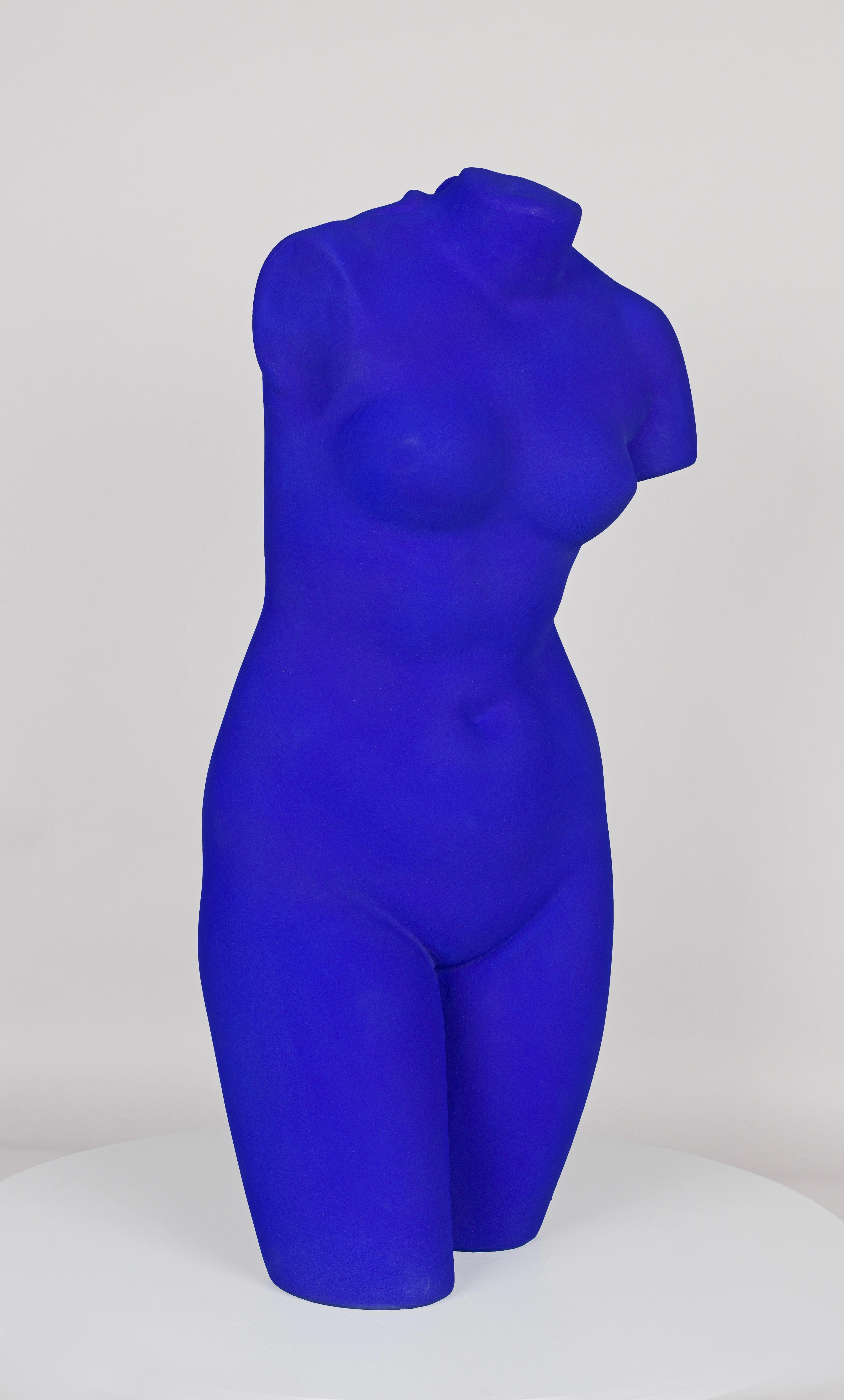
Yves Klein (French, 1928–1962). Blue Venus (Vénus Bleue), ca. 1961, cast 1984; edition no. 50/350. Multiple spray coats of International Klein Blue (“I.K.B.”; dry pigment and synthetic resin) over paint applied to a plaster cast, 26 3/4 × 11 5/8 × 11 1/2 in. (67.9 × 29.5 × 29.2 cm). The Metropolitan Museum of Art, New York, Gift of Mr. and Mrs. Iain Nasatir, 1985 (1985.445) © 2026 Artists Rights Society (ARS), New York
This project, conducted during a 2024–2025 Fellowship in the Museum’s Department of Objects Conservation, focused on researching the practical and ethical challenges of conserving a damaged Yves Klein sculpture in The Met’s Modern and Contemporary Art collection titled Blue Venus (ca. 1961).
Treatment options were investigated through a meticulous study of the artist’s original pigment recipe he called “International Klein Blue” (commonly referred to as I.K.B.) and its technical application to the sculpture, allowing for direct engagement with the process of creating and applying it to three-dimensional forms. This extensive hands-on experimentation, in addition to collaboration with conservators and specialists around the globe, laid the foundation for a comprehensive project. After eight months of research and testing, the effort culminated in the treatment of the Blue Venus, which will be displayed for the first time since its acquisition by The Met in the Museum’s Greek and Roman Galleries.
Yves Klein and I.K.B.
Yves Klein’s pivotal innovation emerged through a collaboration with French color merchant Edouard Adam, resulting in a distinctive pigment system he officially registered with the French government in 1960 as “International Klein Blue.” This formulation—ultramarine pigment suspended in a low-concentration adhesive—can be applied to a variety of surfaces using a brush, roller, or spray. The outcome is a velvety, matte finish of loosely bound pigment that radiates both intensity and tranquility yet remains exceptionally fragile and prone to damage.
Because the pristine surface texture and color of Klein’s sculptures is integral to the viewer’s experience, even the slightest imperfections—scratches, scuffs, compression marks, or burnished areas—can noticeably disrupt the visual experience he intended. Each flaw alters the perception of the piece in its own way, and thus must be evaluated independently to fully understand its impact on the integrity of the artwork.
The Met’s Blue Venus
Blue Venus is created from a single hollow plaster cast, initially painted blue and subsequently coated with multiple layers of I.K.B. While the surface may appear largely intact at first glance or from a distance, closer examination reveals significant damage: scuffs, scratches, and compressions have disrupted the uniformity of the original surface while a large area of paint loss has compromised the integrity of the I.K.B. layer on the Venus’s shoulder, exposing the underlying plaster substrate. These condition issues detract from the intended original appearance of the work as conceived by Klein, ultimately rendering the sculpture unsuitable for exhibition.
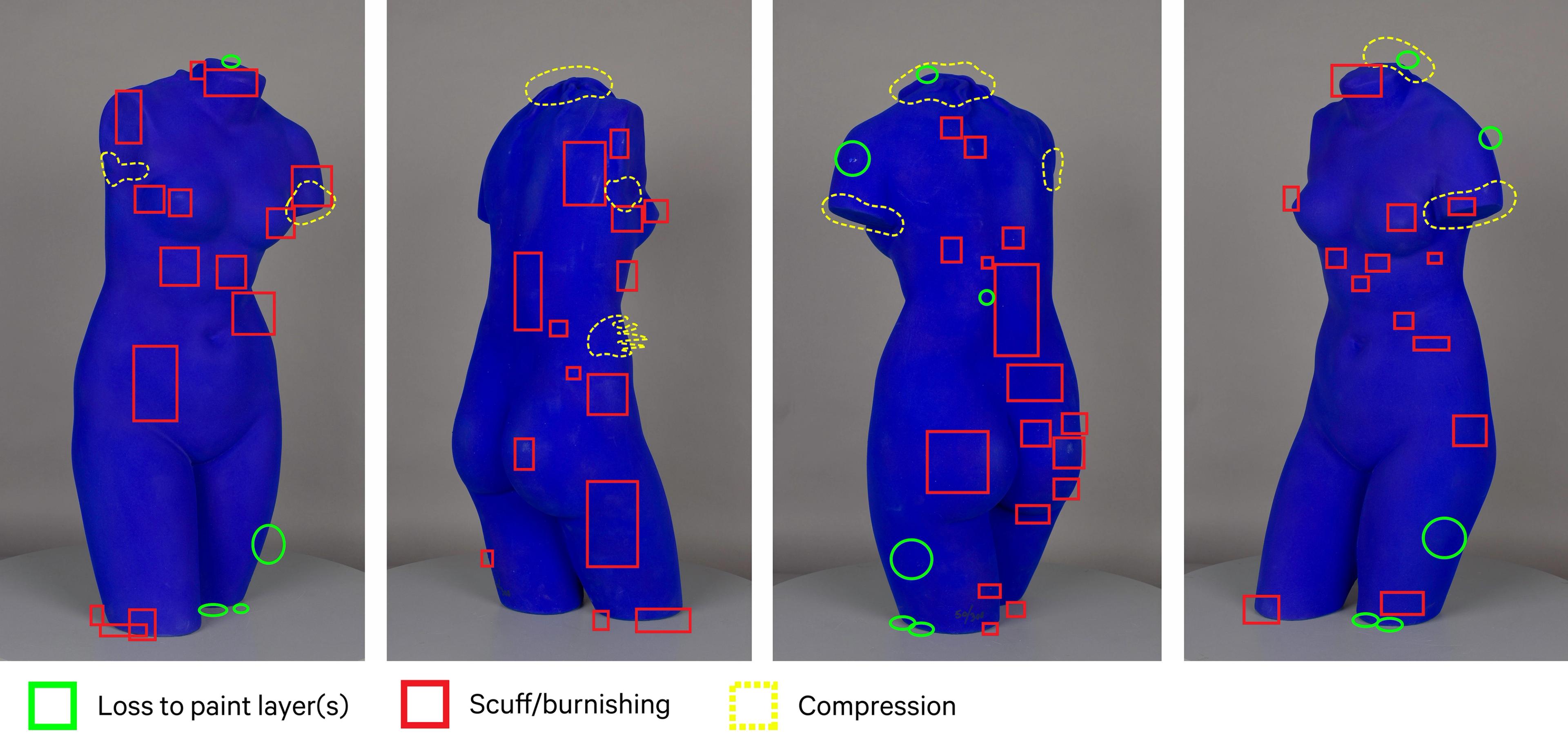
Annotated image of the condition issues present in The Met’s Blue Venus. The most serious damage was a significant loss to the Venus’s rear proper left shoulder which exposed the plaster body of the sculpture beneath the lost I.K.B. layers.
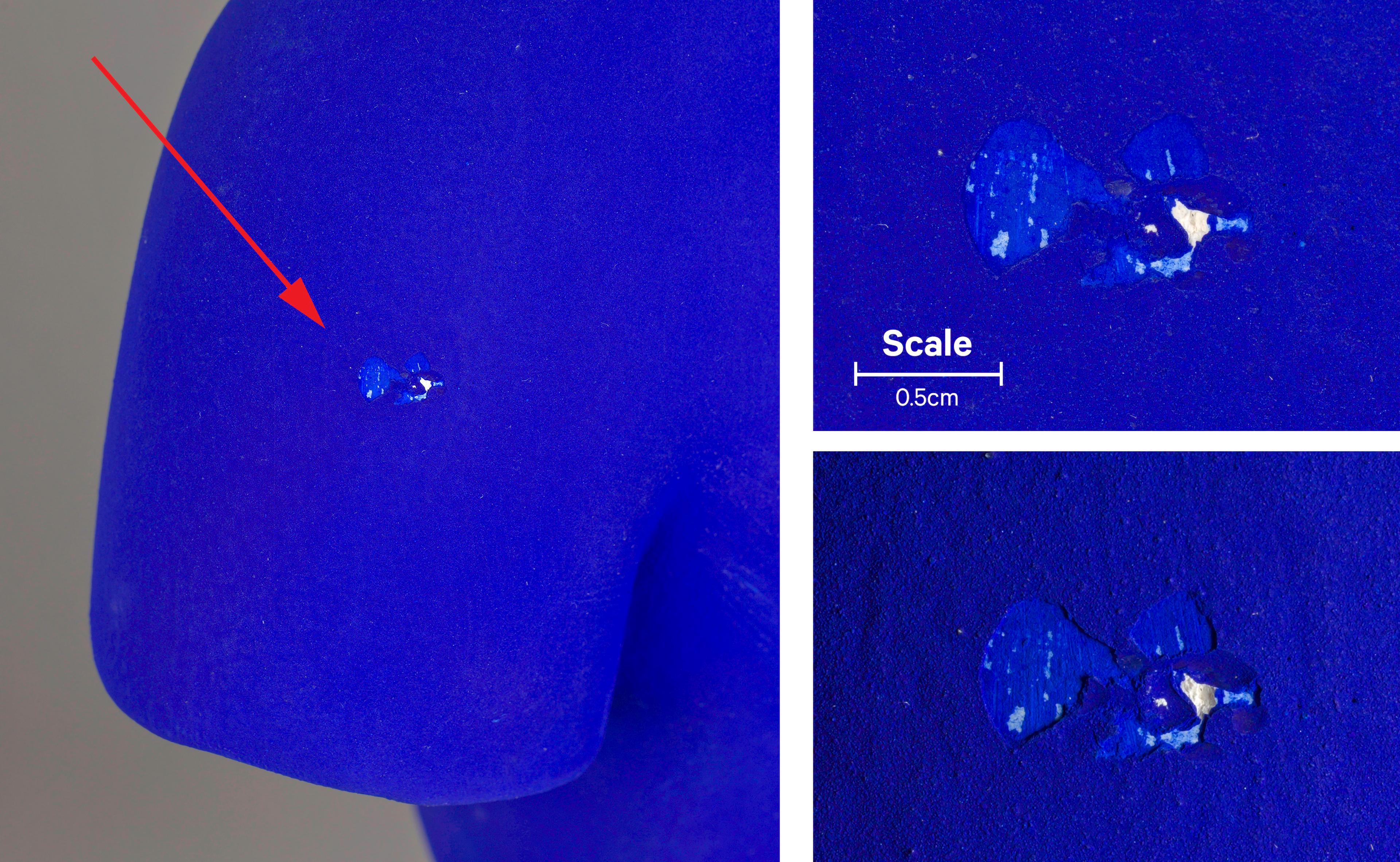
Left: Location of the damage to the Venus’s rear proper left shoulder; Right, top and bottom: Detail of the damage to the shoulder; detail of the damage to the shoulder as seen in raking light.
Practical and ethical considerations in exploring treatment options
Klein’s unwavering pursuit of pristine, uninterrupted surfaces has sparked a range of innovative treatment approaches among conservators across the globe. Addressing the challenges posed by matte, vibrant monochrome surfaces with intricate topographies often demands considerable time and resources. As a Fellow, I have been fortunate to have access to both—allowing me to explore techniques that had not yet been investigated by the Museum’s conservation team.
Contemporary conservation approaches often involve re-spraying editions of Klein’s works with a modern formulation of I.K.B. Although the process is ethically complicated, the process of recreating and applying the pigment system can be mastered using materials and techniques closely aligned with those Klein employed during his lifetime. When carried out with precision and sensitivity, such treatments can successfully restore the velvety, matte surface that is central to the artist’s vision.
Among the museum stakeholders, there was a strong interest in pursuing less invasive treatment strategies, favoring localized interventions designed to seamlessly integrate modern I.K.B. into areas of loss, while also reducing the visibility of surface damage. This approach emphasizes preserving the integrity of the original surface and minimizing any unnecessary intervention.
Preliminary research and technical studies
The initial phase of the study involved mastering the creation and application of a modern I.K.B. pigment mixture to three-dimensional surfaces. Over the course of three months, I conducted experiments on a series of mock-ups. These test pieces provided a controlled environment to explore both re-spraying techniques and localized treatment strategies, all while deepening my understanding of the medium’s distinctive working properties—without compromising the original artwork.
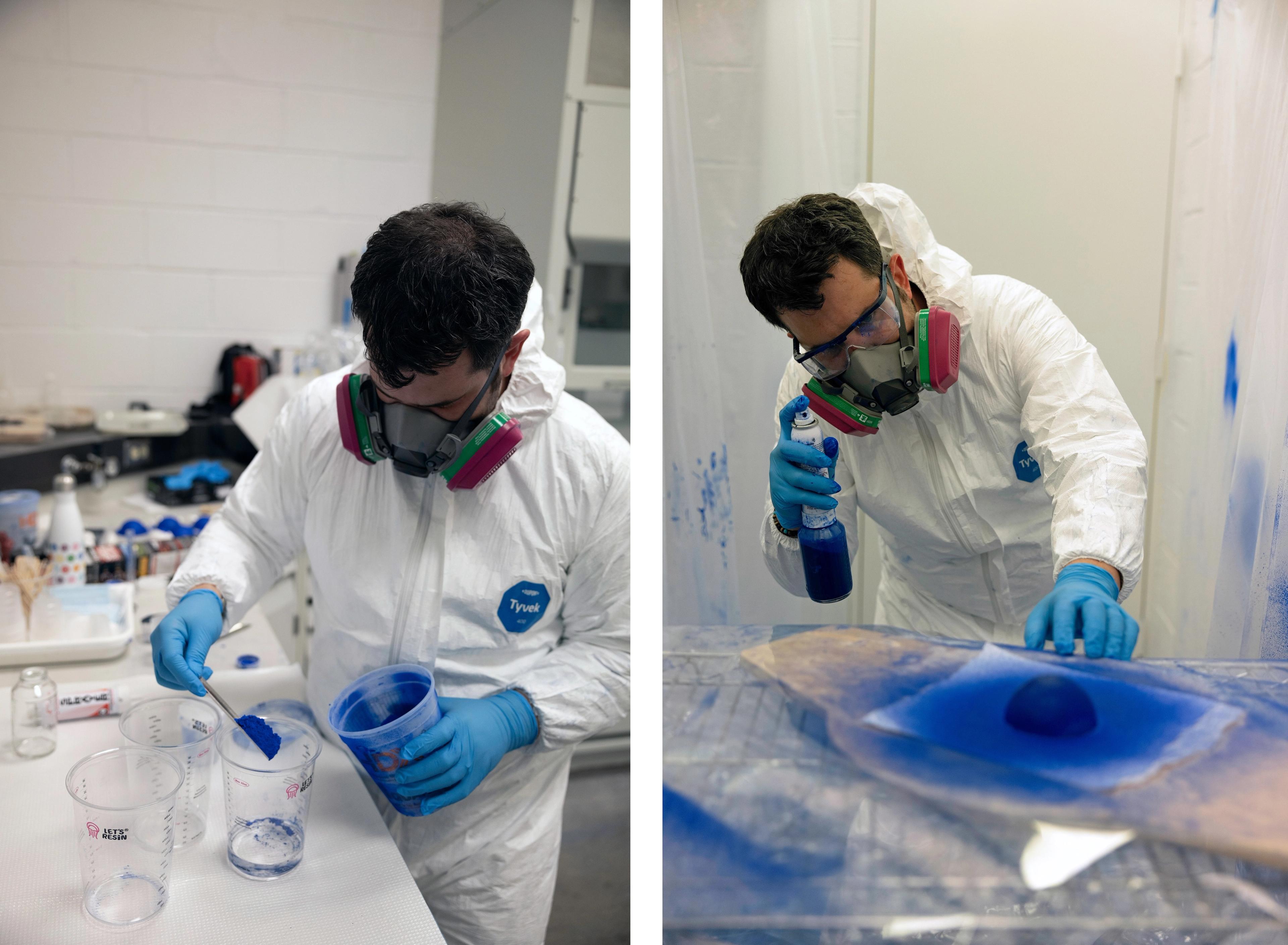
Left: Mixing the synthetic ultramarine pigment into the adhesive; Right: Spraying a plaster mock-up with a modern mixture of I.K.B.
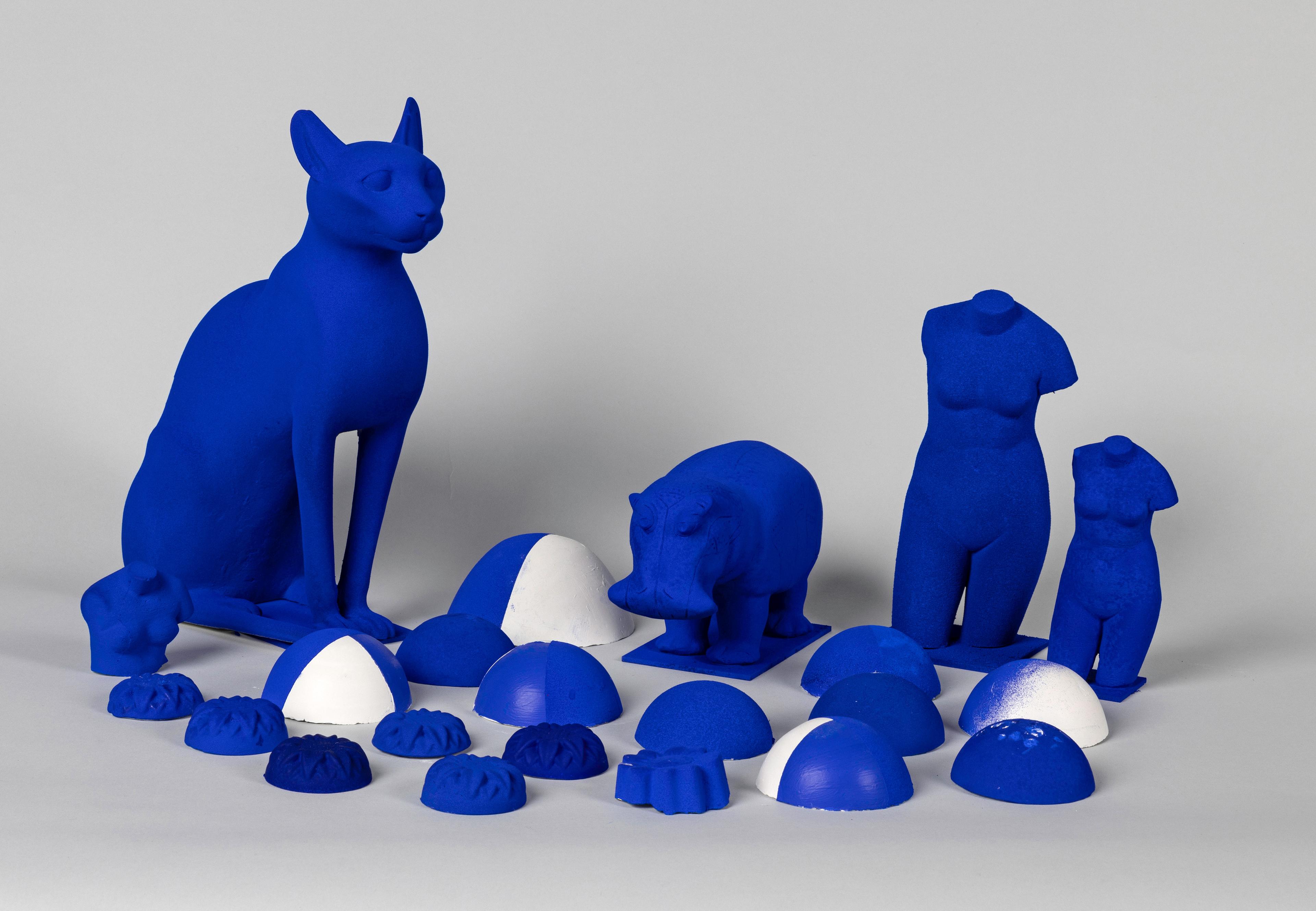
A variety of plaster mock-ups sprayed with various recipes of I.K.B. in March and April 2025.
Beyond replicating the signature texture of the I.K.B., it was essential to achieve a precise color match for the sculpture. This was accomplished through visual assessment, involving subtle adjustments to the I.K.B. formulation—such as modifying the solvent concentration in the spray bottle and increasing the ratio of raw pigment. This process culminated in a series of sprayed samples, from which the final recipe was selected to achieve an acceptable chromatic match. This was done by eye in lieu of instrumental analysis, as the sculpture’s contours and delicate surface rendered such methods impractical.
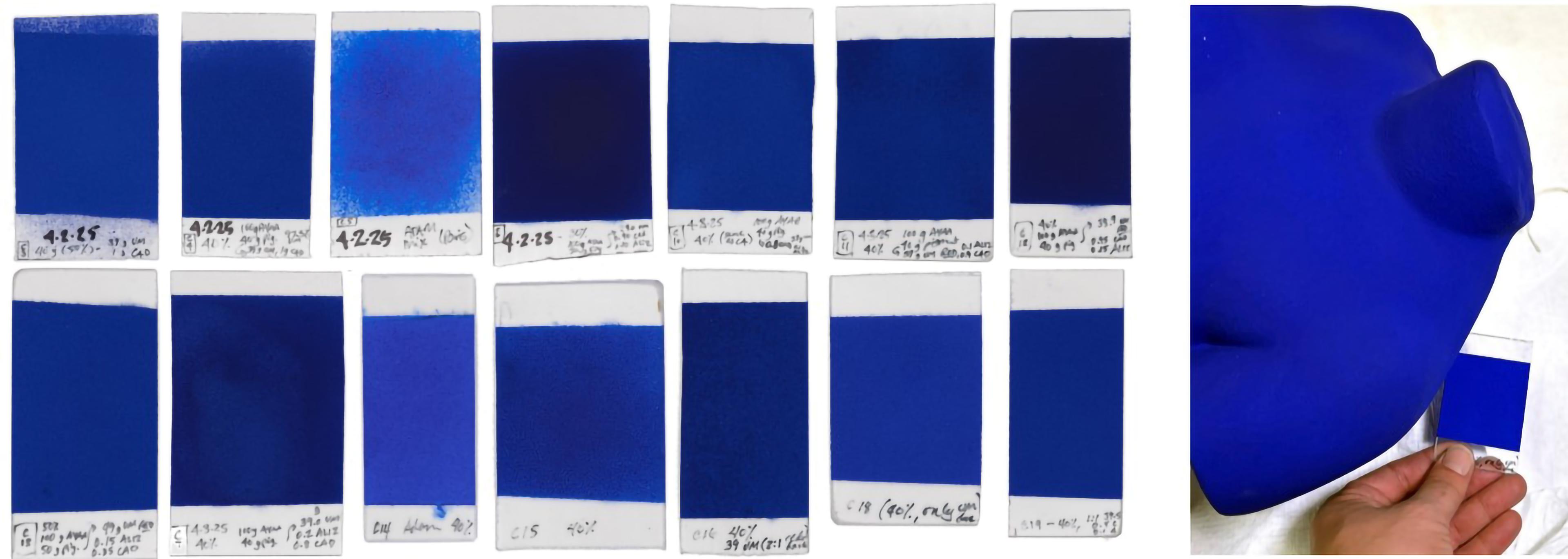
A variety of color mock-ups sprayed on plastic slides with various recipes of I.K.B. in March and April 2025.
Plaster domes measuring 2.5 inches in diameter were cast and coated with the I.K.B. formulation that most closely matched the Museum’s Blue Venus. While re-spraying proved to be a viable method for addressing damaged areas, the broader goal was to investigate all possible options—including localized interventions that could preserve original material while mitigating the most visually disruptive condition issues.
Tests conducted on the I.K.B.-coated plaster domes yielded encouraging results. Haziness caused by compressions and scuffs was effectively diminished through the careful reapplication of solvents using a fine brush. Areas of pigment loss were addressed by introducing a modern I.K.B. mixture, sprayed onto and scraped from glass plates and later applied as a powder to the area of damage. The physical and aesthetic properties of this inpainting material—such as particle size and surface sheen—were modified through various techniques, including scraping, grinding, and sifting. These adjustments allowed for improved integration and adhesion, producing visually satisfactory outcomes.
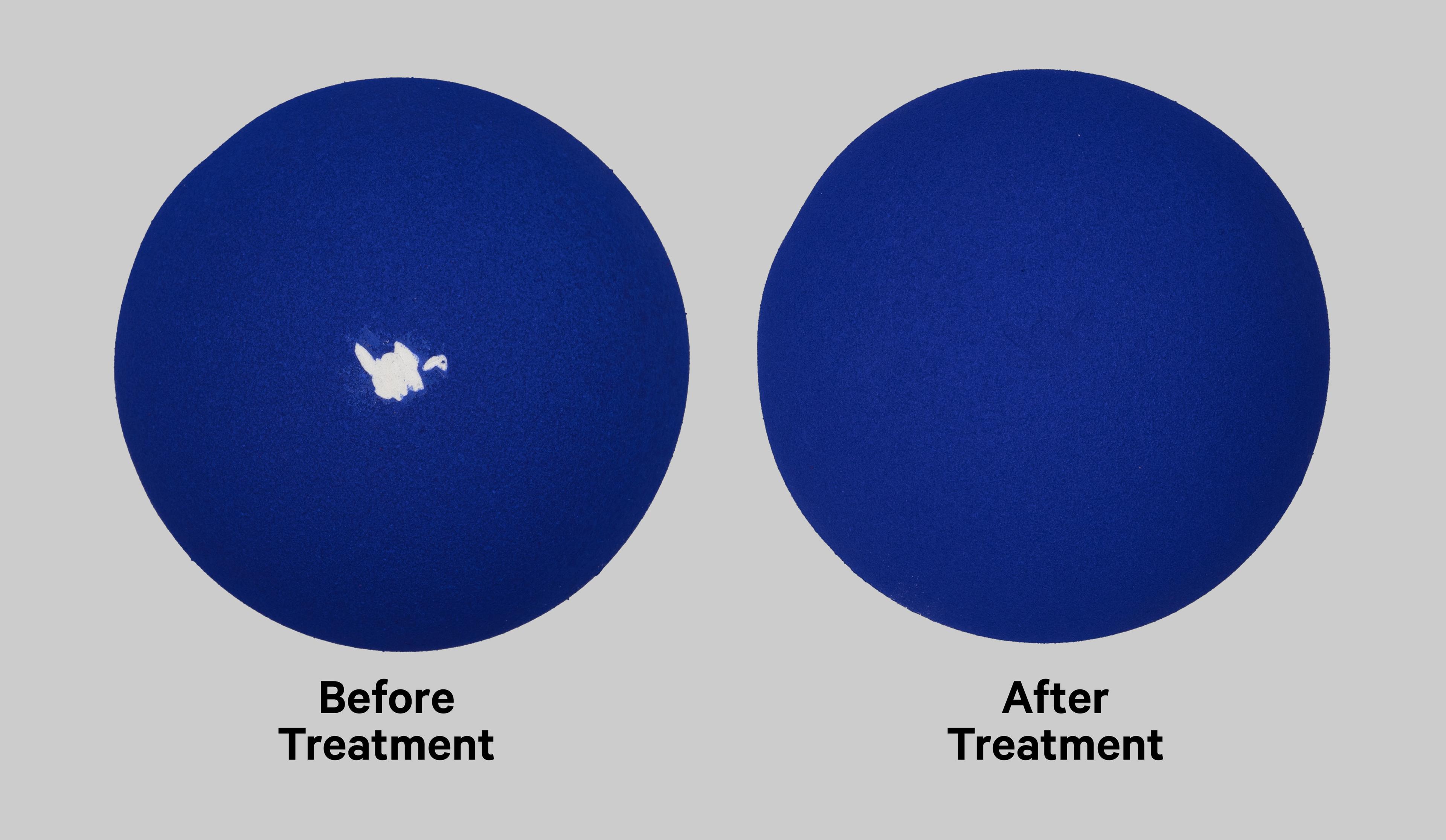
A top-down view of a small (2.5 in. in diameter) plaster dome with simulated damage, before (left) and after (right) treatment.
Treating the sculpture
It became evident that localized treatment offered the most appropriate path forward for this specific edition of the Venus. Although re-spraying had proven to be a viable option, its irreversible nature makes it more suitable for cases involving extensive or severe damage. With this in mind, I proceeded with the formal treatment during July and August of 2025.
Months of testing treatment methods on mock-ups proved invaluable, as the final intervention presented few unexpected challenges. The topography and color of the modern I.K.B. samples aligned closely with those of the Blue Venus, yet subtle differences in surface response—particularly to humidity—became apparent. These variations were likely due to the aging of the original sprayed layer, dating back to the 1980s. For example, applying solvents with brushes required exacting control, as even the slightest excess could result in visible droplets and tidelines.
Through localized solvent application, final treatment significantly diminished scratches, scuffs, and compression, resulting in a more unified and visually harmonious surface.
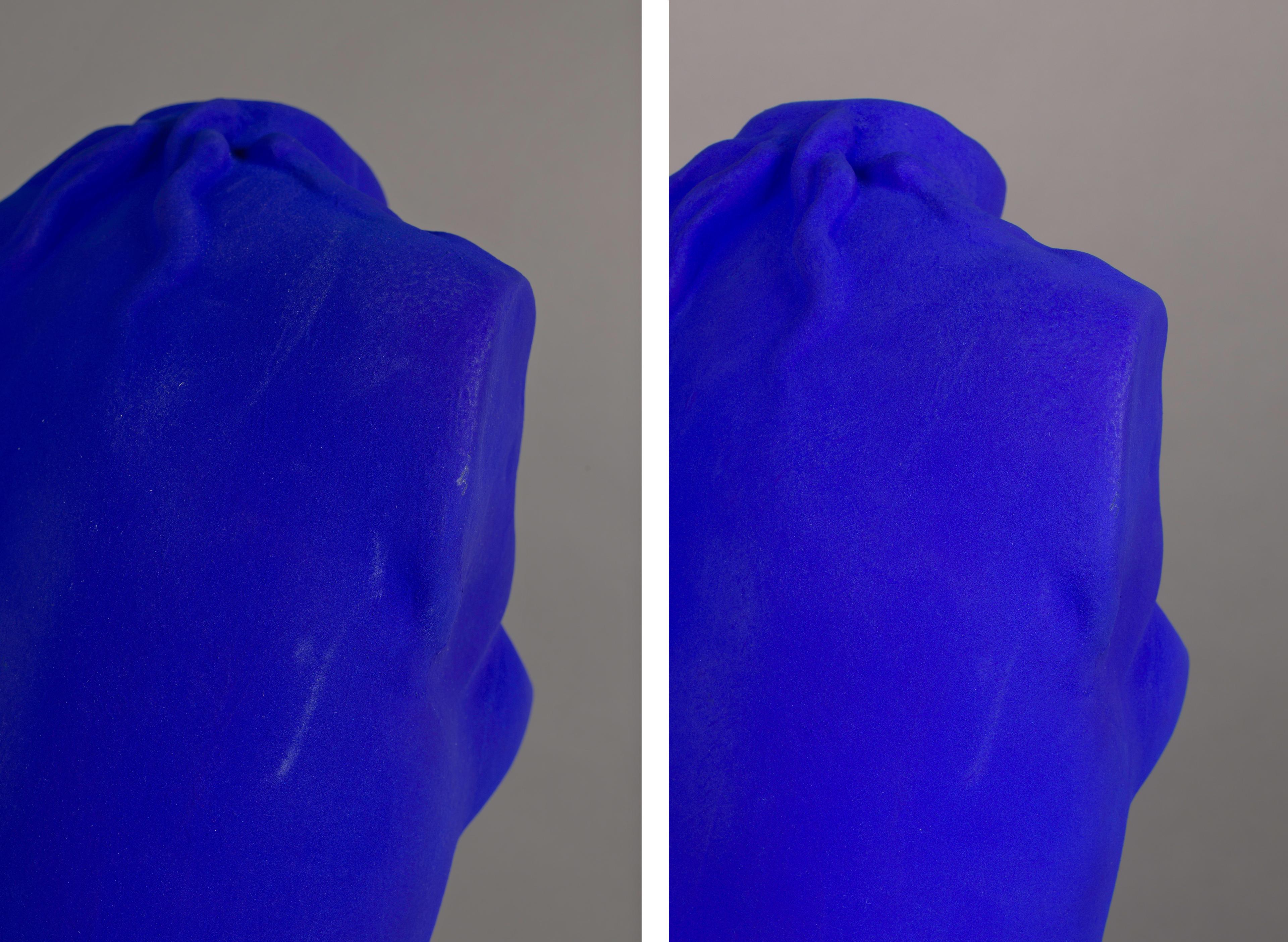
Detail of the Venus’s rear proper right shoulder, before treatment (left) and after treatment (right).
Additionally, the treatment effectively addressed the most visually disruptive damage—the paint loss on the proper left rear shoulder—while preserving the majority of the sculpture’s original material.
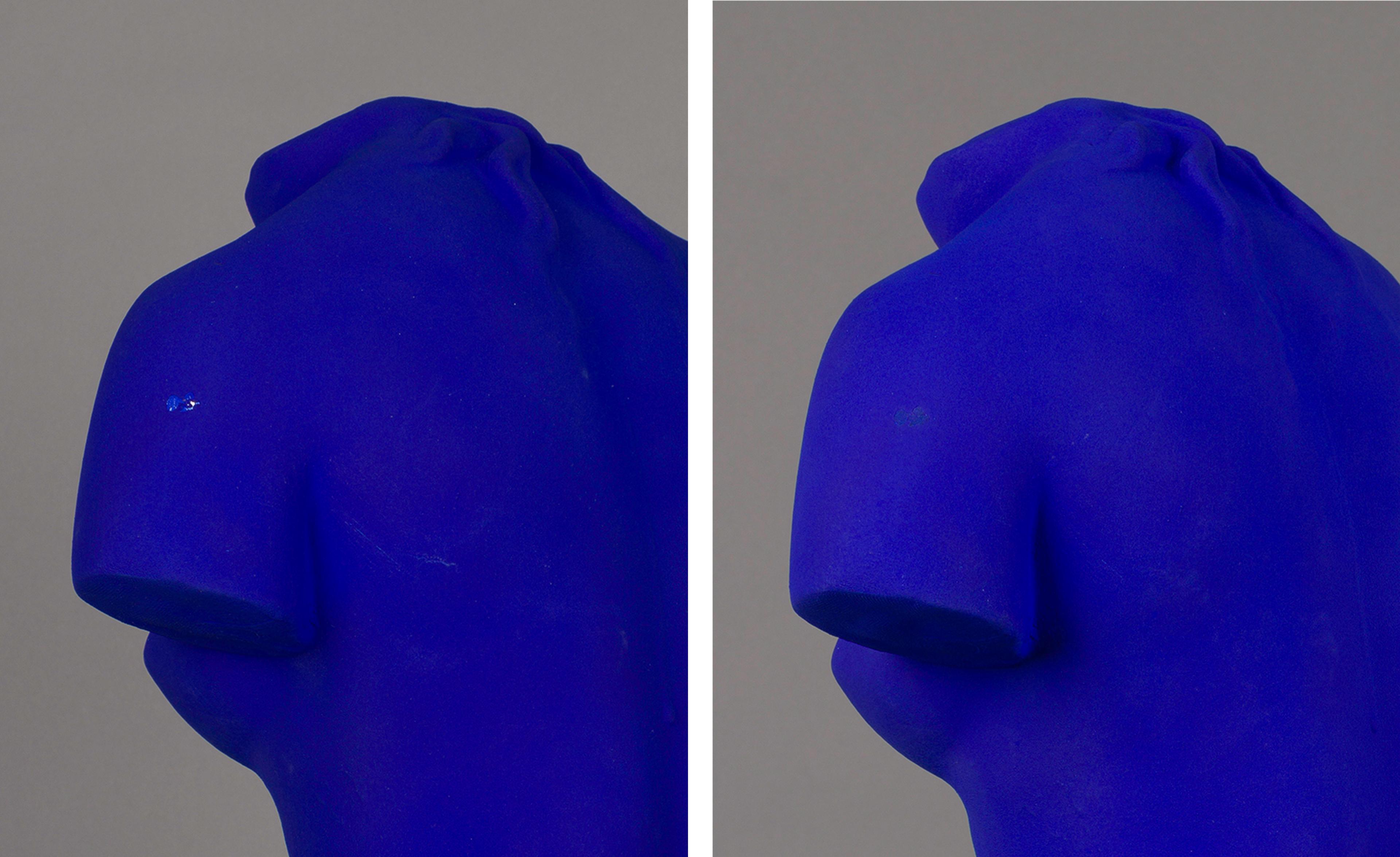
Detail of the Venus’s rear proper left shoulder, before treatment (left) and after treatment (right).
This approach was guided by a commitment to preserving the artwork in a manner that aligns with the artist’s original intent, while deliberately avoiding interventions that could be considered heavy-handed or irreversible. By prioritizing minimal disruption and material integrity, the treatment honored the delicate balance between aesthetic restoration and ethical responsibility. Ultimately, this rewarding project not only restored the sculpture’s visual harmony but also underscored the complexity of Klein’s surfaces and the multifaceted challenges they pose.
Final thoughts: Into the Void
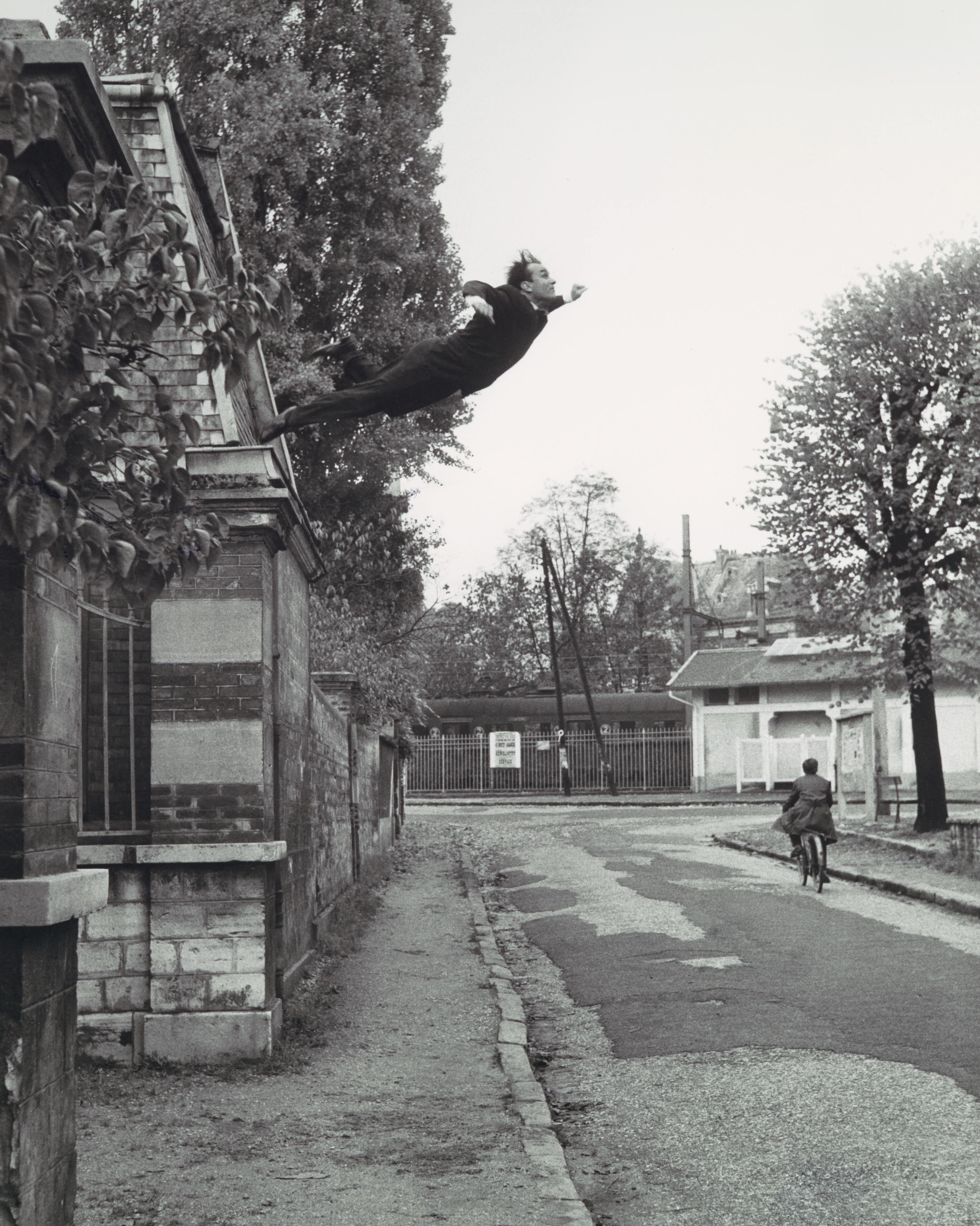
Photographed by Harry Shunk (German, 1924–2006) and János (Jean) Kender (Hungarian, 1937–2009), artistic action by Yves Klein (French, 1928–1962). Leap into the Void, 1960. Gelatin silver print, 10 1/4 x 7 7/8 in. (25.9 x 20 cm). The Metropolitan Museum of Art, Purchase, The Horace W. Goldsmith Foundation Gift, through Joyce and Robert Menschel, 1992 (1992.5112) © Yves Klein, ADAGP, Paris; Photo: Shunk-Kender © Roy Lichtenstein Foundation
In 1960, Yves Klein produced a striking photomontage titled Leap into the Void, in which he appears to be soaring—or plummeting—through the air toward the pavement below. The image evokes a sense of daring transcendence, yet the dramatic illusion was carefully staged: Klein’s friends held a tarpaulin beneath him to break his fall, which the photographers later edited out in the darkroom.
To me, the image conjures the leap of faith inherent in both engaging with and safeguarding works of art. The dynamic field of art conservation often feels like navigating unknown terrain, where each step forward demands curiosity, adaptability, and trust in the process. Contemporary art conservators routinely face exhilarating challenges—grappling with cutting-edge technologies, unconventional materials, and ever-evolving creative practices.
In many ways, that spirit of bold exploration is likely what Klein would have appreciated most.
We would like to thank conservators Jackie Wilson, Benoit Dagron, Christa Haiml, and Ellen Davis, whose expert insights greatly contributed to the success of this project. We also extend gratitude to David Breslin, Leonard A. Lauder Curator in Charge, Modern and Contemporary Art, and Stephanie D’Alessandro, Leonard A. Lauder Curator of Modern Art and Senior Research Coordinator.
Notes
Klein created an original version of Blue Venus ca. 1961. Later, in 1982, a limited production of editions was posthumously produced and the mold used for their production, taken from the original, was destroyed (LeDeur, Yves Klein, 222).
International Klein Blue (I.K.B.) is not merely a color, but a specific application technique. The process involves depositing ultramarine pigment particles onto a surface using an adhesive with distinct drying characteristics. As a result, the final appearance of I.K.B. can vary significantly across Klein’s body of work, reflecting subtle differences in materials, methods, and environmental conditions.