Nous travaillons à la traduction de cette page dès que possible. Merci de votre compréhension.
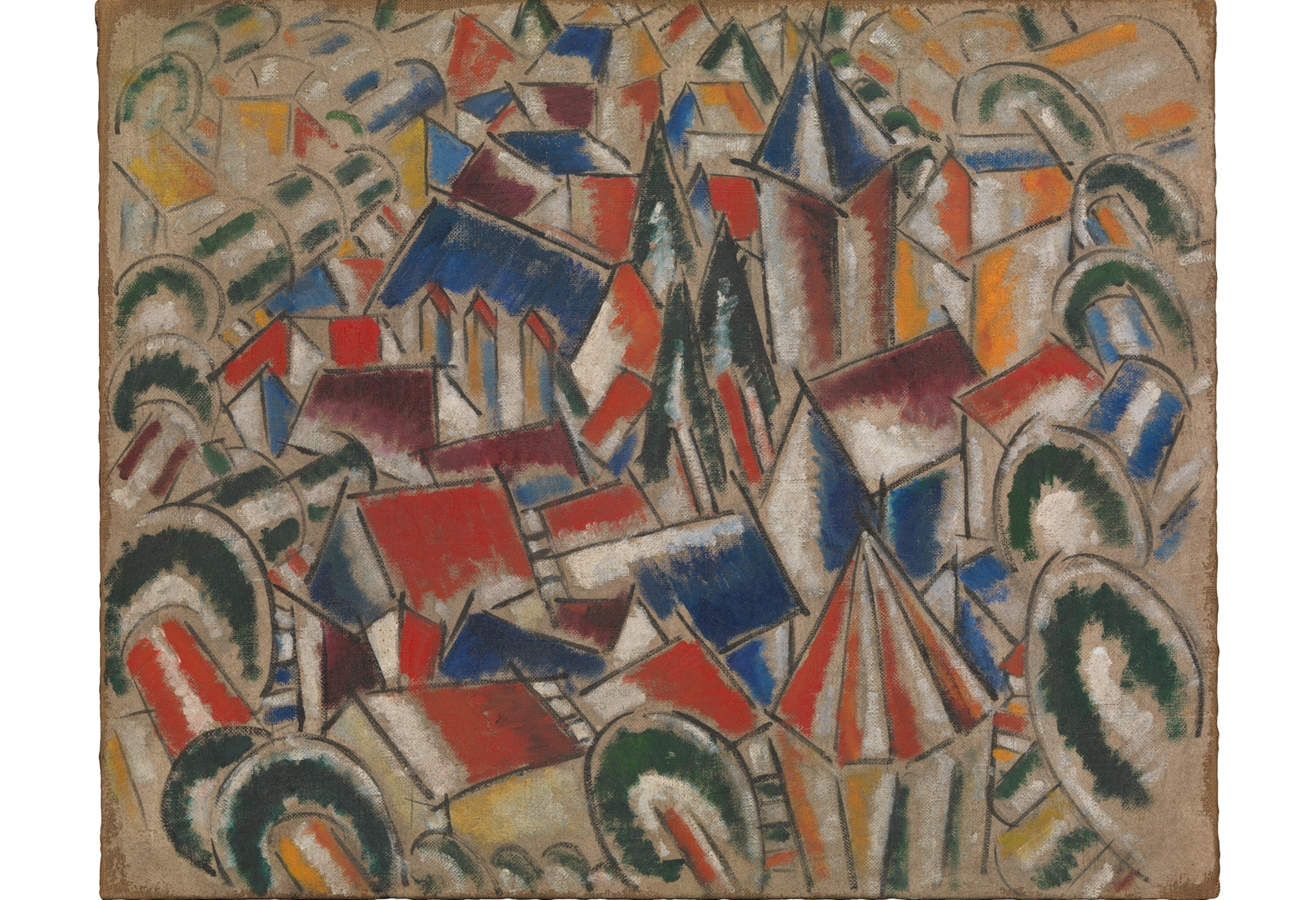
Oil painting of a village of cones, cylinders and cubes with mostly blue, white, and red shapes in the center and more green and yellow shapes on the outskirts

Fernand Léger’s The Village, 1914

Take a closer look at Fernand Léger’s colorful early composition, The Village, created using oil paint on burlap canvas.

Oil painting of a village of cones, cylinders and cubes with mostly blue, white, and red shapes in the center and more green and yellow shapes on the outskirts


Fernand Léger (1881–1955), The Village, 1914. Oil on canvas, 31 1/2 x 39 1/2 in. (80 x 100.3 cm). The Metropolitan Museum of Art, Leonard A. Lauder Cubist Collection, Purchase, Leonard A. Lauder Gift, 2013 (2013.271) © 2016 Artists Rights Society (ARS), New York / ADAGP, Paris

Like many of Fernand Léger's early works, The Village was painted on coarse burlap canvas. Even though he may have chosen this material because it was inexpensive, Léger clearly appreciated its aesthetic possibilities. The brown, coarse open-weave fabric provides a prominent textural and tonal background for his colorful composition.

Before he began painting, Léger sealed the open weave of the burlap with a thin, porous, homemade, matte, grey-beige ground layer. He applied the ground sparingly, barely filling the interstices, covering only the area that he planned to paint and leaving exposed canvas on all sides of the composition (FIG. 1). The ground layer of The Village is primarily composed of a water-soluble glue mixed with chalk to which Léger added traces of the various pigments found in the final composition—blue, red, yellow, green, and orange—in order to achieve a neutral color background (FIG. 2). A similar idiosyncratic ground mixture has been identified in other paintings by Léger from the same period (for example, The Level Crossing, 1912; Fondation Beyeler, Basel).
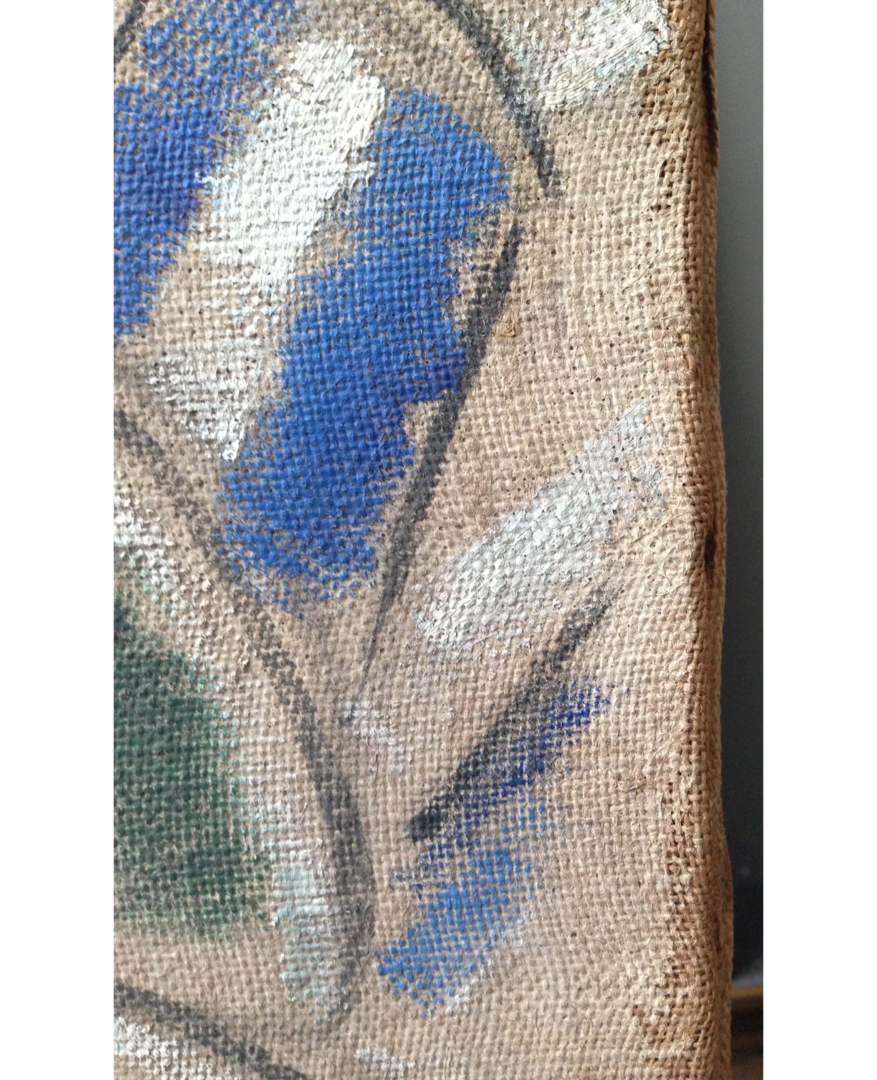
Enlarged lower right corner of “The Village” where both the canvas texture and ground layer of water-soluble glue mixed with chalk are visible


FIG. 1. Detail of The Village, ground layer, lower right corner.
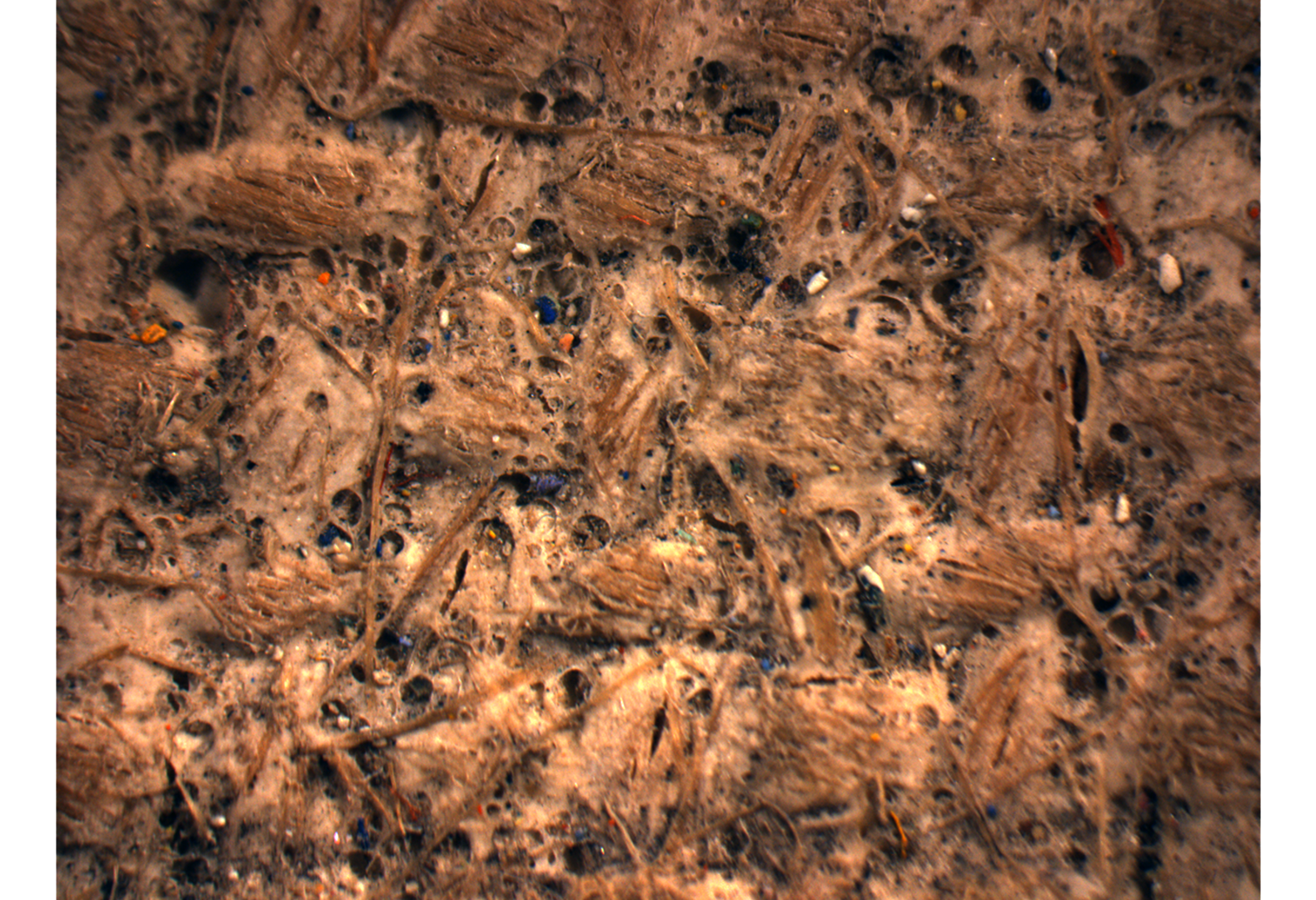
Microphotograph of ground layer of “The Village”, showing porous texture and multicolor paint inclusions


FIG. 2. Microphotograph of ground layer of The Village, showing porous texture and multicolor paint inclusions.


Contributors

Isabelle Duvernois
Conservator, Paintings Conservation

abstract cubist image with a lot of whites, browns, and greys and lines everywhere.
Scholar and curator Anna Jozefacka discusses an unrealized decorative commission by Pablo Picasso intended for a Brooklyn residence.
Isabelle Qian
October 16, 2023
Cubist painting of a metronome in tones of gray and brown
Braque’s painting marked a critical step in advancing Cubism, but the importance of the metronome has been overlooked.
Lauren Rosati
October 5, 2020
Oil painting of nude woman sitting on a stool holding a cloth between her bent legs with a dark green background
Discover Picasso’s walk through the Jardin des Plantes, and his encounter with Oceanic sculpture at the Musée d’histoire naturelle, that inspired a 1908 painting.
Philippe Peltier and Samuel Bronowski
October 28, 2019
More in:Cubism in Focus
A slider containing 1 items.
Press the down key to skip to the last item.
The Village, Fernand Léger  French, Oil on canvas
Fernand Léger
1914