Exhibition Dates: January 19, 2026–August 8, 2027
Location: The Met Fifth Avenue, Arts of Japan Galleries (223–232), Floor 2
(New York, January 13, 2026)—On January 19, 2026, The Metropolitan Museum of Art will present the exhibition The Infinite Artistry of Japanese Ceramics, on view through August 8, 2027, in the Arts of Japan galleries. This exhibition traces more than 13,000 years of ceramic artistry in Japan—from its Neolithic origins to the country’s dynamic contemporary art scene. The exhibition presents approximately 350 works in three rotations, drawn mostly from The Met collection, focusing on works from the Harry G. C. Packard Collection in honor of the 50th anniversary of the landmark acquisition.
This exhibition is made possible by the Mary Livingston Griggs and Mary Griggs Burke Foundation Fund.
“The Infinite Artistry of Japanese Ceramics illuminates the profound ingenuity and aesthetic diversity that are the hallmarks of Japanese ceramics,” said Max Hollein, The Met’s Marina Kellen French Director and Chief Executive Officer. “Showcasing works from The Met collection—many drawn from the esteemed Harry G. C. Packard Collection in celebration of the 50th anniversary of its acquisition—this exhibition traces Japanese ceramics from Neolithic vessels to the bold expressions of today’s leading contemporary artists.”
Monika Bincsik, Diane and Arthur Abbey Curator for Japanese Decorative Arts, said: “It is an exciting opportunity to present an exhibition on Japanese ceramics that encompasses a wide range of subjects and a long historical span—the first of its kind in the Arts of Japan galleries. Many of the works have rarely, if ever, been displayed, making it a pleasure to highlight and rediscover our permanent collection. Organized around 10 major themes, the exhibition invites visitors to find something thought provoking and inspiring in each section. Ultimately, the aim is to offer numerous different ways to appreciate and enjoy this art form.”
Bringing together exceptional works shaped by centuries of cultural exchange with China, Korea, and Europe, the exhibition invites visitors to explore how materials, techniques, function, and meaning intersect in one of the world’s most enduring ceramic traditions.
The exhibition will be organized across 10 thematic galleries, highlighting the remarkable diversity of Japan’s regional ceramic practices. Distinct local clays, methods, and systems of patronage gave rise to a wide spectrum of forms, surfaces, and uses, ranging from everyday tableware to vessels created for tea masters and elite households. By placing ceramic works in dialogue with other art forms, the exhibition highlights broad aesthetic and cultural currents.
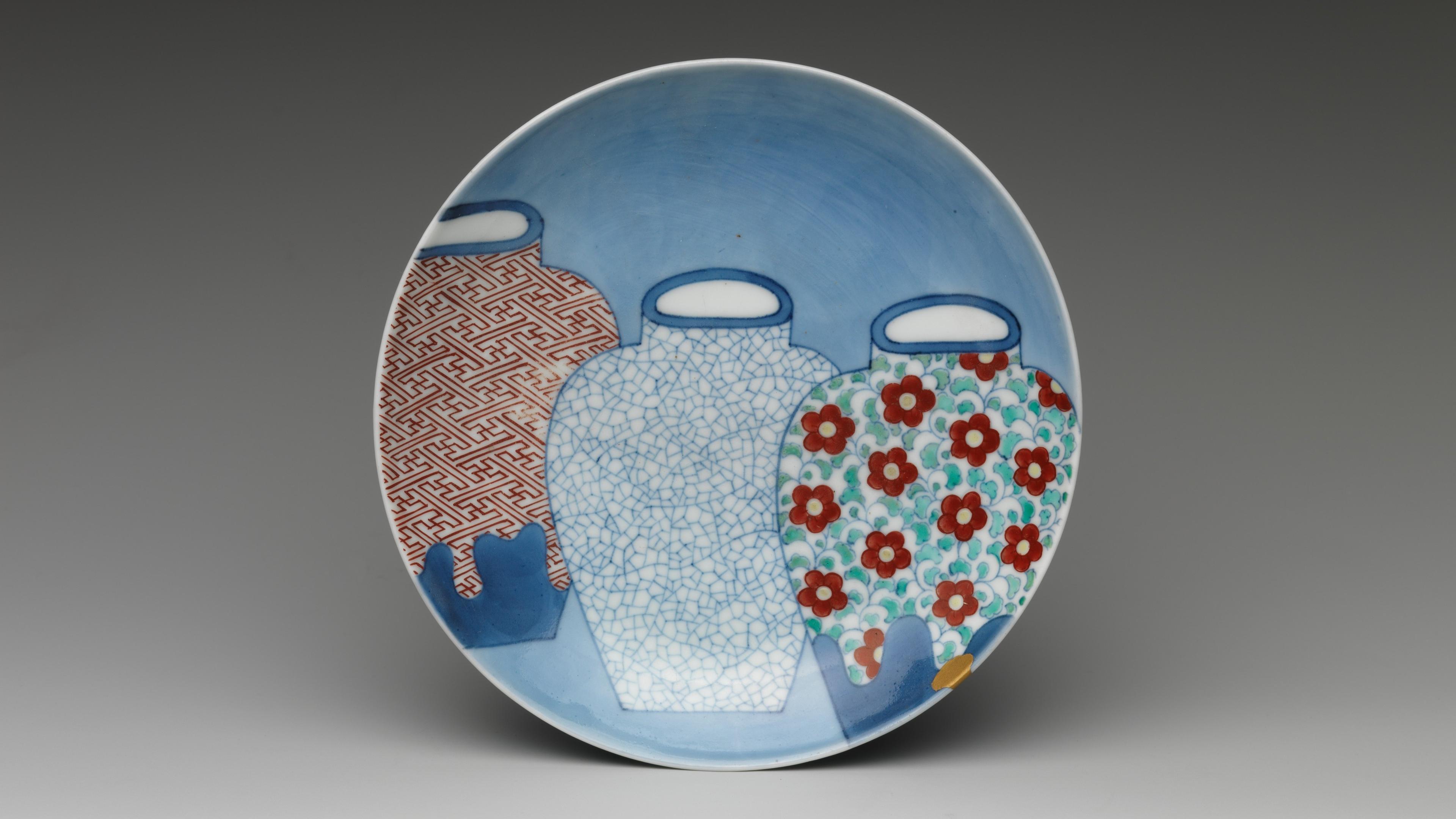
A selection of works will represent the abstract qualities of medieval natural ash glazing. Themes of the exhibition include monochrome wares such as elegant early Japanese celadons; ceramics repaired with kintsugi (gold joinery); whimsical blue-and-white porcelains adorned with flowers and insects; and exquisite examples of Nabeshima ware, once produced exclusively for the Tokugawa shogunate and its circle. A focused section on tea culture illuminates the evolution of Japanese style tea (wabicha) and the tea cuisine, anchored by masterworks such as a striking early-17th-century Oribe vessel, a recent acquisition, reflecting the refined sensibilities of tea master Furuta Oribe (1544–1615).
Several galleries will celebrate the pleasure of food presentation, featuring vessels for comfort food used by commoners traveling along the historic Tōkaidō highway connecting Kyoto and Edo. Luxurious porcelain and lacquerware, designed for festive banquets among the elite, will be on view. Enhancing these narratives, a selection of rare garments—including richly embroidered wedding robes—and other decorative arts offer further insight into the broader visual culture in which these ceramic traditions flourished.
A Landmark Collection at 50
Much of the selection is drawn from the Harry G. C. Packard Collection, presented in honor of the 50th anniversary of the landmark acquisition. Comprising more than 400 artworks—including Buddhist sculptures, paintings from the medieval period through the 19th century, and a wide range of pottery—the Packard Collection became the foundation of the Museum’s renowned Japanese art holdings. Many of the ceramics featured in this exhibition, seldom displayed until now, underscore the ingenuity, vitality, and enduring legacy of Japanese ceramic artistry.
Credits and Related Content
The Infinite Artistry of Japanese Ceramics is curated by Monika Bincsik, Diane and Arthur Abbey Curator for Japanese Decorative Arts at The Met.
The exhibition is featured on The Met website, as well as on social media.
###
January 13, 2026
Image: Dish with Three Jars. Edo period (1615–1868), 1680–90s. Porcelain with cobalt under and polychrome enamels over a transparent glaze (Hizen ware, Nabeshima type), H. 1 5/8 in. (4.1 cm); Diam. 6 in. (15.2 cm). The Metropolitan Museum of Art, New York, The Harry G. C. Packard Collection of Asian Art, Gift of Harry G. C. Packard, and Purchase, Fletcher, Rogers, Harris Brisbane Dick, and Louis V. Bell Funds, Joseph Pulitzer Bequest, and The Annenberg Fund Inc. Gift, 1975 (1975.268.563)