後陣
Artwork Details
- 題: 後陣
- 月日: 1200–1210年頃
- 地理: ピカルディー、ソアソンのサン・ジェルベ・エ・サン・プロテ聖堂
- 文化: フランス
- 手法: 鋳鉄ガラス、ガラス塗料
- 寸法: 54.6 x 41.3 cm
- 提供者: クロイスターズ・コレクション、グレンケアン基金寄贈、1980年
- 受け入れ番号: L.58.86
- Curatorial Department: Medieval Art and The Cloisters
Audio
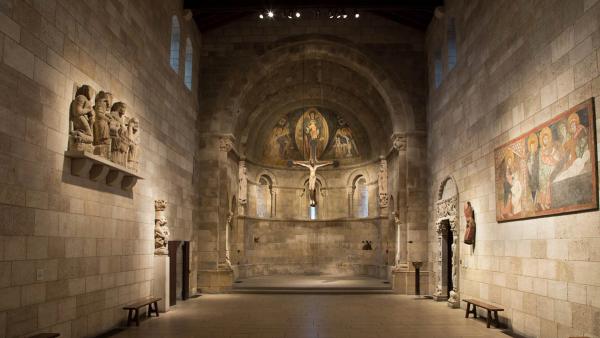
Fuentidueña Chapel
Gallery 2
NARRATOR: Walk the length of this expansive room, and you get a sense of the space and acoustics of a twelfth-century church in the Romanesque style. We're fortunate to have a real example of Romanesque construction: the apse at the far end of the room. An apse is a rounded projection usually at the east end of a church, where the altar stands. This apse was part of a church built at a place called Fuentidueña, on a high ridge in a mountainous part of Spain. Over fifty years ago, the government of Spain agreed to lend it to the Cloisters permanently, and it was carefully dismantled stone by stone and reconstructed here.
The Fuentidueña apse displays several distinctive features of Romanesque architecture. Its basic element is the rounded arch, which defines the structure overall and repeats in the three small windows. But the clean geometric forms are also embellished with delicate details. Look at the ornament around the window openings: the small columns with their sculpted capitals, and the textured molding. These sculptural effects embellish the stone blocks of the walls; notice how neatly cut they are, and how perfectly they fit together.
The fresco painting in the half-dome of the apse and the magnificent crucifix, made of painted wood, come from other sites in Spain. Though they are not original to this structure, they're also fine examples of Romanesque art.
Listen to more about this artwork
Content Notice
The Metropolitan Museum of Art presents over 5,000 years of art from around the world, and our online collection reflects ongoing work conducted over the course of our more than 150-year history. You may encounter objects or images that may be inappropriate for some viewers or information that may be outdated.