音声ガイド
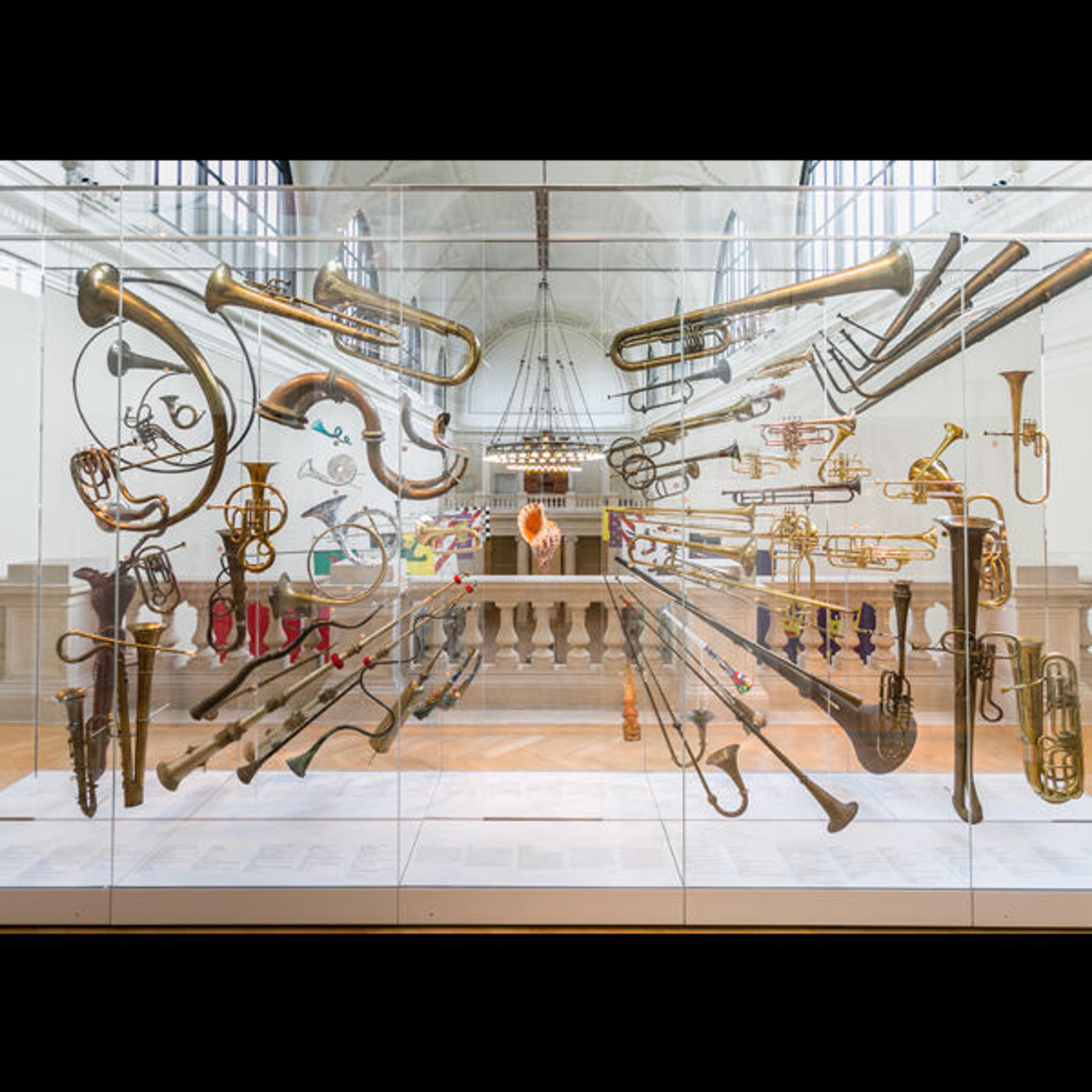
Musical Instruments: Fanfare
9400. Gallery Overview: Fanfare
Welcome to Fanfare!
[MUSICAL FLOURISH]
I’m Bradley Strauchen-Scherer and I’m one of the curators in the Musical Instruments Department.
As a brass player, Fanfare conjures up two distinct elements in my mind. The first is the sound, the piece of music: a flourish that announces someone or something important.
[MUSICAL FLOURISH]
The other element, is how they appear visually. When you think of a group of trumpet players who are there to play at an important event, it's this row upon row of musicians with their instruments.
Fanfare is organized by the universal ways in which we use brass instruments across cultures and around the world. Signaling, ritual, status, and of course making all different types of music. If you look at the center of the display, the conch has a place of honor because with its end broken off, the conch represents what may well have been the first brass instrument that was ever discovered.
[SOUND OF CONCH]
The term ‘brass instrument’ refers to how the instrument actually produces sound, and not what it's made out of. They produce sound when we buzz our lips into the mouthpiece of the instrument.
Fanfare incorporates seventy five brass instruments from around the world and throughout time.
You see animal horns, trumpets made out of pottery, horns of glass and ceramic, and even a plastic vuvuzela made for the World Cup in 2014.
[SOUND OF VUVSELA]
When you look at some of the extraordinary shapes of instruments in this showcase, things that have bells that stick up in the air, or bodies that wrap around the player, or even bells that are in the shape of dragon heads, it's very clear that appearance was perhaps almost as important to the makers and the players as what they sounded like.
I’m so excited that we have recordings of a number of the instruments on display. So now’s your opportunity to have a listen to what some of these fantastic instruments sound like.