“I am writing you at the instance of Mrs. Carpenter,” Man Ray typed to Alice Roullier, chair of the Exhibitions Committee at The Arts Club of Chicago, in June 1928 to follow up on the possibility of his first solo exhibition in the Midwest.[1] Rue Winterbotham Carpenter, president of The Arts Club and emissary to the transatlantic cultural elite, had presumably seen his photographs in Paris at the Premier salon indépendant de la photographie (May 24–June 7, 1928).[2] This salon, which historians have since credited as a milestone in the recognition of photographic modernism, included Man Ray alongside innovators such as Berenice Abbott, Eugène Atget, André Kertész, and Germaine Krull. Man Ray was the sole participant from the exhibition to receive an invitation from The Arts Club. In fact, Photographic Compositions by Man Ray (February 5–19, 1929; fig. 1) was the only exhibition of photographs at The Arts Club from its founding in 1916 until the 1970s. Man Ray’s simple, yet intentional, concept for the exhibition—to feature Rayographs alongside only two other works, an abstract painting and a chess set—provides insight into his photographic experiments and artistic ambitions overall in the late 1920s, a pivotal moment in his career.
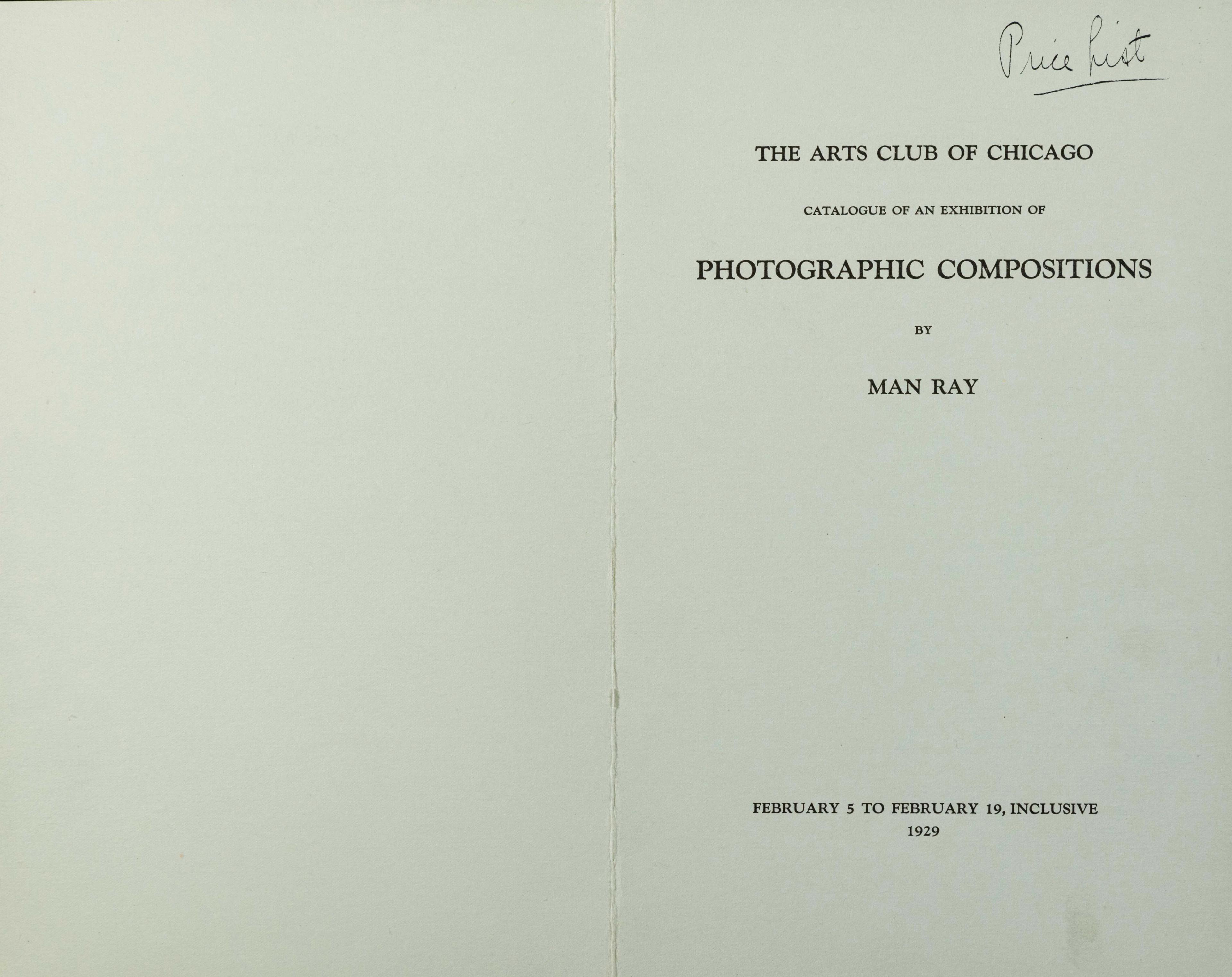
Fig. 1. Title page of Photographic Compositions by Man Ray (The Arts Club of Chicago, 1929)
Although there is no record of Man Ray’s introduction to Carpenter, the two had several friends in common.[3] Chief among them was Marcel Duchamp, who curated sculptor Constantin Brâncuși’s midcareer retrospective at The Arts Club in 1927.[4] In fact, this was not Man Ray’s first showing at The Arts Club; a year before, works such as Departure of Summer (1914, The Art Institute of Chicago) and Mime (1916, The Metropolitan Museum of Art) were included in the group exhibition Modern American Paintings (February 10–24, 1928), thus making way for his further exposure in Chicago.[5]
In the planning of Photographic Compositions, Man Ray conveyed a few specific requests regarding the checklist and framing of works on view. From his studio in Paris, he shipped thirty small-scale and four larger rayographs. He also directed his sister Elsie Siegler to send an additional package of about thirty more from the East Coast, writing that he would select from these. He urged The Arts Club to “put in as many prints as possible,”[6] though according to handwritten annotations the final say was reserved for Roullier.[7] Man Ray specified white mats for the photographs, with a wider margin at the bottom than at the top and sides. At the Paris salon, five of the cameraless images appeared alongside other photographs: a still life and several portraits. For the Chicago selection, by contrast, he included only rayographs.[8]
In an internal note, Carpenter described these works as “kind of photographs but really a new process” (fig. 2).[9] This brief parenthetical explanation suggests that the rayographs, although reproduced in Vogue and elsewhere throughout the 1920s, were previously unknown to her and that she found them to challenge categorization. Ironically, the moment of her discovery happened to coincide with Man Ray’s move away from the rayograph; the Arts Club exhibition, then, might have served as an opportunity for the artist to signal the artistic and intellectual pathways toward which he aspired.
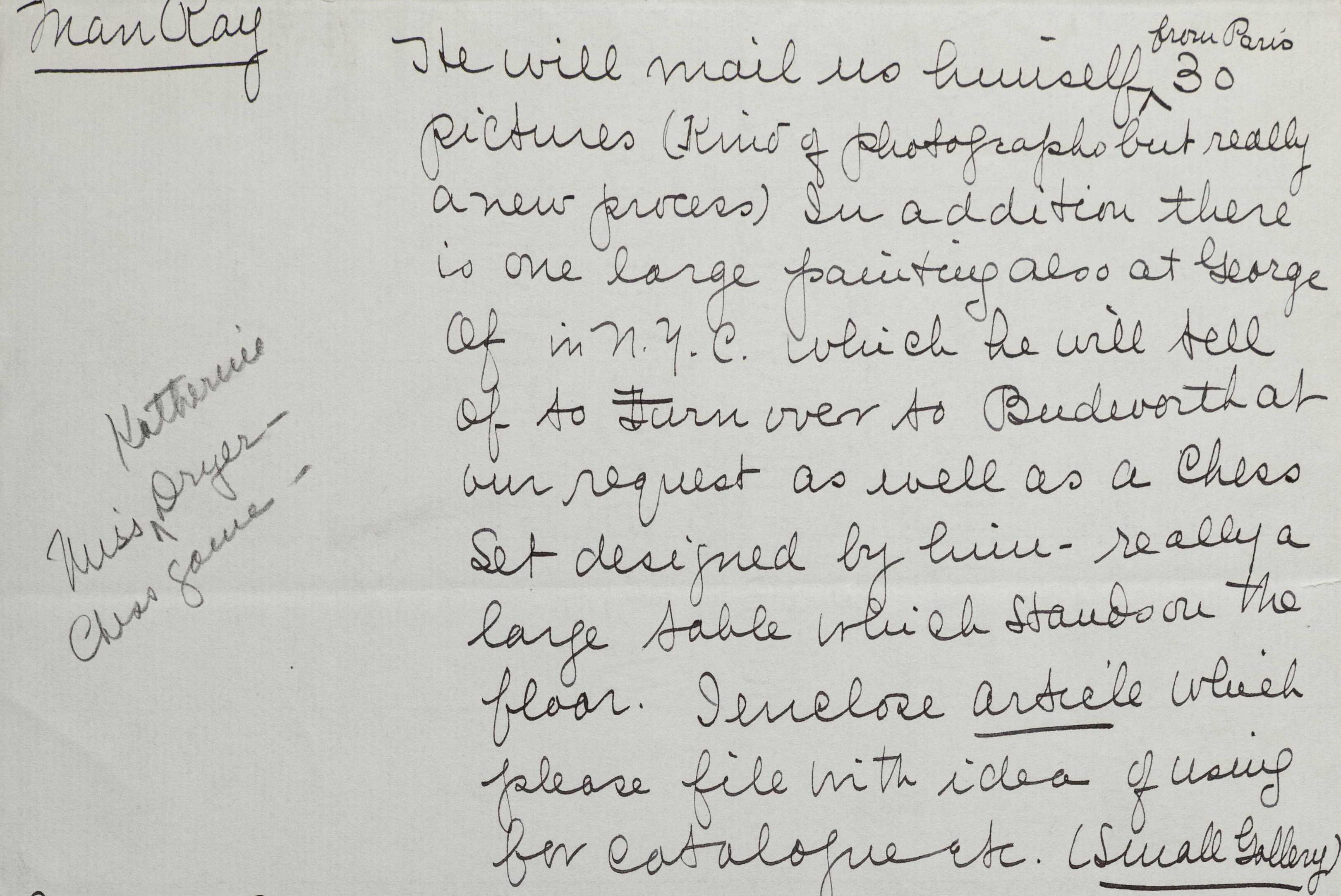
Fig. 2. Unsigned and undated note by Rue Carpenter about the forthcoming Man Ray exhibition, ca. 1928. Arts Club Records, The Newberry Library, Chicago
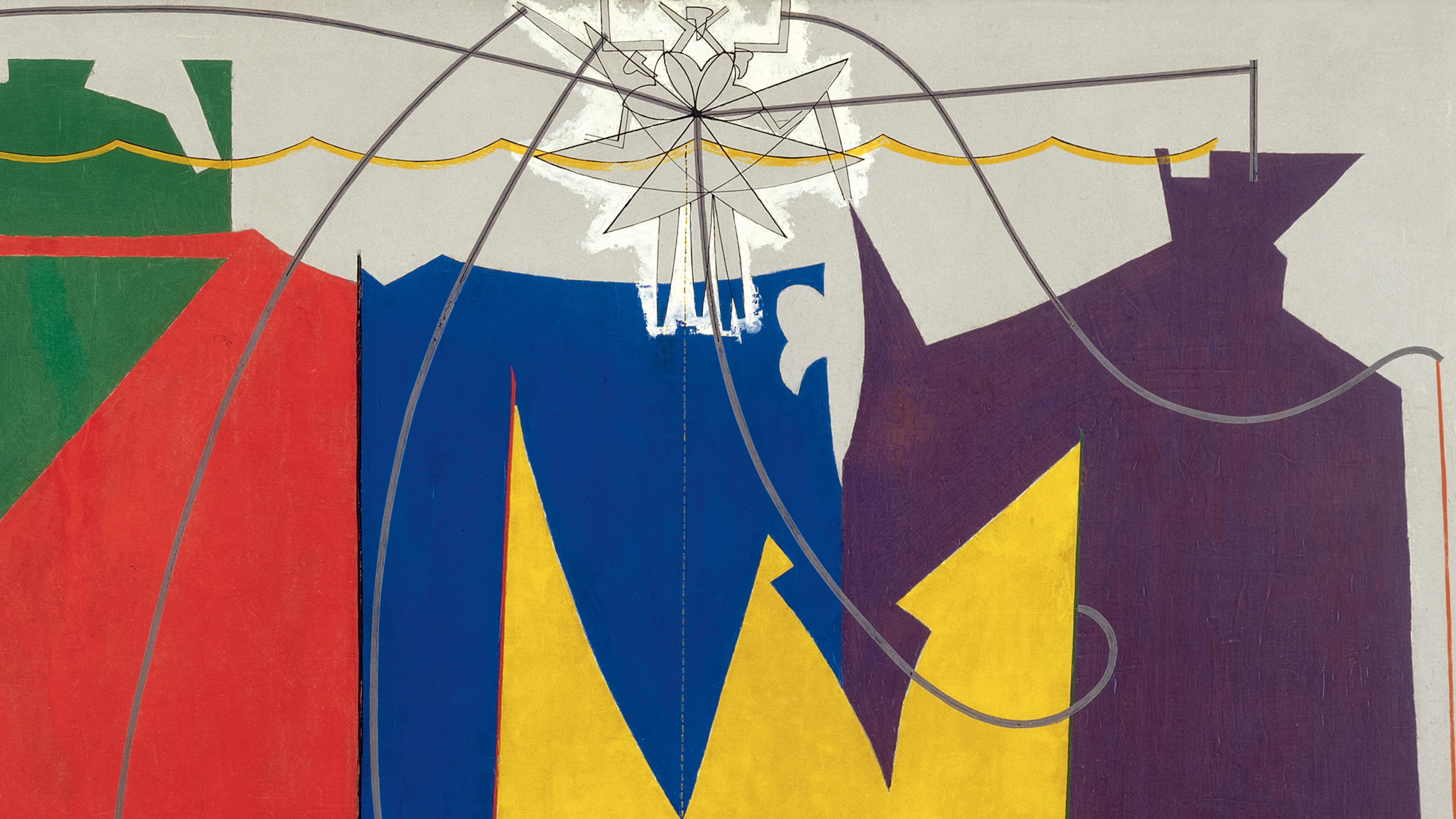
This direction can be surmised by Man Ray’s further additions to the exhibition checklist, which point toward the interplay between intellect, corporeality, and chance in his oeuvre. The first was a “large painting,” which he instructed be retrieved from Katharine Dreier, founder of the Société Anonyme, who had stored it since a 1921 exhibition at the Worcester Art Museum.[10] An installation view from that exhibition (fig. 3) confirms that the painting in question is the one now known as The Rope Dancer Accompanies Herself with Her Shadows (1916; fig. 4). Though Man Ray never named the work in correspondence with The Arts Club, to Dreier he called it: “Dans sa cervelle la danseuse danse” (In his/her mind, the dancer dances).[11] This phrase, which quotes an erotic poem by Man Ray’s first wife Adon Lacroix, casts the painting as both corporeal and conceptual. Even earlier, in 1917, he used a more mystical title, Theater of the Soul, for the same work.[12] In the catalogue of The Arts Club exhibition, such poetry was replaced by a plain descriptor: Painting “Abstraction.” This generic label may be a deliberate pivot on Man Ray's part from the work’s prior interpretive titles. He would later seal the meaning of The Rope Dancer in his 1963 autobiography through anecdotes about a vaudeville performance and the chance operations of paper cutting.[13] But in 1929, it seems, the painting’s significance was still in flux and, in this case, Man Ray wanted it to stand in for an overarching category of abstraction.
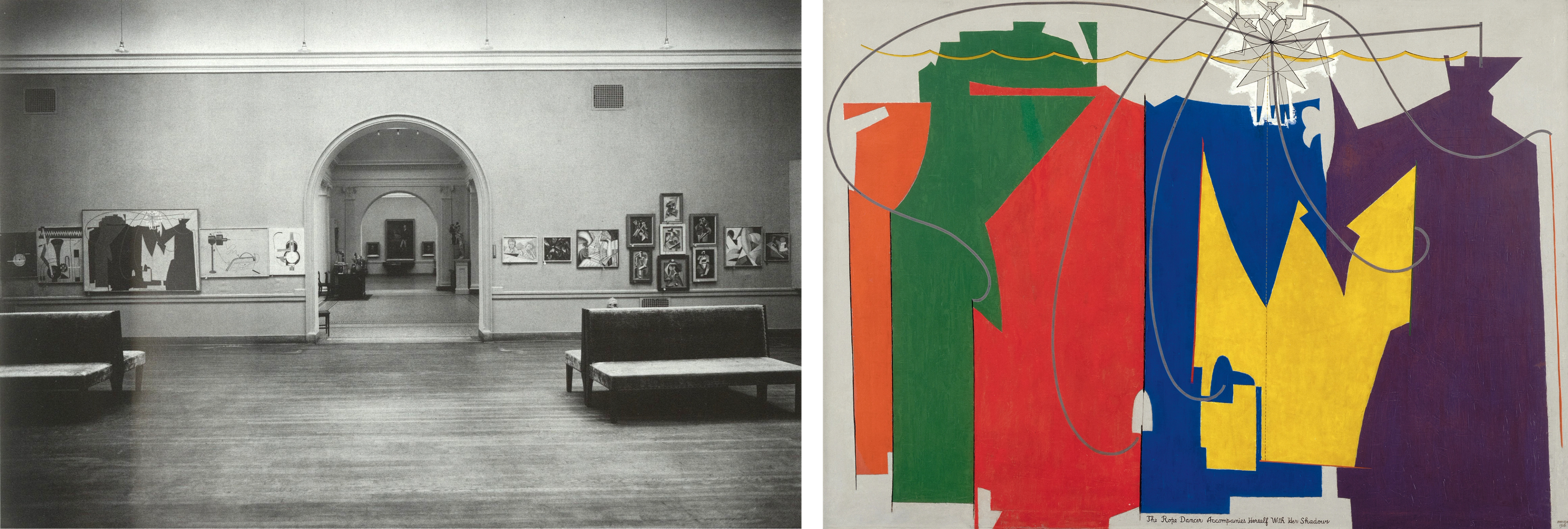
Fig. 3. Installation view of Paintings by Members of the Société Anonyme, Worcester Art Museum (November 3–December 5, 1921).
Fig. 4. Man Ray, The Rope Dancer Accompanies Herself with Her Shadows, 1916. Oil on canvas, 52 x 73 3/8 in. (132.1 x 186.4 cm). The Museum of Modern Art, New York, Gift of G. David Thompson 1954 (33.1954). © Man Ray Trust / 2026 Artists Rights Society (ARS), New York
In addition to the painting and rayographs, the only other work included in the Chicago exhibition was a chess set of Man Ray’s design. He and Roullier discussed its inclusion when they met in 1928. “We are getting in touch today with Miss Dreier about the painting,” the Arts Club secretary informed Man Ray, adding, “we are also asking about the Chess Game which you promised to Miss Roullier in Paris but which you did not mention in your letter.” After some searching, the set was located, albeit without a table that had previously accompanied it.
No images remain of the installation at The Arts Club’s former home in Chicago’s Wrigley Building, nor do we know exactly which rayographs were shown. We can imagine the striking contrast between the bold colors of The Rope Dancer and the subtle black-and-white tones of the photographs and chess set amid the fabric-clad walls of the gallery (fig. 5). At the exhibition’s close, Roullier reported: “The exhibition looked very well indeed in our galleries with the superb chess set in the middle of the room, your painting on one wall and your prints on the other walls.”[14] The central presentation of the chess set suggests its crucial role in establishing an argument for the exhibition. Associated with strategy, in opposition to the chance-driven making of both the painting and rayographs, the chess set could be seen as a surrogate for the artist’s will.
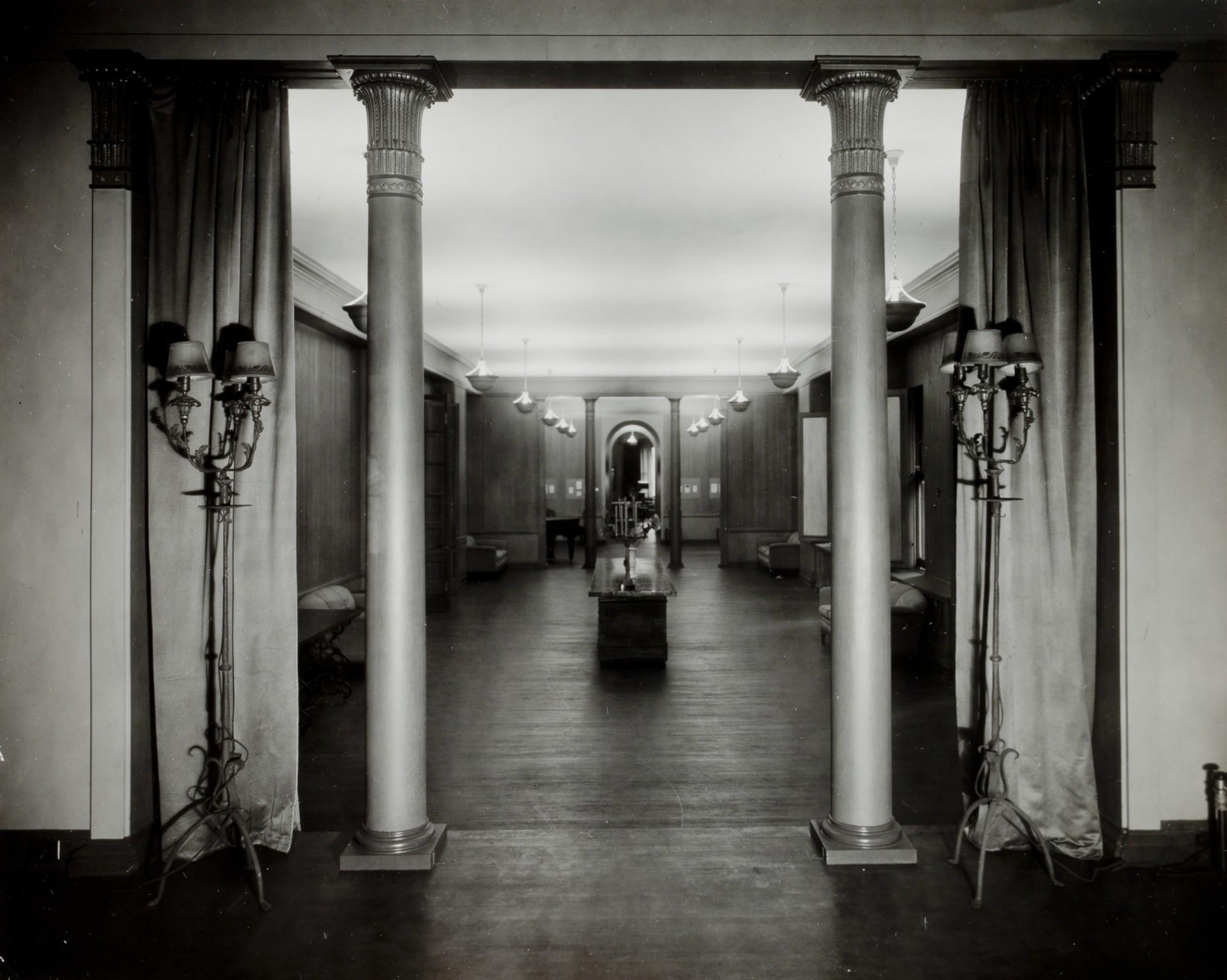
Fig. 5. View of a gallery at The Arts Club of Chicago in the Wrigley Building, 1924. Arts Club Records, Series 10, The Newberry Library, Chicago
The texts for the catalogue provide further evidence of the possibilities of strategy and chance open to Man Ray at this time. One was excerpted from a 1926 article in Paris-Soir by poet Robert Desnos that Man Ray translated and sent to Roullier for inclusion in the catalogue, and another came from a 1924 New York Times article announcing his 1924 exhibition at The Little Review in New York.[15] The latter, proposed by Carpenter, outlines Man Ray’s technique for making rayographs, explaining his use of red and white incandescent lights and variations in timing and exposure. Desnos’s words range more broadly, taking on the topic of photography’s worthiness as art and positioning Man Ray as its “champion,” while noting his engagement with Duchamp via chess. While Carpenter explained the “new process” of rayographs to the Arts Club audience, Man Ray evidently wished to stake a claim for himself as an artist by reprinting the Desnos excerpt.
Earlier, in 1921, Tristan Tzara wrote of the radicality of Man Ray’s cameraless photographs and undertook to interpret and promote them.[16] As Tzara emphasized, these images generate intrigue through the organized action of light that either is blocked by or penetrates an arrangement of objects and, sometimes, body parts. Yet, as Susan Laxton has argued, the rayographs remain utterly concrete in their iteration of an indexical relation to their source objects.[17] Doing away with the camera, rayographs not only insist on proximity but also rely on accident since the light cannot be fully controlled. Tzara praised the play of light and shadow in the photographic operation for this chance aspect of the rayograph.
Given the primary role of cast shadows in the rayographic process, it seems fitting that The Rope Dancer Accompanies Herself with Her Shadows would become the ultimate title for the regularly renamed painting that Man Ray directed for inclusion at The Arts Club. Nevertheless, shadow was not the only dimension shared by the painting and the surrounding works. The abstraction employed in The Rope Dancer depends crucially on a suggestion of motion in space. The painting’s shapes project centrifugally from a spinning figure at its upper center. Threads of rope articulate the large, irregular fields of flat color, which overlap as if in a rotation initiated by the dancer above. This spiraling structure reappears throughout Man Ray’s oeuvre in the 1920s, from the collages and pochoir album Revolving Doors (1916–17 and 1926, respectively) to the film Emak Bakia (1926), and underscores a conception of aesthetic attraction as a mesmerizing and sensual play of pull and dispersal.
The chess set, against the animated forms of the prints and painting on view, grounded the exhibition in its assertion of the artist’s volition. While the spiral is physically charged and corporealized, the flat structure of the grid has long been read as an iteration of the autonomy of modern art through its self-referentiality and lack of mimesis.[18] This tension between material dimensionality and intellectualized flatness mirrors Man Ray’s combination of chance operations and strategy in the rayographs, which serves to undermine the perception of photography as a mechanical enterprise. Showing rayographs with The Rope Dancer and a chess set aligned his innovative photographic medium with the aesthetic appeal of the gelatin silver print and abstract painting, while avoiding what his chess opponent Duchamp had dubbed the “retinal,” or anti-intellectual, in art. The chess set affirmed the importance of skill, whereas the rayographs were untamed. Prominently placed in the middle of the room, the chess set acted as a means of strategic navigation—a maestro conducting the dynamism in its surround.
Notes
Letter from Man Ray to Alice Roullier, June 2, 1928. The Arts Club Records, Modern Manuscripts, The Newberry Library, Chicago (hereafter ACR).
This exhibition, which took place at the Théâtre de la Comédie des Champs-Élysées, is known as the Salon de l’Escalier because the works were hung in the stairway.
For example, Man Ray specifically mentions John Storrs in his June 2 letter to Rouiller, see note 1.
An Exhibition of Sculpture by Brâncuși, The Arts Club of Chicago (January 4–18, 1927).
Explaining the selection of works, gallerist Charles Daniel, who organized the exhibition, iterated The Arts Club’s mission to share new work with its Chicago audience: “This is a lively, vital group of pictures. The artists have outstanding reputations in the East and I hope Chicago will find them enjoyable.” Letter from Charles Daniel to Alice Roullier, January 27, 1928, ACR.
Letter from Man Ray to Alice Roullier, December 4, 1928. ACR.
“We have 34 prints already. When Mr. Miller lays them out Miss R. will decide if we need.” Handwritten annotation by Isabel Jarvis on letter from Man Ray to Alice Roullier, October 28, 1928, ACR.
The request of works to be matted (and therefore likely included in the exhibition) lists only thirty smaller works and four larger ones, presumably the original selection sent from Paris since the document is dated before Man Ray’s October 28 letter arrived. Letter from Isabel Jarvis to Newcomb-Macklin Company, October 23, 1928, ACR.
Rue Carpenter, “Man Ray,” handwritten note, undated. The note is not signed, but the handwriting matches that of a letter from Rue Carpenter to Alice Roullier reproduced in 70th Anniversary Catalogue of The Arts Club of Chicago, unpag.
Raymond Wyer and Christian Brinton, Exhibition of Paintings by Members of the Société Anonyme (Worcester Art Museum, 1921), https://archive.org/details/exhibitionofpain00wyer/.
Letter from Man Ray to Katharine Dreier, September 24, 1928, Société Anonyme Papers, Beinecke Library, Yale University. With thanks to Stephen C. Pinson for directing me to this letter and to Man Ray’s inventory card for the work held by the Centre Pompidou, Paris, https://www.centrepompidou.fr/en/ressources/oeuvre/ckXXR6X/.
This was the famous exhibition where Duchamp attempted to show the scandalous Fountain. Man Ray evidently withdrew his painting as a consequence of the controversy. See Catalogue of the First Annual Exhibition of the Society of Independent Artists (Society of Independent Artists, 1917), 53, https://archive.org/details/catalogueofannua1191unse/page/n53/mode/2up?q=soul/.
Man Ray, Self Portrait (Little, Brown, 1963), 66–67.
Letter from Alice Roullier to Man Ray, February 23, 1929, ACR.
Robert Desnos, “Man Ray,” Paris-Soir, March 23, 1926, 1; “New Photography Employs No Lens,” New York Times, January 6, 1924, 6. The Little Review exhibition opened on January 10 and closed on February 6, 1924. For more on this article and Man Ray’s process, see Stephanie D’Alessandro and Stephen C. Pinson, Man Ray: When Objects Dream (The Metropolitan Museum of Art, 2025).
Tzara may have suggested the term “rayograph.” For more, see D’Alessandro and Pinson, Man Ray.
Susan Laxton, “Flou: Rayographs and the Dada Automatic,” October 127 (Winter 2009): 25–48.
See, for example, Rosalind Krauss, “Grids,” October 9 (Summer 1979): 50–64.
