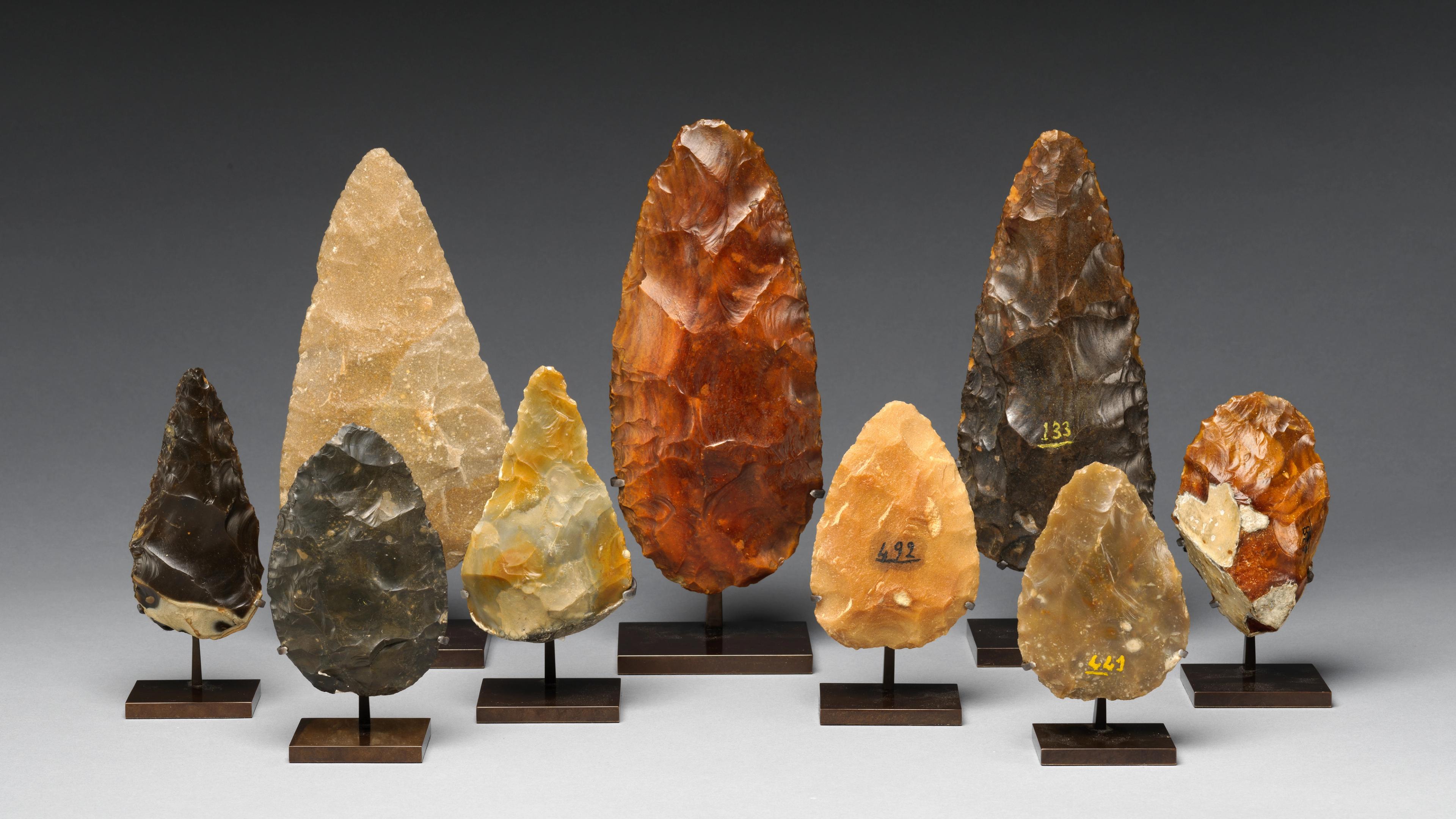
In a quiet corner of the Arms and Armor galleries at The Met, nine ancient stones sit in conversation with time. Carved between 700,000 and 200,000 BCE, these bifaces, discovered in Aisne, France, are among the oldest surviving artifacts made by human hands. To the casual eye, they may appear as little more than fascinating rocks; hard, heavy, inert. But a closer look reveals a profound story about the early human relationship with the environment, a story still shaping the world we inhabit today.
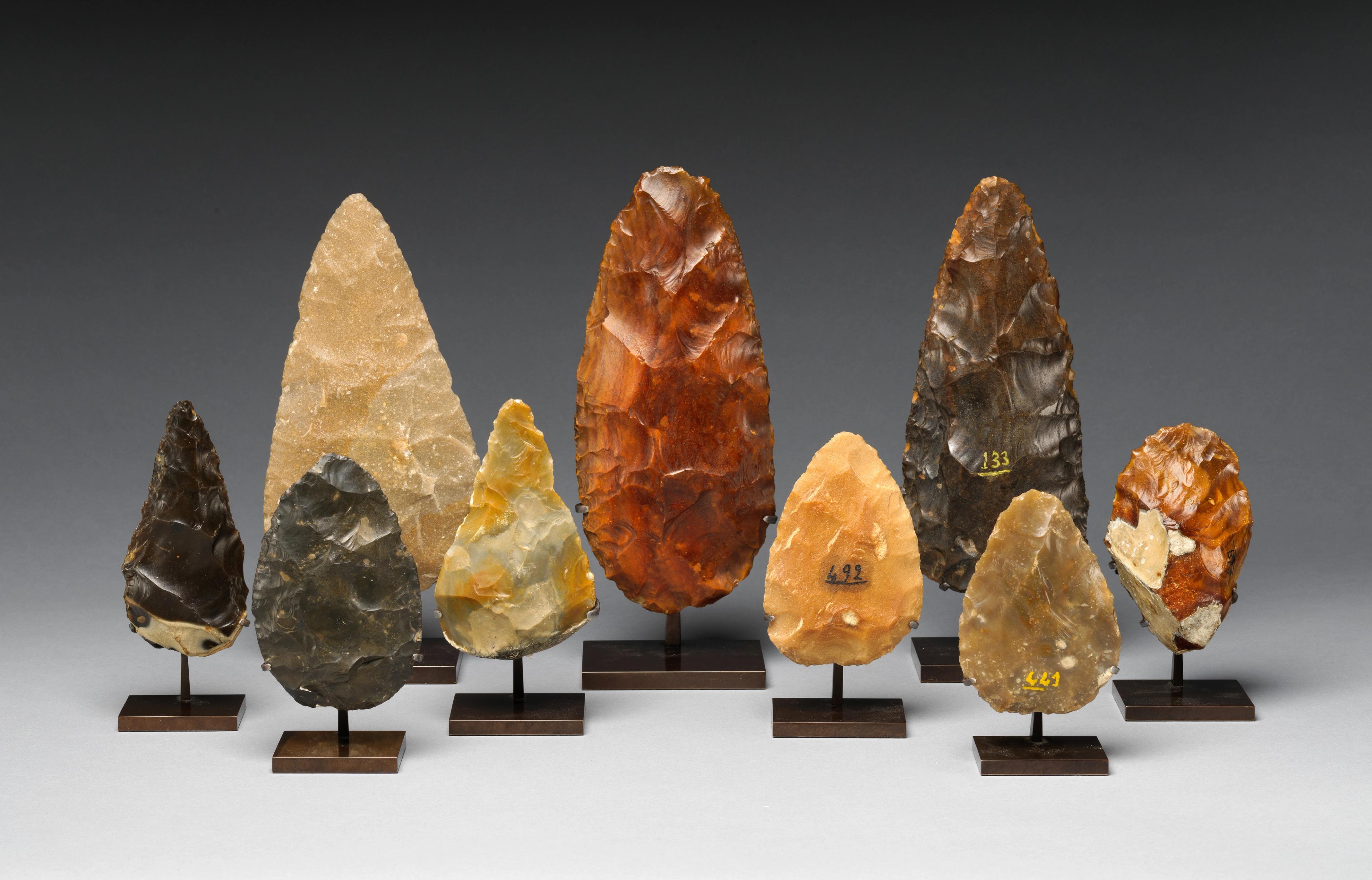
Nine Bifaces, 700,000–200,000 BCE. Acheulean. Flint, quartzite. The Metropolitan Museum of Art, New York, Purchase, Arthur Ochs Sulzberger and Friends of Arms and Armor Gifts, Arthur Ochs Sulzberger Bequest, and funds from various donors, 2018 (2018.51.1–.9)
Formally, the nine bifaces display a remarkable balance between raw functionality and artistry. Each stone has been meticulously shaped into a teardrop or almond form, the edges chipped carefully to create sharp cutting profiles. Their symmetry is striking. The early hominids who created these tools did not simply smash rocks together; they imposed order and intention on natural material, producing objects that are both useful and beautiful in their simplicity. Made of flint and other hard stones, the bifaces vary in size, suggesting diverse purposes: some perhaps for butchering animals, others for woodworking or digging. The repeated shaping on both sides, the hallmark of “biface” tools, required planning and foresight, hinting at the cognitive leap that distinguishes these artisans.
These ancient tools are not just markers of technological ingenuity. They are also a testament to how our extinct ancestors interacted with their environment in thoughtful ways. Rather than view nature as something to conquer or exploit, they were intimately bound with the natural world. Their survival depended on an acute sensitivity to the materials around them. The makers of these bifaces needed to understand the properties of different stones: which ones would fracture cleanly, which would blunt under pressure, which would hold an edge. They became geologists, engineers, and artists all at once, through necessity and instinct.
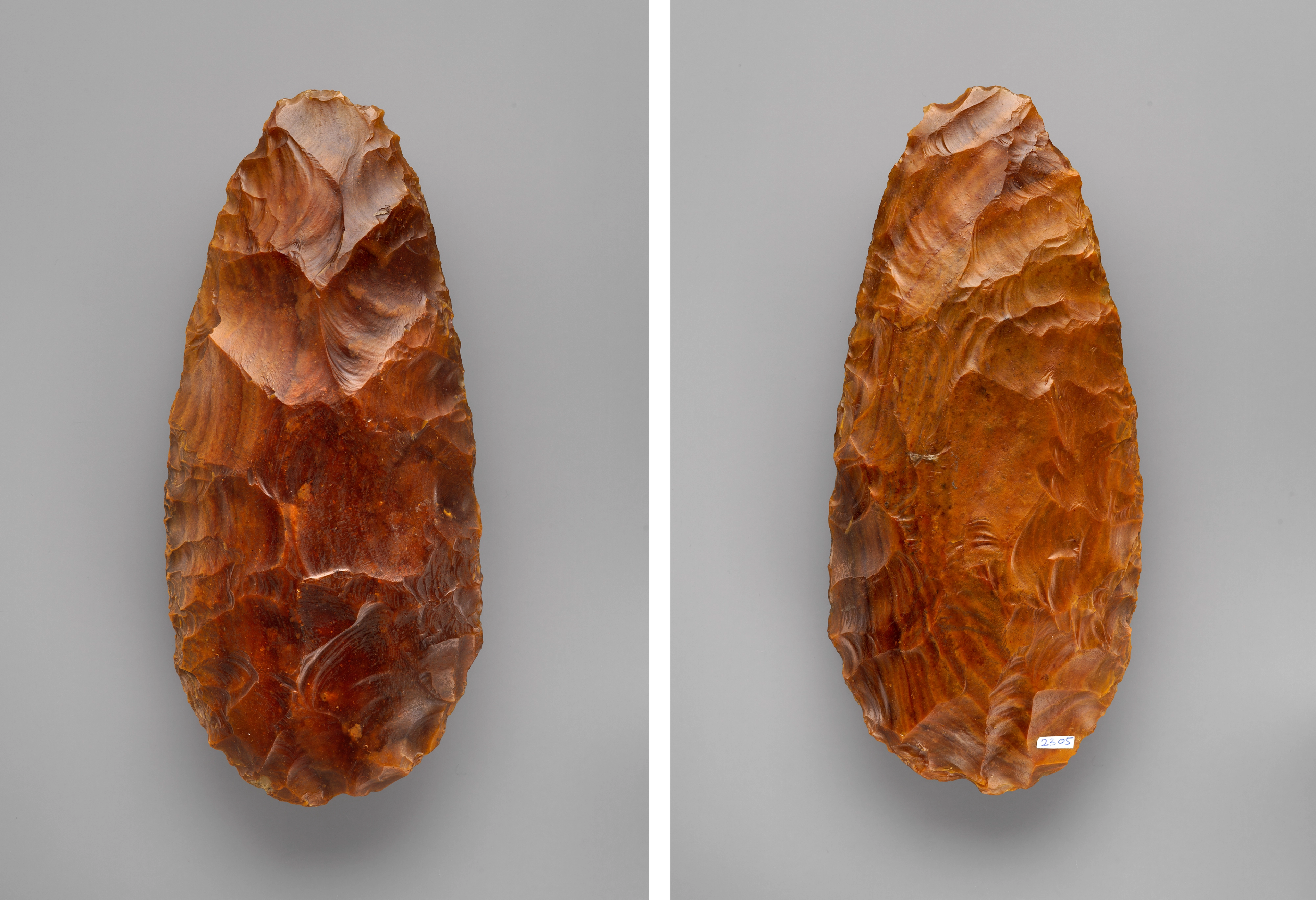
Biface, 700,000–200,000 BCE. Acheulean. Flint, 10 1/8 x 4 5/8 x 1 1/5 in. (26 x 11.7 x 4 cm). The Metropolitan Museum of Art, New York, Purchase, Arthur Ochs Sulzberger and Friends of Arms and Armor Gifts, Arthur Ochs Sulzberger Bequest, and funds from various donors, 2018 (2018.51.1)
Formally, the nine bifaces display a remarkable balance between raw functionality and artistry. Each stone has been meticulously shaped into a teardrop or almond form, the edges chipped carefully to create sharp cutting profiles. Their symmetry is striking. The early hominids who created these tools did not simply smash rocks together; they imposed order and intention on natural material, producing objects that are both useful and beautiful in their simplicity. Made of flint and other hard stones, the bifaces vary in size, suggesting diverse purposes: some perhaps for butchering animals, others for woodworking or digging. The repeated shaping on both sides, the hallmark of “biface” tools, required planning and foresight, hinting at the cognitive leap that distinguishes these artisans.
Today, standing before these ancient objects, one cannot help but reflect on how that relationship has changed. The slow, patient labor that produced each biface contrasts sharply with contemporary industry. In our modern age of disposable plastics and fast production, the idea of spending hours, perhaps even days, weeks, or months, fashioning a single tool from stone seems almost inconceivable. Yet it is this intimate, sustained engagement with the environment that allowed early humans not just survive but flourish.
There is also a poignant irony to consider. In mastering stone, early humans set themselves on a path of technological innovation that would eventually lead to the very alienation from nature that now threatens the planet. The bifaces are both a beginning and a warning. They remind us that every tool carries within it the seeds of both connection and disconnection, sustainability and exploitation. What began as a careful collaboration with the environment has evolved, over millennia, into a relationship marked more by dominance than by dialogue.
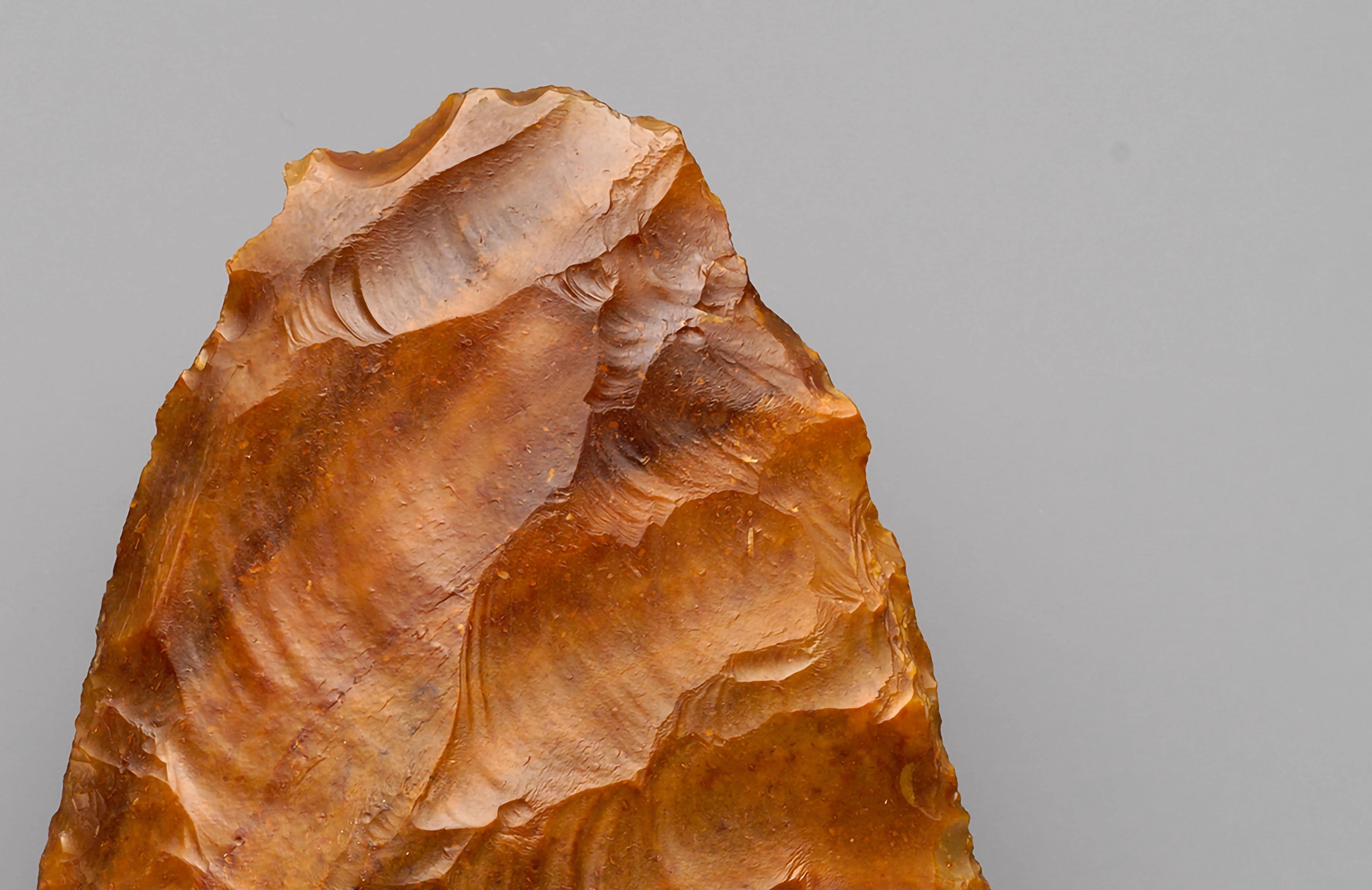
Visually, the bifaces possess a rugged, tactile beauty. Their surfaces shimmer with the subtle gleam of worked stone, their edges jagged yet purposeful. Tiny flake scars crisscross their bodies, evidence of the rhythmic, almost meditative labor that shaped them. Each object is a snapshot of a moment in time, preserving the gestures and decisions of a human ancestor long vanished. There is a deep humility in these forms: a recognition that survival required not the conquest of nature, but its careful, creative engagement. As we confront the environmental challenges of our own age, perhaps we have something to learn from the patient hands that shaped these stones so long ago.
This essay is adapted from Points of View: 100 Connections to Art, a book that brings together voices from across The Met to consider how art inspires us to connect to the world and to each other.


