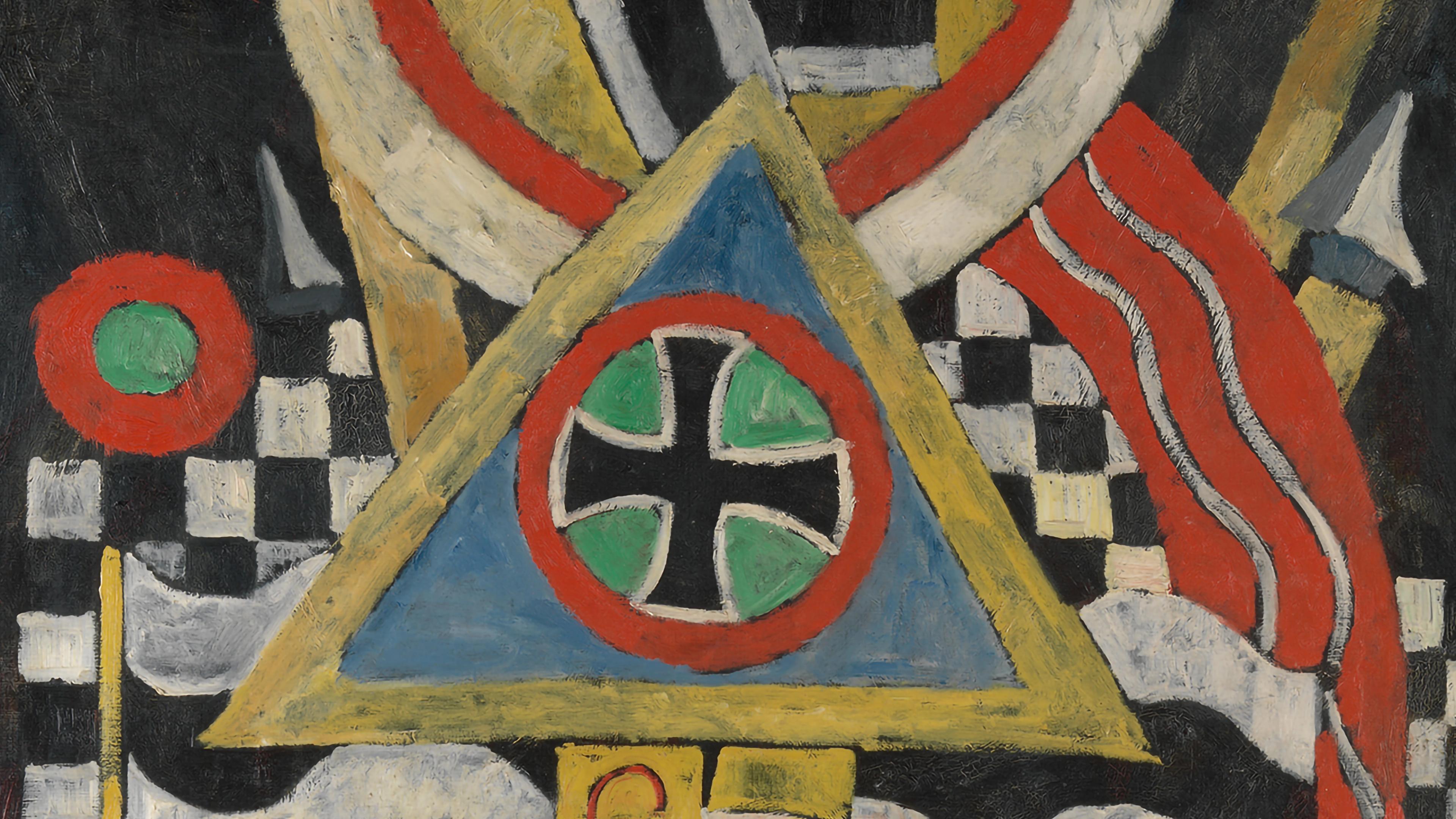
Portrait of a German Officer (1914) is an arresting painting: bold in palette, graphic in composition, a collage of military motifs woven across a canvas as imposing as the warrior it represents. For a picture that seems to wear its symbols on the surface like insignia, it has a history entangled with personal affairs that the artist alternately revealed and concealed.
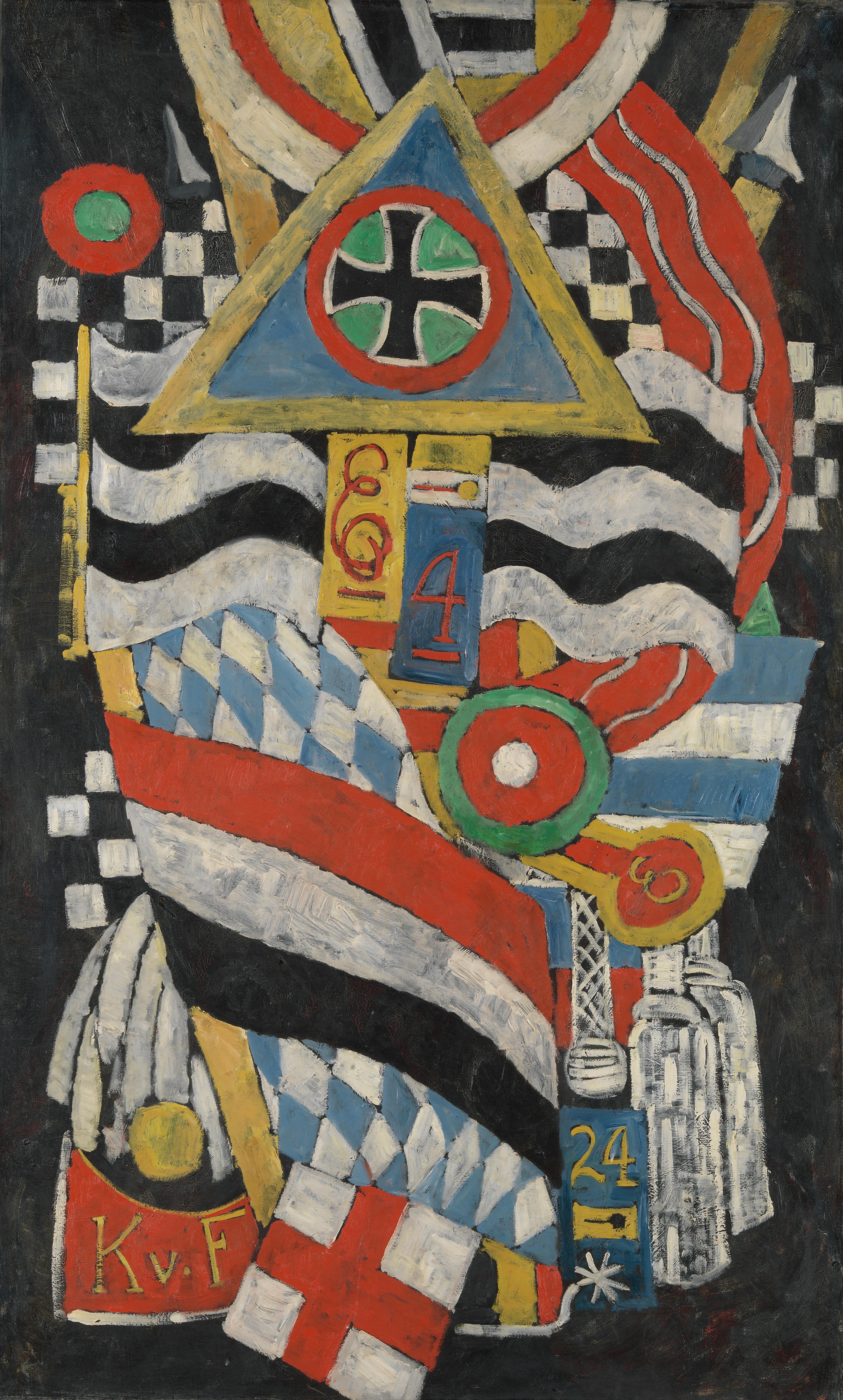
Marsden Hartley (American, 1877–1943). Portrait of a German Officer, 1914. Oil on canvas, 68 1/4 × 41 3/8 in. (173.4 × 105.1 cm). The Metropolitan Museum of Art, New York, Alfred Stieglitz Collection, 1949 (49.70.42)
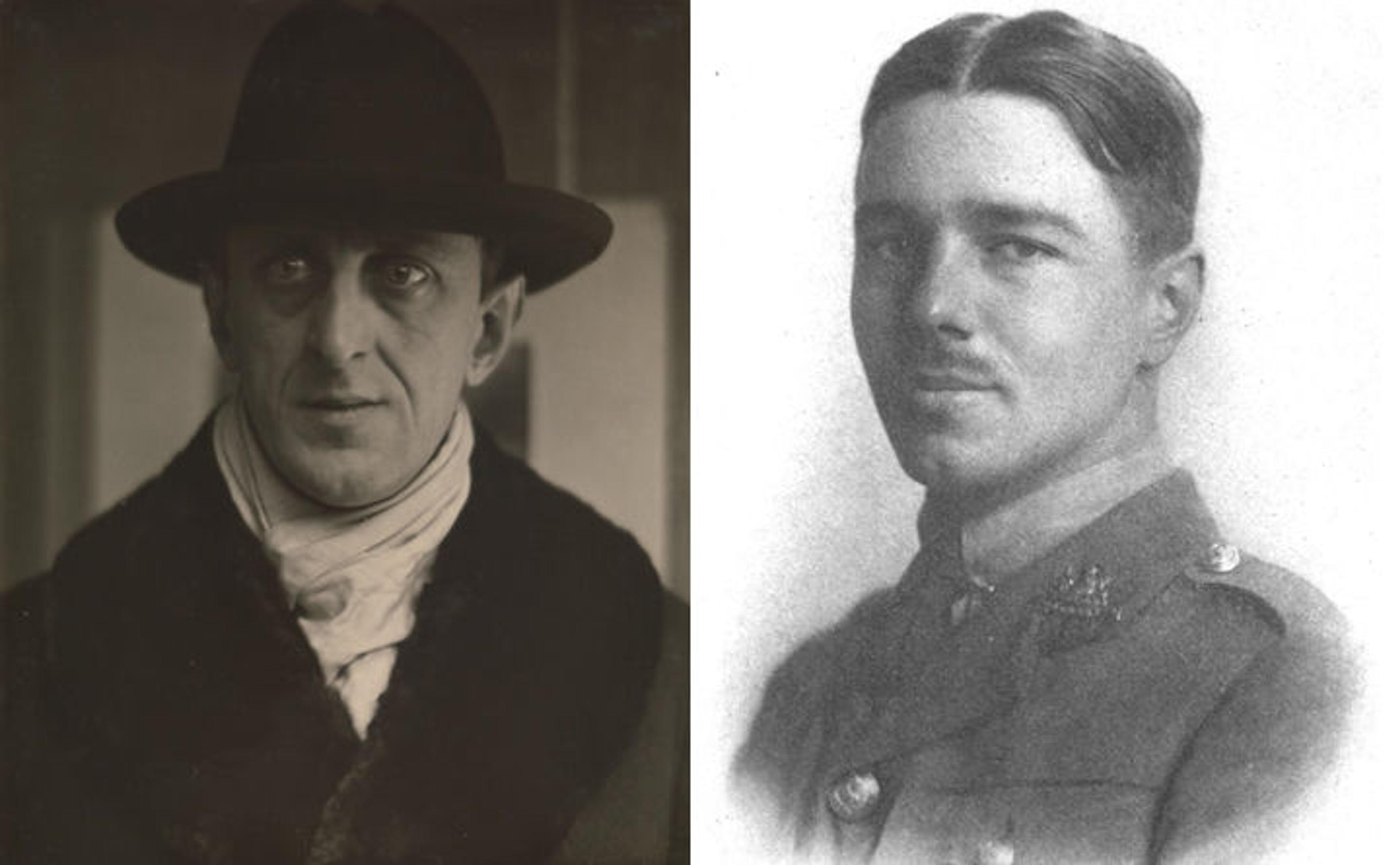
Marsden Hartley was working in Berlin at the outbreak of World War I, exhilarated by the throbbing energy of the city, a place so distant from his native Maine. He had gone to the German capital by way of Paris, on the heels of the strapping lieutenant Karl von Freyburg and his cousin, the sculptor Arnold Rönnebeck, whom he met in 1912 at one of Gertrude Stein’s salons. Although Paris was seen as the nerve center of the modern art world, Hartley described feeling a “new crescendo to [his] sensations” from the “pageantry of living” in Berlin, with its military parades and vibrant social life. The freedoms Hartley relished were likely facilitated by a relative tolerance toward homosexuality in the metropolis, where more than forty gay clubs operated at the time. His memoirs and letters to recipients including Stein and dealer Alfred Stieglitz are laced with admiration of the displays of masculinity, the “sexual immensity” of military spectacles, and the intensity of his friendships with other men. Now a widely accepted aspect of the literature on Hartley, his presumed homosexuality simmers beneath the surface in his Portrait of a German Officer.
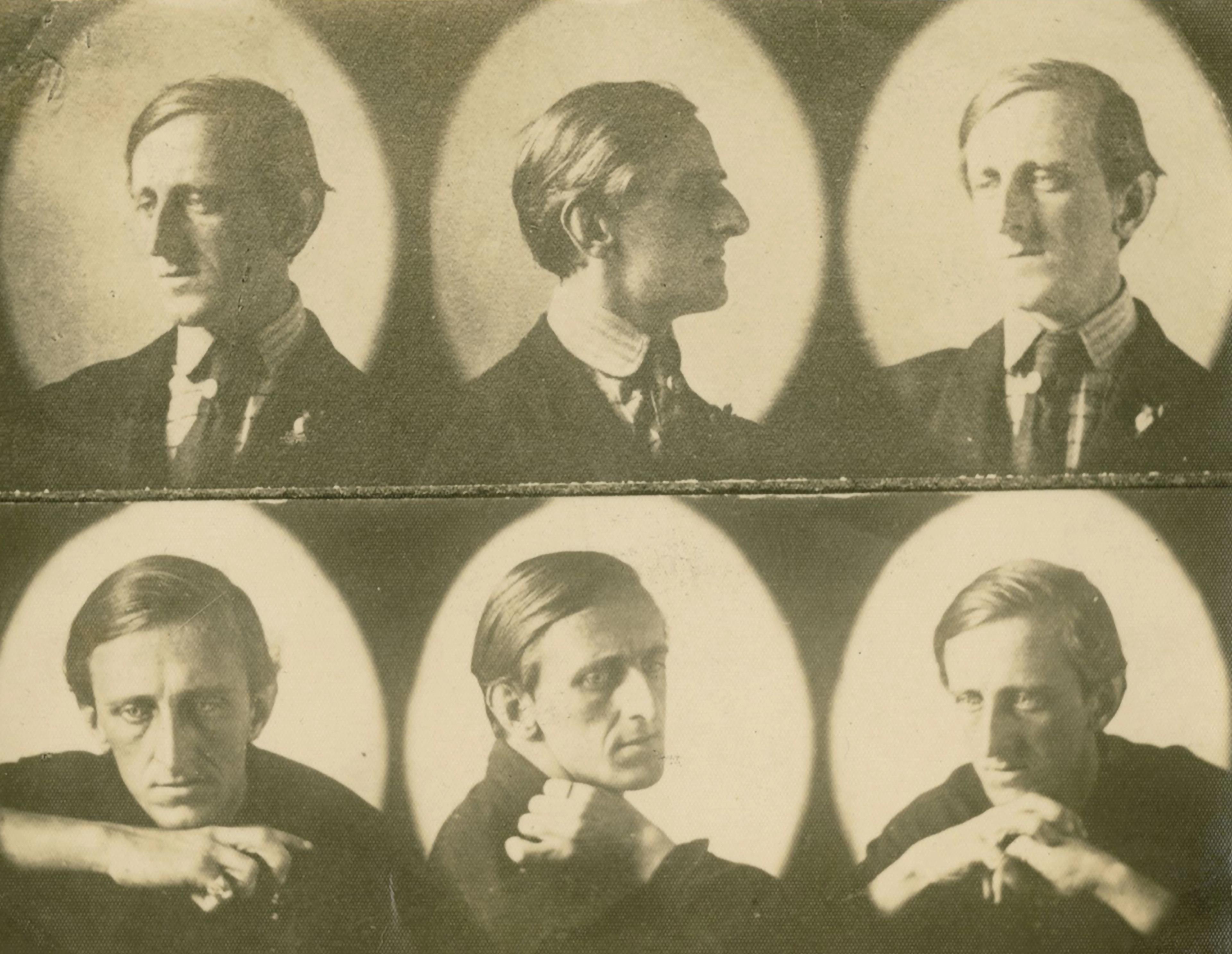
Unknown Photographer. Contact Sheet of Six Portraits (Marsden Hartley), 1909. Photograph, 4 x 5 1/8 inches. Bates College Museum of Art, Marsden Hartley Memorial Collection, Gift of Norma Berger, 1955.1.173.f
Having enjoyed the company of Rönnebeck and Freyburg in “a very beautiful triangle,” Hartley was agitated by their departure for the front and wracked with grief when Freyburg fell in battle on October 24, 1914, “at the age of 24 perfectly equipped for a life of joy and strength and beauty—most exceptionally handsome with that rarest accompaniment of soul and character which one finds so often lacking in just beauty,” as he wrote to Stieglitz. For weeks, Hartley was listless, and then, before the end of the year, he picked up his brush. He began a series of War Motifs, painted assemblages of military paraphernalia that combine the fragmented abstraction of Cubism, the dynamism of German Expressionism, and a reverence for ancient elegies.
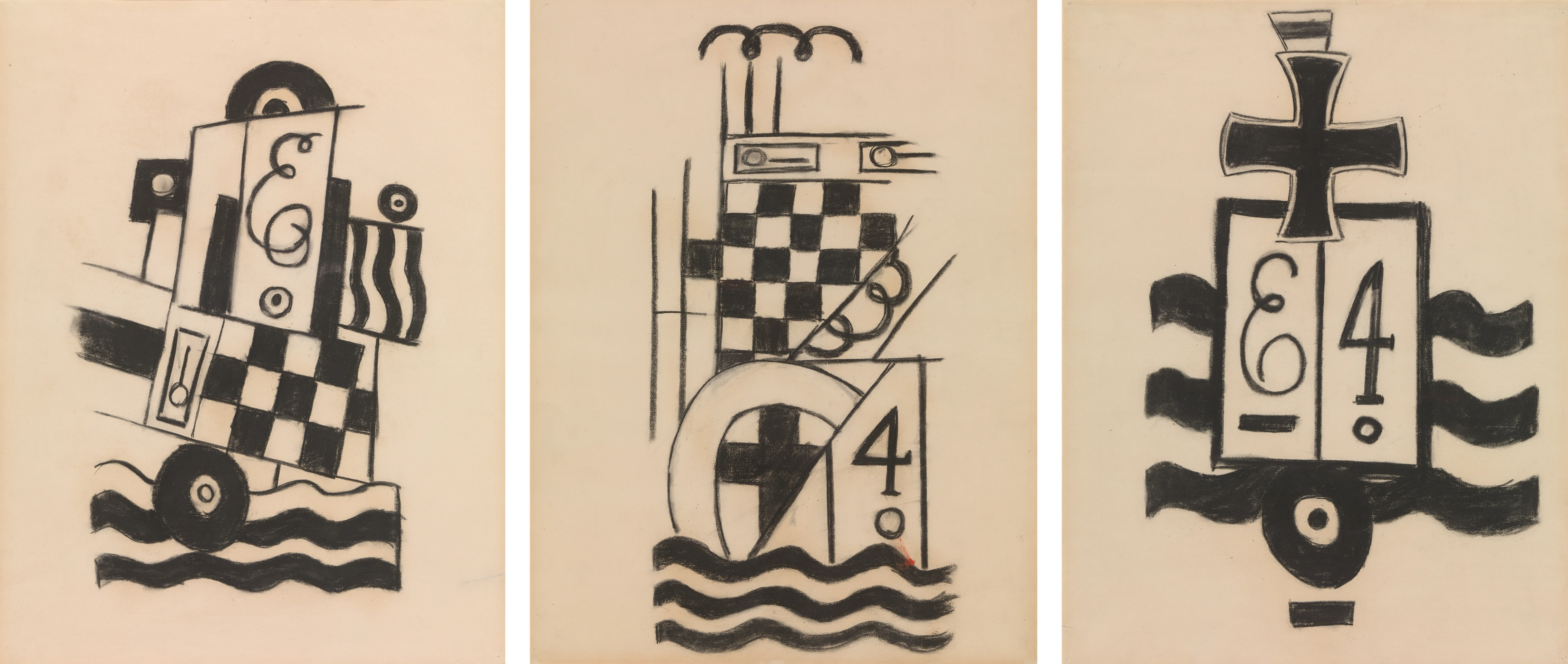
Marsden Hartley (American, 1877–1943). Military Symbols 1 (62.15.1), Military Symbols 2 (62.15.2), and Military Symbols 3 (62.15.3), 1914. Charcoal on paper, 24 1/4 × 18 1/4 in. (61.6 × 46.4 cm). The Metropolitan Museum of Art, New York, Rogers Fund, 1962
When he left Europe to return to America in 1916, Portrait of a German Officer—the first, largest, and arguably magnum opus of the series—was the only painting Hartley took care to transport by hand. In New York that spring, he exhibited the picture at the Anderson Galleries (as “Portrait of a Young Man”) and Steiglitz’s 291 gallery. The title was bowdlerized of its attribution to an enemy officer, and Hartley pleaded with the public to believe that “the forms are only those which I have observed casually from day to day. There is no hidden symbolism whatsoever in them; there is no slight intention of that anywhere.”
And yet, German pomp is undeniably plastered across the picture plane. For the knowing eye, so too are tributes to Freyburg. Absent a likeness, his muscular form is composed of allusions later spelled out by Rönnebeck: initials (K.v.F.), age at death (24), regiment (4), Iron Cross decoration, and affinity for chess (black and white squares). Rönnebeck also identified references to his own uniform (tassels) and regiment (E for the patroness Elisabeth of Greece) and interpreted the golden triangles surrounding the Iron Cross as symbolic of the friendship among the three men.
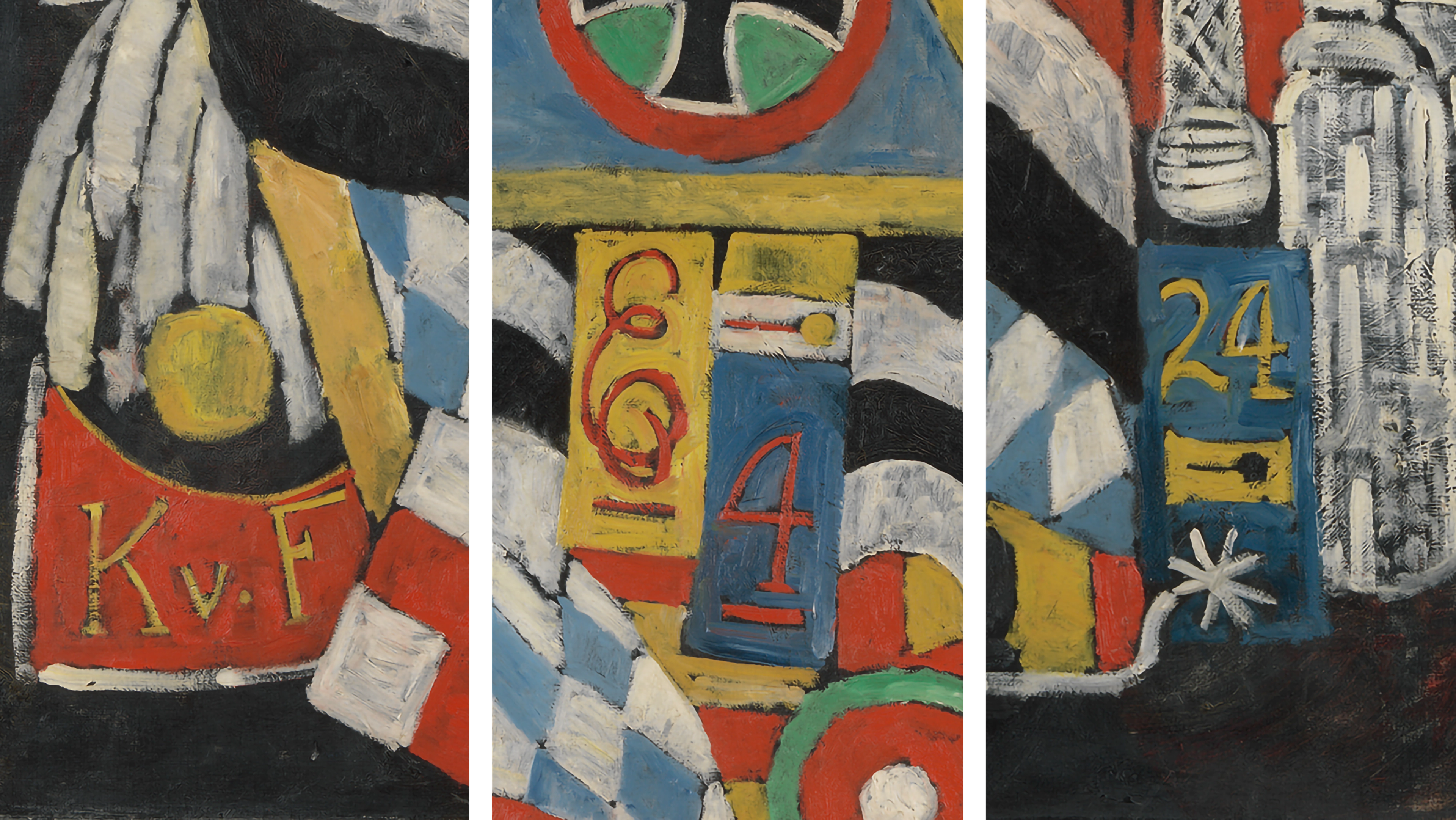
Details from Marsden Hartley’s Portrait of a German Officer (1914).
Hartley remained elusive in his words about the painting, but his memories of Freyburg endured. He kept the German officer’s letters and epaulet until his death and penned a poem to “K. von F.” in 1940 that concludes: “Yourself the moment that I saw / and took into my heart / is still an image that I worship — / not death but love inspire / to keep this everlasting fellowship.”
For decades, Portrait of a German Officer was discussed in terms of its approach to abstraction and, sometimes, its political imagery, but the poignancy of Hartley’s feelings for Freyburg were repressed. Only as the AIDS crisis in the 1980s cracked open the discourse about homosexuality were biographical references to Hartley’s affections, including those as transparent as in the poem, brought to light. It is tempting to imagine the pain Hartley may have felt at having to hide his feelings and to reread this painting through the lens of later threats to the expression of gay identities. We may never know what happened between the men, even whether Freyburg reciprocated Hartley’s passion, but the painting, an icon of modernism, keeps vigil for the fallen solider in plain sight as a coded message of queer love.
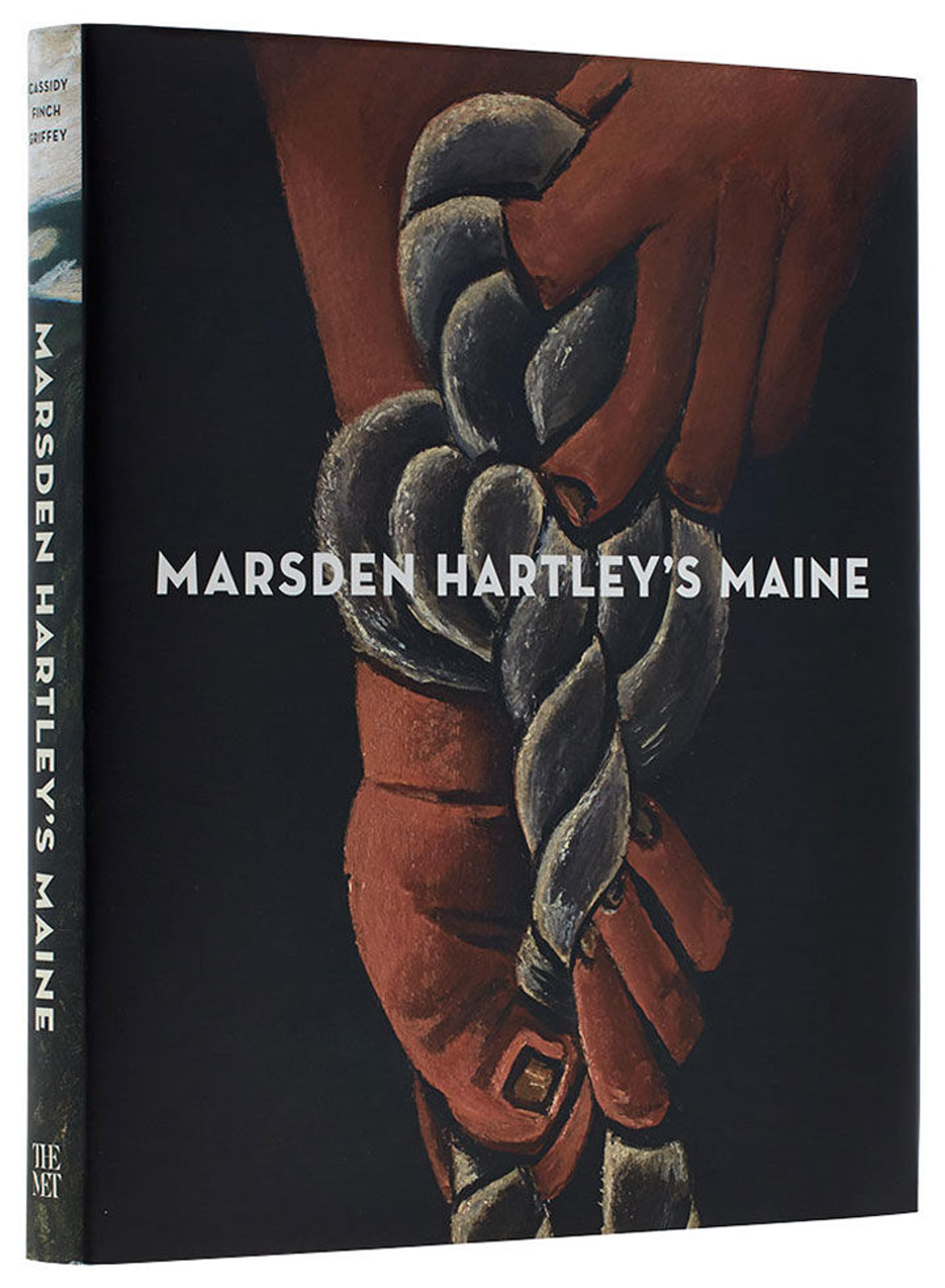
This essay is adapted from Points of View: 100 Connections to Art, a book that brings together voices from across The Met to consider how art inspires us to connect to the world and to each other.