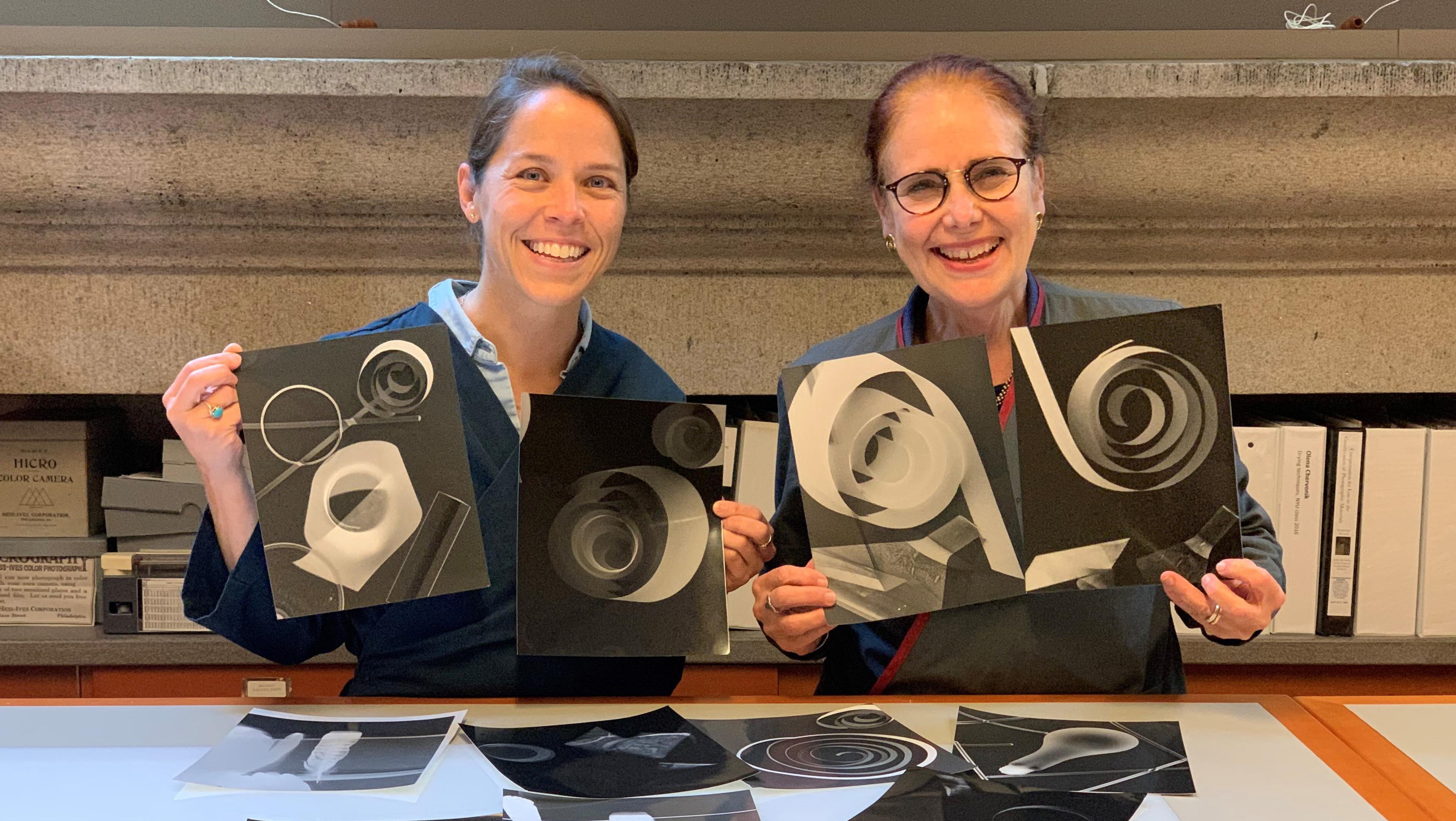
In preparation for Man Ray: When Objects Dream, curators Stephanie D’Alessandro and Stephen Pinson began exploring the mysteries behind Man Ray’s iconic “rayograph” photograms. Their curiosity sparked a series of technical questions about the artist’s materials and methods, and the research team expanded to include photograph conservators Nora Kennedy and Katie Sanderson.
To better understand how Man Ray created his rayographs, the team launched a collaborative characterization study. This included hands-on darkroom experiments to try to replicate some of his visual effects, as well as a scientific analysis of his photographs in partnership with Yale’s Lens Media Lab (LML) and colleagues from other institutions and private collections.
Using LML’s established protocols, the study measured color, gloss, thickness, and texture across a selection of rayographs and other works by Man Ray. The resulting data informed the development of a custom data visualization app that allowed partners to compare these photographs—highlighting both subtle and striking differences across the artist’s body of work.
This project showcases the power of cross-institutional collaboration, blending conservation science, curatorial inquiry, and digital innovation to gain insight into the technical artistry behind Man Ray’s dreamlike images.
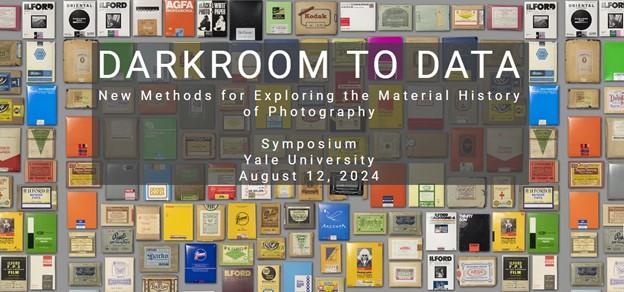
This talk was part of DARKROOM TO DATA, a symposium hosted by Yale’s Lens Media Lab that explored the material history of black-and-white photography through the lens of data science. The event brought together leading voices from the Center for Creative Photography, The Metropolitan Museum of Art, the Museum of Modern Art, and other institutions to share insights from collaborative research projects.
The central theme, “seeing at scale”, focused on how large datasets can reveal hidden patterns in photographic collections. These patterns help researchers better understand artistic intent, regional practices, and the shared materials and techniques used by photographers across time, ultimately informing preservation strategies.
The symposium welcomed over 175 attendees, including artists, art historians, conservators, conservation scientists, collectors, curators, dealers, and others interested in the intersection of cultural heritage and data visualization. Read the symposium abstract.