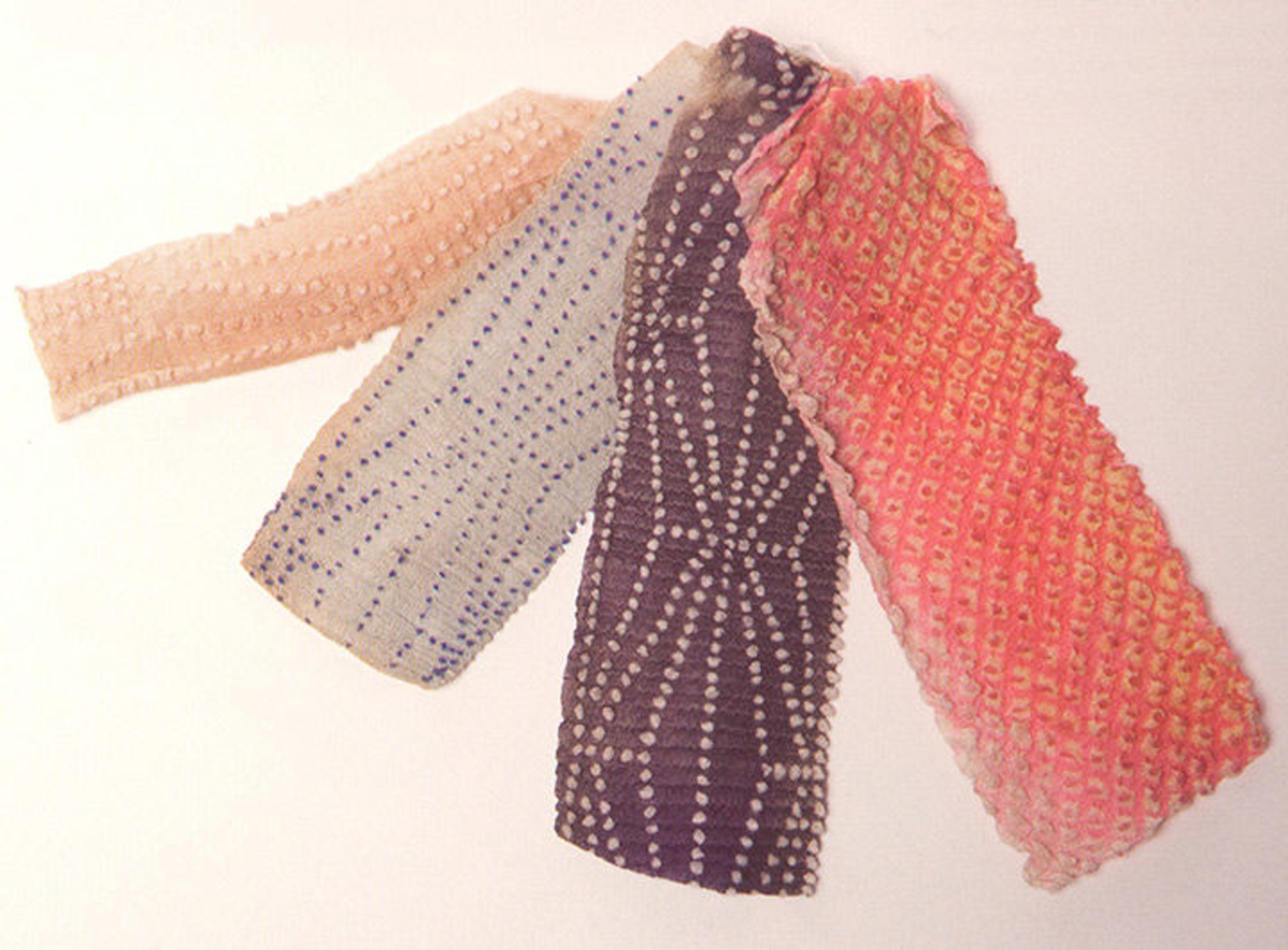
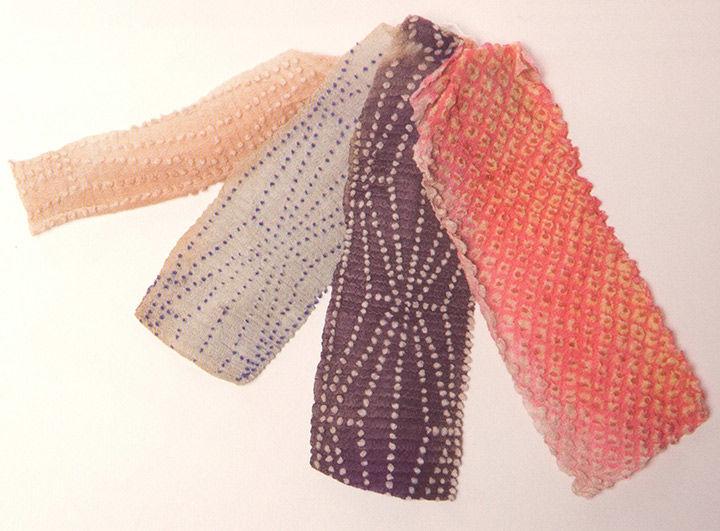
Nancy Broadbent Casserley, Washi: The Art of Japanese Paper (Kew: Royal Botanic Gardens, 2013). A hair ornament made of tie-dye washi, a traditional Japanese paper paper
«Here in Watson Library, everywhere you go there is paper in the form of books. Almost 300 of those books are about papermaking. You can read about the history of paper, the craftsmanship of papermaking and paper from all over the world, or view one-of-a-kind artists' books that creatively utilize paper. We even have books of paper specimens.»
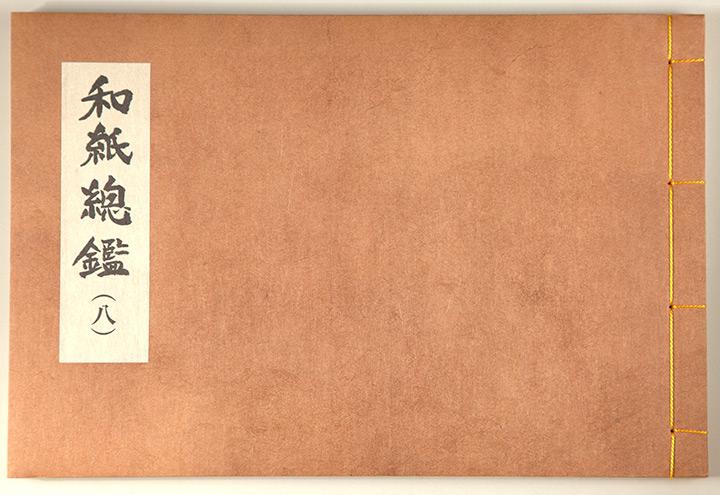
Washi: The Soul of Japan, Fine Japanese Paper in the Second Millennium, 12 vols. (Kyoto-shi: 2000-nenki Washi Iinkai, 2006–2010).
One such book is Washi: The Soul of Japan, Fine Japanese Paper in the Second Millennium. It is a collection of 12 volumes of Japanese paper specimens. If you have strong feelings about paper like I do, you will appreciate that you can read about and observe the details of more than 1,000 paper samples. They are not only well-crafted and beautiful papers, but are also examples of functional objects that are rare and interesting.
I would like to share some of the paper objects that caught my eye when I was paging through the book.
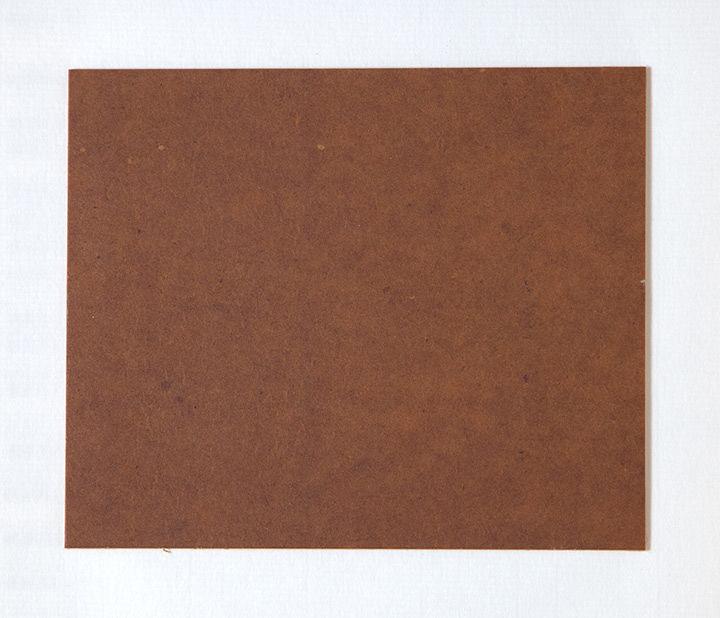
Sample of yuton from the eighth volume of Washi: The Soul of Japan, Fine Japanese Paper in the Second Millennium
The first one is yuton. It is an unusually thick rectangular brown paper that I hadn't seen before. By reading the accompanying descriptions (which every single specimen has), I learned something new.
Yuton is a traditional flooring material that helps cool rooms in the summer. Hot and humid weather is characteristic of the Japanese summer—Kyoto and Nara are especially known for it. Yuton started disappearing when air conditioning systems and western housing styles became more available and popular. Making yuton takes time and skill, which makes it costly, and its maintenance requires patience. It is rare to see it in use nowadays. Having said that, it has been coming back to the market slowly. The materials and technology needed to produce yuton are environmentally sustainable and if yuton is taken care of properly, it should last a long time—up to 100 years. You can read more about it here.
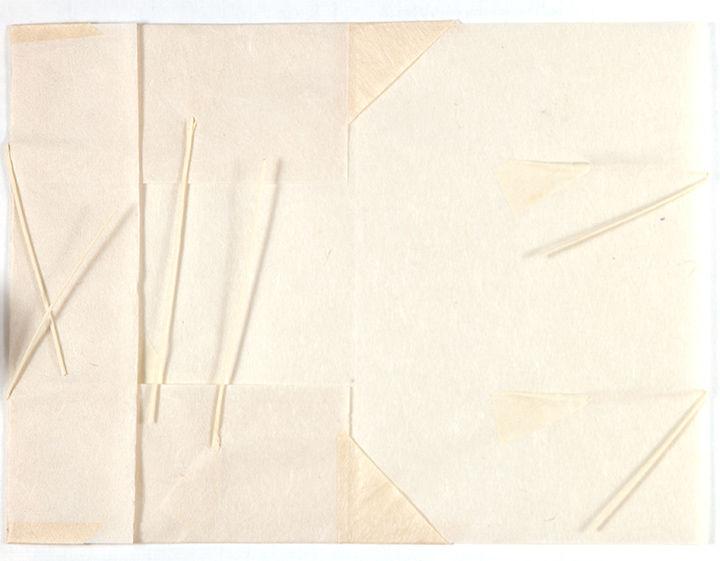
Sample of kosode bunkogami from the eigth volume of Washi: The Soul of Japan, Fine Japanese Paper in the Second Millennium
Kosode bunkogami is another sample in the book. It is a paper wrapper that is specifically made to store and protect kimonos. The sample in the book is partially folded and scaled down in size. A full-size wrapper has four flaps that can be folded over the kimono. The kimono is also folded into a rectangular form and placed in the center of the wrapper. It is approximately 15 by 36 inches, though size can vary depending on the manufacturer. The breathability of the paper prevents kimonos from getting moldy. High humidity is problematic in the rainy season, which usually lasts for a few months. There are now synthetic material bags or containers that are on the market, but the traditional paper wrappers work the best.
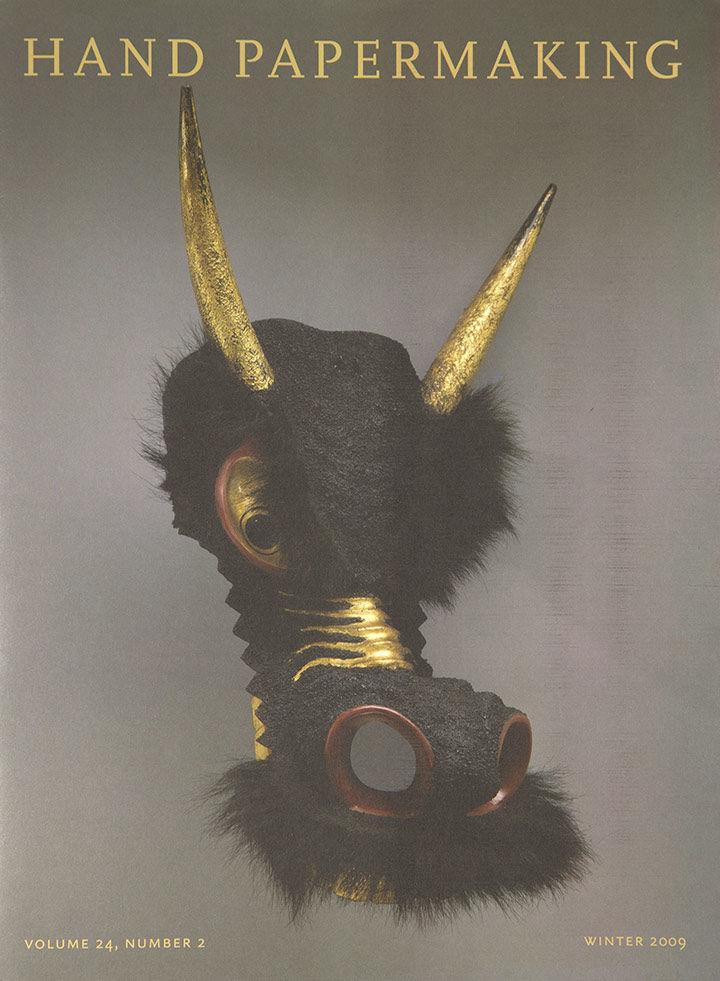
Mina Takahashi, ed. Hand Papermaking, vol. 24, no. 2 (Winter 2009).
In general, people think of paper as a flat, two-dimensional thing. It is something to write on, draw on, or to be used for decoration, such as wallpaper or wrapping paper. Although it may not be widely known, paper has also been used as material for various types of objects by different cultures throughout time. It is light yet can be durable. Paper can be a functional three-dimensional object. It can be treated and be a replacement for wood, leather, metal, or textiles.
You can read many fascinating articles about the story of three-dimensional paper objects in the periodical Hand Papermaking.
In volume 24 from 2009, there is an article titled "Practically Invulnerable: Chinese Paper Armor" by Peter Dekker. He wrote about armor in China during the first millennium. Paper armor was light, which was a great advantage for soldiers. Well-made layered paper was sturdy enough to resist spears going through it.
During wartime, paper was also spun into thread and woven into cloth as a substitute for traditional cloth-making fibers. Christina Leitner wrote about the role of paper textiles in wartime Europe in her article, "Paper Textiles: A Substitute Material in Wartime Europe" in the same issue of Hand Papermaking.
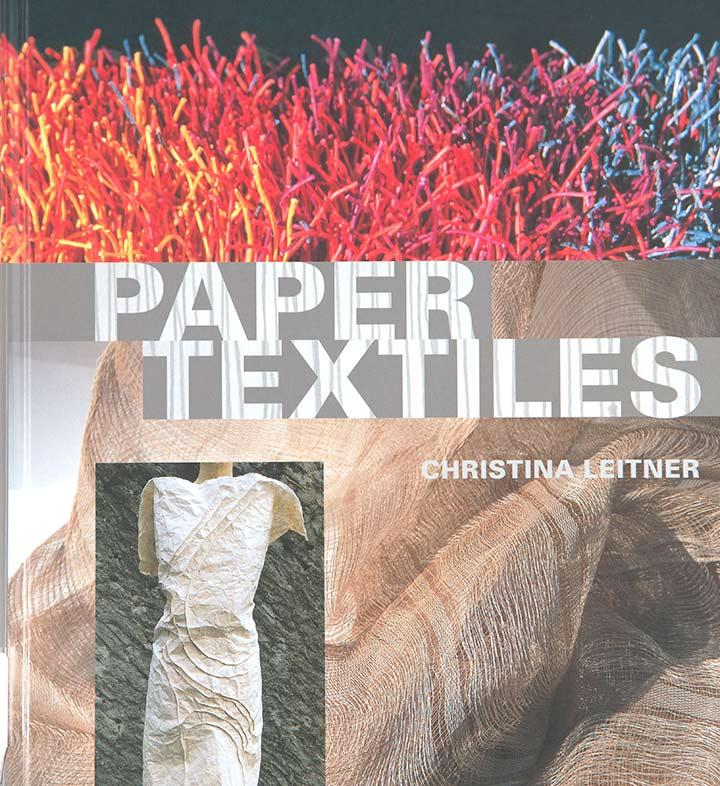
Christina Leitner, Paper Textiles (London: A & C Black, ca. 2005).
Making textiles and garments from paper thread isn't unique to Europe. In her book Paper Textiles, Leitner reviews the history and techniques of paper textiles and shows a variety of international contemporary artworks.
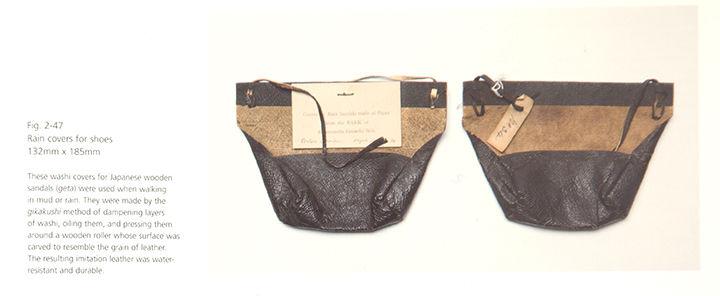
Rain covers for shoes. From Nancy Broadbent Casserley, Washi: The Art of Japanese Paper (Kew: Royal Botanic Gardens, 2013).
Lastly, I would like to share one more three-dimensional paper object. It took me a while to figure out what the above items were. During the rainy season in Japan, there was a time when paper was used to help one stay dry. This is a pair of rain covers for shoes. You can see how they were used in a painting by Shinsui Ito titled Tsuyu (1926) as toe covers for a woman's geta, a traditional Japanese footwear.
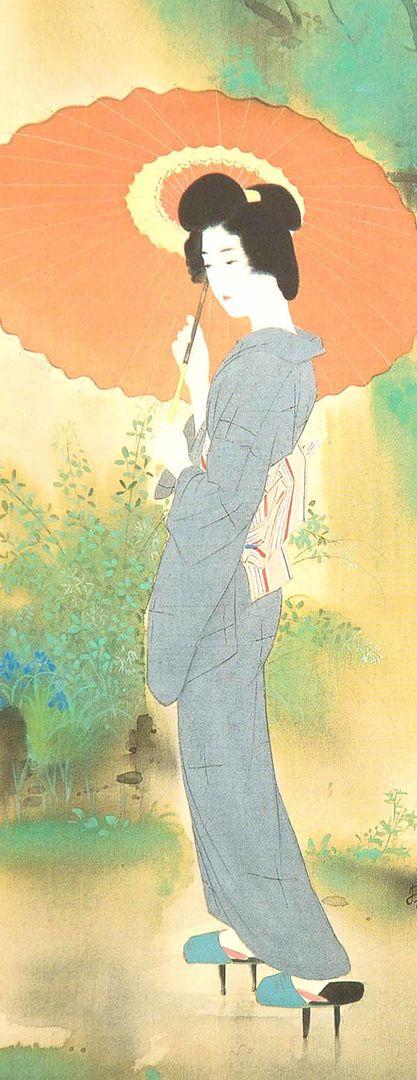
Shinsui Ito, Tsuyu (1926). From Bijinga no tanjō: tokubetsuten, (Tokyo: Yamatane bijutsukan, 1997).
The publications mentioned above are only a few of the papermaking books in the Watson Library collection. You can take a deeper look into the diversity of paper by consulting Watsonline, the library's catalogue.


