MetPublications
Showing 1–10 results of 41
Sort by:
 Every two years the fall issue of The Met's quarterly Bulletin celebrates notable recent acquisitions and gifts to the collection. Highlights of Recent Acquisitions 2020–2022 include the Mantuan Roundel by Gian Marco Cavalli, a recently rediscovered tour de force from the early Renaissance; the archive of photographer James Van Der Zee, one of the most celebrated chroniclers of Black life in New York City during the Harlem Renaissance; a pair of sculptures by the renowned contemporary American artist Robert Gober; Thomas Sully’s magisterial portrait of Queen Victoria; and Poussin’s Agony in the Garden, one of only two accepted works by the artist in oil on copper. This publication also honors the many generous contributions from donors that make possible the continued growth of The Met collection.Download PDFFree to download
 The second volume in a special two-part edition of Recent Acquisitions, this Bulletin celebrates works acquired by the Museum in 2019 and 2020, many of which were gifts bestowed in honor of the Museum’s 150th anniversary year. Highlights of this volume include Jean-Baptise Carpeaux’s astonishing portrayal of an African woman in the marble sculpture Why Born Enslaved!, a monumental storage jar by African American potter and poet David Drake, an exquisite lacquer mirror case depicting an 1838 meeting between the crown prince of Iran and the tsar of Russia, and Carmen Herrera’s abstract work dating to 1949, Iberic. This publication also honors the many generous contributions from donors that make possible the continued growth of The Met's collection.Download PDFFree to download
 The first of a special two-part edition of Recent Acquisitions, this Bulletin celebrates works acquired by the Museum in 2019 and 2020, many of which were gifts bestowed in honor of the Museum’s 150th anniversary year. Highlights of this volume include a sumptuous set of handscrolls depicting The Tale of Genji, a second-century Roman wellhead, a drawing of a landscape by French artist Claude Lorrain, and nearly one hundred Indian paintings. This publication also honors the many generous contributions from donors that make possible the continued growth of The Met's collection.Download PDFFree to download
![Vanities: Art of the Dressing Table [adapted from The Metropolitan Museum of Art Bulletin, v. 71, no. 2 (Fall, 2013)]](https://cdn.sanity.io/images/cctd4ker/production/c1f683ed3f60d30e370c886ebf4ab45ad29a77b4-250x324.jpg?w=3840&q=75&fit=clip&auto=format) The Metropolitan Museum's vast collections include a seemingly infinite variety of objects, some more familiar than others. Among these is the dressing table, or vanity, to which this issue of the Bulletin is dedicated. This volume and the exhibition it accompanies, "Vanities: Art of the Dressing Table," provide an overview of the origins and development of the dressing table from antiquity to the present day. What emerges is a refreshing and surprising cross section of works from the Museum's curatorial departments, including an Egyptian storage box, a nineteenth-century Japanese cosmetics stand, and a streamlined Jazz Age vanity by noted American designer Norman Bel Geddes, to name just a few. Fine Furnishings and other accoutrements designed specifically for men and women to use while preparing to dress have been created throughout the centuries, from utilitarian pieces to serve our most basic domestic needs to matchless luxury objects that are also powerful statements about social class and status. Among the standouts in the Museum's collections is a combination table by Martin Carlin, a German-born cabinetmaker active in Paris in the late eighteenth century, just as the dressing table reached the apogee of its evolution as a marker of social ascendance. The Carlin table is one of many splendid gifts to the Museum from Jayne Wrightsman that demonstrate her profound knowledge of and devotion to the decorative arts of eighteenth-century France. Armand-Albert Rateau's dressing table, a triumph of French Art Deco elegance, is another superb example of the variety of this furniture form. To those important pieces we can now add a dressing table that allows us to update the story of the vanity for the present day: a starkly beautiful stone, steel, and marble ensemble, by Korean artist Byung Hoon Choi, whose echoes of ancient Korean tomb architecture underscore some of the complex themes traditionally associated with the vanity and elucidated in both the exhibition and the Bulletin. "Vanities: Art of the Dressing Table" brings to fruition the longtime vision of Jane Adlin, associate curator in the Department of Modern and Contemporary Art. She was aided by a number of curators, conservators, and outside scholars who contributed significant findings about the furniture as well as the many equally elaborate accessories. We are also grateful to Lori Zabar, research assistant in the Department of Modern and Contemporary Art, who provided critical assistance at many stages of the project.Download PDFFree to download
The Metropolitan Museum's vast collections include a seemingly infinite variety of objects, some more familiar than others. Among these is the dressing table, or vanity, to which this issue of the Bulletin is dedicated. This volume and the exhibition it accompanies, "Vanities: Art of the Dressing Table," provide an overview of the origins and development of the dressing table from antiquity to the present day. What emerges is a refreshing and surprising cross section of works from the Museum's curatorial departments, including an Egyptian storage box, a nineteenth-century Japanese cosmetics stand, and a streamlined Jazz Age vanity by noted American designer Norman Bel Geddes, to name just a few. Fine Furnishings and other accoutrements designed specifically for men and women to use while preparing to dress have been created throughout the centuries, from utilitarian pieces to serve our most basic domestic needs to matchless luxury objects that are also powerful statements about social class and status. Among the standouts in the Museum's collections is a combination table by Martin Carlin, a German-born cabinetmaker active in Paris in the late eighteenth century, just as the dressing table reached the apogee of its evolution as a marker of social ascendance. The Carlin table is one of many splendid gifts to the Museum from Jayne Wrightsman that demonstrate her profound knowledge of and devotion to the decorative arts of eighteenth-century France. Armand-Albert Rateau's dressing table, a triumph of French Art Deco elegance, is another superb example of the variety of this furniture form. To those important pieces we can now add a dressing table that allows us to update the story of the vanity for the present day: a starkly beautiful stone, steel, and marble ensemble, by Korean artist Byung Hoon Choi, whose echoes of ancient Korean tomb architecture underscore some of the complex themes traditionally associated with the vanity and elucidated in both the exhibition and the Bulletin. "Vanities: Art of the Dressing Table" brings to fruition the longtime vision of Jane Adlin, associate curator in the Department of Modern and Contemporary Art. She was aided by a number of curators, conservators, and outside scholars who contributed significant findings about the furniture as well as the many equally elaborate accessories. We are also grateful to Lori Zabar, research assistant in the Department of Modern and Contemporary Art, who provided critical assistance at many stages of the project.Download PDFFree to download
Poiret
2007Paul Poiret dominated haute couture in the first decade of the twentieth century. Known in America as the "King of Fashion," he liberated women from constricting undergarments, most significantly from the corset, which had shaped the female form almost without interruption for hundreds of years. In so doing, he revolutionized dressmaking, by shifting its emphasis away form the skills of tailoring to those based on the skills of draping. He advocated dresses that hung from the shoulders, pioneering such styles as the chemise, which he introduced as early as 1911. Beyond his technical innovations, Poiret established the blueprint of the modern fashion business. He founded a perfume and cosmetics company, as well as a decorative arts company. In forming these enterprises, he became the first designer to relate fashion to interior design and to promote a "total lifestyle." Known for his marketing acumen, Poiret employed the theater as his runway, dressing such high-profile performers as Lillie Langtry, Sarah Bernhardt, Ida Rubenstein, and Isadora Duncan. As an extension of this form of advertising, he threw lavish parties for which he designed many of the costumes. Of there, perhaps the most well-known was his "One Thousand and Second Night," where he promoted two of his most iconic designs: the "lampshade" tunic and the "harem" trousers, or pantaloons, both of which were worn by his wife, Denise. Poiret's designs reflected the dominant artistic discourses of the early twentieth century, most notably orientalism. An art collector himself, Poiret also worked with a number of important artists, including Raoul Dufy, on designs for fabrics. Two of Poiret's most important collaborations were with the graphic artists Paul Iribe and Georges Lepape, who created deluxe albums for Poiret's elite clients. Many of these pochoir prints are illustrated in this volume and served as inspiration for the remarkable vignettes in the exhibition of Poiret's couture held at the Metropolitan Museum of Art in 2007. Among the garments featured prominently in this catalogue are those created for Denise Poiret. Dark and reed thin, she was the epitome of Poiret's ideal of beauty. He created some of his most daring and radical designs for his wife, who—as many photographs of her reveal—wore them with a captivating, flamboyant self-confidence. In 2005, many of these unique creations were purchased by the Metropolitan Museum of Art and formed the core of its exhibition "Poiret: King of Fashion." These exciting acquisitions provide new insights into Poirets artistic vision and help to reassert his position as one of the most important designers of the twentieth century.Download PDFFree to download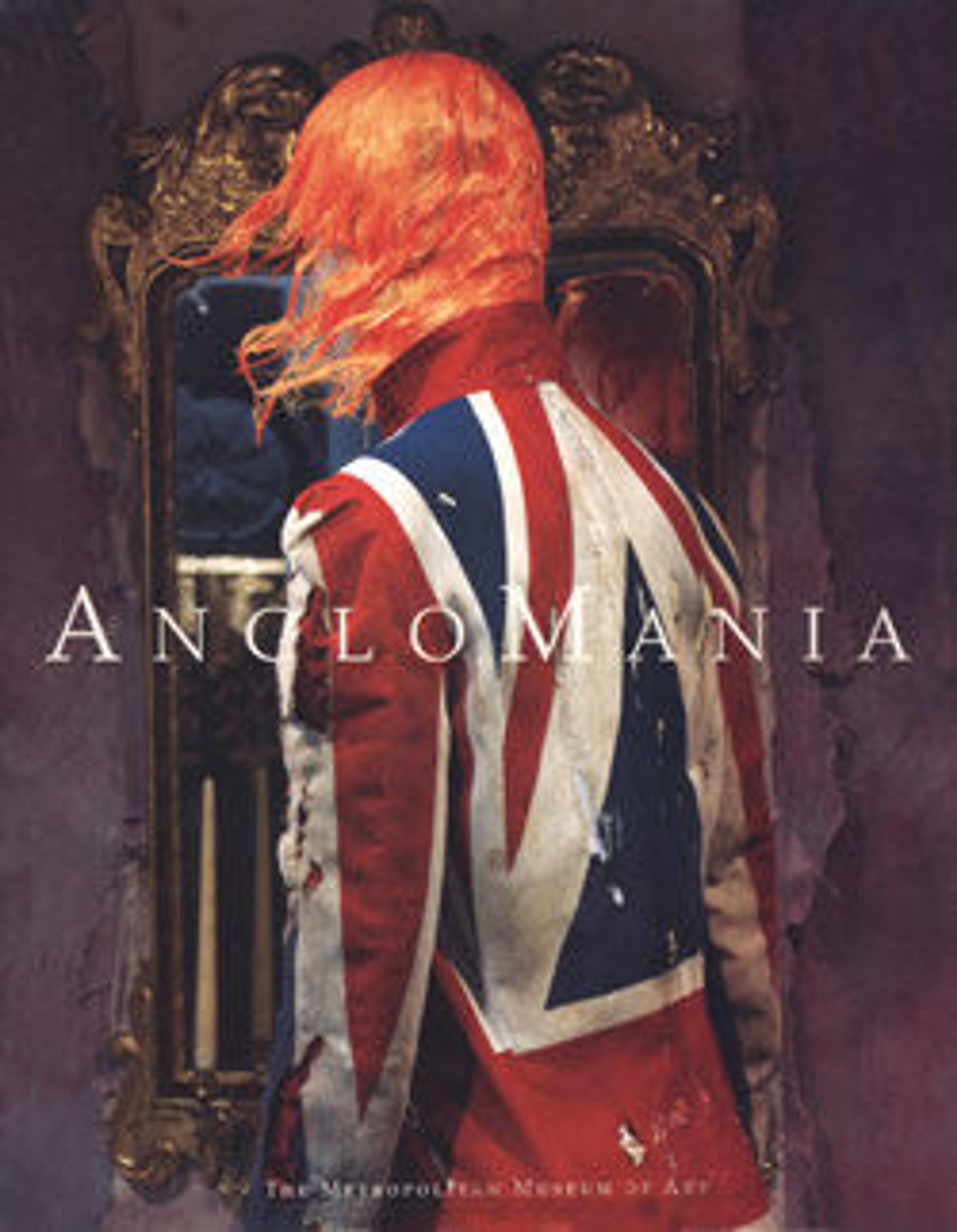 Anglomania gripped Europe during the mid-to-late eighteenth century. Continental Anglophiles such as Voltaire and Montesquieu saw England as a land of reason, freedom, and tolerance. Yet what began as an intellectual phenomenon became and has remained, a matter of style. Through the lens of fashion, AngloMania, based on the popular exhibition of the same name held at The Metropolitan Museum of Art in 2006, examines aspects of English culture that continue to capture the imaginations of Europeans and Americans, among them the class system, sport, royalty, pageantry, eccentricity, the gentleman, and the country garden. Englishness is a romantic construct, formed by fictive and imaginary narratives. These narratives are, however, not merely the product of European-American Anglophilia but are fostered by the English themselves. As this book reveals, they can be found in the novels of Samuel Richardson and in the paintings of George Stubbs and William Hogarth. AngloMania presents historical costumes with clothing of the late twentieth and early twenty-first centuries in a series of theatrical vignettes staged in the Museum's English Period Rooms. In the book, images of the Kirtlington Park Dining Room (ca. 1748), the venue for "The English Garden," teems with figures wearing eighteenth-century gowns made from Spitalfields silks and sporting twenty-first century hats by Philip Treacy. Although the gowns and hats are separated by time, they are united through their bold floral motifs that are startling in their botanical naturalism. The Lansdowne Dining Room (1776–79) becomes "The Gentlemen's Club," in which dandies, gentlemen, and punks, wearing designs by Malcolm McLaren and Vivienne Westwood, clash in a scene of Hogarthian intensity. Around the Hampton Court State Bed (ca. 1698), Queen Victoria in widow's weeds mourns the death of a figure wearing tartan trousers and an elaborately embroidered cape-jacket by Alexander McQueen. The illuminating and entertaining texts, written by Andrew Bolton, are complemented by an introductory essay by Ian Buruma that traces the beginnings of the desire for all things British.Download PDFFree to download
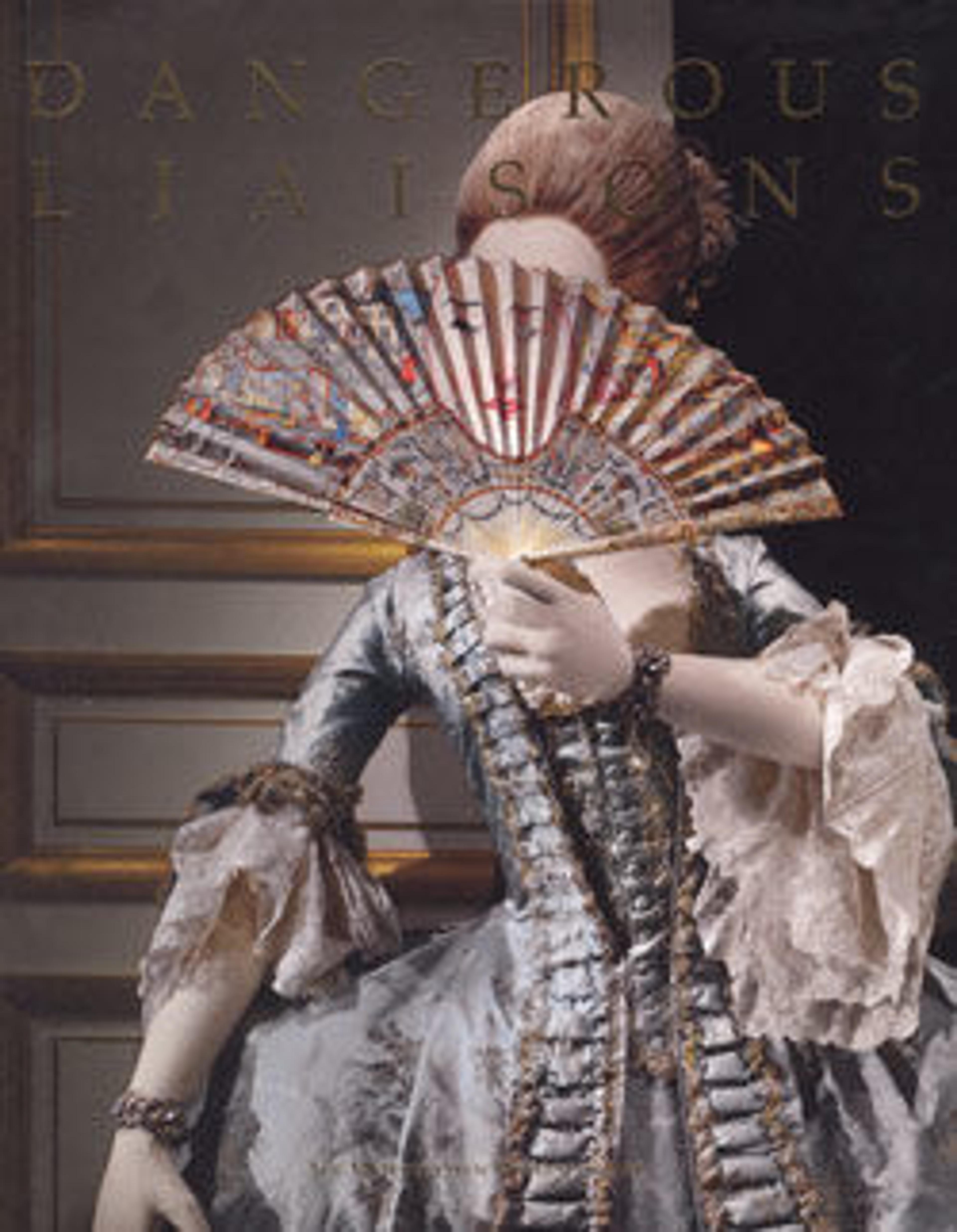 During the reigns of Louis XV (1723–74) and Louis XVI (1774–92) fashion and furniture merged ideals of beauty and pleasure through their forms and embellishments. With their fragile surfaces and delicate proportions, tables, chairs, and other pieces of furniture enhanced the elite's indulgence in leisurely pursuits, fostering highly complex standards of etiquette and performance. Men and women restated the splendor of the Rococo and Neoclassical interiors of the period in their opulent costumes. For the eighteenth-century libertine and femme du monde, a refined elegance and delicate voluptuousness infused their world with a mood of amorous delight. Dangerous Liaisons takes its theme from this era, when trifling in love propelled the energies of elite men and women, providing almost daily stimulating encounters, and when, as has been written, "morality lost but society gained." In Choderlos de Laclos's novel of the same name, Cécile, a young girl, is praised by her tutor in the worldly arts: "She is really delightful! She has neither character nor principles ... everything about her indicates the keenest sensations." Valmont, her seducer, notes the following morning, "Nothing could have been more amusing." Valmont has won a game in the contest of lovemaking. The beautifully photographed and handsomely reproduced images on the following pages bring these amorous adventures to life. The vignettes, staged for the widely praised exhibition "Dangerous Liaisons: Fashion and Furniture in the Eighteenth Century," held at The Metropolitan Museum of Art in 2004, feature eighteenth-century costumes in the Museum's spectacular French period rooms, The Wrightsman Galleries. The artfully composed scenes include: a woman sitting for her portrait while her husband flirts with her friend; a man being granted an audience with a woman in a peignoir who is having her hair dressed; a vendor embracing the wife of an old man, his back turned, examining a table for sale; a girl receiving more than a harp lesson from her teacher, while her oblivious chaperone reads an erotic novel; a woman giving up her garter as a memento of a very private dinner. The entertaining and knowledgeable texts set the scenes perfectly.Download PDFFree to download
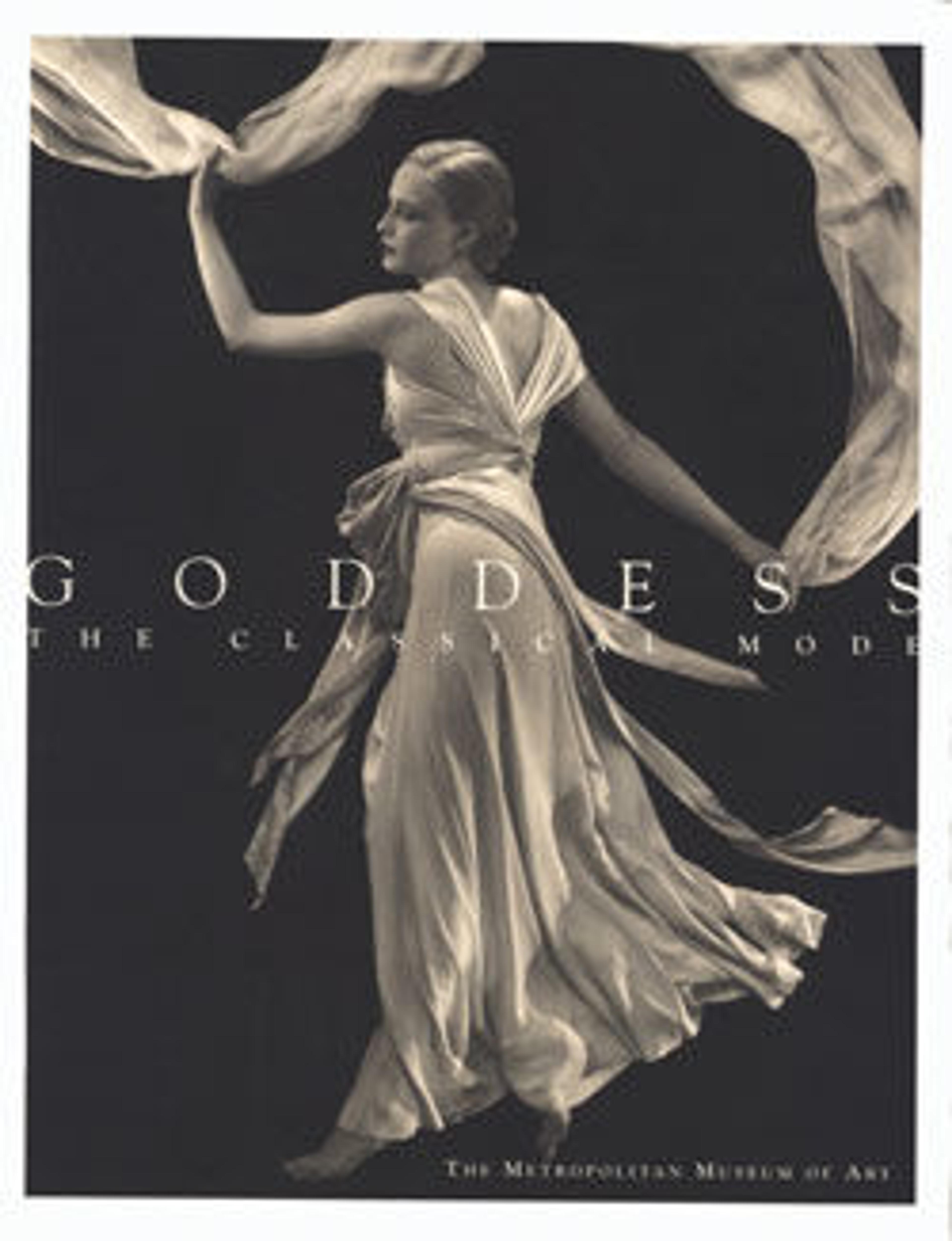 Goddess: The Classical Mode explores the continually evolving influence of ancient Greco-Roman dress through the ages. Over the past two-and-a-half millennia, the classical mode has unfolded and persisted, finding expression in a variety of artworks and through them, in fashion. Through diverse permutations and transformations, ancient dress has survived and resonated as an ideal. This beautifully illustrated volume presents a survey of this fascinating theme, including examples of ancient sculptures and vases, along with works of art and fashions from various historical periods. Artists and designers have looked to the three major types of classical dress—the chiton, peplos, and himation—and have incorporated from Greco-Roman sources attributes such as the laurel and breastplate as well as various details, notably the Greek-key motif that is familiar as an architectural element from ancient Greek times to recent revivals. Because no ancient dress survives in cloth, Greek and Roman sculptures and vases, reinforced by literary sources of the period, provide the only evidence of their characteristics. this book is arranged in four sections, in which examples of antique art depicting each type of dress are followed by fashions showing subsequent connections and variations that have occurred on the metamorphosis from marble and clay to fabric. They demonstrate that in the process of assimilation and transformation, some of these interpretations have been subtle, and others more radical. Fashions inspired by the classical ideal can be elegant, romantic or provocative—reminders of Venus, goddess of love, of Diana, goddess of the hunt, or of the martial ancient tribe of women called Amazons. Most are in pale tones of white or beige, the result of the bleaching out of ancient, originally polychromed marbles that has occurred over many centuries. The emphasis is on the continuing presence of the classical mode in the fashion of the nineteenth and twentieth centuries. Full-page illustrations with accompanying texts portray and discuss important and innovative works by such designers as Paul Poiret and Mariano Fortuny; the emblematic draped creations of Madame Grès; costumes created for performances by the innovator of modern dance Isadora Duncan; the deconstructed peplos-style gown of Yves Saint Laurent; and the formidable recent contributions of Gianni Versace, Romeo Gigli, Alexander McQueen, and Tom Ford of Gucci. Each has made unique imaginative contributions that carry the immortal ideal originating from the goddesses of ancient Greece and Rome to the present and enliven it for the future. Inspired by the classical mode, Harold Koda, Curator in Charge of The Costume Institute, The Metropolitan Museum of Art, has conceived and developed this entertaining volume. It accompanies a major exhibition on view during the spring-summer of 2003 at The Costume Institute. Looking back 2,500 years to the time when Greek gods and goddesses reigned on Mount Olympus, this project continues the ongoing mission of The Costume Institute to document and examine diverse aspects of fashion's history and fashion's march into the twenty-first century.Download PDFFree to download
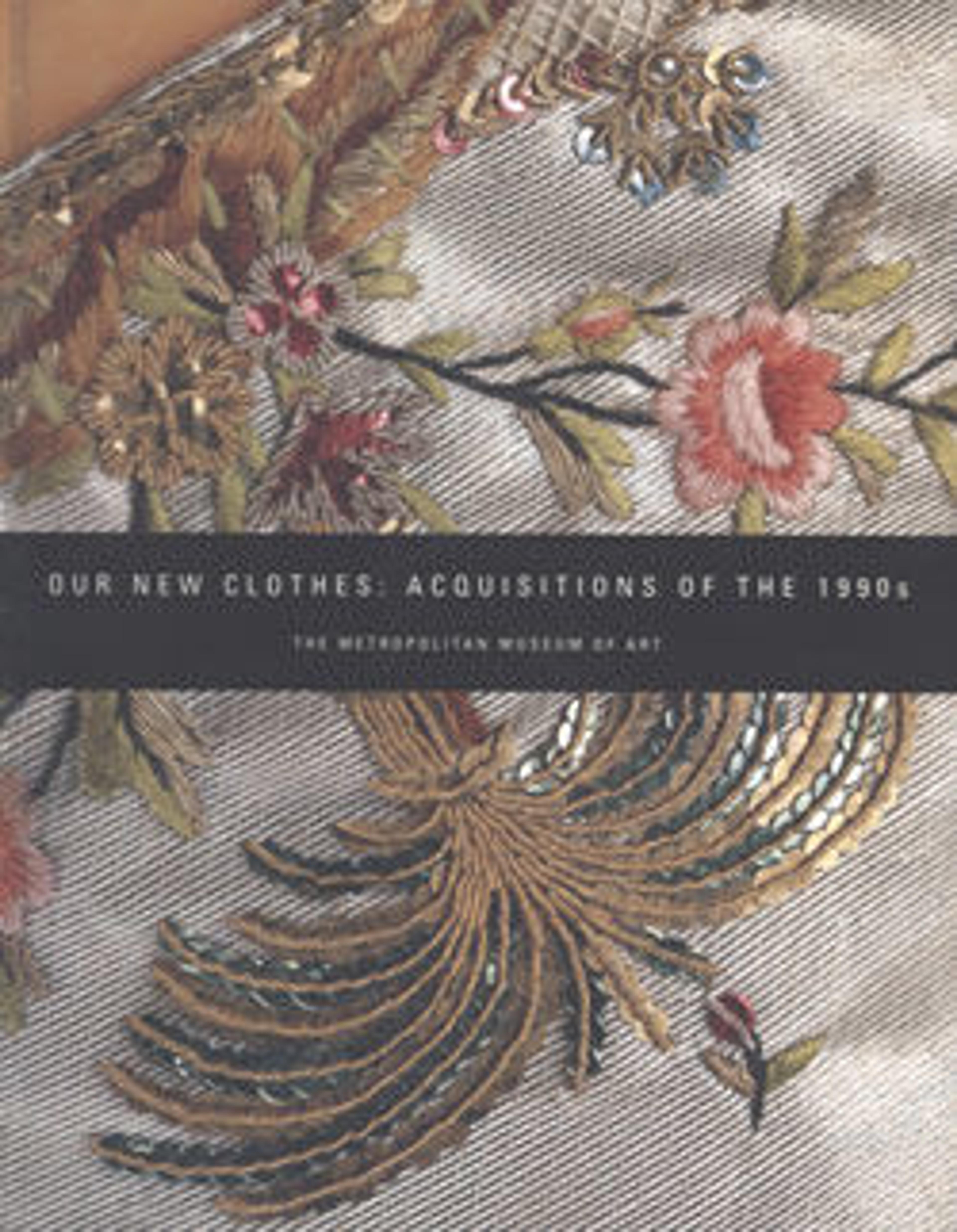 An impressive array of clothing, accessories, and library materials was acquired through gift and purchase during the 1990s by The Costume Institute, The Metropolitan Museum of Art. Adding substantially to its comprehensive collection gathered over fifty-five years, the costumes span three centuries, beginning with a magnificent and rare silk damask brocaded English mantua of 1708 and including a wide-ranging selection such as a luxuriously embroidered and sequinned French man's ensemble of about 1765. a sparkling Agnès Drécoll robe en pannier of 1912, a beautiful Charles James wedding gown of 1940, and a slinky gold-tone metal mesh Gianni Versace evening gown of 1997–98. The "new" clothes are presented in six chapters. In "A History of Fashion" a mini view of three centuries of clothing vividly attests to the breadth of collecting achieved by The Costume Institute during the past decade. "The White Dress" poses a provocative question about the role of women in white, who have, in the author's words, "haunted the romantic imagination for centuries." As Richard Martin notes, men's clothing is difficult to find, largely because it has been far less coveted than womenswear, but the chapter on "Men of Three Centuries" illustrates a number of fine examples from the eighteenth century to Jean Paul Gaultier. Additions to the Irene Lewisohn Library, The Costume Institute, which since 1939 has been building a comprehensive archive of visual and written documents concerning costume history, include a pair of engraved cards front around 1780 showing European headdress and interesting illustrations from the comprehensive Giorgio di Sant'Angelo archive. Twentieth-century costume is brilliantly displayed in the chapters on "The Americans" and "The Contemporaries." During the 1990s The Costume Institute gathered American fashion with particular zeal, including works by the New York minimalist designer of the 1940s and 1950s Valentino and in such contemporary designers as Geoffrey Beene, Giorgio di Sant'Angelo, Halston, and Calvin Klein. The exhibitions and publications held since Richard Martin became curator in 1993 have emphasized contemporary design, and included here, in addition to the Americans, are choice pieces by Giorgio Armani, Ann Demeulemeester, Dolce & Gabbana, James Galanos, Romeo Gigli, Christian Lacroix, and Issey Miyake. The 113 color illustrations and the illuminating text by Richard Martin add up to a fascinating overview of one decade of The Costume Institute's collecting, which conveys its ongoing dedication to the acquisition and exhibition of costumes from the earliest extant examples of the eighteenth century to the newest works of voting designers. Our New Clothes displays the commitment to present costume in the museum setting as a living an that interprets history, becomes part of the historical process, and inspires subsequent art.Download PDFFree to download