MetPublications
Showing 1–5 results of 5
Sort by:
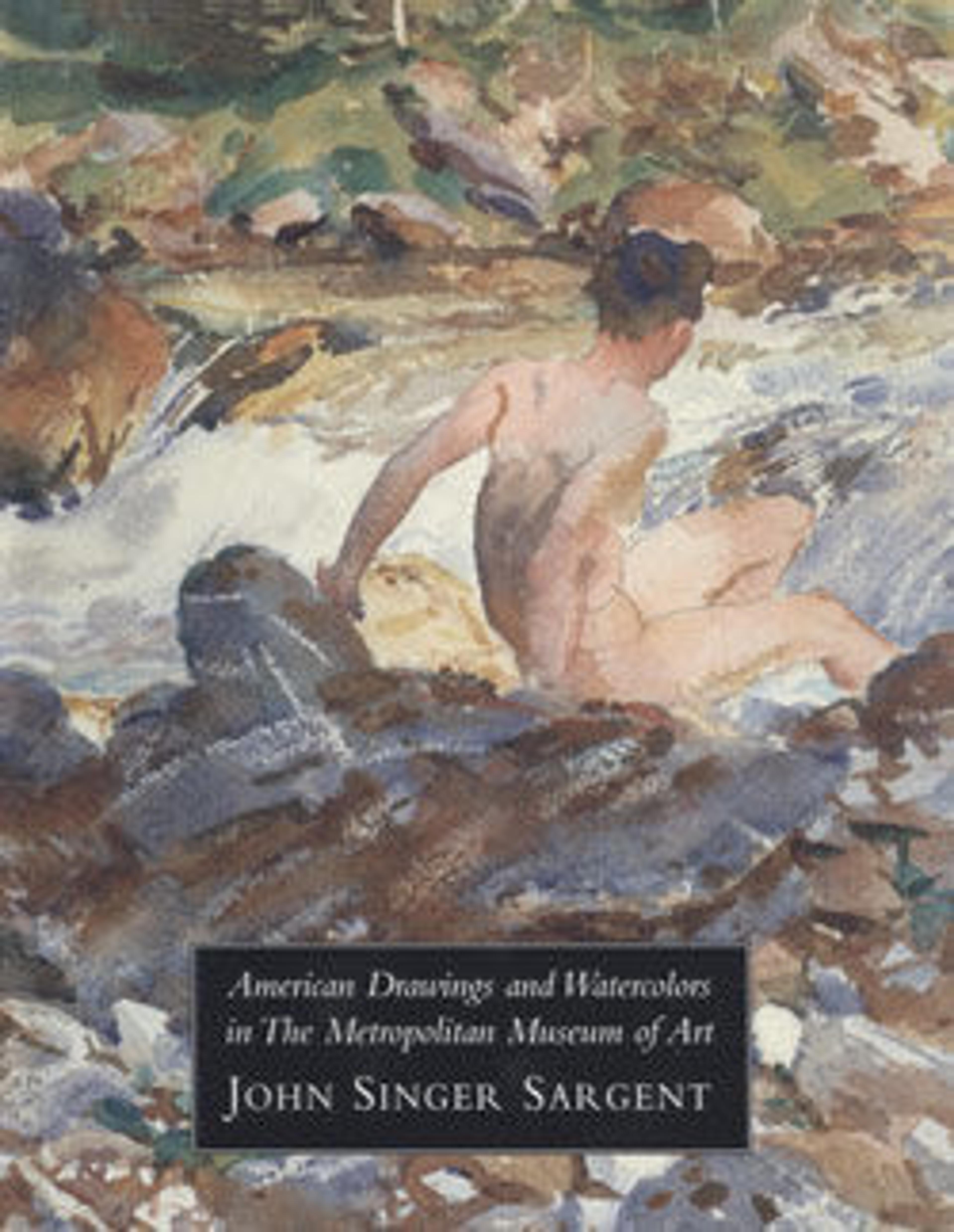 The Metropolitan's collection of drawings and watercolors by John Singer Sargent (1856–1925), the renowned expatriate American painter based in England, is extraordinary in size and variety. This publication—the first volume to appear in a series documenting the Museum's American drawings and watercolors—catalogues all 337 sheets by Sargent and every page from four sketchbooks, and analyzes them within the artist's oeuvre. Sargent is, of course, best known for his portraits, which secured his international patronage and reputation. However, he always traveled widely and drew and painted people, places, and things that captured his attention. This pattern began during an unusually peripatetic childhood, persisted through his student years, and marked his mature career, when he worked on murals and subject pictures as well as portraits. After about 1905, when his fame reached its apogee, Sargent declined most portrait commissions and spent more time traveling—for pleasure and for mural research—and recording his experiences, especially in dazzling watercolors. The Museum's collection illuminates all aspects of Sargent's career. The drawings and watercolors in particular reflect his activity outside the portrait studio: his sojourns in Spain, Morocco and elsewhere in North Africa, and in the Middle East; his enduring fascination with Venice; his holidays in the Italian lake district and the Alps; his tours of North America, including Florida and the Rocky Mountains; his visit as an official war artist to the western front in 1918; and his work as a muralist at the Boston Public Library, the Museum of Fine Arts, Boston, and Harvard University's Widener Library. The Metropolitan enjoyed a friendly relationship with Sargent, purchased canvases and watercolors from him, and maintained a cordial connection with his sisters after his death. In 1950 the Museum received from his sister, Mrs. Francis Ormond, a magnificent gift: twenty-four oils, more than three hundred drawings and watercolors, four sketchbooks, and several miscellaneous works. The Ormond donation formed the core of the Museum's remarkable Sargent holdings, which has been amplified by other gifts and purchases. Sargent's reputation had ebbed during the decades that followed his death. The 1980s witnessed a revival of interest in him that is now at a peak. His virtuoso portraits are as popular with collectors as they were with his patrons. His vibrant outdoor scenes have made him one of the most cherished American practitioners of Impressionism. His bravura watercolors have earned him acclaim as a master of the medium. Sargent studies and popular exhibition have proliferated. This heightened awareness makes the scholarly examination of Sargent's drawings and watercolors by Stephanie L. Herdrich (research associate) and H. Barbara Weinberg (Alice Pratt Brown Curator of American Paintings and Sculpture) in this catalogue all the more timely. This volume also contains an essay on Sargent's materials and technique by Marjorie Shelley, Sherman Fairchild Center for Paper and Photograph Conservation. A chronology of the artist's life and an exhibition history (1877–1926) are included, as is a selected bibliography. This comprehensive catalogue illuminates Sargent's multifaceted career and invites appreciation of his accomplishments as represented in the Metropolitan's superb collection.Download PDFFree to download
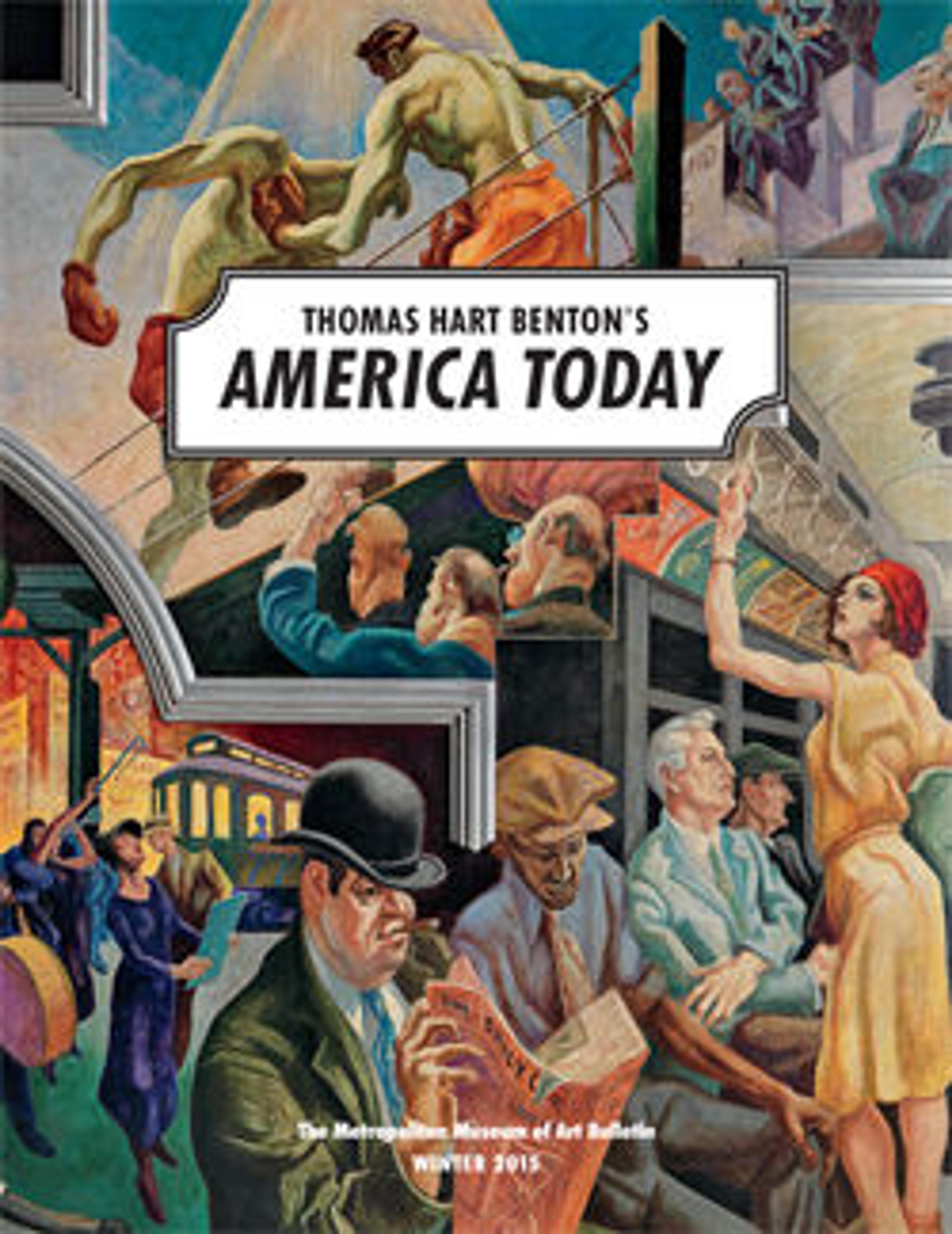 Thomas Hart Benton is often recognized as the leader of the 1930s movement known as Regionalism, which celebrated rural life in the United States. However, he lived and worked primarily in New York from 1912 to 1935, one of the most vibrant and dynamic periods in the city’s history. It was also a critical time for Benton’s artistic development, as he gradually established and set on the course that would define his career, one characterized by a passionate commitment to public art, populist subject matter, and a distinctively expressive figurative style rooted predominantly in European Mannerism. The pinnacle of Benton’s New York years was the mural cycle he painted for the newly erected headquarters of the New School for Social Research at 66 West 12th Street, which opened to the public in January 1931. Called America Today, the mural — his first significant commission for an institution — raised Benton’s artistic stature not only in New York, but also nationwide, setting the stage for his appearance in December 1934 on the cover of Time magazine, the first time an artist was accorded that honor. This Bulletin reveals the many remarkable stories that America Today has to tell and presents new discoveries about Benton’s epic cycle. The essay and entries contained in these pages elucidate the mural’s rich content, particularly Benton’s celebration of the Machine Age and American “progress” in the 1920s.Download PDFFree to download
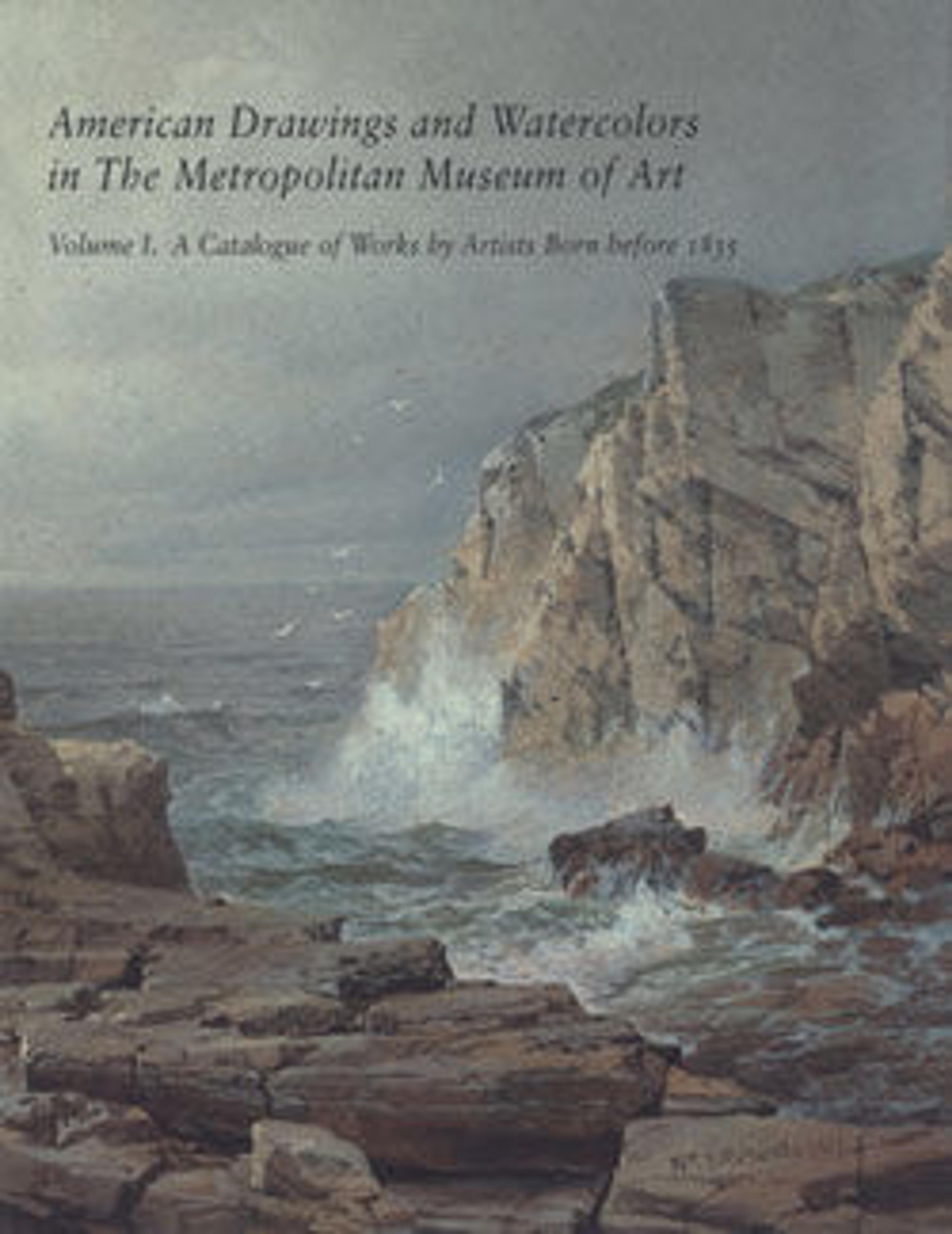 The Metropolitan Museum began acquiring American drawings and watercolors in 1880, just ten years after its founding. Since then it has amassed more than 1,500 works executed by American artists during the eighteenth and nineteenth centuries in watercolor, pastel, chalk, ink, graphite, gouache, and charcoal. Roughly a third of the collection is by John Singer Sargent and was published as a single volume in 2000. The present volume is the first of two devoted to the Metropolitan's general collection. Documenting the draftmanship of more than 150 known artists born before 1835 and that of about 60 unidentified artists of the period, it includes drawings and watercolors by such American masters as John Singleton Copley, John Trumbull, John Vanderlyn, Thomas Cole, Asher Brown Drand, John Frederick Kensett, William Trost Richards, George Inness, and James Abbot McNeill Whistler. Because the 504 works illustrate such a wide range of media, techniques, and styles, Volume 1 is a veritable history of American drawing from the eighteenth through most of the nineteenth century. Volume 2 will extend the survey into the early twentieth century with works from the Museum's collection by American masters born between 1835 and 1876. The introduction to this volume was written by Kevin J. Avery, Associate Curator in the Department of American Paintings and Sculpture. With zest and insight he traces the history of American drawings acquisitions at the Metropolitan, detailing its excitements, disappointments, and triumphs. His essay is illustrated with works selected from the Museum's entire collection, including some notable watercolors and pastels by Winslow Homer, Thomas Eakins, and Mary Cassatt, which will be treated fully in Volume 2. The following essay, by Marjorie Shelley, Sherman Fairchild Conservator in Charge, Sherman Fairchild Center for Works on Paper and Photograph Conservation, illuminates the creation of the 504 works in the catalogue with a discussion of the tools and techniques used by draftsmen of the period. Shelley describes how artists learned to handle the various drawing media and how and where they obtained their equipment and supplies. She documents the many advances in technology that benefited the draftsman and the growing interest in outdoor sketching that popularized such novel conveniences as the folding easel, collapsible stool, and lightweight tin container for brushed and paints. Her chapter includes many delightful illustrations of artists' supplies from the dealers' catalogues and drawing books of the period. The catalogue section of this volume features 106 of the Museum's choicest early American drawings and watercolors. These are reproduced in color and discussed in detail. A checklist follows of the complete collection, enriched by 432 additional illustrations in black and white and by brief biographies of all the artists represented in the catalogue.Download PDFFree to download
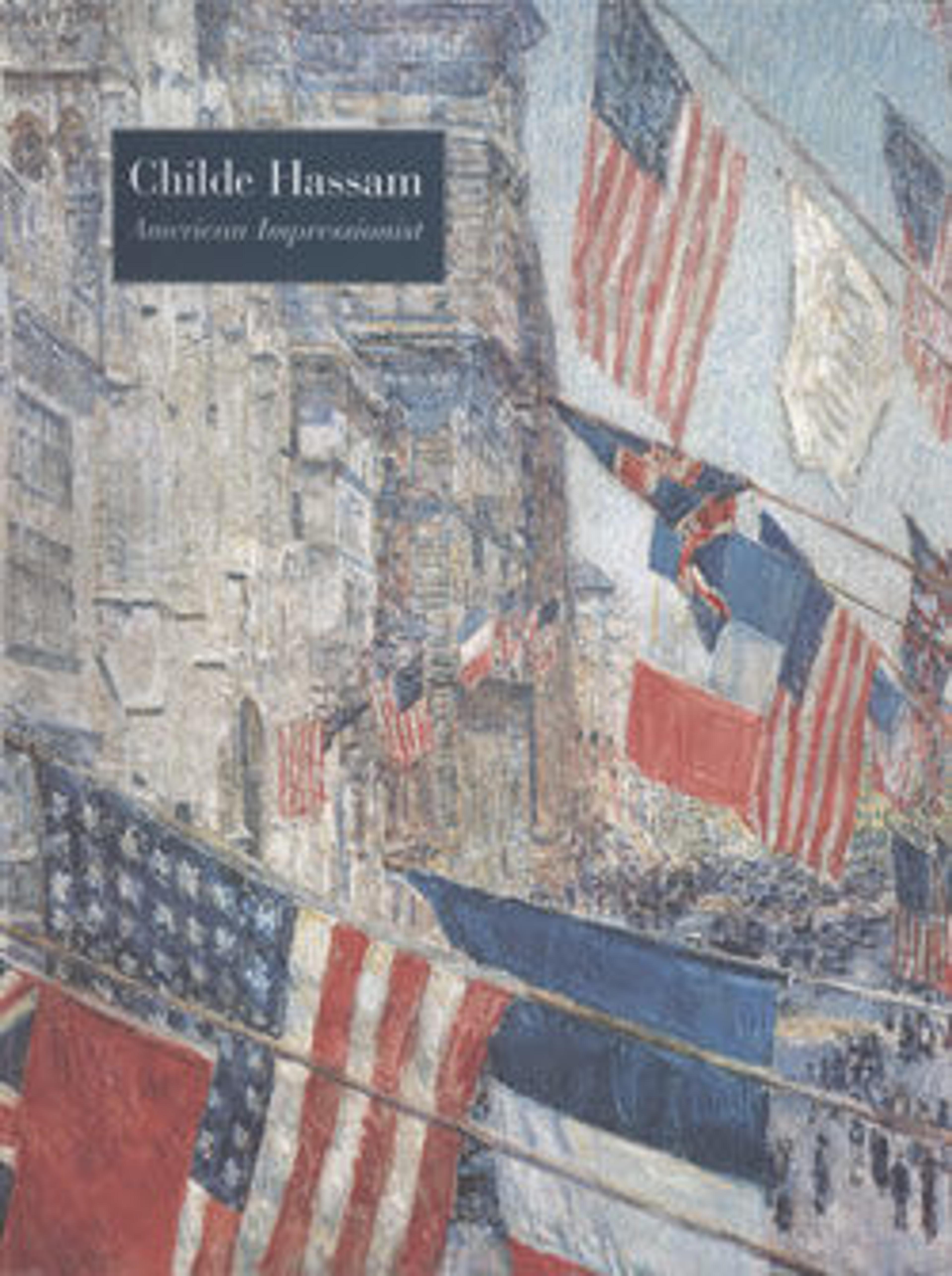 "I believe the man who will go down to posterity is the man who paints his own time and the scenes of everyday life around him," declared Childe Hassam in 1892. It was as a pioneer of American Impressionism and perhaps its most prolific and successful practitioner that Hassam (1859–1935) realized this credo. In so doing, he provided an engaging account of our national life during a dynamic period. At the same time he helped to create a wave of enthusiasm for American Impressionism that he rode to fame and fortune. Hassam's earliest work announce his cheerful euphemism, pride in American traditions, and what would become his lifelong devotion to both pastoral scenes and urban views. As a student in Paris, he was exceptional among his compatriots in adopting the French Impressionists' modern subjects and lively technique. Upon settling in New York, Hassam became the city's principal American Impressionist chronicler. He made long visits to picturesque New England villages and later spent summers working in elegant East Hampton, New York, sojourns that yielded rich material for his brush. Among Hassam's favorite themes are New York shown at all seasons and times of day, often veiled in snow or evening mist; beguiling women in interiors or at leisure in sun-dappled gardens; and dazzling coastal views. Today he is best known for his exuberant portrayals of Celia Thaxter's old-fashioned garden on Appledore Island, Maine, and his depictions of the flags, banners, and bunting displayed on New York's tall buildings in patriotic response to World War I. This lavishly illustrated publication accompanies a major exhibition at the Metropolitan Museum, the first retrospective presentation of Hassam's work in a museum since 1972. The insights of H. Barbara Weinberg, the Metropolitan's Alice Pratt Brown Curator of American Paintings and Sculpture, and other experts shed new light on the artist's achievements in texts that will engage scholarly and popular audiences alike. Reconsidered are his formative period in Boston and his student years in Paris. His rural and urban scenes, analyzed in terms of their Impressionist brushwork and palette, are also measures against his determination to portray modern life. The New England views, which offer a composite portrait of the region that preserved American traditions in the face of daunting change, are examined for the first time in relation to the attributes of the locales Hassam visited. And his genteel portrayals of New York are shown to have become increasingly euphemistic as the city's population grew more fluid and heterogeneous after 1900. Hassam's watercolors, etchings, and lithographs have also merited fresh scrutiny. Unique to this volume are an account of Hassam's lifelong campaign to market his art, a study of the frames he selected and designed for his paintings, and an unprecedented lifetime exhibition record. Included in addition are a checklist of works in the exhibition and a chronology of Hassam's life. All works in the exhibition as well as rich comparative materials are reproduced.Download PDFFree to download
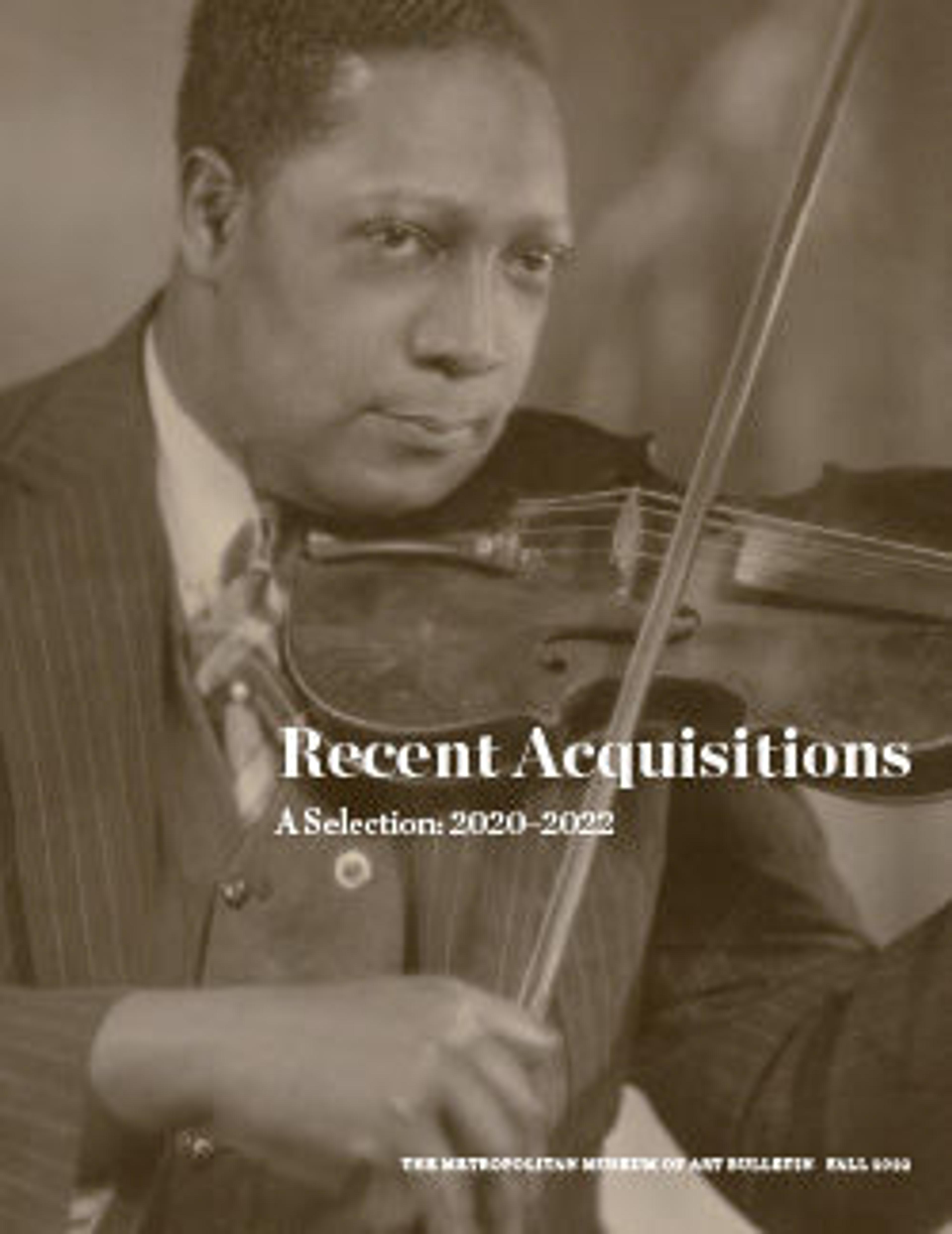 Every two years the fall issue of The Met's quarterly Bulletin celebrates notable recent acquisitions and gifts to the collection. Highlights of Recent Acquisitions 2020–2022 include the Mantuan Roundel by Gian Marco Cavalli, a recently rediscovered tour de force from the early Renaissance; the archive of photographer James Van Der Zee, one of the most celebrated chroniclers of Black life in New York City during the Harlem Renaissance; a pair of sculptures by the renowned contemporary American artist Robert Gober; Thomas Sully’s magisterial portrait of Queen Victoria; and Poussin’s Agony in the Garden, one of only two accepted works by the artist in oil on copper. This publication also honors the many generous contributions from donors that make possible the continued growth of The Met collection.Download PDFFree to download