Exhibition Dates: September 14, 2026–February 28, 2027
Exhibition Location: The Howard Gilman Gallery, Gallery 852
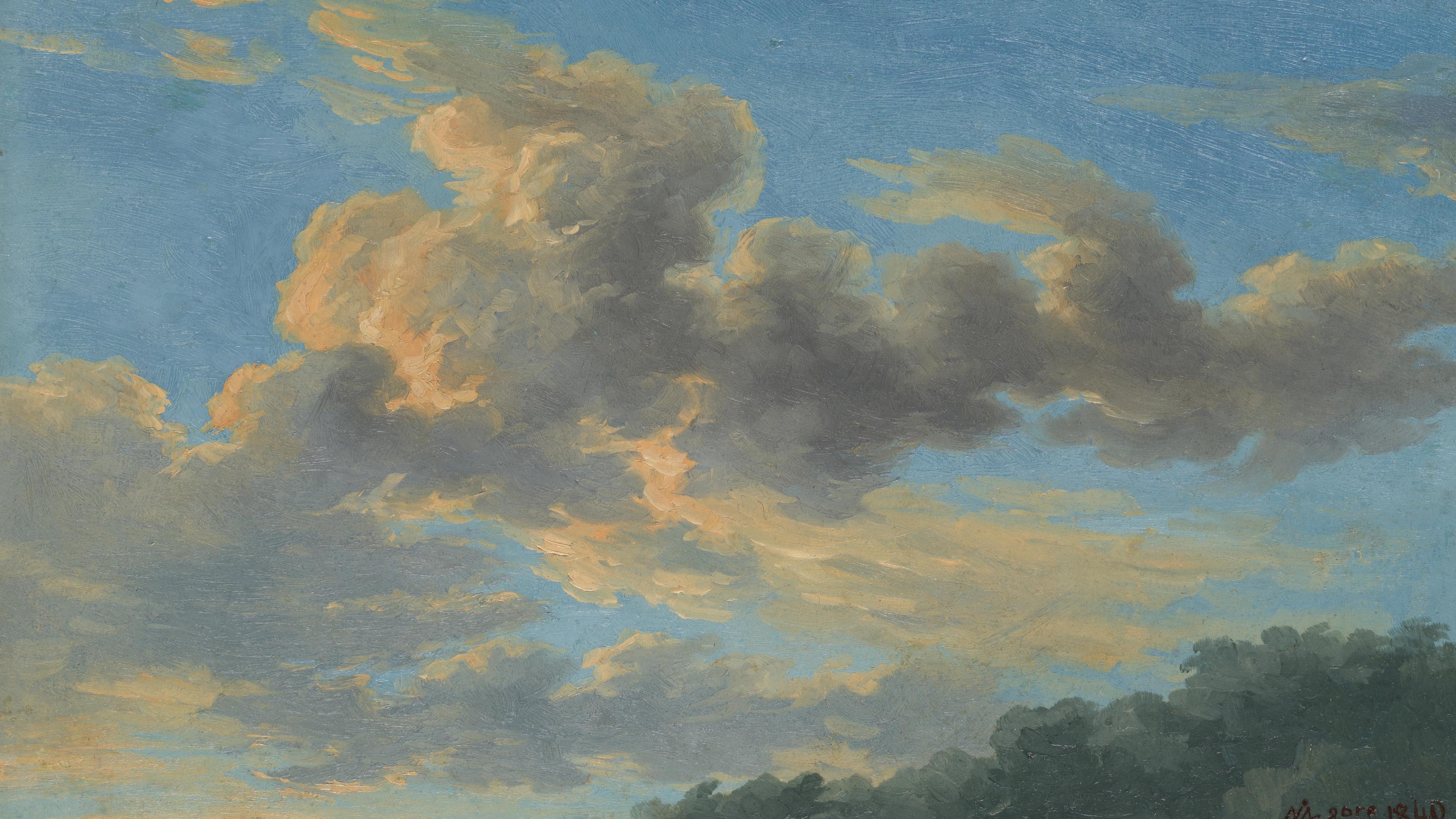
(New York, September 14, 2026)—Through February 28, 2027, The Metropolitan Museum of Art will present Chasing Clouds, an exhibition that explores the enduring human impulse to represent one of nature’s most ephemeral subjects: clouds. Spanning the early 19th to the early 20th century, the exhibition will trace artists’ efforts to observe and depict the ever-changing sky and considers how the advent of photography introduced new possibilities for capturing this elusive subject. Bringing together works by John Constable, Eugène Delacroix, Gustave Le Gray, John Singer Sargent, Alfred Stieglitz, and others from The Met’s collection, the exhibition spans plein air paintings and drawings—created outdoors in direct observation of nature—as well as photographs, all examining how artists across mediums developed inventive approaches to capturing the natural world at a time when clouds were also being increasingly studied by scientists.
This exhibition is made possible by the Robert Mapplethorpe Foundation, Inc.
"While artists have long depicted the clouds and sky, the beginning of the 19th century brought renewed fascination, inspired by both scientific and artistic study,” said Max Hollein, The Met's Marina Kellen French Director and Chief Executive Officer. “This captivating exhibition traces this quest throughout various artistic mediums, and charts evolving tensions between poetic sensibilities and growing interest in immediacy and accuracy, reflecting the deep and enduring dialogue between art, science, and technology across time."
“Clouds present artists with a fascinating paradox—visible forms that often refuse to hold still, they have continually inspired curiosity while testing the limits of artistic representation,” said Stephen C. Pinson, Curator in The Met’s Department of Photographs. “The challenge of depicting their fleeting forms encouraged experimentation across media, from the immediacy of plein air sketching to novel efforts to overcome the limitations of early photographic processes. Seen together, these works reveal how changing ideas about nature, art, and technology shaped not only how clouds were pictured but also what they could come to express.”
In the early 19th century, artistic and scientific interest in clouds developed in parallel. As plein air sketching became increasingly important to the practice of landscape painting, artists turned to the portrayal of clouds as a compelling test of their ability to record the fleeting effects of nature. English landscape painter John Constable called his practice of observing and sketching cloud formations “skying,” and this close study enabled him to explore their expressive possibilities as well. At the same time, clouds became a new focus of scientific study and classification as scientists sought to better understand their formation and relationship to weather, bringing greater attention to their constantly changing forms.
The introduction of photography in 1839 promised new possibilities for recording the natural world, but also presented significant technical challenges. Because early photographic processes had variable sensitivity to certain colors, including blue, skies often appeared as flat, blank expanses. Photographers responded creatively, painting clouds into their images or combining separately exposed negatives to simulate atmospheric effects. By the turn of the 20th century, advances in photographic chemistry and optics made it possible to produce cloudscapes that rivaled the painted studies of the preceding century.
The exhibition culminates with a group of photographs by Alfred Stieglitz, who, beginning in the 1920s, made more than 200 studies of the clouds above Lake George, New York. Examples from the resulting series Equivalents demonstrate how Stieglitz moved beyond the interpretation of clouds as purely natural phenomena, instead using the sky to evoke his emotional and spiritual state. In these works, the exhibition’s exploration of observation and representation comes full circle, as the precision made possible by photography becomes a vehicle for poetic and deeply personal expression.
Chasing Clouds draws from across The Met's collection, bringing together oil sketches and drawings from the Department of European Paintings, the American Wing, and the Department of Drawings and Prints alongside works from the Department of Photographs. This collaborative and cross-departmental approach reflects The Met's ongoing commitment to presenting its collection in new and illuminating ways, a spirit that will carry forward as the Museum continues to expand and reimagine its spaces for the new Tang Wing for Modern and Contemporary Art in the years ahead.
Exhibition Credits
This exhibition is organized by Stephen C. Pinson, Curator in The Met’s Department of Photographs, with the assistance of Micayla Bransfield, Senior Research Associate.
The exhibition is featured on The Met website, as well as on social media using the hashtag #MetPhotographs.
###
September 14, 2026
Image: Jean-Michel Cels, Cloud Study in the Late Afternoon (detail), 1840. Oil on paper. Thaw Collection, Jointly Owned by The Metropolitan Museum of Art and The Morgan Library & Museum, Gift of Eugene V. Thaw, 2016
Now on View: Met Exhibition Charts Artists' Innovative Pursuit of the Sky Across Two Centuries
From plein air paintings and drawings to pioneering methods of photography, Chasing Clouds explores the creative techniques employed by 19th and 20th century artists, from John Constable to Alfred Stieglitz, to capture fleeting effects of nature
Contact: Julie Niemi
Communications@metmuseum.org