The premise seemed simple enough: place objects on photographic paper, flash a light, and develop the print to make a rayograph. In a darkroom tucked away inside The Metropolitan Museum of Art, we soon realized how deceptive this simplicity truly was as we experienced objects producing unexpected forms, light making unexpected reflections, and exposures proving too long or too short. Perhaps most tellingly, months later, when we returned to our first rayographs, we found that we could not entirely remember how we had made them. How, exactly, were the abstracted forms of known objects reborn in unrecognizable shapes and densities on the photographic paper? This, it turns out, is a useful place to begin thinking about Man Ray's most inventive experiments.
Rayographs—the artist’s term for cameraless photographs made by using objects (instead of a projected negative in an enlarger) to make images directly on photosensitive paper—often present themselves as immediate, almost self-evident images. The process involves an inversion of tones in the final print in which areas of the paper exposed to more light develop darker, and those shielded from light remain the color of the paper. Even with this reversal, a feather still appears as a faithful rendering of its structure, only with its delicate barbs translated into pale forms against a darker ground (fig. 1). Glass prisms fracture into recognizably sharp light and dark lines (fig. 2). What a rayograph records is not simply an object but an interaction involving object, light, time, movement, and surface.
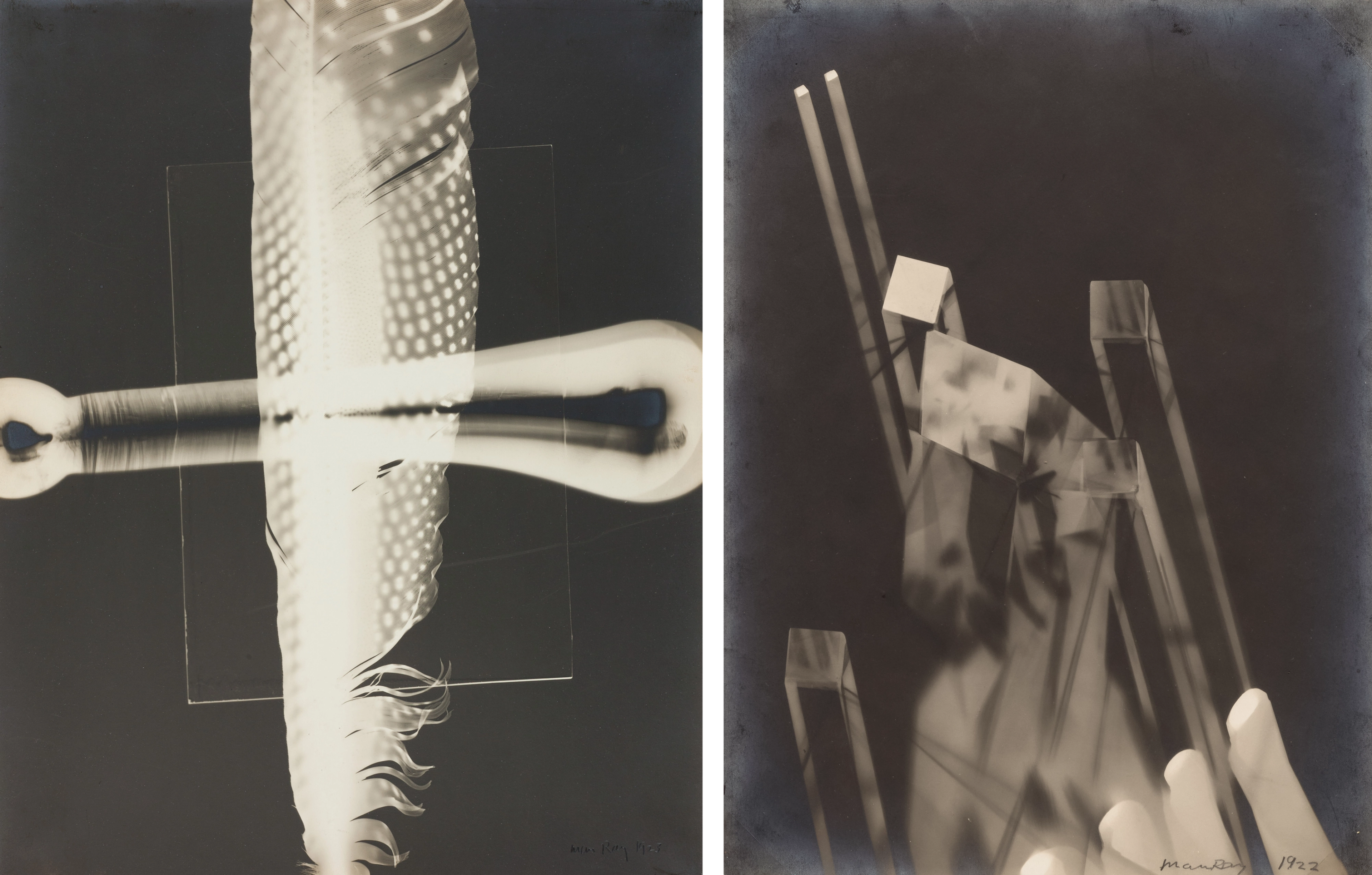
Fig. 1. Man Ray, Rayograph, 1923. Gelatin silver print, 11 11/16 x 8 5/8 in. (29.7 x 21.9 cm). The Art Institute of Chicago, Julien Levy Collection, Special Photography Acquisition Fund (1979.99). © Man Ray Trust / 2026 Artists Rights Society (ARS), New York. Fig. 2. Man Ray, Rayograph, 1922. Gelatin silver print, 9 7/8 x 7 1/16 in. (24 x 18 cm). Private collection, Courtesy Gió Marconi, Milan. © Man Ray Trust / 2026 Artists Rights Society (ARS), New York
Certain aspects of that interaction are legible. In our darkroom, we experimented with these elements: while an opaque object blocks light completely, leaving behind the white of the paper, transparent materials bend and concentrate light, producing dense, dark lines or halos. A simple square prism illustrates this interplay with light; direct light produces a recognizable form in pure white lines, while angled light produces a composition of unexpected forms and image tones (fig. 3). Semiopaque forms settle into soft, mid-tone grays. Reflectivity also plays a role: objects that bounce light back toward the paper can produce bright shadow effects. Even something as simple as an egg reveals this distinction—a brown egg reflects less light than a white one, resulting in less apparent modeling of the ovoid form in the final print (fig. 4).
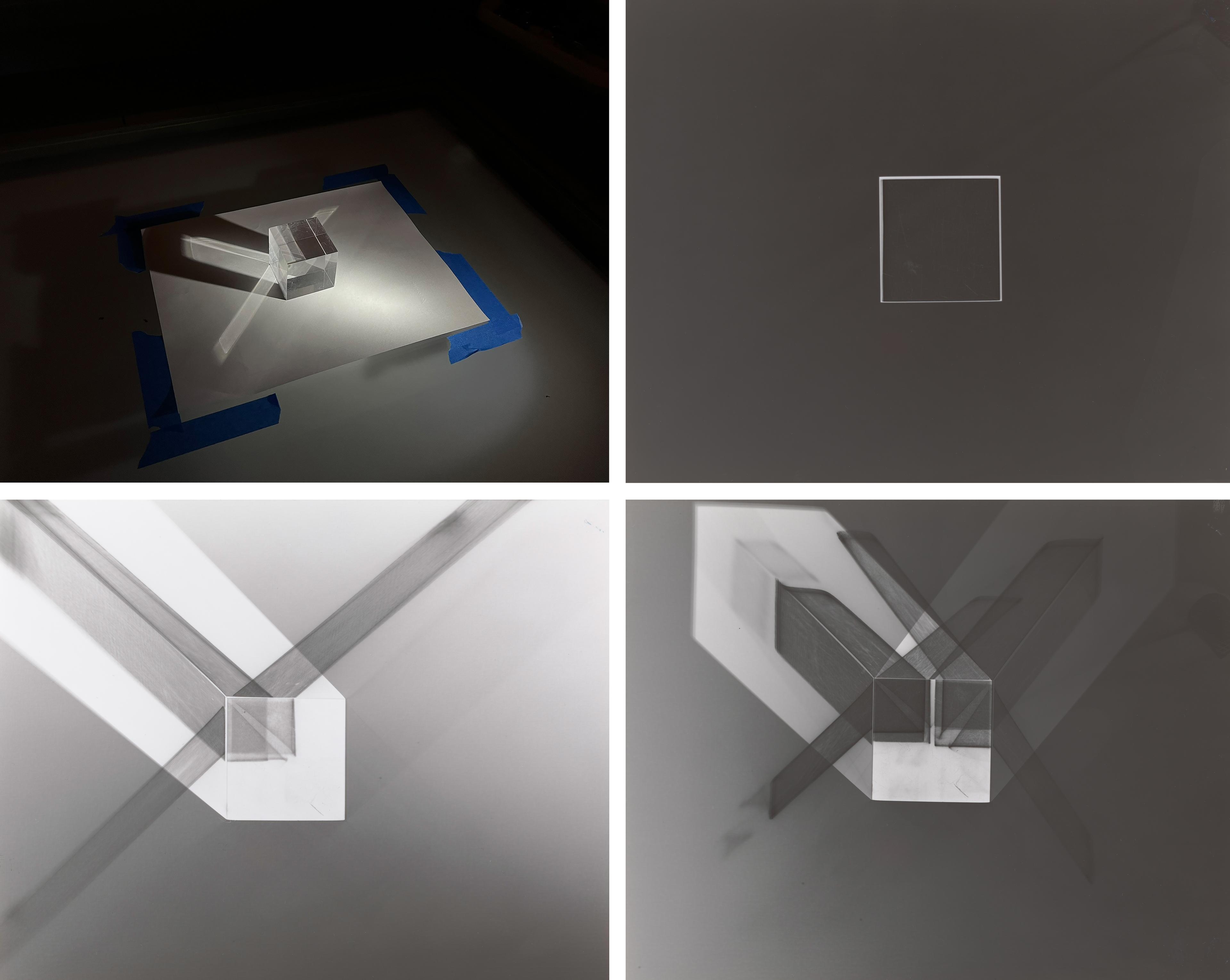
Fig. 3. These four images illustrate a simple darkroom experiment conducted at The Met. At top left is the physical setup with a plain piece of paper and a prism. At top right is a photogram made with a single overhead exposure. The photogram at bottom left was made by positioning the prism in the same location on the paper and flashing a light from the lower right corner. The photogram at bottom right was made in the same manner, but with a double exposure: first from lower right and then from lower left.
Distance, too, becomes visible, as an object resting directly on the photographic paper yields a crisp edge, while one held away from the surface of the paper dissolves into a blurred shadow. These are the kinds of effects we could reproduce in the darkroom, at least in principle. And yet, even in these more legible images, uncertainties in Man Ray's works persist. A pestle placed on the paper seems stable, until one notices a faint doubling at its edge, suggesting that it shifted during exposure (see fig. 1). Or was it moved deliberately? A cluster of prisms appears both precise and unruly with refracted light suggesting a deliberately angled source, or sources, that remain just out of reach of reconstruction (see fig. 2).

Fig. 4. In this experiment, the photogram on the left was made with a white egg and that on the right with a brown egg. The more reflective white egg produced more modeling of the rounded form in the resulting image.
Our own experiments with a simple lightbulb highlighted this ambiguity even further (fig. 5). Under direct overhead light, the bulb produced a recognizable, straightforward form. With a slight angle, its contours began to distort but remained legible. At a sharply oblique angle, however, the image collapsed into a dense oval, organized around a bright white central nucleus with radiating, irregular lines extending toward its edges. The form was immediately familiar—we had seen something similar in rayographs before—yet we had never suspected that such images might originate from something as ordinary as a lightbulb.
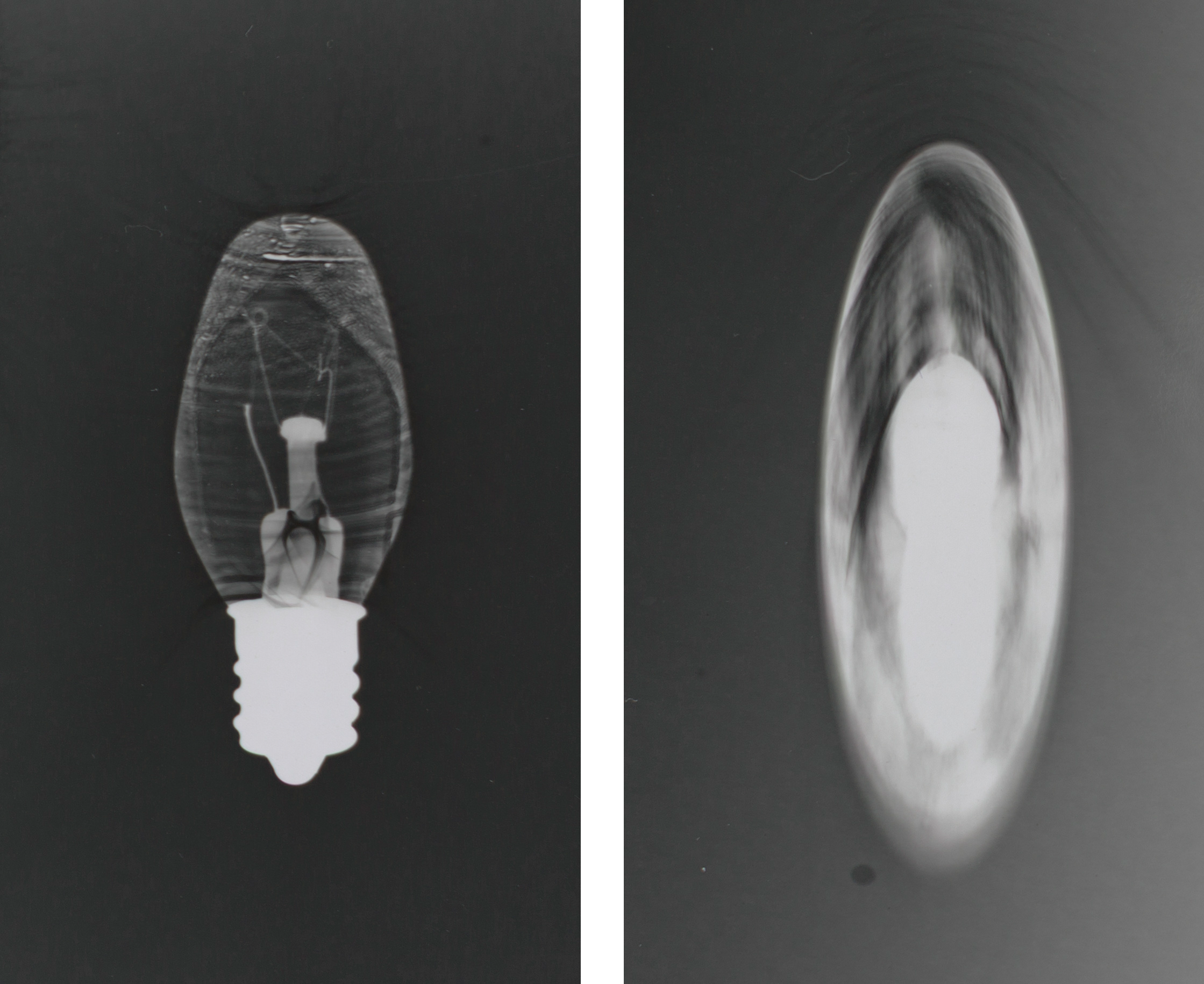
Fig. 5. Darkroom experiments with a lightbulb show the collapsing of familiar forms due to the angle of light exposure. On the left, the light source is directly above, and on the right, it is angled from the bottom.
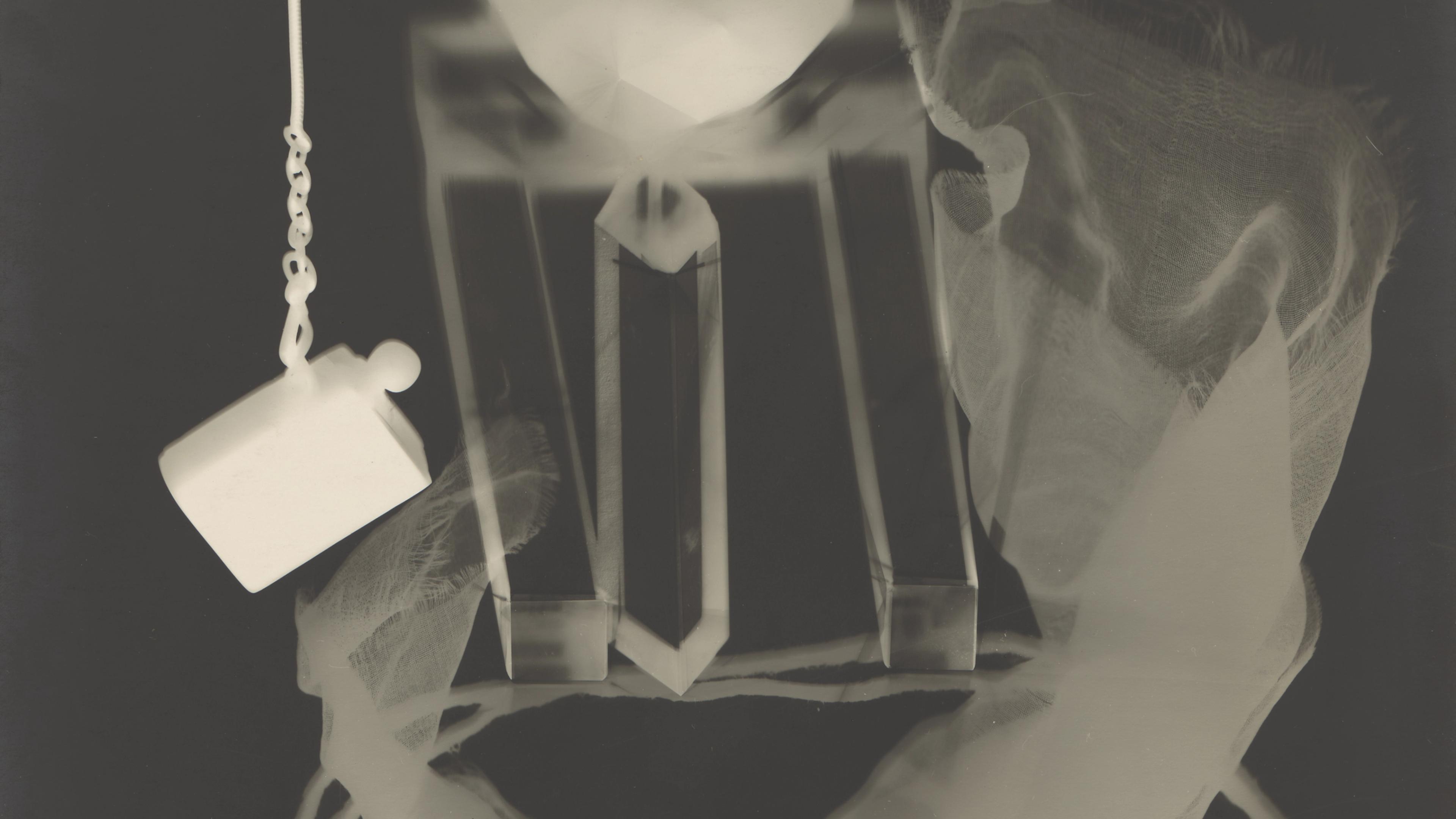
Then there are the images that seem to hinge on Man Ray's staging. In one composition, a cigarette lighter, which appears to be suspended by a thin cord, is accompanied by textiles, prisms, and other forms that are harder to name (fig. 6). The arrangement of the lighter suggests that the paper itself may have been oriented vertically, but how would the other elements have been held in place? Tonal variations hint at distance: the lighter, bright and sharply defined, seems closest to the surface, while the other forms recede into murkier grays, pointing us back again to the possibility of a vertical orientation. In another rayograph, coiled springs stretch across the paper sheet, their contours shifting in and out of focus. The spring forms an oblong loop that comes to a point somewhere just off the bottom edge of the sheet, suggesting that Man Ray suspended the spring in front of a sheet of paper for the exposure and then inverted the finished rayograph in a final editing step (fig. 7).
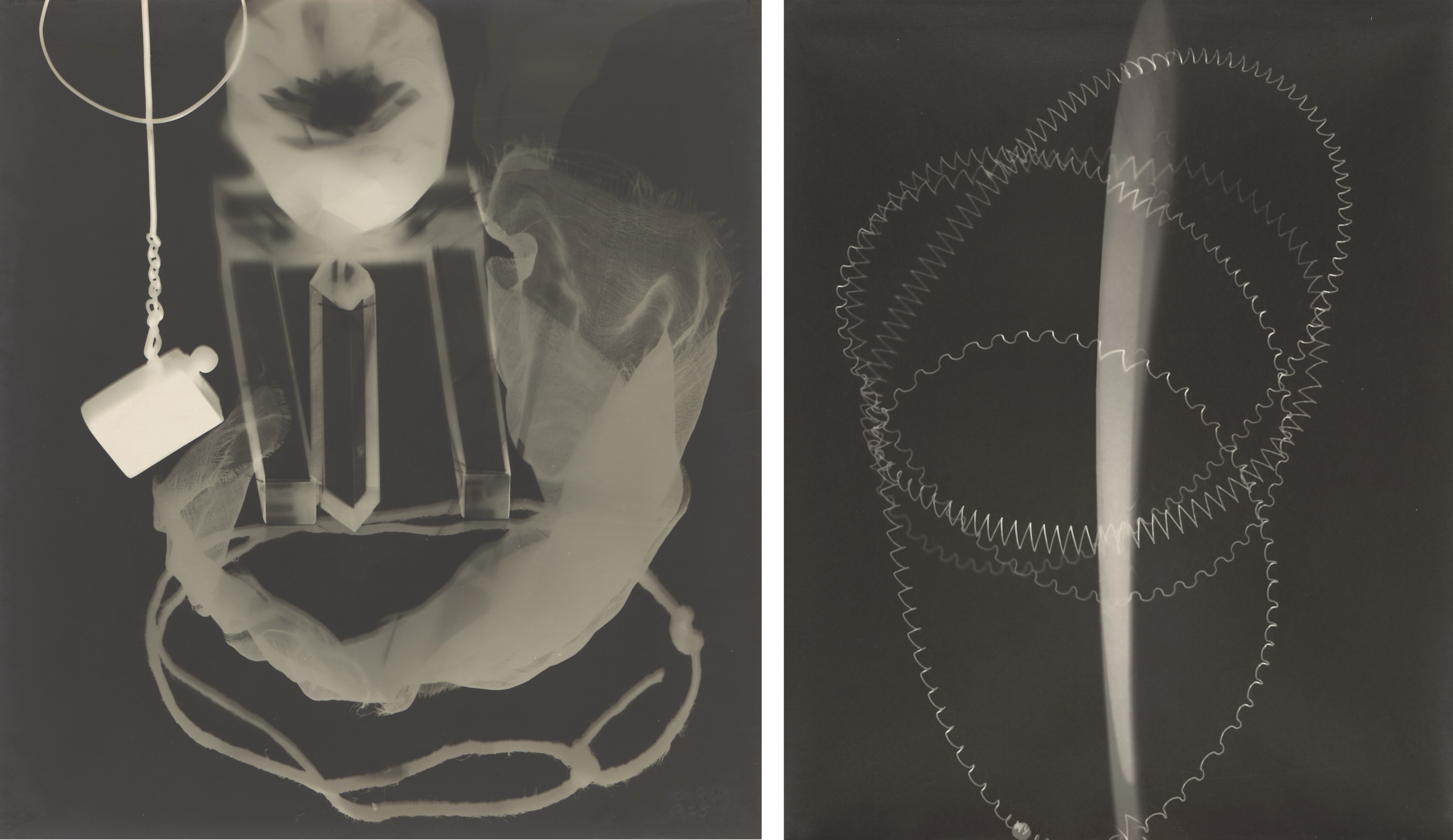
Fig. 6. Man Ray, Rayograph, 1923. Gelatin silver print, 11 11/16 x 9 7/8 in. (29.7 x 24 cm). The J. Paul Getty Museum, Los Angeles (84.XM.1000.156). © Man Ray Trust / 2026 Artists Rights Society (ARS), New York. Fig. 7. Man Ray, Rayograph, 1922. Gelatin silver print, 11 3/4 x 9 1/2 in. (29.8 x 24.1 cm). Yale University Art Gallery, New Haven, Gift of Collection Société Anonyme (1941.650). © Man Ray Trust / 2026 Artists Rights Society (ARS), New York
In some of the most striking examples, the “object” may not be an object at all. A rayograph from 1927, printed on heavily textured paper, reveals what looks at first like a rubbing made with charcoal dragged across the rough surface (fig. 8). In fact, the effect was achieved photographically: a raking, oblique light skimmed the peaks of the paper’s bumpy texture, leaving the valleys in shadow. The paper itself—usually a passive support—was here an active participant, shaping the image as decisively as any object placed on it.
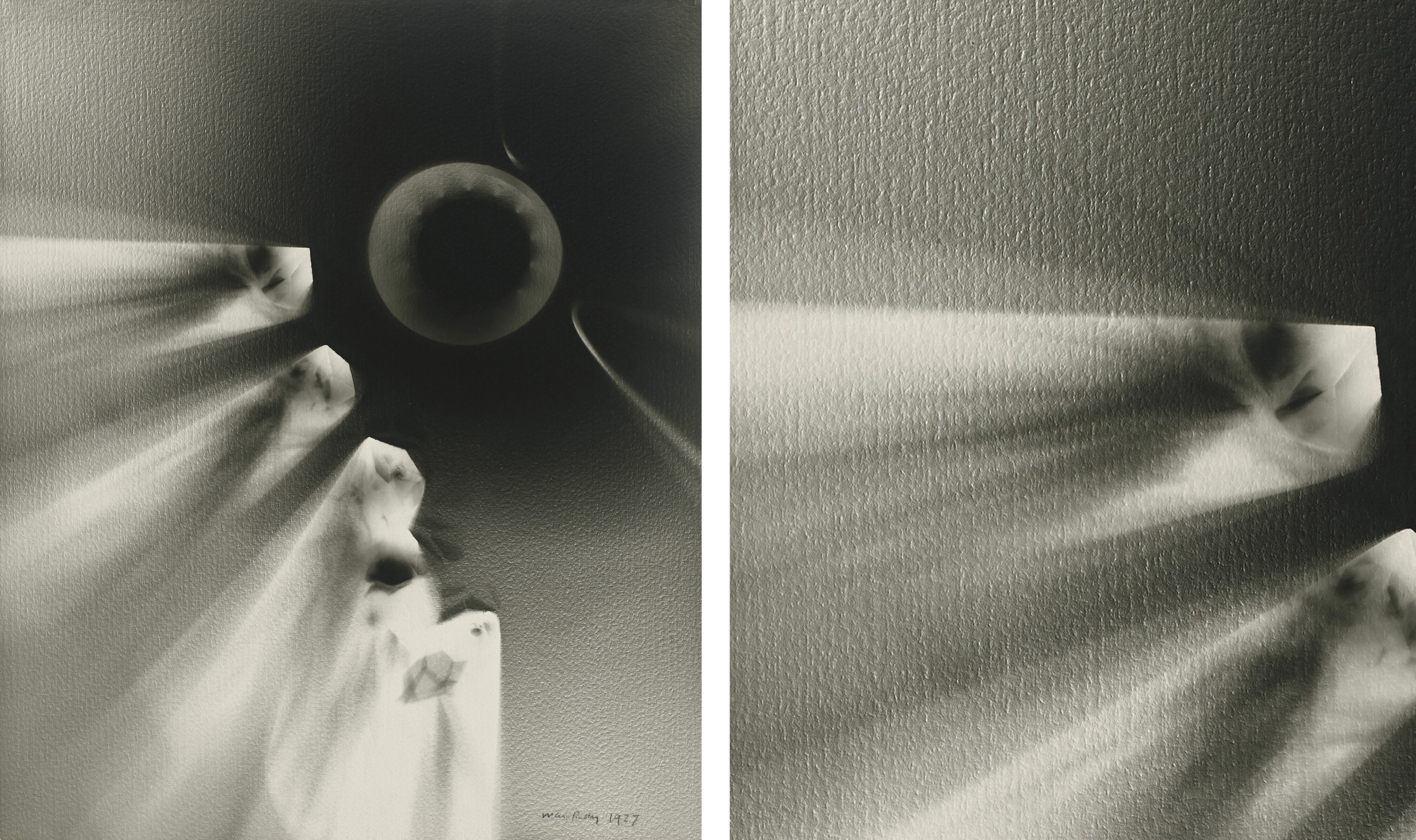
Fig. 8 (overall and detail). Man Ray, Rayograph, 1927. Gelatin silver print, 11 15/16 x 9 15/16 in. (30.3 x 25.2 cm). The Museum of Fine Arts, Houston, Museum purchase funded by the Caroline Wiess Law Accessions Endowment, The Manfred Heiting Collection (2002.1576). © Man Ray Trust / 2026 Artists Rights Society (ARS), New York
These observations bring us back to a question that hovers over Man Ray’s rayograph practice: how much of it was intentional and how much was the result of happy accident? The artist often cultivated a narrative of chance and spontaneity in his work. But the closer we looked and the more time we spent in the darkroom, the harder it became to sustain the idea of pure coincidence. Objects reappear and effects repeat. Certain visual strategies such as angled light, suspended forms, and layered exposures suggest iteration rather than happenstance.
Our own experiments in the darkroom offered few definitive answers. If anything, they reinforced the many variables and unknown elements that remain in understanding Man Ray's rayographs: the exact paper, its sensitivity and surface characteristics; the kind of light, its intensity and direction; the duration of the exposure; and the orientation of the setup. Instead, we have gained a different understanding of the artist’s experimentation, not as a series of happy accidents, but as a method—a sustained engagement with materials in which trial and error become a form of craft. In this sense, the darkroom is not a site where surprises simply occur, but one where they are actively cultivated. Rayographs reward slow looking. They are records of not only objects but also decisions, conditions, and constraints—some visible, others irretrievably lost. It is precisely this combination of clarity and uncertainty that keeps them endlessly fascinating.
