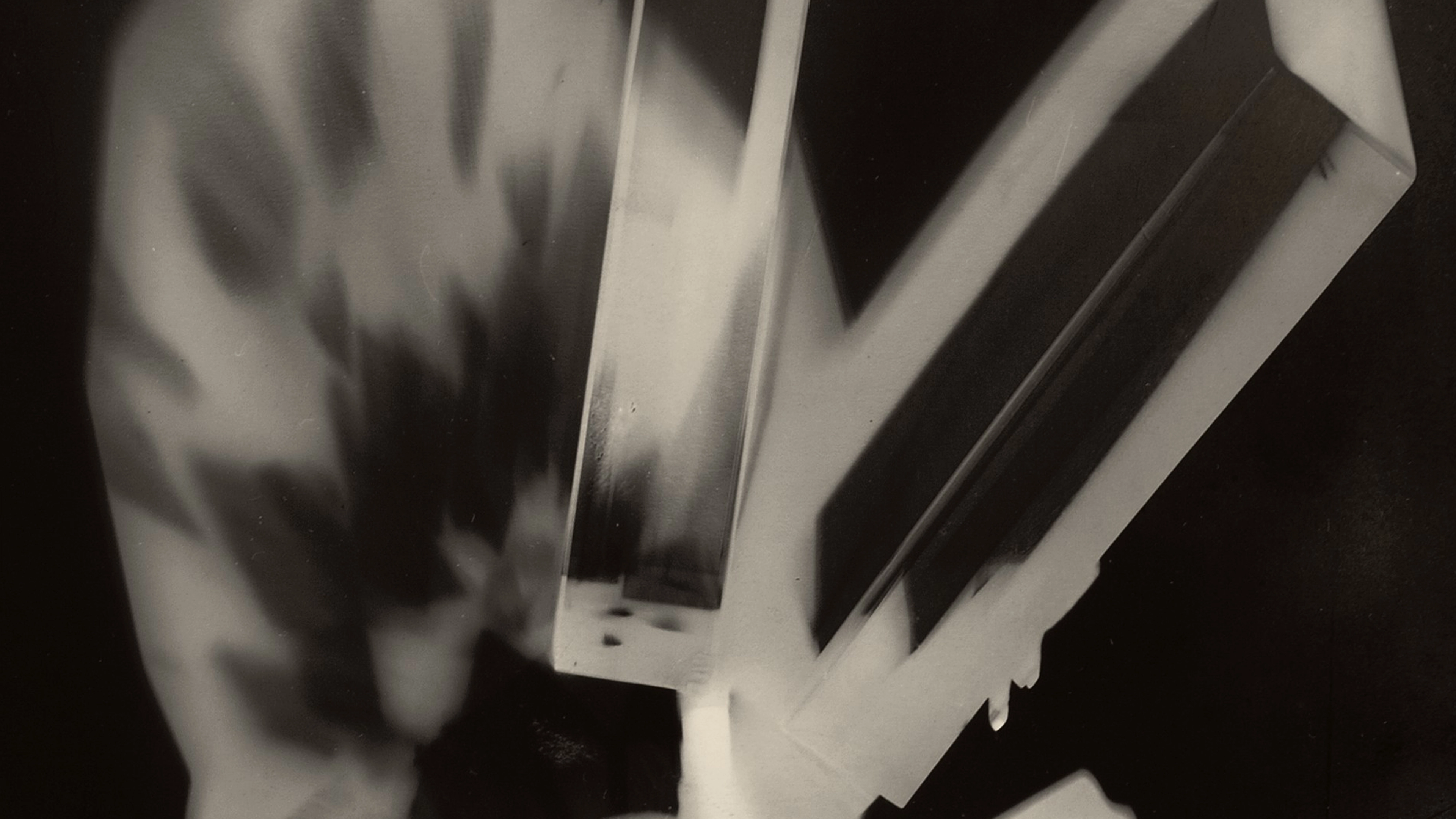
On September 6, 1930, one of Man Ray’s rayographs (fig. 1), originally produced in 1922, was reproduced in the “Arts and Culture” section of Dong-A Ilbo (동아일보, Oriental Daily News), with a brief, anonymous text (fig. 2).[1] The Korean newspaper, founded in 1920 under Japanese colonial rule, was one of the two most widely circulated Korean-language newspapers, alongside Chosun Ilbo (조선일보, The Korea Daily News), providing an important venue for intellectual and cultural discourse in the country.[2] Titled “A Cutting-Edge Artistic Style,” the article appears to be the first to introduce Man Ray’s work to Korean audiences. It states:
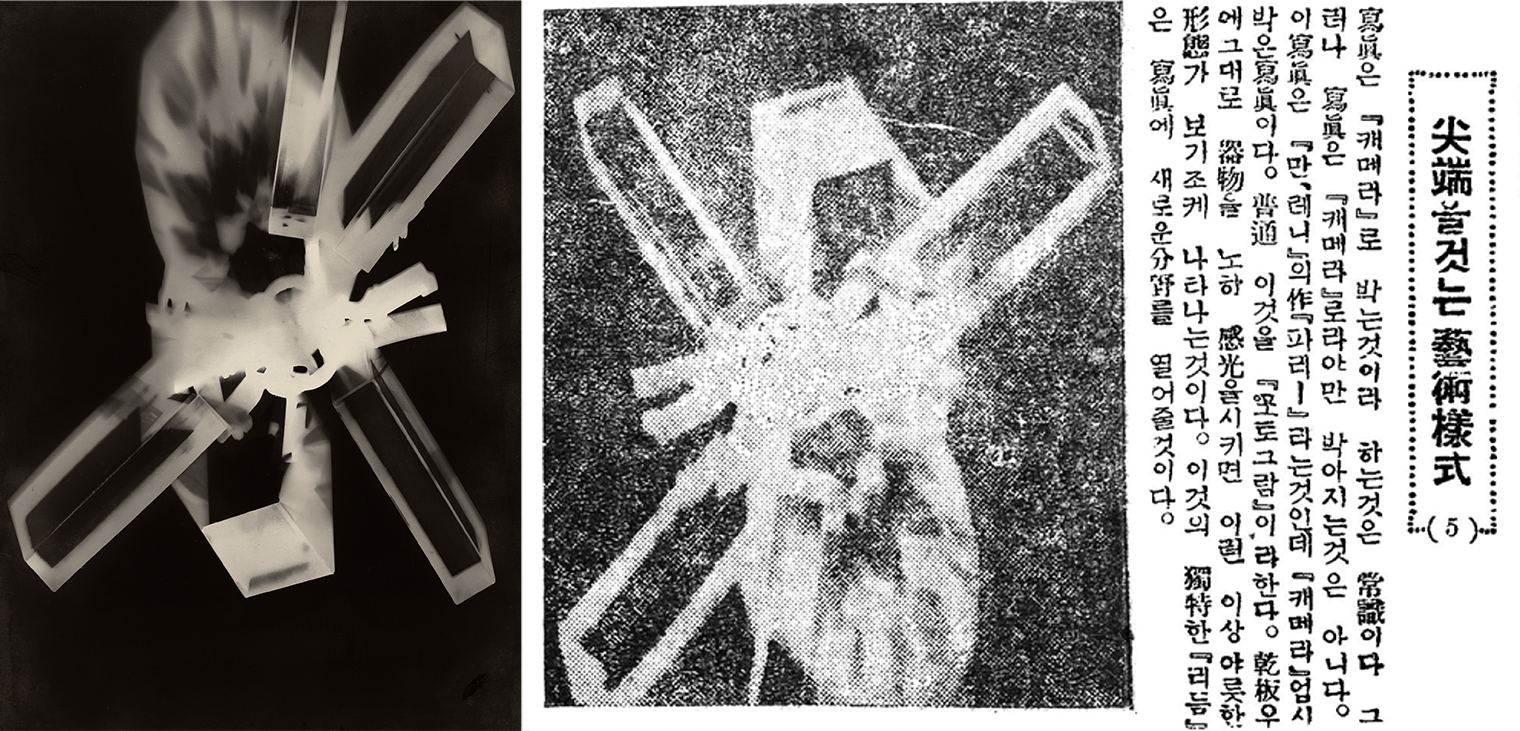
Fig. 1. Man Ray, Rayograph, 1922. Gelatin silver print, 9 3/8 x 7 in. (23.8 x 17.8 cm). Christie's Images Limited. © Man Ray Trust / 2026 Artists Rights Society (ARS), New York. Fig. 2. Detail of a rayograph by Man Ray reproduced in "A Cutting-Edge Artistic Style (5)" (尖端을것는藝術樣式[5]), Dong-A Ilbo, September 6, 1930
The source of the information and image cannot be easily identified. It can only be assumed that the content was either taken directly from Western sources or facilitated through Japanese media, as often happened during the colonial period. In either case, it shows that the Dong-A Ilbo editors had an interest in the rayograph and a certain understanding of its context. The publication of the article, which can be considered part of an ambitious endeavor to mediate Western avant-garde art for Korean audiences, coincided with Dong-A Ilbo’s renewed circulation after a monthslong period of dormancy. The six-part series that included the article on the rayograph began in the first issue after the newspaper resumed publication following its indefinite suspension by the colonial government for publishing an article implying Korean independence.[4] Alongside critical essays on Korean education and culture, the article demonstrates an aspiration to revitalize the Korean cultural field by introducing contemporary Western art. Among the six installments were included works by artists contemporaneous with Man Ray: Kurt Schmidt’s set design “Man at the Control Panel” (1924); Richard Neutra’s urban planning project “Rush City” (1928); films by Hans Richter and Lotte Reiniger; Viking Eggeling’s “Diagonal Symphony” (1923); a photograph by Florence Henri; and interior design by Lucie Holt Le Son.
Despite being short, the article did not go unnoticed. The following year, the art historian Ko Yusŏp (고유섭) wrote in the same newspaper that the text marked the introduction of the rayograph in the Korean press, even if some readers may already have been aware of it.[5] As the article sparked interest in this cutting-edge art form, more advanced discourse surrounding it emerged in the following years. For instance, in 1934, Chŏn P'yŏng (전평), a film critic writing a serialized critique of Korean photography in Chosun Ilbo, emphasized the need for Korean artists to study and emulate avant-garde photographic expressions such as Man Ray’s: “But how, then, should this movement in photographic art [Man Ray’s rayograph] be creatively developed in Korea? . . . This, of course, suggests that Korean culture as a whole has lagged behind that of foreign countries. It is also an undeniable fact that its cultural development has been impeded.”[6]
The rayograph became understood in Korea as being ahead of its time, especially in a country where art photography was only beginning to flourish.[7] The title of the 1930 article, literally “An Artistic Style that Walks along the Cutting Edge,” even translates the rayograph’s temporal advancement into a spatial metaphor. The introduction of the rayograph in Korea, then, can be seen as an effort to both catch up to Western modernity and overcome colonial reality, as the colonizer, Japan, was also behind compared to countries in the West. However, this association of the rayograph with a linear notion of temporal progress, and, therefore, a hierarchy of modern knowledge, is called into question when considering the medium of its reproduction: a newspaper, rather than an exhibition or a magazine dedicated to art or photography.
In this era, European photographic art was often introduced in mainland Japan through exhibitions and special-interest magazines. For instance, Film und Foto, a 1929 exhibition originally held in Stuttgart, which included works by Man Ray, László Moholy-Nagy, El Lissitzky, and others, traveled to Tokyo and Osaka in 1931; and Japanese periodicals such as Asahi Camera brought Man Ray’s work to photography audiences in the same period. In Korea, there were no corresponding media. Instead, reproductions of artworks appeared in newspapers where they were juxtaposed with miscellaneous articles on local and traditional topics; the rayograph featured in Dong-A Ilbo, for example, was placed alongside articles covering Korean traditional poetry and a historical Korean monk, a serialized novel, and medicine advertisements (fig. 3). Images in newspapers were of poor quality and sometimes lacked supplemental information. Even the rayograph was rotated upside down and its resolution was greatly compromised.
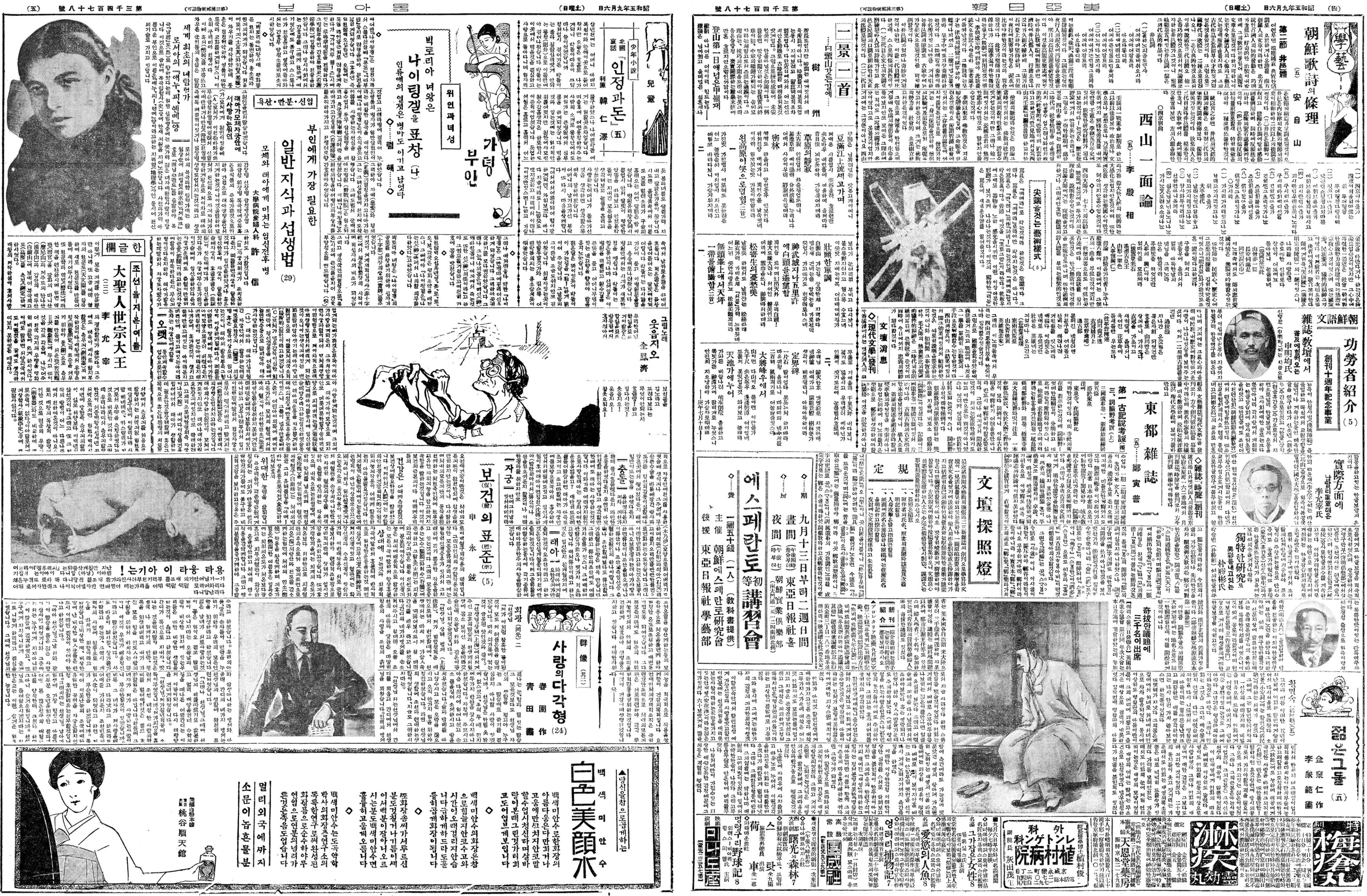
Fig. 3. Full newspaper page featuring the article “A Cutting-Edge Artistic Style (5)" (尖端을것는藝術樣式[5]), Dong-A Ilbo, September 6, 1930
Such circumstances contextualize the rayograph differently from a work in a gallery or an image in an art magazine. The reduced quality of the reproduction was offset by its wide circulation: more than forty thousand copies of Dong-A Ilbo were printed each day in 1928, allowing the rayograph to reach readers far beyond the limited audience of an exhibition or a specialized readership in Japan.[8] Furthermore, its appearance in a newspaper rendered the rayograph a part of daily experience rather than a unique work of art to be appreciated in isolation. The distinctions between the avant-garde, the everyday, and the traditional are blurred when various visual elements meet on the same page.
How, then, was the rayograph received by the Korean art world? Although it may not be directly connected to the 1930 article, the influence of the rayograph in Korea is evident in the era’s professional photography: Limb Eung-sik (임응식, 1912–2001), a prominent twentieth-century photographer, recalls in his autobiography that he learned the photogram method from the experimental works of Man Ray and Moholy-Nagy in the early 1930s. His photographic series Sŭpchak (습작, Study) produced in 1933, consists of photograms similar to Man Ray’s; by 1945, he had named the technique “Limbsgram,” following Man Ray's practice of using his name for his own method.[9]
The reception of the rayograph highlights a distinct mode of transmission of avant-garde art in Korea, where Man Ray’s work was neither reproduced nor received in a conventional sense. Circulated outside the established art media and network, the rayograph in Dong-A Ilbo was more of an informal, localized object than a pristine artwork. However, the value of this version of reproduction lies squarely in that exceptionality. Rather than presenting Man Ray straightforwardly in an art-world context, it reveals unexpected routes of spreading knowledge in a colonial mediascape: such seemingly indirect or peripheral means were often the norm rather than the exception. While it would be an overstatement to conclude that the reproduction of the rayograph in Korea was subversive, its appearance suggests a different way of understanding the global history of avant-garde art through its unconventional modes of circulation and reception.
Notes
All translations are my own unless otherwise noted. Romanization follows the McCune–Reischauer system, except for established proper nouns. East Asian names are presented in the conventional order used in East Asia, with surnames preceding given names.
Dong-A Ilbo was distinctly nationalist and critical of Japanese colonialism until colonial repression intensified after 1936. Today, it is regarded as a conservative newspaper.
“A Cutting-Edge Artistic Style,” Dong-A Ilbo, September 6, 1930, 5.
Dong-A Ilbo was suspended four times during the Japanese colonial period (1920, 1926, 1930, and 1936). The third episode lasted from April 17 to September 2, 1930, making it the longest suspension imposed up to that point. Each suspension resulted from the newspaper’s publication of material challenging colonial authority: criticism of the Japanese Imperial Household (1920), commemoration of the March First Independence Movement (1926), an article implying Korean independence (1930), and the removal of the Japanese flag from the uniform of Korean marathon runner Sohn Kee-chung in a published photograph (1936).
Ch’ae Chaun (pen name of Ko Yusŏp), “Emerging Art, Especially Cutting-Edge Architecture” (Sinhŭng yesul, t'ŭkhi ch'ŏmdanŭl kanŭn kŏnch'uk e taehaya), Dong-A Ilbo, January 24, 1931.
Chŏn P'yŏng, "On Photographic Art” (Sajinyesure taehaya), Chosun Ilbo, April 3–8, 1934.
See Pak Chusŏk, History of Korean Photography (Han'guk Sajin-sa) (Munhak Tongne, 2021).
Dong-A Ilbo-Sa, History of Dong-A Ilbo (Dong-A Ilbo Sa Sa), vol. 1 (Dong-A Ilbo Sa, 1975), 284–85.
See Limb Eung-sik, The Korean Photography Scene: Memoirs of Limb Eung-Sik (Naega Kŏrŏon Han'guk Sadan: Im Ŭng-sik Hoegorok) (Nunbit, 1999); Photography of Limb Eung Sik (Im Ŭng-sik) (National Museum of Modern and Contemporary Art Korea, 2011).
