
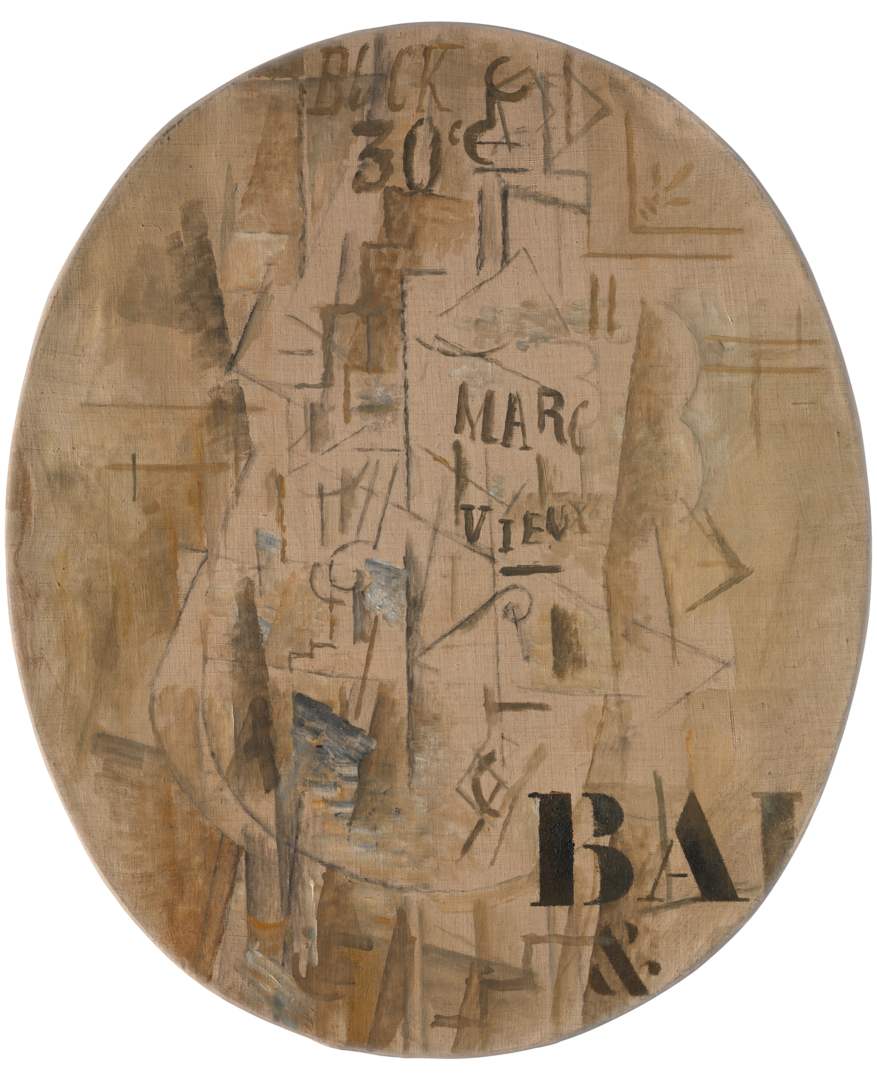
Georges Braque (1882–1963), Bottle of Marc Vieux, 1912. Oil and charcoal on canvas, 21 1/2 × 17 15/16 in. (54.6 × 45.6 cm). Leonard A. Lauder Cubist Collection, Purchase, Leonard A. Lauder Gift, 2015 © 2016 Artists Rights Society (ARS), New York / ADAGP, Paris
In Bottle of Marc Vieux, Braque combined drawing and painting, blurring the boundaries of the two media. He began by applying a thin white ground layer, composed of barium sulfate, lead white, gypsum, and linseed oil to a length of fine-weave canvas. In this way Braque created a particularly smooth support that approximated the high-quality wove paper that both he and Picasso favored during this period. He attached the prepared canvas onto a standard size oval stretcher before he began to work on it. Braque used fine charcoal to draw the outlines of the major compositional elements, which he selectively enhanced with thin layers of oil paint. He continued using charcoal, both on top of and adjacent to the paint, creating a subtle variety of effects that modulate the perception of depth and volume. His sophisticated use of charcoal is particularly apparent under magnification (FIG. 1). Braque amplified these visual subtleties by varying the density of his paint application. Many areas are devoid of paint, leaving the ground layer exposed. Elsewhere, nearly imperceptible washes define objects such as the etched rectangular mirror at the upper right. Below, thickly textured letters intimate the word "BAL.” The letter B—the darkest and most thickly painted—was created by daubing layers of umber and black paint through a stencil (FIG. 2). The deep indentation and paint smudge above the B is indicative of such a device more commonly associated with the design trade.
With analytical assistance from Silvia Centeno, Research Scientist, Department of Scientific Research
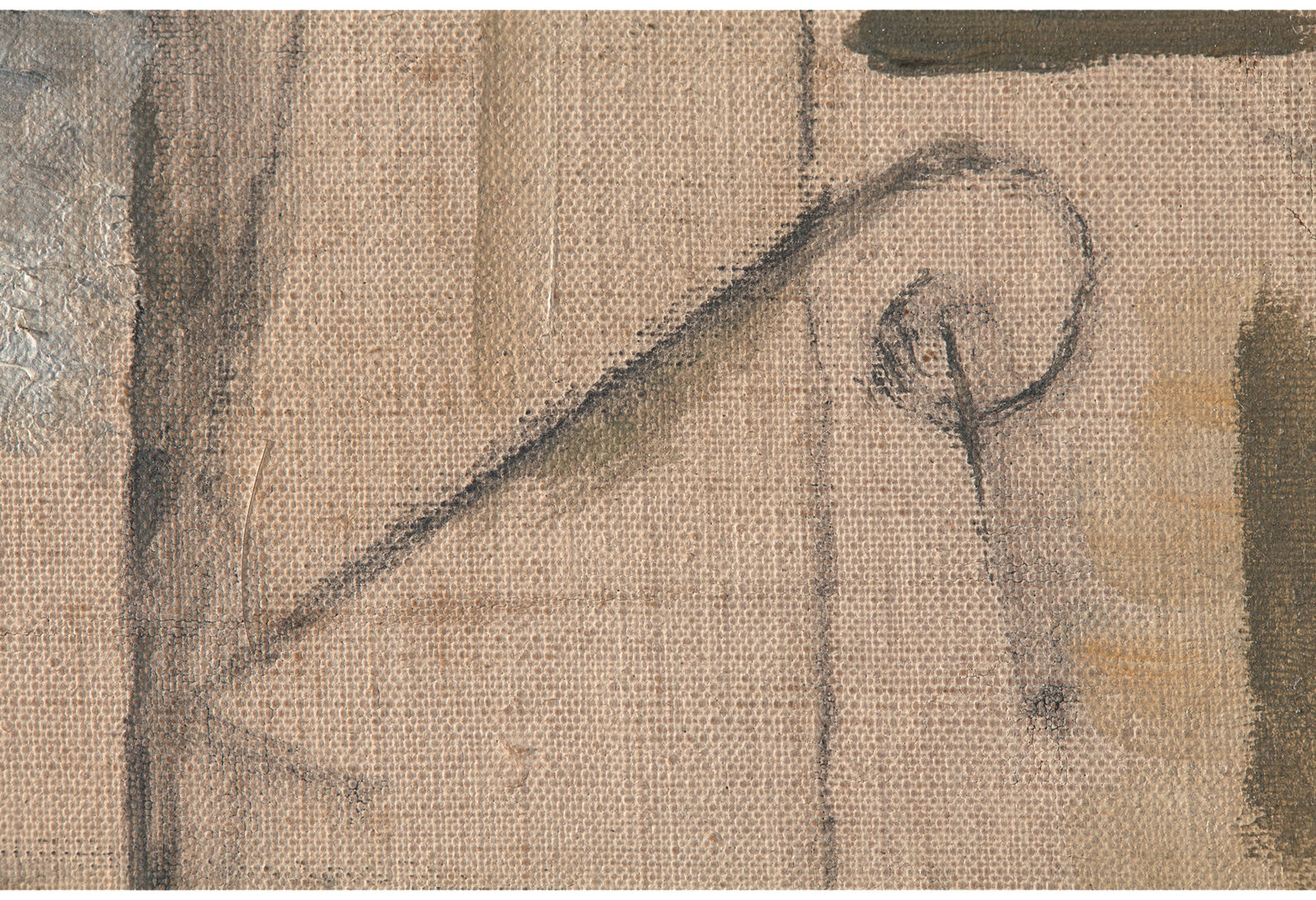
FIG. 1: Raking light detail showing the charcoal under, adjacent, and on top of the paint layer.
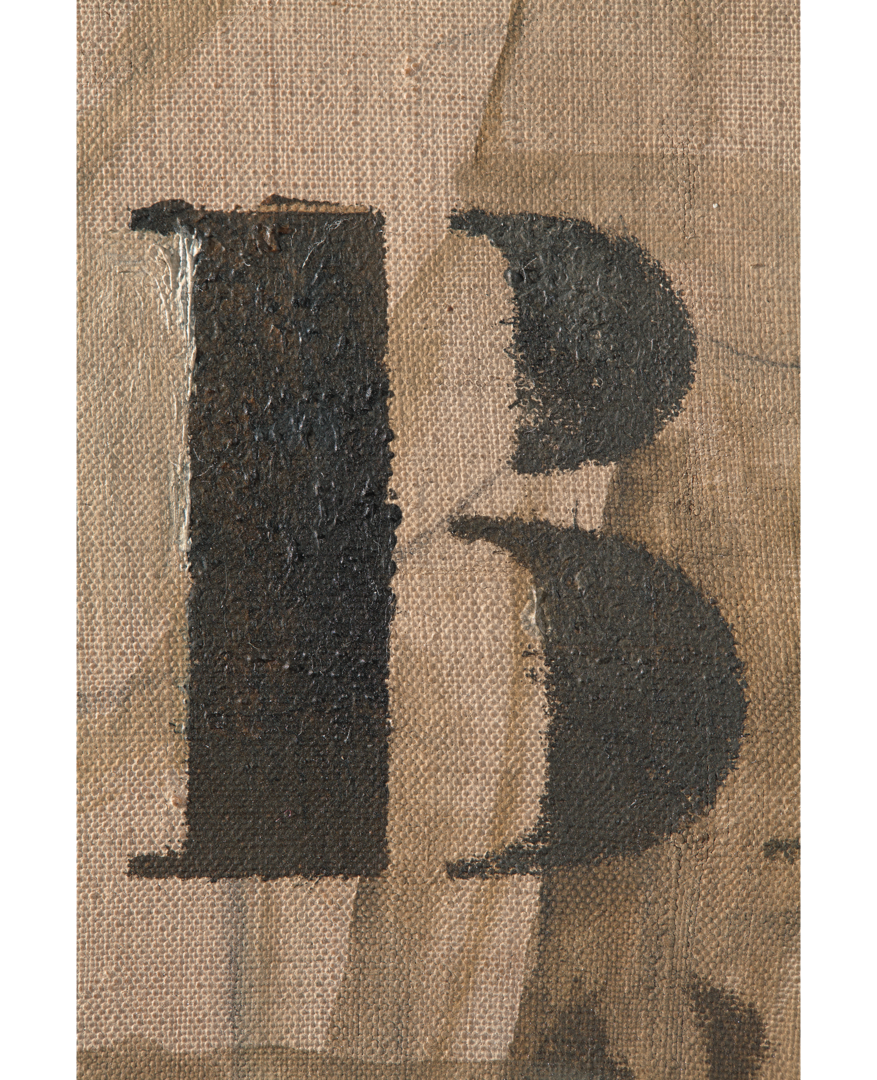
FIG. 2: Raking light detail showing the thick textured paint layer and the mark left by the stencil letter above the vertical bar of the B.


