Fashion and music have long been intertwined, each shaping and reflecting the other. Musical genres frequently carry distinct styles of dress that help define the subcultures around them. At the same time, certain musical icons have transcended sound, cultivating visual identities that become as influential as their music and leaving a lasting impact on fashion.
These intersections have been explored in past exhibitions at The Costume Institute. Rock Style (1999–2000) surveyed the fashion of rock performers from the 1950s through 1990s, featuring artists such as Madonna, Mick Jagger, David Bowie, the Beatles, Elvis Presley, and Bono. Punk: Chaos to Couture (2013) traced punk’s influence on high fashion through approximately one hundred garments, ranging from original punk street styles to contemporary haute couture.
The Costume Institute Library continues this exploration through its extensive holdings, which document the dynamic relationship between fashion and music across global subcultures, from ballroom house to heavy metal. These library materials include books, magazines, store catalogs, concert ephemera, and fan zines that capture the visual and cultural impact of music.
Community and belonging
Across cultures and generations, music and fashion create spaces for connection, solidarity, and belonging. The following books document communities that have used dress, performance, and sound to forge collective identities and celebrate self-expression.

Gaskin, Gerald H. Legendary: Inside the House Ballroom scene ([Durham: Duke University Press, 2013)
Ballroom house music, a subgenre of house music developed for voguing and ballroom performance, provides the soundtrack for the vibrant culture documented in Legendary: Inside the House Ballroom Scene (2013). Gerard H. Gaskin’s photographs take readers inside the world of house balls, late-night underground pageant events where predominantly Black and Latinx LGBTQIA+ communities gather to celebrate identity, creativity, and self-expression.
Participants organize themselves into chosen families, known as “houses,” and compete in categories such as fashion, attitude, dance, and “realness.” Within these spaces, the ballroom scene emerges as a powerful place of artistry, empowerment, and pride. Through images ranging from quiet backstage moments to electrifying runway performances, Gaskin captures a community in which individuals often marginalized elsewhere can be fully seen and celebrated.
In Gaskin’s own words, “The participants work to redefine and critique gender and sexual identity through an extravagant fashion masquerade. Women and men become fluid, interchangeable points of departure and reference, disrupting the notion of a fixed and rigid gender and sexual self.” Featuring photographs from events in the New York area, Philadelphia, Richmond, and Washington, DC, taken between 1995 and 2012, the book also includes an introduction by Deborah Willis and the essay “The Queer Undercommons” by Frank Roberts.
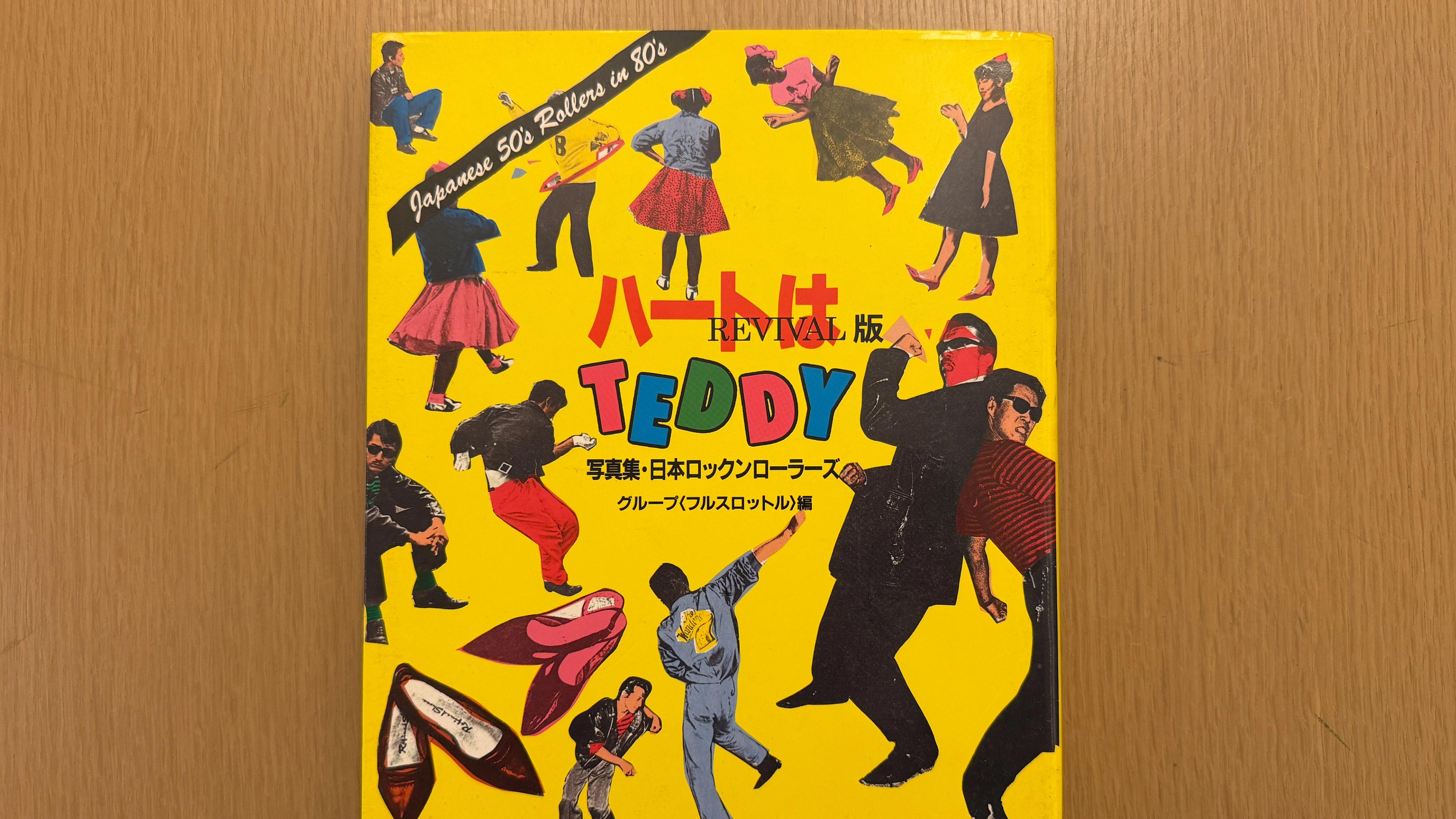
Revival 版 ハートはTEDDY : 写真集・日本ロックンローラーズ (2003) documents Japan’s enduring rockabilly revival, capturing a community that reimagined the music, fashion, dance, and spirit of 1950s American rock ’n’ roll. Emerging in the 1980s and continuing today, the movement is far more than a nostalgic tribute. Through intimate photographs of enthusiasts sporting towering pompadours, leather jackets, and Teddy Boy and Teddy Girl-inspired fashions, the book presents rockabilly as a living subculture rooted in identity, performance, and belonging. It shows how an imported American cultural phenomenon evolved into a distinctly Japanese form of self-expression while remaining connected to its musical roots.

Gurūpu Furusurottoru. Revival ban hāto wa TEDDY: shashinshū Nihon rokkun rōrāzu (Revival 版 ハートはTEDDY: 写真集・日本ロックンローラーズ) (Tokyo: Daisan Shokan, 2003)
Born from Japan’s postwar fascination with American popular culture and flourishing in Tokyo neighborhoods such as Harajuku and Yoyogi Park, the rockabilly scene demonstrates the enduring power of fashion and music to create cultural bonds across generations, and extended to cities like Himeji, Kobe, Kyoto, Nagoya, Osaka, and Sapporo, as captured in this book. Like many youth-driven style movements, Japanese rockabilly transformed borrowed influences into something of its own, blending reverence for the past with contemporary expression. The culture documented in the book continues to thrive. Every Sunday, enthusiasts of all ages still gather in Yoyogi Park to dance to classic records and showcase 1950s-inspired ensembles, sustaining a vibrant tradition rooted in music, fashion, and collective identity.
Identity and reinvention
For many communities, fashion and music are not merely forms of expression but tools for negotiating identity, adapting cultural influences, and reimagining the self. These publications reveal how individuals and communities have transformed music and dress into powerful forms of cultural expression, resilience, and reinvention.

Ai, Elizabeth. New wave : rebellion and reinvention in the Vietnamese diaspora = nơ̂i loan và tái tao trong cộng đò̂ng Việt hải ngoại ([Los Angeles]: Angel City Press, Los Angeles Public Library, [2024])
New Wave: Rebellion and Reinvention in the Vietnamese Diaspora (2024) was created to complement Elizabeth Ai’s 2024 documentary film New Wave, which brings visibility to a vibrant yet long-underrecognized cultural movement. Centered on the Vietnamese diaspora in the 1980s, the project also marked the fiftieth anniversary of the fall of Saigon and Vietnamese migration, and examines how young refugees in Southern California forged new identities through music and style in an age heavily influenced by MTV era visual culture, the provocative content planting seeds of rebellion and going against the grain for youth, heavily influencing fashion.
Drawing on synth-pop and Euro disco, Vietnamese New Wave became a defining expression for first-generation Vietnamese Americans as they negotiated heritage and assimilation. Rather than mainstream channels, the music circulated through local record stores and borrowed VHS tapes of Paris By Night, a concert series showcasing both traditional and contemporary Vietnamese musical performances. Through essays by scholars and cultural figures, alongside rare images from community archives, New Wave artists, record labels, fans, and Ai’s family collection, the book explores how creative expression fostered belonging, resilience, and self-definition for a generation shaped by displacement.
I was a fan of Lynda Trang Dai, though I was too young to fully understand the subculture she represented. My parents called her the “Vietnamese Madonna,” and seeing her on the book’s cover alongside her vintage cassettes and photographs of young women with towering bangs and perms (hairstyles I briefly adopted as a tween) made this book especially meaningful. To see this chapter of Vietnamese American cultural history so thoughtfully documented is remarkable and an invaluable addition to our fashion library collection of underrepresented voices.
Marshall, Frank. Renegades (Johannesburg: Rooke Gallery, 2011)
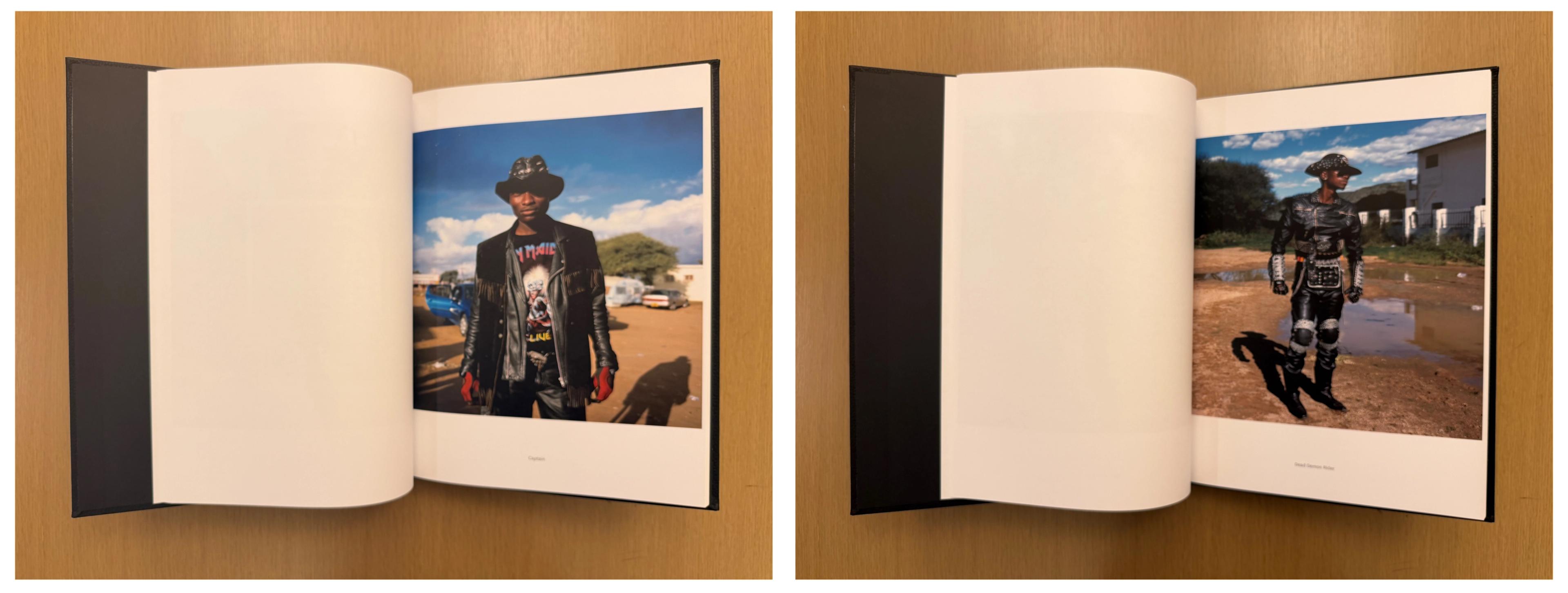
Renegades (2011) is a photographic series by South African photographer Frank Marshall that, at first glance, provokes curiosity about who these subjects are, where they live, and what inspired their striking blend of heavy metal-influenced style and cultural aesthetics. Marshall first encountered Botswana’s heavy metal subculture in 2008 while photographing a South African band performing in Gaborone. Intrigued by this community, he developed Renegades as his final-year photography thesis project at Tshwane University and completed the series in 2010. The project culminated in a solo exhibition at Rooke Gallery in Johannesburg in 2011, which traveled to other locations in South Africa and the United States.
Carefully composed against the backdrop of the Sub-Saharan African landscape, each subject confronts the viewer with a striking self-possession and purpose. Because heavy metal has historically been associated with predominantly white, male, and Western audiences, these images offer a powerful invitation to reconsider this genre’s global reach and the diverse ways subcultures take shape across cultural contexts. In doing so, Marshall’s series challenges stereotypes and reveals how fashion and music can serve as tools for cultural exchange, community building, and self-expression.
Artistic collaboration and innovation
Beyond shaping communities and identities, music and fashion have also inspired creative partnerships that expand the boundaries of both disciplines. The collaboration between avant-garde Japanese designer Kohshin Satoh and jazz legend Miles Davis demonstrates how artists working across fashion and music can create new visual languages and enduring cultural legacies.

Satoh, Kohshin. Kohshin, the Best to Best, Miles (San Francisco: Cadence Books, 1993)
Beginning in the mid-1980s, Satoh designed Grammy Awards ensembles for Davis, as well as stage designs and visual concepts for his international tours. Their collaboration reflected a shared interest in innovation, performance, and self-expression, bridging Japanese avant-garde fashion and American jazz culture. Their creative partnership is documented in the publication Kohshin, the Best to Best, Miles (1993), a photography book project accompanied by an exhibition in Tokyo.
Satoh’s designs contributed to Davis’s evolving late-career style and imagery, while simultaneously elevating the designer’s international profile. Even after Davis’s death in 1991, Satoh continued to engage with the musician’s legacy through graphic design projects, including the CD jacket for the memorial album 1969 MILES and the record sleeve for Panthalassa: The Music of Miles Davis 1969–1974 Remixed. Together, these projects underscore the enduring dialogue between fashion and music, one that extends beyond performance.
Conclusion
Encountering these stories and histories through Ai’s New Wave book and documentary underscored for me the importance of representation and visibility, a common thread throughout all the examples discussed here. As a first-generation Vietnamese American myself, Ai’s project deepened my understanding of my family’s history and, in many ways, my own. It reveals how music and fashion can build community, foster belonging, and help us process the complexities of intergenerational, unspoken trauma. In a conversation I had with Ai, she said, “We have been carrying so much for so long—it’s time to release some of it into the world.” Seeing that release take shape through music, clothing, and creative expression is profoundly moving, a testament to the ways fashion and music can foster belonging, shape identity, inspire artistic collaboration, preserve histories, and make visible stories that might otherwise remain unheard.
The books discussed here offer only a small glimpse of the wide range of resources in The Costume Institute Library that explore the intersection of fashion and music. To discover more, search the keyword phrase “fashion and music” in Watsonline. Materials from The Costume Institute Library can be requested and consulted in the Thomas J. Watson Library. For additional information about The Costume Institute’s Irene Lewisohn Costume Reference Library, archives, and special collections, please visit our website and follow us on Instagram at @metcostumeinstitute and @costumeinstitutelibrary.


