Patio from the Castle of Vélez Blanco
Artwork Details
- Title: Patio from the Castle of Vélez Blanco
- Date: 1506–15
- Culture: Spanish, Almería
- Medium: Marble of Macael (Sierra de Filabres)
- Dimensions: 33 × 63 × 44ft. (10.06 × 19.21 × 13.41)
Other (pilaster fragment, wt. confirmed): 71 lb. (32.2 kg)
Other (Cornice fragment, wt. confirmed): 217 lb. (98.4 kg)
Other (Unused marble fragments weight 170-384 lbs): 384 lb. (174.2 kg) - Classification: Sculpture-Architectural
- Credit Line: Bequest of George Blumenthal, 1941
- Object Number: 41.190.482
- Curatorial Department: European Sculpture and Decorative Arts
Audio
2316. Patio from the Castle of Vélez Blanco
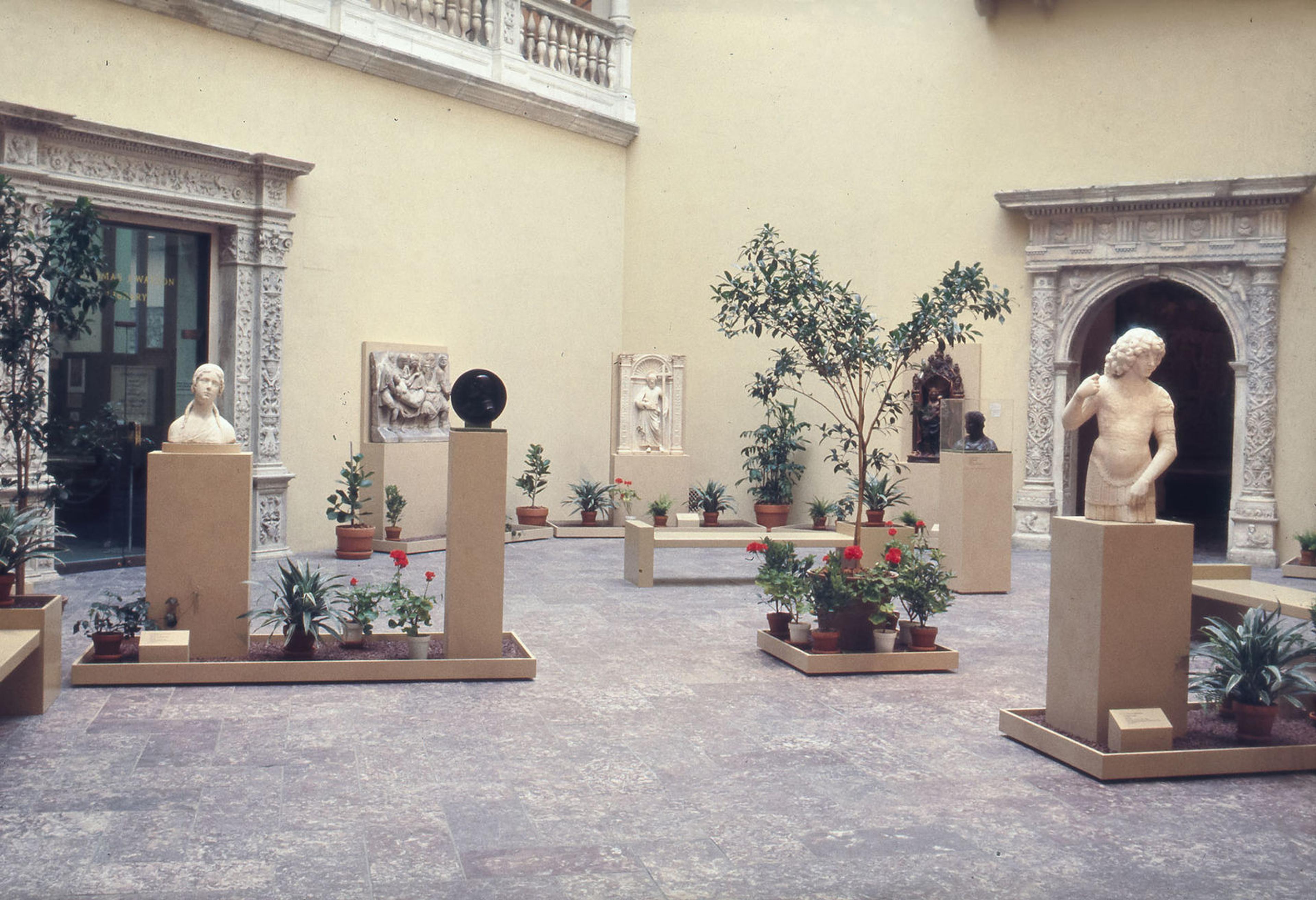
JIM DRAPER: I'm Jim Draper, long-time curator in the Department of European Sculpture and Decorative Arts. And you are entering one of our most magnificent spaces in the museum. This is a patio that was built in the early sixteenth century for a nobleman in the south of Spain, Pedro Fajardo. The town is called Vélez Blanco. This nobleman had made a great career in the service of the Spanish king, and this fortress town was given to him as a royal gift.
Let's come on into the room, and you get a quick taste for the sumptuous marble carvings. Fajardo hired teams of Italian marble sculptors from the region of Lake Como to come down and carve these marbles in the native stone.
LUKE SYSON: They decorated the window frames along the wall with scrolling leaves and “grotesques” inspired by ancient Roman carvings. The doorway directly opposite, as well.
JIM DRAPER: And they made up drawing books of these motifs and took them with them down there to Spain.
LUKE SYSON: We’re not sure how the patio was originally used, though it once held a well. Today, the castle it came from is completely gutted. And before it came here, the donor, George Blumenthal, installed the architectural elements in his New York townhouse in 1913.
JIM DRAPER: Not everything in here is from that castle. The Singing Gallery opposite the columns is from a church we don't know. And the portal below it is probably from an altarpiece in Pisa.
LUKE SYSON: Today, the courtyard is used to house an important collection of Italian Renaissance sculptures with space enough for you to walk around and view them from every side. And beneath the arcade, in the corner of the gallery, a staircase leads up to the balcony. There, you can hear about Spanish art, and get a dramatic view of the Vélez Blanco patio from above.
More Artwork
Press the down key to skip to the last item.
Related Content
 Free to download
Research Resources
The Met provides unparalleled resources for research and welcomes an international community of students and scholars. The Met's Open Access API is where creators and researchers can connect to the The Met collection. Open Access data and public domain images are available for unrestricted commercial and noncommercial use without permission or fee.
To request images under copyright and other restrictions, please use this Image Request form.
Feedback
We continue to research and examine historical and cultural context for objects in The Met collection. If you have comments or questions about this object record, please contact us using the form below. The Museum looks forward to receiving your comments.