In July 1923, Man Ray made his first of four films, Retour à la raison (Return to Reason), which would prove to be nowhere and everywhere in his 1920s work. Screened only once in the interwar period, the film was almost entirely forgotten. It survived as a photograph, a rayograph, and a snippet of film in seminal works produced (and widely reproduced) in and beyond the mid-1920s. Retour à la raison and its many afterlives strain not only the boundaries of discrete artworks but also the borders between camera-based and cameraless photography and film, movement and stillness, and even visibility and invisibility. Rather than focus on Retour à la raison as an independent work, this essay explores a radical cinematic experiment and its dispersion across multiple media, techniques, and independent artworks.[1]
Initially, Retour à la raison lay somewhere between a film and an event. It was screened once and only once in the interwar period: the venue was the Soirée du coeur à barbe (Soiree of the Bearded Heart) at the Théâtre Michel on the night of July 6, 1923. Best known as the last great Dada soiree, the Coeur à barbe featured an unexpected brawl between rival art gangs: Tristan Tzara’s Dadaists and André Breton’s nascent Surrealists. The film garnered only scattered notices and was not shown in public or even mentioned again until well after World War II.
At least not as a film. Man Ray turned one of the frames from the film’s conclusion—showing the undulating, light-striped torso of Kiki de Montparnasse—into a photograph with the title Retour à la raison (fig. 1). An obscure film was transformed into a famous photograph. And the fame of the photograph further obscured the film and its most innovative features.

Fig. 1. Man Ray, Torse (Retour à la raison) (Torso [Return to Reason]), 1923. Gelatin silver print, 8 1/4 x 6 3/8 in. (21 x 16.2 cm). The Metropolitan Museum of Art, New York, The Bluff Collection, Promised Gift of John A. Pritzker. © Man Ray Trust / 2026 Artists Rights Society (ARS), New York
Today the film is celebrated for its “rayographic” elements.[2] Shortly after World War I, a number of artists reinvented cameraless photography as an avant-garde technique. (The process is as old as camera-based photography. Amateurs and scientists had long produced images technically similar to the first cameraless photographs made by Man Ray, László Moholy-Nagy, Christian Schad, and other self-proclaimed “inventors” of the technique.[3]) In an effort to secure his own dominion over these photographs, Man Ray took advantage of his photophilic name and dubbed them “rayographs.”[4] To make a rayograph, the artist interposed objects directly between a sheet of photosensitive paper and a light source. Rather than record the objects’ reflections through the lens of a camera obscura, the photosensitive surface served as a screen to register their refractions and shadows. Never wholly abstract and often imbued with mystery, the rayograph quickly became one of Man Ray's signature creations.
For the Soirée du coeur à barbe, Man Ray applied his cameraless technique to film. In his later and largely apocryphal account, he wrote: “I threw pins and thumbtacks at random; then turned on the white light for a second or two, as I had done for my still Rayographs.”[5] The pins are randomness incarnate, but the thumbtacks follow a strict logic (fig. 2). Man Ray placed exactly one tack at the center of a length of film (that is, at every fourth perforation in the filmstrip) so that, when projected, they collectively create the illusion of a single tack wobbling erratically.[6] Rather than use the cinematographic camera and projector to disassemble and reassemble an object in motion, Man Ray constructed the illusion of motion from dozens of immobile tacks precisely placed on the filmstrip. Neither live action nor stop-motion animation, the rayographic sequences that connect filmed sequences in Retour à la raison inaugurated a new genre of cinematic movement without correspondence in the real world.[7] Man Ray employed a similar approach for glass beads, a coiled metal spring, and other objects set into unpredictable motion ex nihilo.

Fig. 2. Details of rayograph segment with tacks from the film Retour à la raison (Return to Reason), 1923. Courtesy of WOMANRAY and CINENOVO. © Man Ray Trust / 2026 Artists Rights Society (ARS), New York
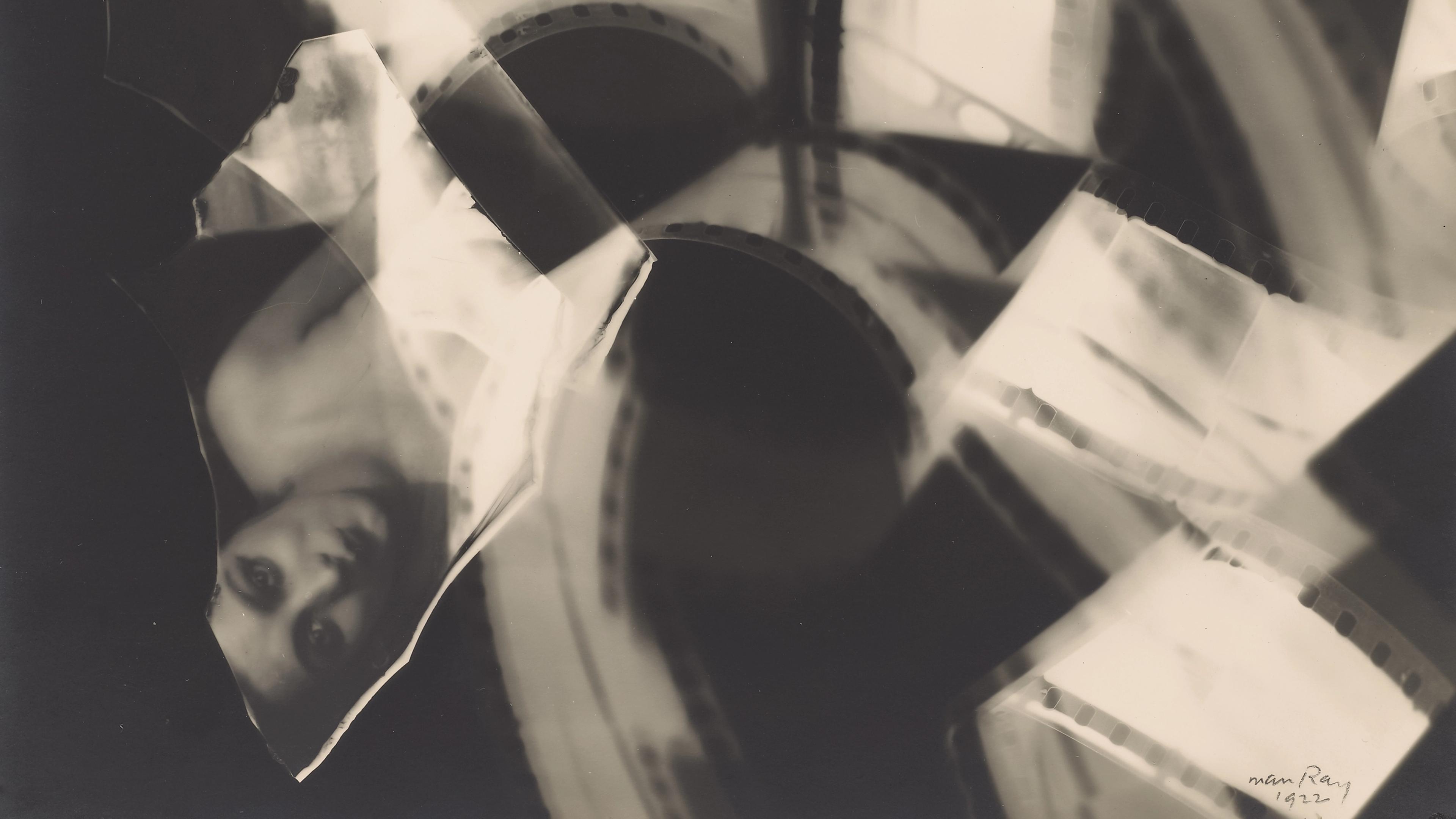
Man Ray’s experimental film rushed too quickly past the rowdy viewers assembled at the Soirée du coeur à barbe to elicit any enduring commentary. And so, the artist took extraordinary measures to keep his celluloid filmstrips visible. A 1923 rayograph, now at the Museum of Modern Art, is composed from the luminous, looping celluloid filmstrips featuring Kiki’s torso (figs. 3, 4). Reproduced on the cover of Hans Richter’s special cinema-focused issue of the journal G, the rayograph served as a cipher for avant-garde cinema writ large.[8] But Retour à la raison and its related rayograph were not Man Ray’s first attempts to make cinematic celluloid visible through rayographic means. A 1922 rayograph similarly features filmstrips: in this earlier rayograph, the filmstrips are illegible, but the upside-down face of Kiki (from a shattered glass-plate negative) stares at us (fig. 5). In these two rayographs, light projected through curls of celluloid onto a photosensitive flat surface permanently records their cinematic traces. If photographs were famously dubbed mirrors with a memory, these rayographs become screens with a memory.[9] As an alternative projection-and-screen practice, they rhyme with the film-cum-photograph of Kiki’s undulating torso, for which the sun serves as projector, curtains replace filmstrips, and her body functions as screen. The reinscription of this cinematic sequence as a rayograph of its celluloid strips closes an expanded cinematic circle even as it opens up new configurations of cinema and photography.
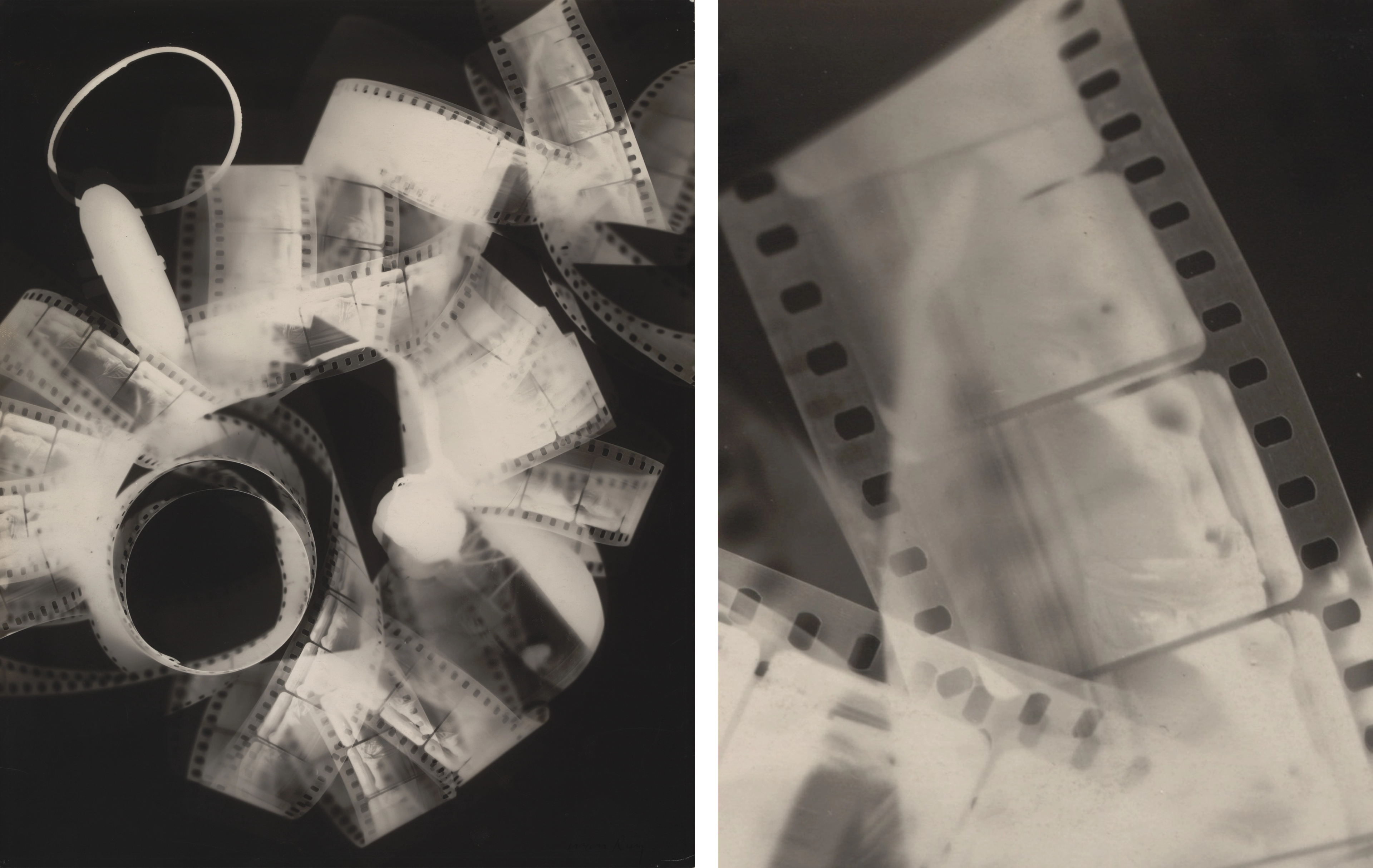
Figs. 3, 4 (overall and detail). Man Ray, Rayograph, 1923. Gelatin silver print, 11 9/16 x 9 1/4 in. (29.4 x 23.5 cm). Museum of Modern Art, New York. Gift of James Thrall Soby (116.1941). © Man Ray Trust / 2026 Artists Rights Society (ARS), New York
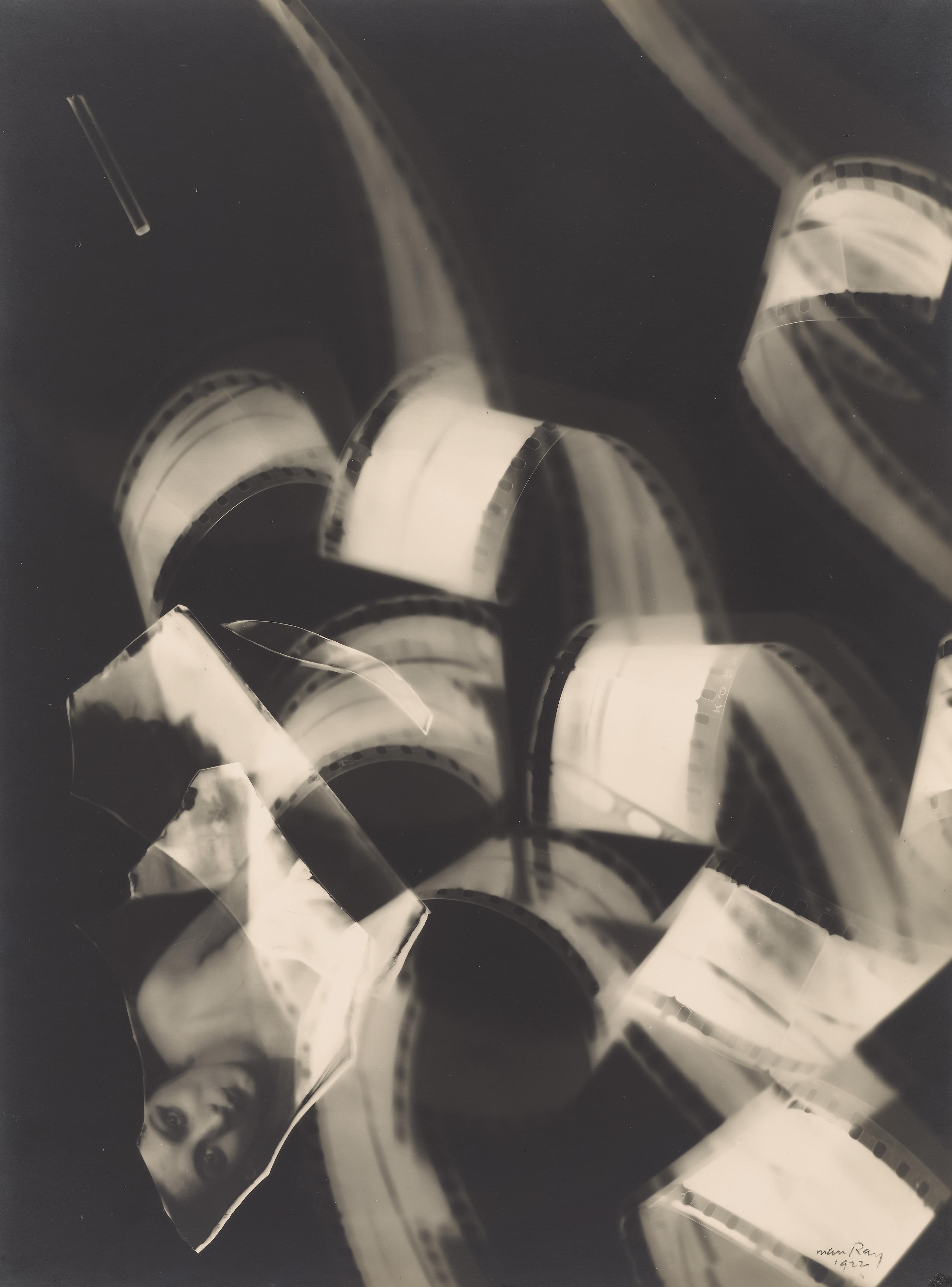
Fig. 5. Man Ray, Rayograph, 1922. Gelatin silver print, 9 3/8 x 7 in. (23.8 x 17.8 cm). The J. Paul Getty Museum, Los Angeles (84.XM.1000.173). © Man Ray Trust / 2026 Artists Rights Society (ARS), New York
Man Ray clearly savored such photographic and rayographic transpositions from Retour à la raison, but he did not stop there. The opening sequences of Retour à la raison were composed of salt and pepper strewn across the celluloid surfaces. The results are bursts of jittery noise. Works like Apparent Motion (1975) by Paul Sharits, who was among the first champions of Retour’s cameralessness, continue the legacy of Man Ray’s salt-and-pepper abstract filmstrips as an allusion to the silver-salt substrate of celluloid film: here, an enlarged film grain emerges as the content of the entire film.[10] Retour à la raison collapses the vast difference in scale between silver salts and table salts. Man Ray was fond enough of these salt-and-pepper sequences to recycle them at the start of his next film, Emak Bakia (1926), which would be later canonized as the artist's “first” film. Indeed, for most of Man Ray’s life, Retour à la raison survived in filmic form only as the uncredited opening sequences of Emak Bakia.
Projected only once in the interwar period and little known in Man Ray’s lifetime, Retour à la raison was long less important in its original form than in its multimedia afterlives. And so, it is fitting that its latest afterlife arrives only indirectly. Steve McQueen’s feature film Blitz (2024) tells the story of a boy separated from his mother during the bombing of London in World War II. In most respects, it is a traditional narrative movie. The film begins, however, with a burst of abstraction culminating in the salt-and-pepper cameraless “noise” from the start of Emak Bakia, itself borrowed from opening of Retour à la raison.[11] The truly random grains of salt (and the daisies that follow) inject an ambiguous, poetic dimension into McQueen’s film and affirm the enduring appeal and mystery of Retour à la raison—or rather, of its many afterlives.
Today, digital versions of Retour and its afterlives are readily available on the internet. Exhibitions such as The Metropolitan Museum of Art’s Man Ray: When Objects Dream (2025) can present the movie, its cameraless filmstrips, the eponymous photograph, and Emak Bakia in a series of connected galleries. Such extensive and intensive access is a luxury that was wholly unavailable to the historical avant-gardes and their audiences. But the relatively recent canonization of Retour à la raison obscures its longtime obscurity. For many decades after its sole interwar projection, Retour à la raison was an unrecounted memory, a photograph, a rayograph, or a snippet of film at the start of another film—but not an independent and complete work of art. Its involuted dispersion across media, techniques, and artworks remains among its most confounding and inspiring legacies.
Notes
For a fuller account of Retour à raison and its legacy, see Noam M. Elcott, “Darkened Rooms: A Genealogy of Avant-Garde Filmstrips from Man Ray to the London Film-Makers’ Co-op and Back Again,” Grey Room 30 (Winter 2008): 6–37.
This was long not the case. The rayographic filmstrips were virtually unknown until well after World War II. And they were not exhibited as such until 2006 in “Le mouvement des images” at the Centre Pompidou. See Philippe-Alain Michaud, “Le mouvement des images/The Movement of Images,” in Le mouvement des images, ed. Philippe-Alain Michaud, exh. cat. (Centre Pompidou, 2006). Certain elements—such as the naked torso and closeup portrait of Berenice Abbott, which appear as abstract flashes of light when projected on screen—were not fully identified until the 2025 publication of Stephanie D’Alessandro and Stephen C. Pinson, Man Ray: When Objects Dream, exh. cat. (The Metropolitan Museum of Art, 2025); see Stephanie D’Alessandro, “Dangerous Games,” 159–63.
On early cameraless photography, see Carol Armstrong, “Cameraless: From Natural Illustrations and Nature Prints to Manual and Photogenic Drawings and Other Botanographs,” in Ocean Flowers, ed. Carol Armstrong and Catherine de Zegher (Princeton University Press, 2004), 87–165. On the amateur origins of cameraless photography, see Floris M. Neusüss and Renate Heyne, ed., Das Fotogramm in der Kunst des 20. Jahrhunderts (DuMont, 1990); Herbert Molderings, “Laszlo Moholy-Nagy und die Neuerfindung des Fotogramms,” in Kunst und Fotographie, ed. Renate Heyne (Jonas Verlag, 2003), 116–37; and Clément Chéroux, Avant l’avant-garde: Du jeu en photographie, 1890–1940 (Éditions Textuel, 2015).
Man Ray, Self Portrait (Bulfinch Press, 1998), 106.
Man Ray, Self Portrait (Bulfinch Press, 1998), 212.
See Patrick de Haas, Cinéma intégral (Transédition, 1985), 108.
All cinematic movement is illusory: the rapid succession of, say, twenty-four still images per second. But the illusion of motion on screen almost always corresponds to the actual movement of objects or the actual movement of the camera. The movement of the peripatetic tack in Retour à la raison, however, corresponds to no movement in the real world. In its reliance on the industrial manufacture of identical tacks, it approximates a radical and fully industrial form of cell animation.
G. Material zur elementaren Gestaltung, nos. 5–6 (April 1926).
On the photogram as a (cinematic and extra-cinematic) screen with a memory, see Noam M. Elcott, “Art in the First Screen Age: László Moholy-Nagy and the Affordances of Surfaces, Canvases, and Scrims,” New German Critique 51, no. 1 (Winter 2024): 33–76.
Paul Sharits, “Words Per Page,” Afterimage, no. 4 (Autumn 1972): 32.
McQueen refers to them as “the X-ray images of salt crystals.” X-rays are also a type of cameraless photograph. See Susan Kouguell, Academy Award Winner Steve McQueen Talks about His New Film “Blitz,’” Script, November 25, 2024, https://scriptmag.com/interviews-features/academy-award-winner-steve-mcqueen-talks-about-his-new-film-blitz/.
