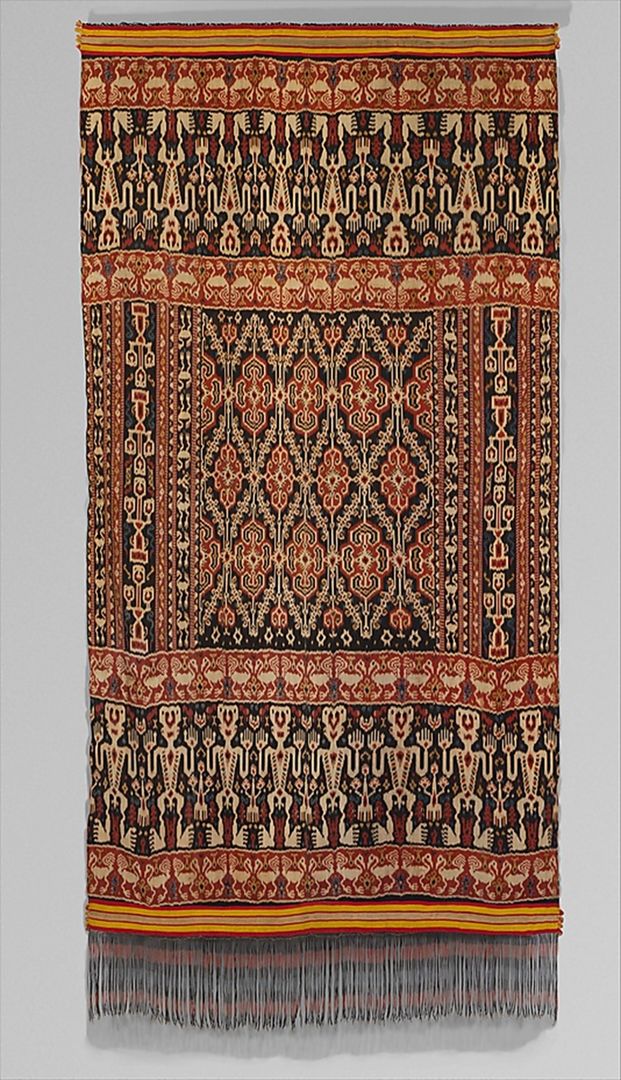
The Fabric of Life: Ikat Textiles of Indonesia
February 28–September 24, 2006
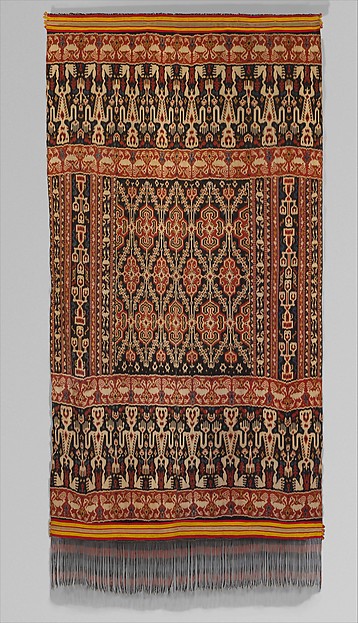
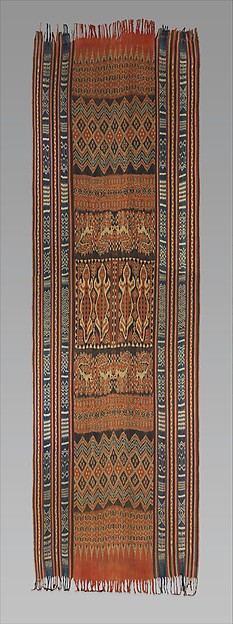
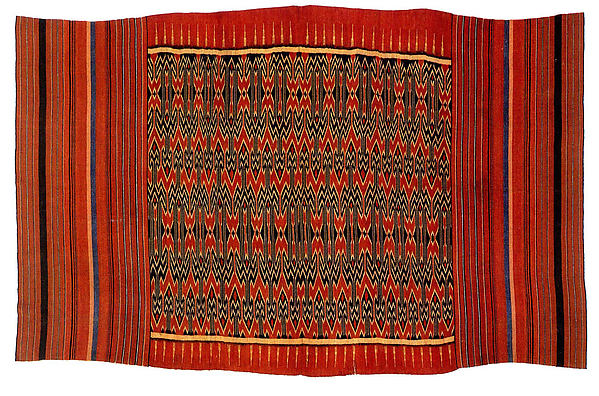
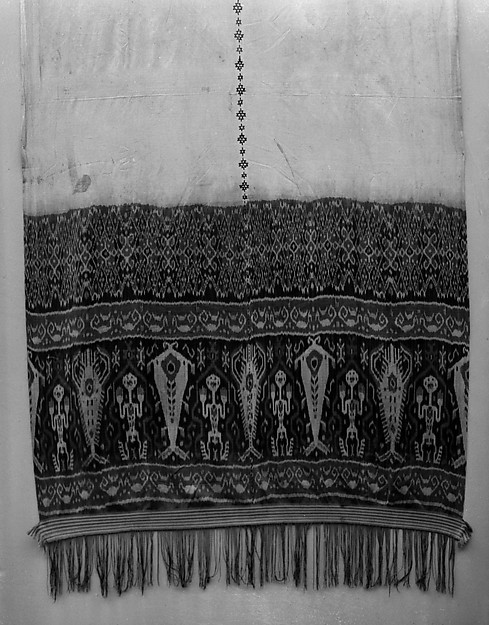
The diverse ethnic groups of Indonesia are renowned for the richness and variety of their textiles. Created by women and used by both sexes, textiles in many Indonesian societies are both literally and figuratively interwoven with an individual's life from earliest infancy to the wrapping of the funerary shroud. This exhibition explores the imagery, forms, and functions of one of the most important, widespread, and technically sophisticated of all Indonesian textile traditions—the colorful and boldly patterned fabrics known as ikat. Drawn primarily from the Metropolitan's own collection, the exhibition includes more than twenty-five outstanding ikat textiles from several distinctive regional traditions. The imagery ranges from vibrant geometric compositions to figural patterns woven with astonishing artistic and technical virtuosity.
The term ikat is derived from the Malay word mengikat, meaning "to tie"—a reference to the distinctive technique used to create them, a complex process that involves tying strips of fiber around the unwoven threads of a textile before dyeing them so as to create rich and intricate patterns in the resulting fabric. Although united by a common technique, ikat textiles are astonishingly diverse in their imagery, which ranges from bold geometric compositions to figural patterns of striking visual and technical virtuosity. The sources of artistic inspiration are equally varied. Some reflect artistic influences from India, the Southeast Asian mainland, or the Islamic world. Others draw on purely indigenous aesthetics. Ikat textiles appear in diverse forms, from lavishly adorned garments, such as skirts or shoulder cloths, to monumental ceremonial textiles used to mark sacred spaces, enshroud the dead, or serve as potent symbols of their owners' wealth and power.
The exhibition features works from across the Indonesian archipelago, including the subtly patterned fabrics of the Aceh region of Sumatra, recently devastated by the Southeast Asian tsunami, and the vibrant designs of the Iban women of Borneo, whose achievements at the loom were seen as equivalent to men's exploits in battle. It includes works ranging from items of personal apparel, such as a group of luxuriously adorned tapis (women's skirts) from the Lampung area of Sumatra, to an imposing ceremonial hanging from the Toraja people of Sulawesi, over sixteen feet in length and adorned with images crocodiles and deer.
This exhibition is made possible through the generosity of the Friends of the Department of the Arts of Africa, Oceania, and the Americas.