J. M. W. Turner
July 1–September 21, 2008
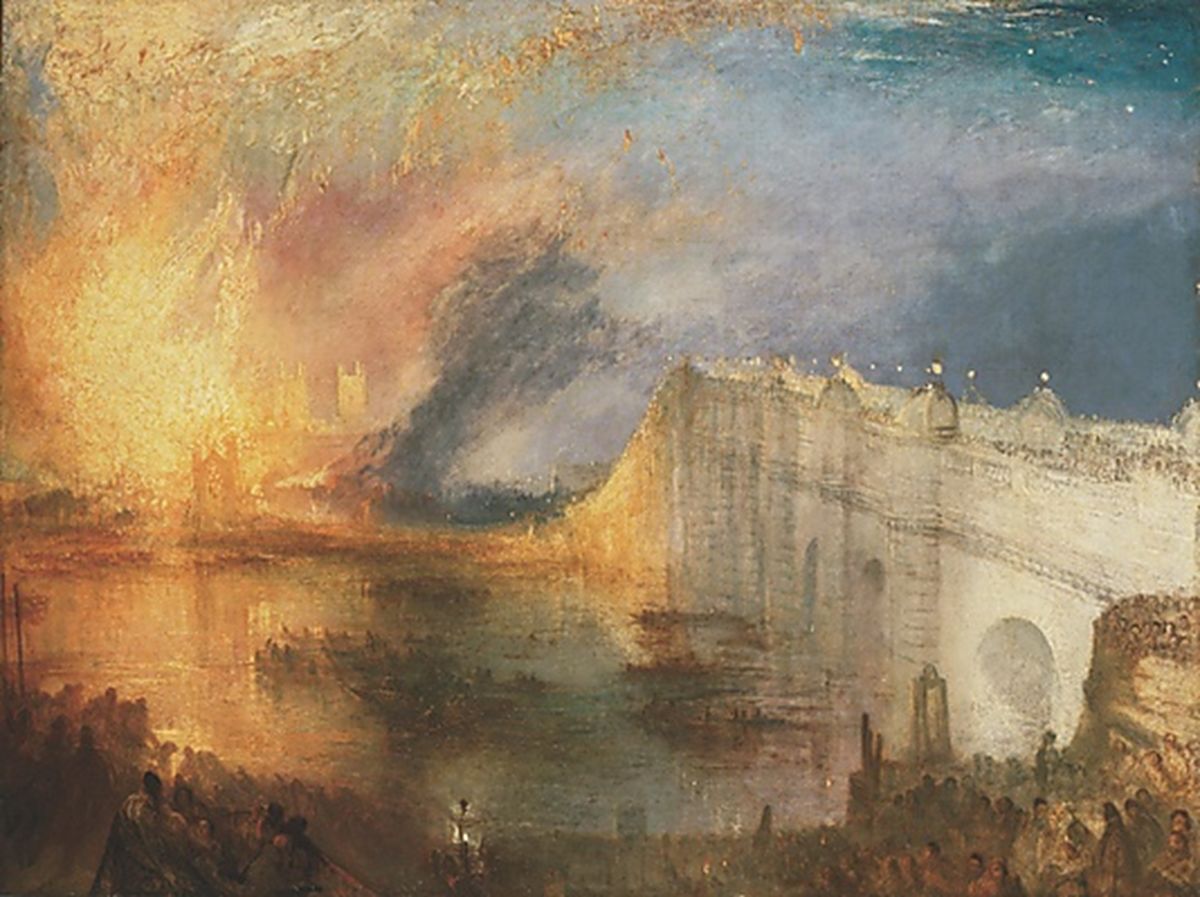
The first retrospective of the work of J. M. W. Turner (1775–1851) presented in the United States in more than forty years, this international exhibition highlights approximately 140 paintings and watercolors—more than half of them from Tate Britain's Turner Bequest—along with works from other collections in Europe and North America. The artist’s extensive iconographic range is represented, from seascapes and topographical views to historical subjects and scenes from his imagination.
Joseph Mallord William Turner (1775–1851), the son of a barber and wigmaker in London's Covent Garden, dominated landscape painting in Britain during the first half of the nineteenth century. Although he initially became known for his topographical watercolors, which he began exhibiting at the Royal Academy in London in 1790, he harbored greater ambitions, aspiring to elevate landscape to the status in which history painting was held. He posited himself as the heir to the classical landscape tradition, as embodied in the pictures of Nicolas Poussin (1594–1665) and, especially, Claude Lorrain (ca. 1604–1682), whose work he emulated throughout his career.
He explored a wide range of genres—from landscapes to historical subjects and scenes from his imagination—and was a prolific and innovative painter and watercolorist as well as a printmaker. Upon meeting Turner in 1813, his contemporary and erstwhile rival John Constable (1776–1837) wrote, "He is uncouth but has a wonderfull range of mind." Turner gained notoriety for his bravura displays during the Varnishing Days that preceded the opening of the annual Royal Academy exhibitions, when he reworked his pictures as they hung on the wall. By the 1840s his increasingly abstract images, in which forms were subsumed by light and color, were mockingly dismissed by critics as "the fruits of a diseased eye and a reckless hand." The influential critic John Ruskin (1819–1900) took up Turner as a special interest and proclaimed his greatness as a landscape painter, thereby contributing to the artist's fame on both sides of the Atlantic among collectors, such as James Lenox (1800–1880) of New York, and artists, including Frederic Edwin Church (1826–1900).
After a turbulent career, Turner's reputation waned, and he died in relative obscurity in 1851. In 1906, when a group of his late, unfinished oils was first exhibited, the inherent abstraction of his work fascinated modernist critics and he was reborn as an avant-garde artist. His art and legacy continue to evoke tradition and modernity: he is both the artist who stipulated in his will that his paintings hang beside the work of Claude Lorrain in London's National Gallery and the inspiration for the Turner Prize, the award for contemporary art given by the Tate.
Bank of America is proud to be the national sponsor.
Additional support is generously provided by Access Industries.
The exhibition is also made possible in part by the Gail and Parker Gilbert Fund and The Horace W. Goldsmith Foundation.
It was organized by The Metropolitan Museum of Art, New York, the National Gallery of Art, Washington, and the Dallas Museum of Art, in association with the Tate Britain, London.
The exhibition is supported by an indemnity from the Federal Council on the Arts and the Humanities.