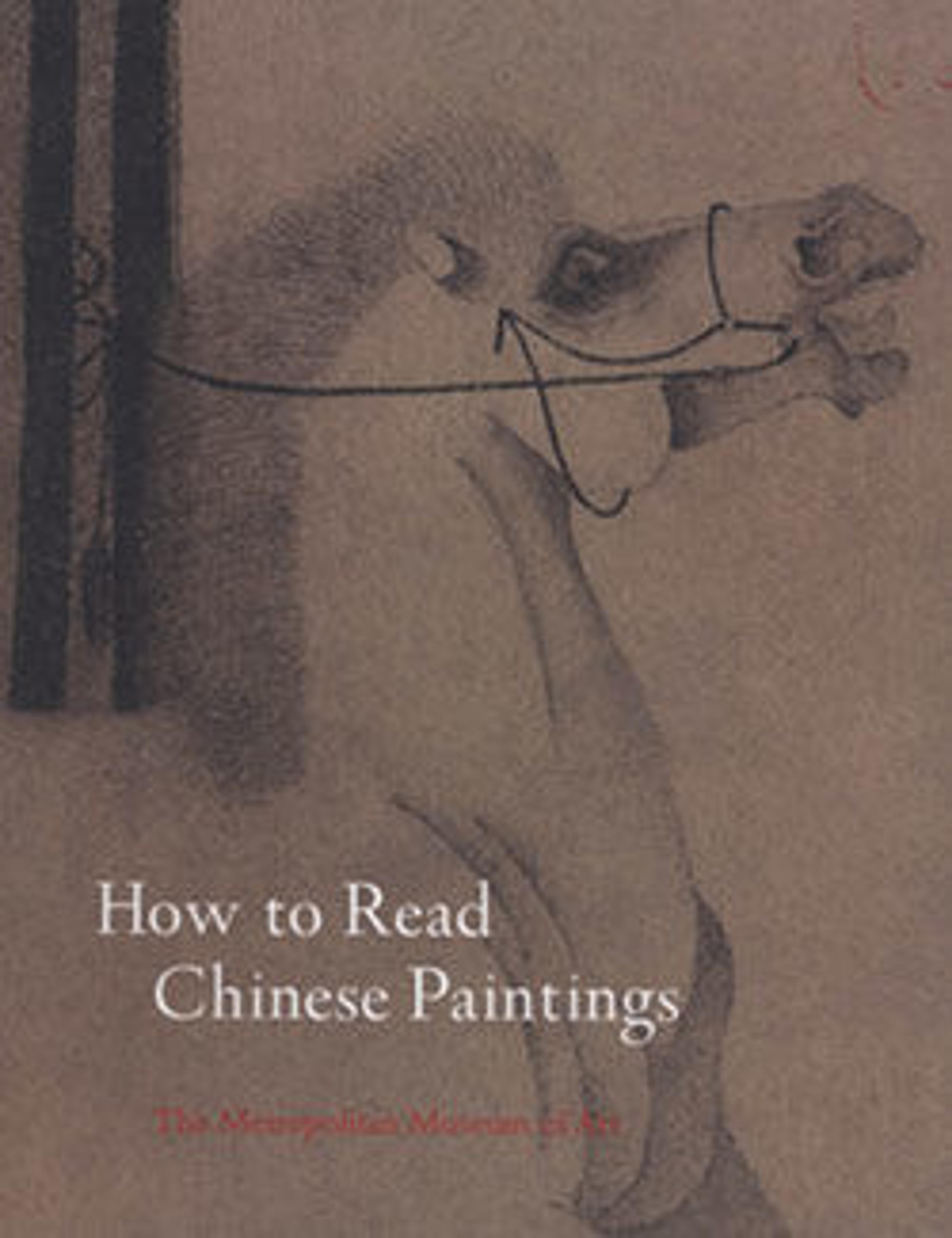
How to Read Chinese Paintings
The Chinese way of appreciating a painting is often expressed by the words du hua, "to read a painting." How does one do that? Because art is a visual language, words alone cannot adequately convey its expressive dimension. How to Read Chinese Paintings seeks to visually analyze thirty-six paintings and calligraphies from the encyclopedic collection of The Metropolitan Museum of Art in order to elucidate what makes each a masterpiece.
Maxwell K. Hearn's elegantly erudite yet readable text discusses each work in depth, considering multiple layers of meaning. Style, technique, symbolism, past traditions, historical events, and the artist's personal circumstances all come into play. Spanning more than a thousand years, from the eighth through the seventeenth century, the subjects represented are particularly wide-ranging: landscapes, flowers, birds, figures, religious subjects, and calligraphies. All illuminate the main goal of every Chinese artist: to capture not only the outer appearance of a subject but also its inner essence. Numerous large color details, accompanied by informative captions, allow the reader to delve further into the most significant aspects of each work.
Together the text and illustrations gradually reveal many of the major themes and characteristics of Chinese painting. To "read" these works is to enter a dialogue with the past. Slowly perusing a scroll or album, one shares an intimate experience that has been repeated over the centuries. And it is through such readings that meaning is gradually revealed.
Met Art in Publication
You May Also Like
Citation
———, eds. 2008. How to Read Chinese Paintings ; [in Conjunction with the Exhibition Anatomy of a Masterpiece: How to Read Chinese Paintings Organized by The Metropolitan Museum of Art, New York, and Held There from March 1 through August 10, 2008]. New York, NY: Metropolitan Museum of Art [u.a.].