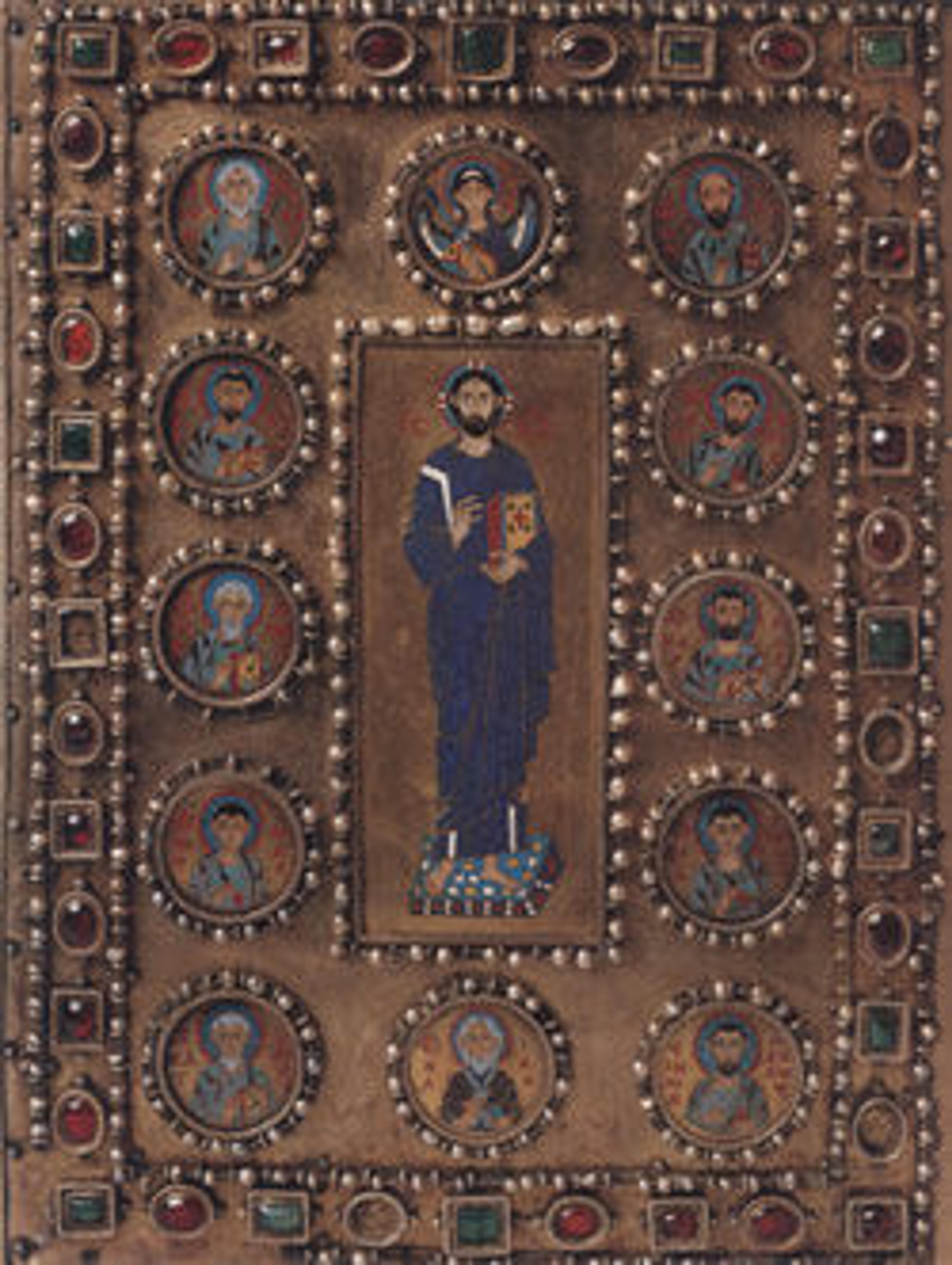
The Glory of Byzantium: Art and Culture of the Middle Byzantine Era, A.D. 843–1261
In A.D. 843, following the resolution of the Iconoclastic controversy, which had raged throughout the Byzantine Empire for more than a century, the use of icons—images—was triumphantly reinstated in the Orthodox Church. This momentous event inspired much of the art of the following four centuries, which comprises the second great era of Byzantine culture and provides the starting point of this volume. The Glory of Byzantium, and the exhibition that it accompanies, concludes with the demise of the empire's role as a world power, evidenced by the Latin occupation of Constantinople from 1204 to 1261.
Conceived as the sequel to the landmark exhibition "Age of Spirituality," which was held at The Metropolitan Museum of Art in 1976 and focused on the first centuries of Byzantium, "The Glory of Byzantium" explores four interrelated themes: the religious and secular culture of the Second Golden Age of the Byzantine Empire; the empire's interaction with its Christian neighbors and rivals; its relations with the Islamic East; and its contact with the Latin West. Bringing together the contributions of fifty-nine scholars and art historians, most of them working in the United States, the text explores the complex currents of Byzantine civilization in its myriad facets. More than 350 works of art assembled for the exhibition from 119 institutions in 24 countries are discussed and illustrated in the catalogue. Together they present a significant selection of the most beautiful and meaningful works that survive from the empire's Second Golden Age and from the countries that constituted its extended sphere of influence. Liturgical objects—including icons, mosaics, chalices, patens, and reliquaries—and secular objects—silks, ivories, ceramics, jewelry, and manuscripts—reflect the dynamic nature of the art of this era both within and outside the empire.
The first half of the volume treats the historical context, the religious sphere, and the secular courtly realm of the empire; the second half focuses on the interactions between Byzantium and other medieval cultures, including Islam and the Latin West. The 17 essays are accompanied by detailed discussions of the works of art and by full-color photographs, as well as by views of architectural sites and comparative illustrations. Many of these illustrations were made specifically for this volume by Bruce White, photographer, on site in Greece, Turkey, Egypt, Italy, Bulgaria, Hungary, Georgia, Ukraine, and the Russian Federation.
Met Art in Publication
You May Also Like
Press the down key to skip to the last item.
Citation
Evans, Helen C., and Metropolitan Museum of Art, eds. 1997. The Glory of Byzantium: Art and Culture of the Middle Byzantine Era A.D. 843 - 1261; [in Conjunction with the Exhibition “The Glory of Byzantium”, Held at the Metropolitan Museum of Art, New York from March 11 through July 6, 1997]. New York, NY: Abrams.