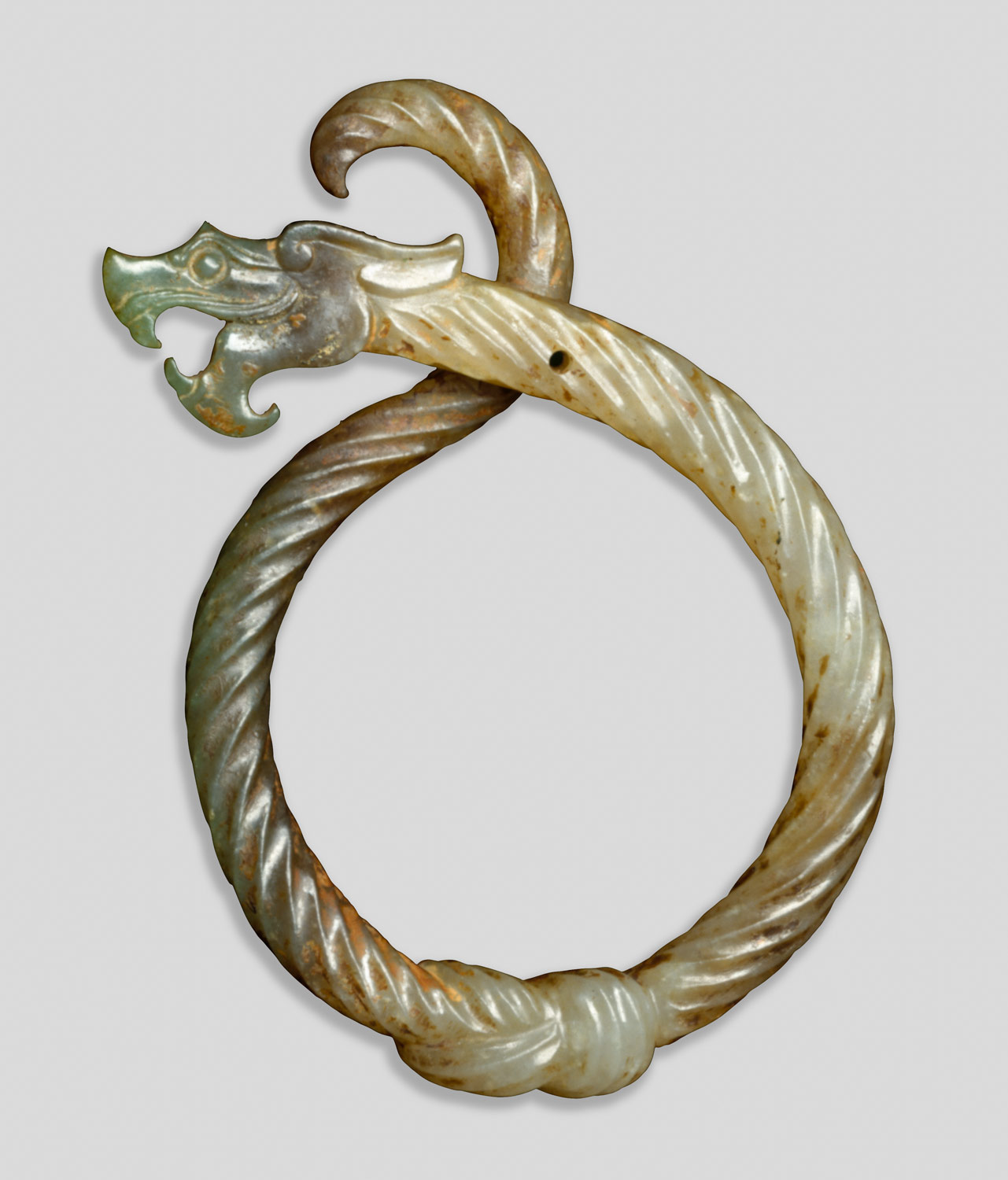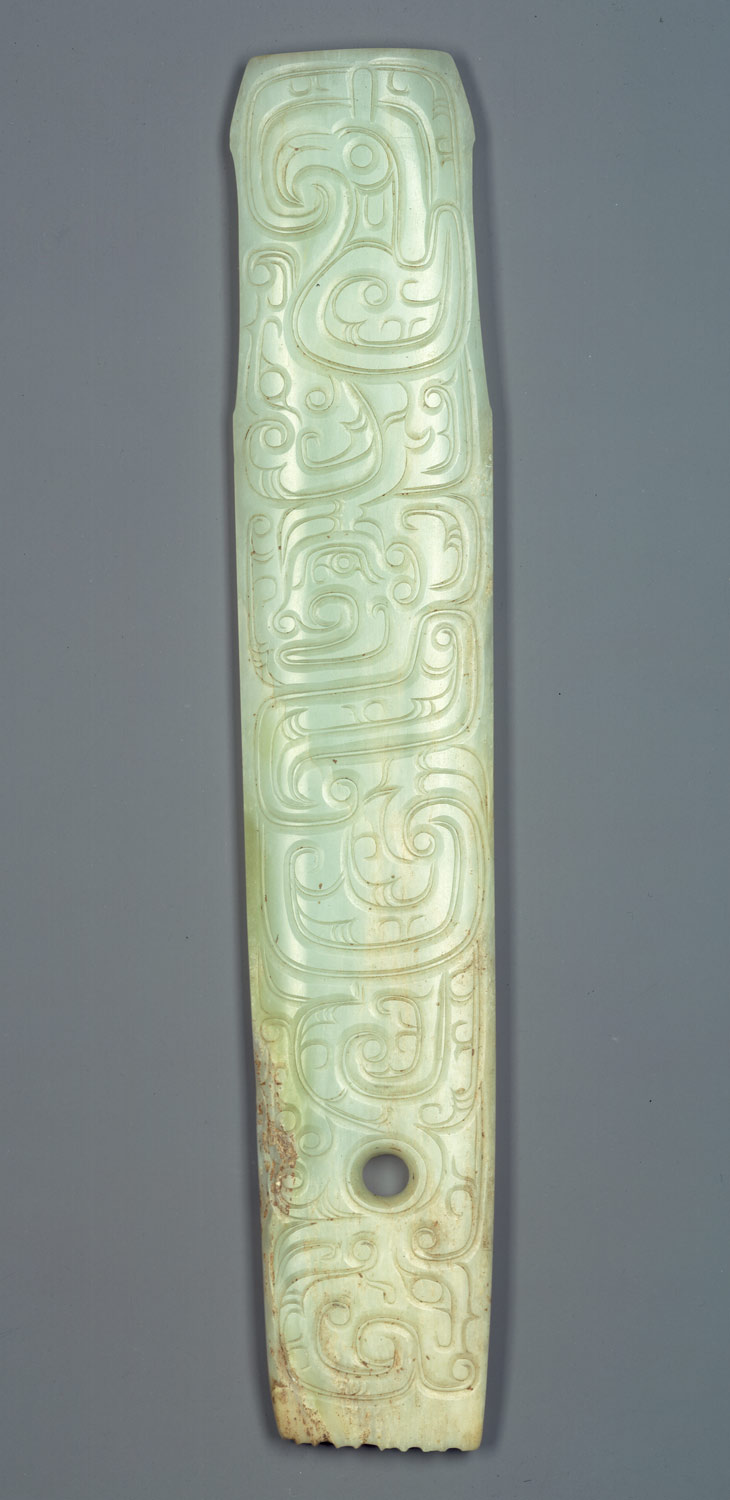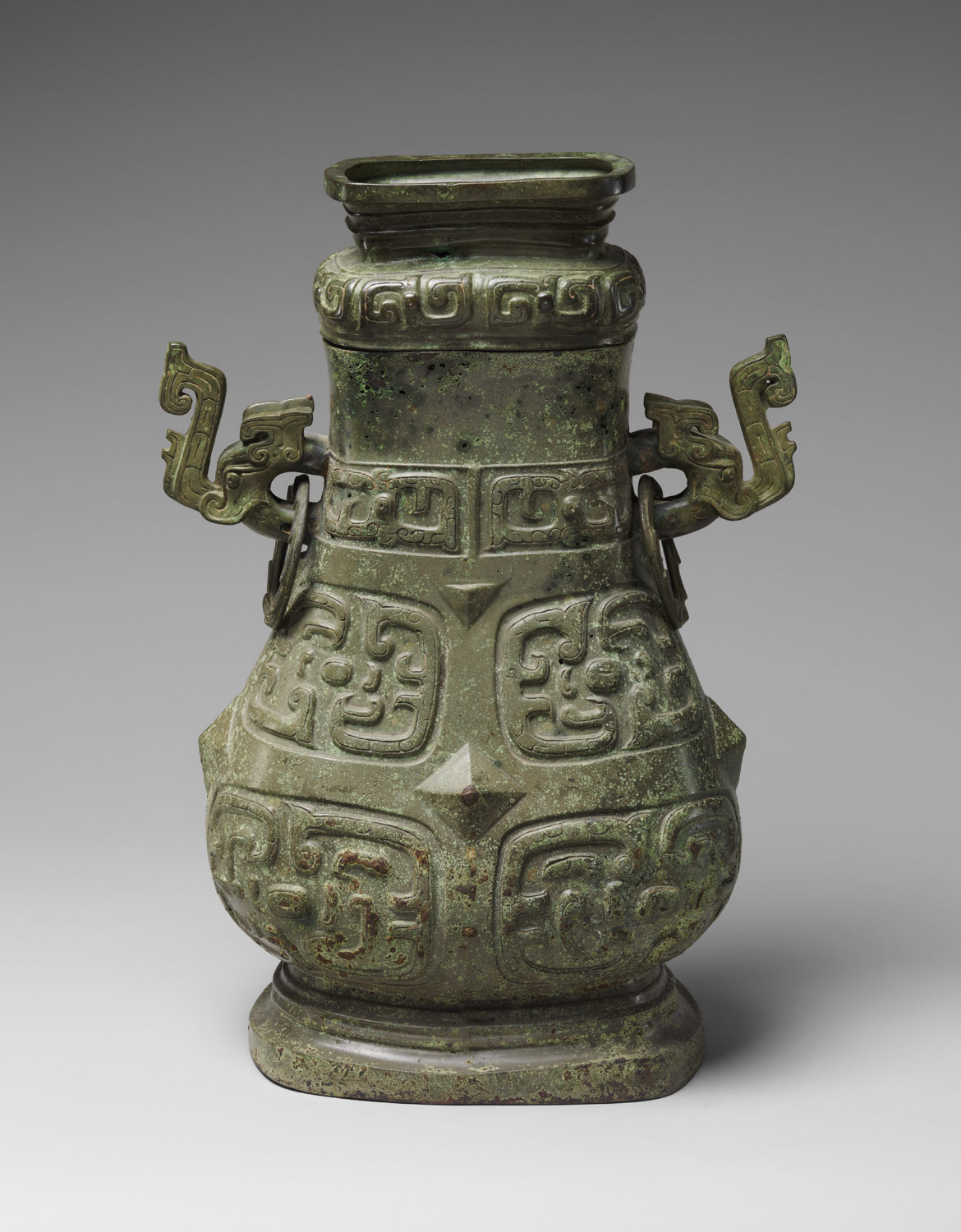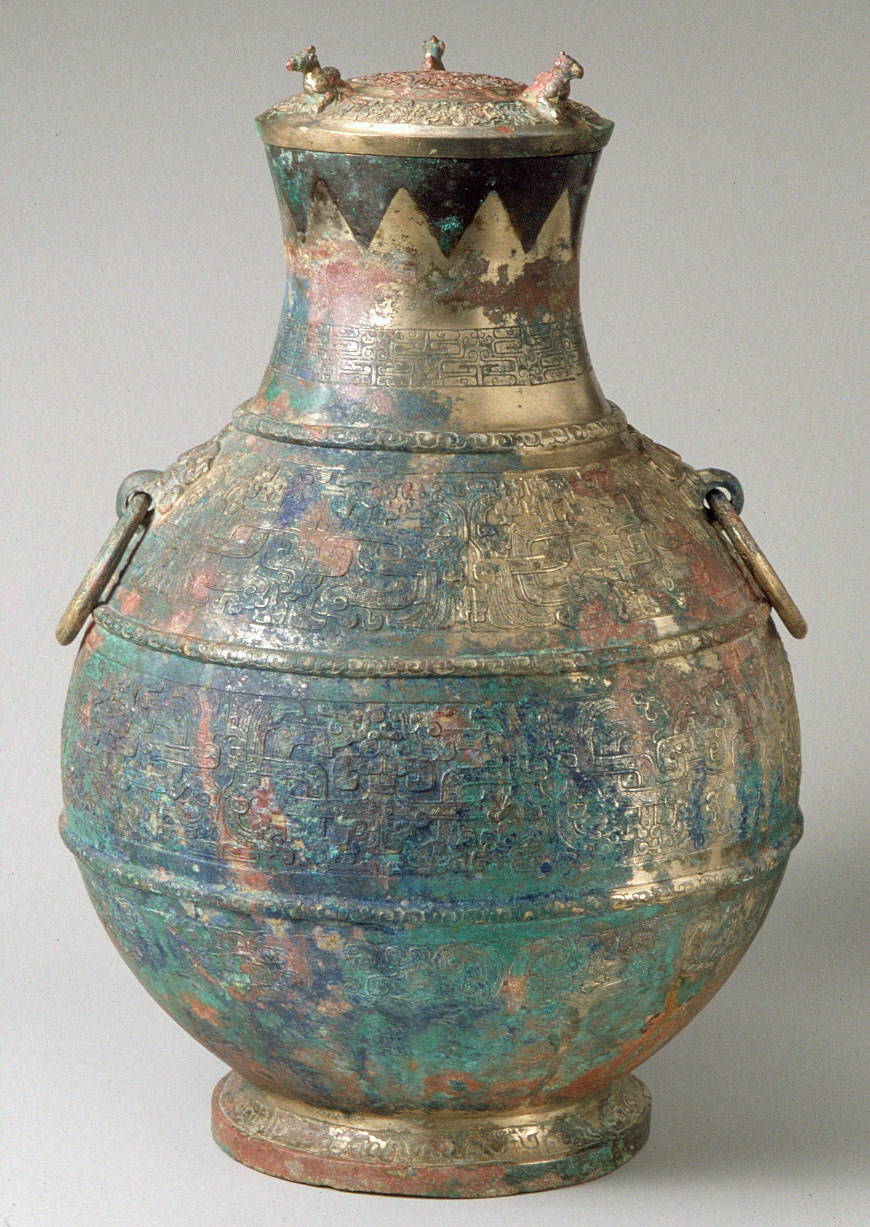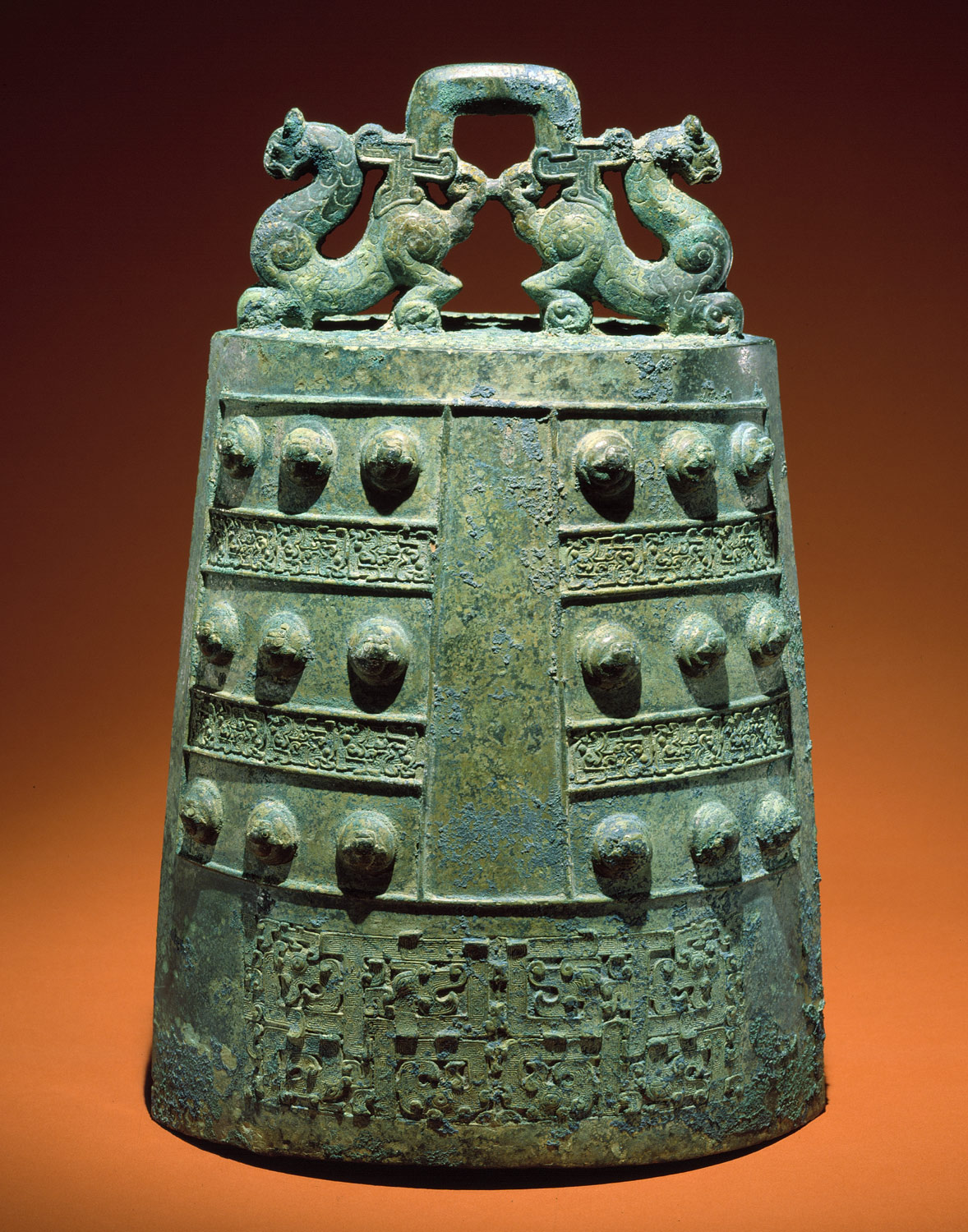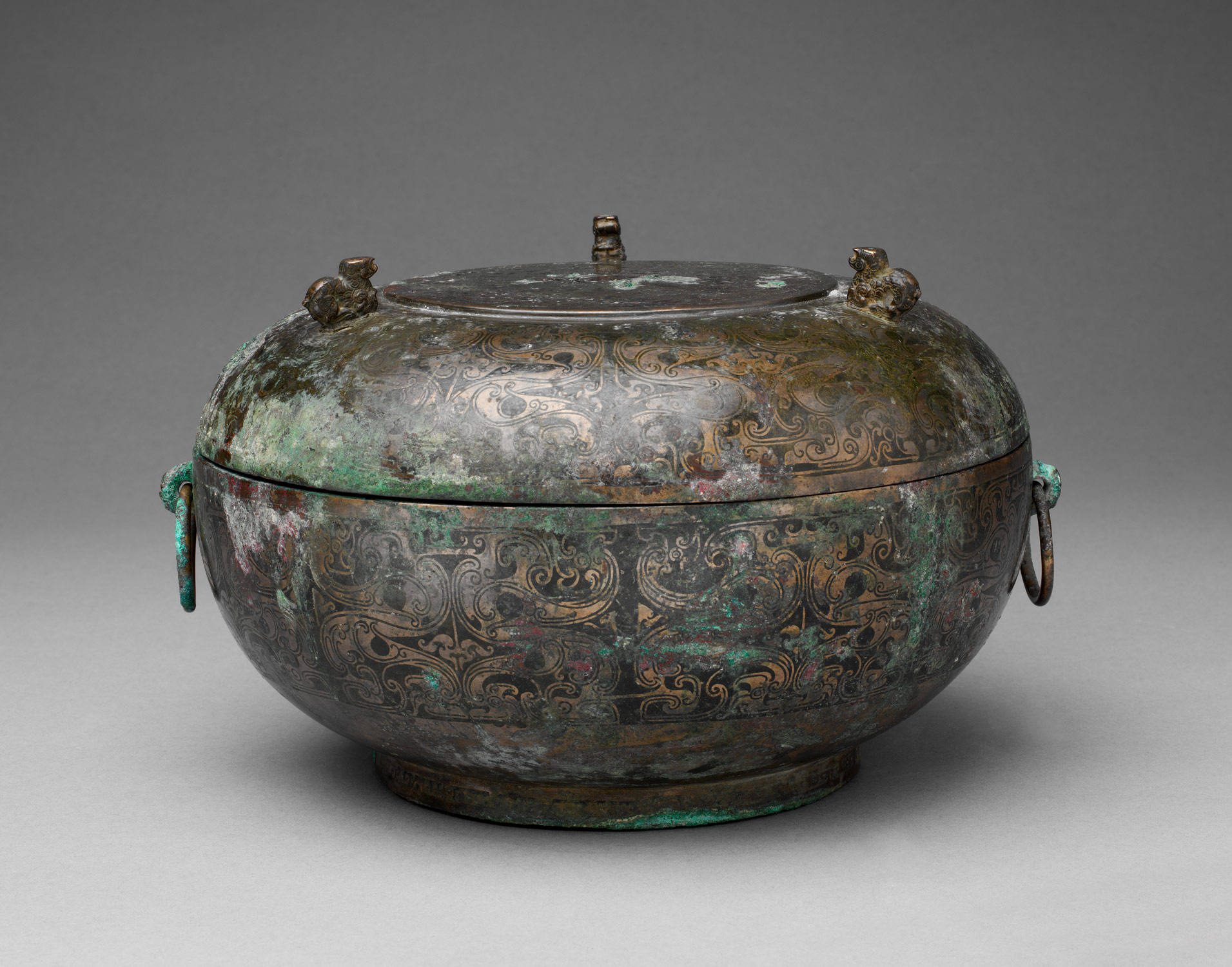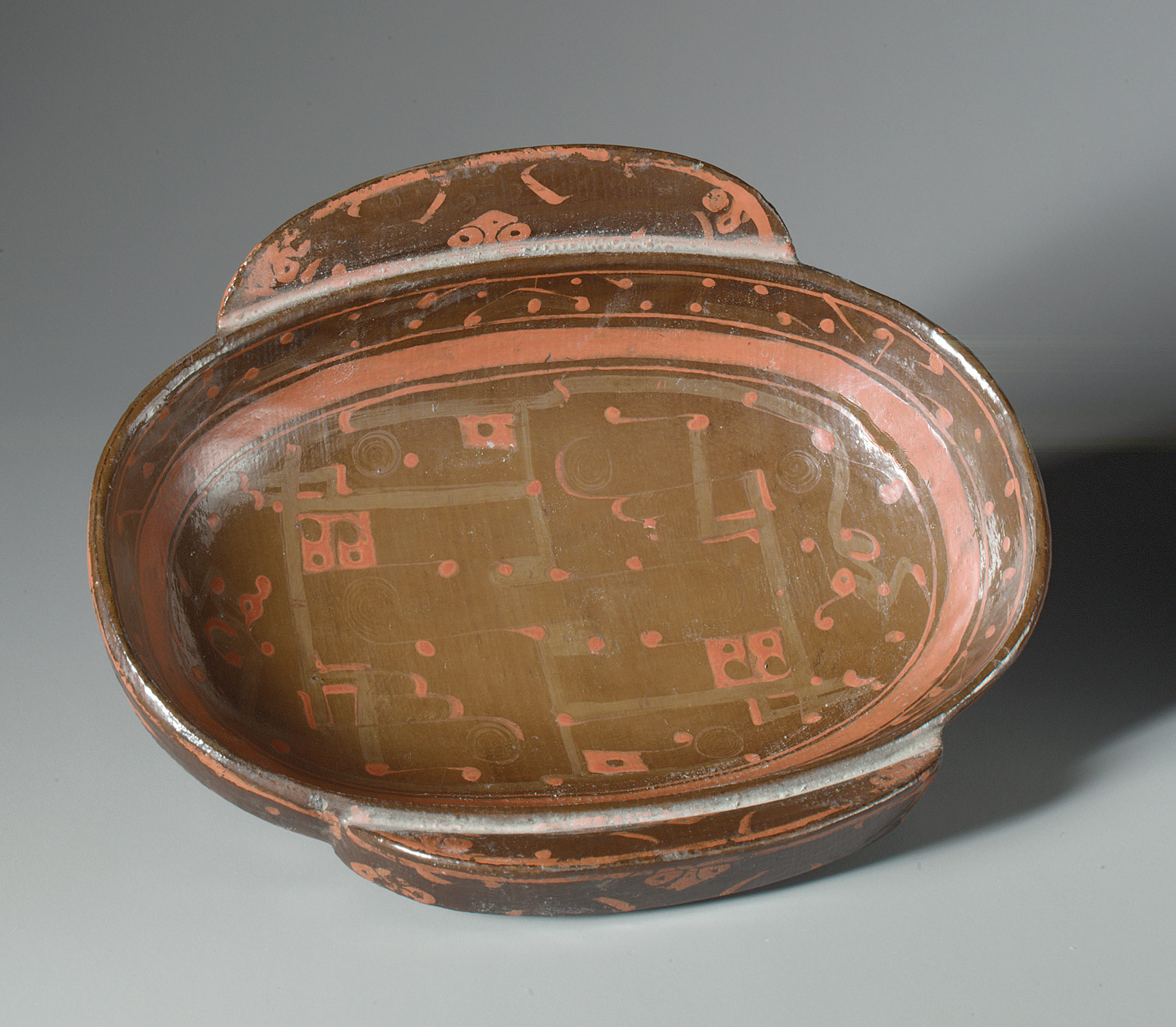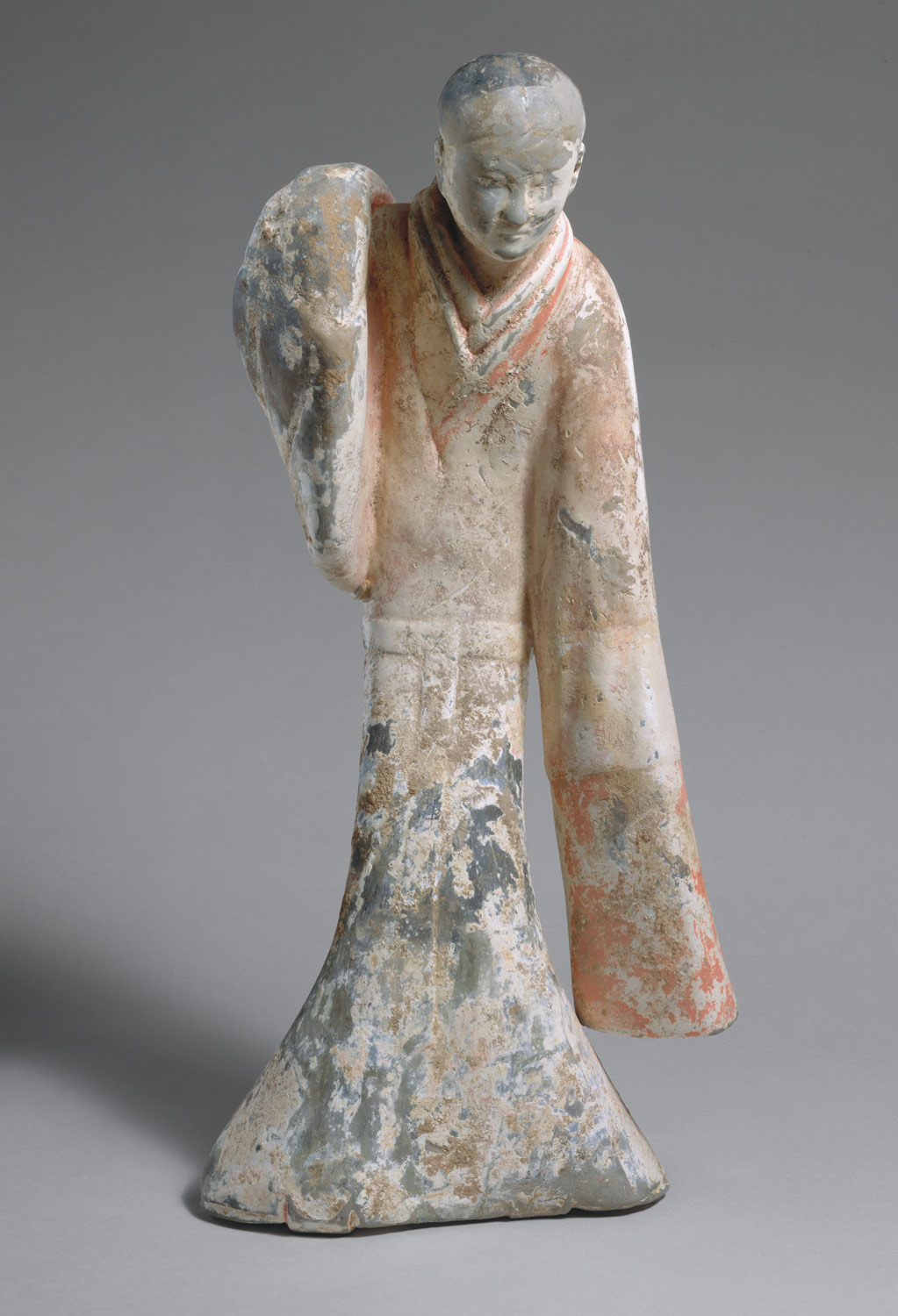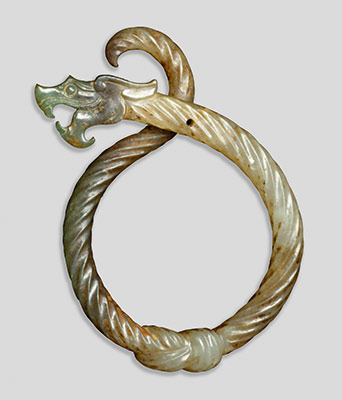
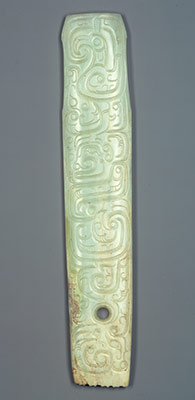
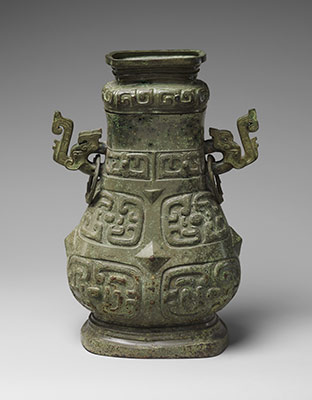
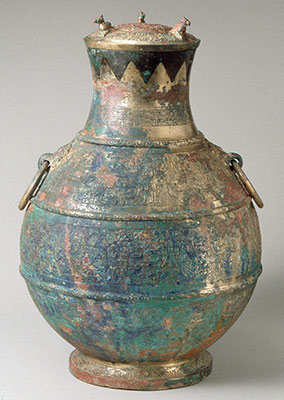
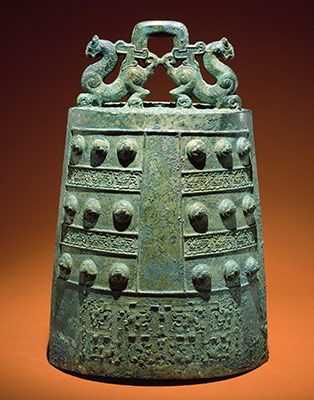
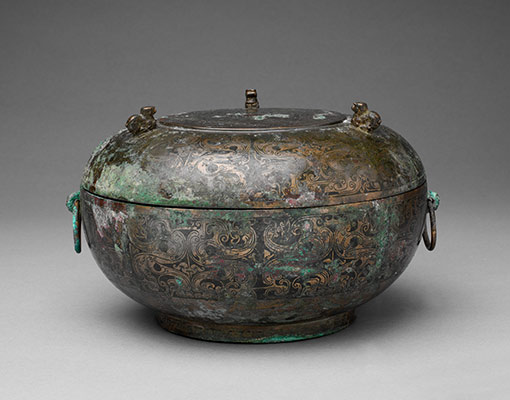
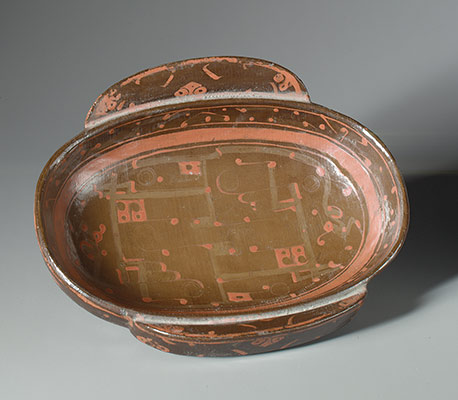
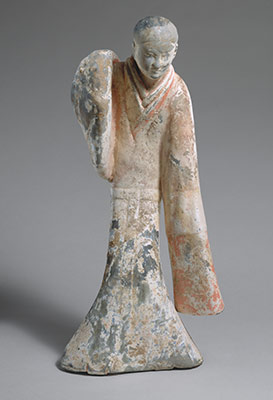
By the end of this period, the boundaries established by the Qin dynasty and maintained by the Han more or less define the present-day nation of China. Other enduring aspects of Chinese culture introduced at this time include Confucianism; an administrative system that serves as a model for government until the early twentieth century; and the construction of the Great Wall of China. The Qin dynasty, pronounced chin, will become the source of the Western name China. The arts introduced in the previous period—bronze casting, lacquerwork, and jade carving—flourish. Technical innovations such as the casting of copper, silver, or gold into the decoration of bronze vessels herald the beginning of a new style of metalworking often thought to have been introduced into China from the West.
China, 1000 B.C.–1 A.D.
-
 1985.214.99
 -
 1985.214.96
 -
 1988.20.4a,b
 -
 1999.46a,b
 -
 1988.20.7
 -
 2006.117a,b
 -
 1974.268.4
 -
 1992.165.19
Timeline
1000 B.C.
750 B.C.
750 B.C.
500 B.C.
500 B.C.
250 B.C.
250 B.C.
1 A.D.
Overview
Key Events
-
770 B.C.
The move of the capital east to Luoyang in Henan Province, after the invasion of the nomadic Quanrong, marks the beginning of the Eastern Zhou era, which is divided into two periods: the Spring and Autumn (770–476 B.C.) and the Warring States (475–221 B.C.). The latter, when China is divided into smaller, conflicting polities, is a period of technical and artistic brilliance noted for its bronze vessels with decoration inlaid in silver and gold.
-
ca. 400–200 B.C.
The Daodejing (The Way and Its Power) is composed. Based on the work of Laozi, this text is one of the foundations of the practice of Daoism (Taoism), a form of mysticism that stresses the union of man with the forces of nature.
-
ca. 400–200 B.C.
The earliest extant paintings on silk, one showing a woman with a dragon and a phoenix, the other a man with the same mythological creatures, are excavated from sites associated with the state of Chu, centered in the regions of Hebei and Hunan provinces. Noted for its lacquer goods, Chu is one of the more powerful polities in China during the Warring States period. The Chuci (Songs of the South), an anthology compiled during the Han dynasty, contains many poems thought to have originated in Chu and attributed to Qu Yuan (ca. 343–277 B.C.), one of the first poets in China to have his name associated with specific works.
-
206 B.C.
The Qin dynasty—pronounced “chin,” thereby providing the Western name China—is established by Ying Zheng (259–210 B.C.), the ruler of a minor polity in the northwest who conquered the six states remaining at the end of the Warring States period. Famous in legend for creating the “Great Wall of China” by uniting several preexisting structures, Ying Zheng, who titled himself Qin Shihuang (First Emperor of the Qin), also undertakes several massive construction projects, including his tomb, which is guarded by a lifesize terracotta army of over 7,000 figures. The use of smaller terracotta armies to guard the perimeters of imperial tombs continues for at least a century. One spectacular group of over 40,000 such figures about one-third lifesize is excavated in 1990 outside the joint tomb of Emperor Jing (r. 157–141 B.C.) and his wife, Empress Wang.
-
206 B.C.–9 A.D.
The Western Han dynasty, named after the location of the capital at Chang’an (present-day Xi’an), is founded after the civil war that follows the death of Qin Shihuang. One of the largest cities in the ancient world, the roughly rectangular Chang’an has walls 15 miles long and houses numerous palaces, administrative and residential buildings, and two bustling marketplaces.
-
141–87 B.C.
Under the rule of Wudi (“martial emperor”), China temporarily expands its boundaries as far west as the Pamir Mountains and as far east as the northern part of Korea. Wu’s rule also sees a flowering of poetry, literature, and philosophy and the publication of the 116-chapter Shiji (Historical Records) by Sima Qian (ca. 145–80 B.C.), a work that sets the standard for government-sponsored histories until the early twentieth century.
-
100 B.C.
Monumental stone sculptures, valued for their aura of permanence, appear above tombs and in other public locations. By the first century A.D., “spirit roads,” avenues of stone monuments and figures lining the approach to an imperial tomb, have replaced the terracotta armies common earlier. This practice, which spreads to Korea and Vietnam, continues in China for centuries.
Citation
“China, 1000 B.C.–1 A.D.” In Heilbrunn Timeline of Art History. New York: The Metropolitan Museum of Art, 2000–. http://www.metmuseum.org/toah/ht/?period=04®ion=eac (October 2000)
Related
Map