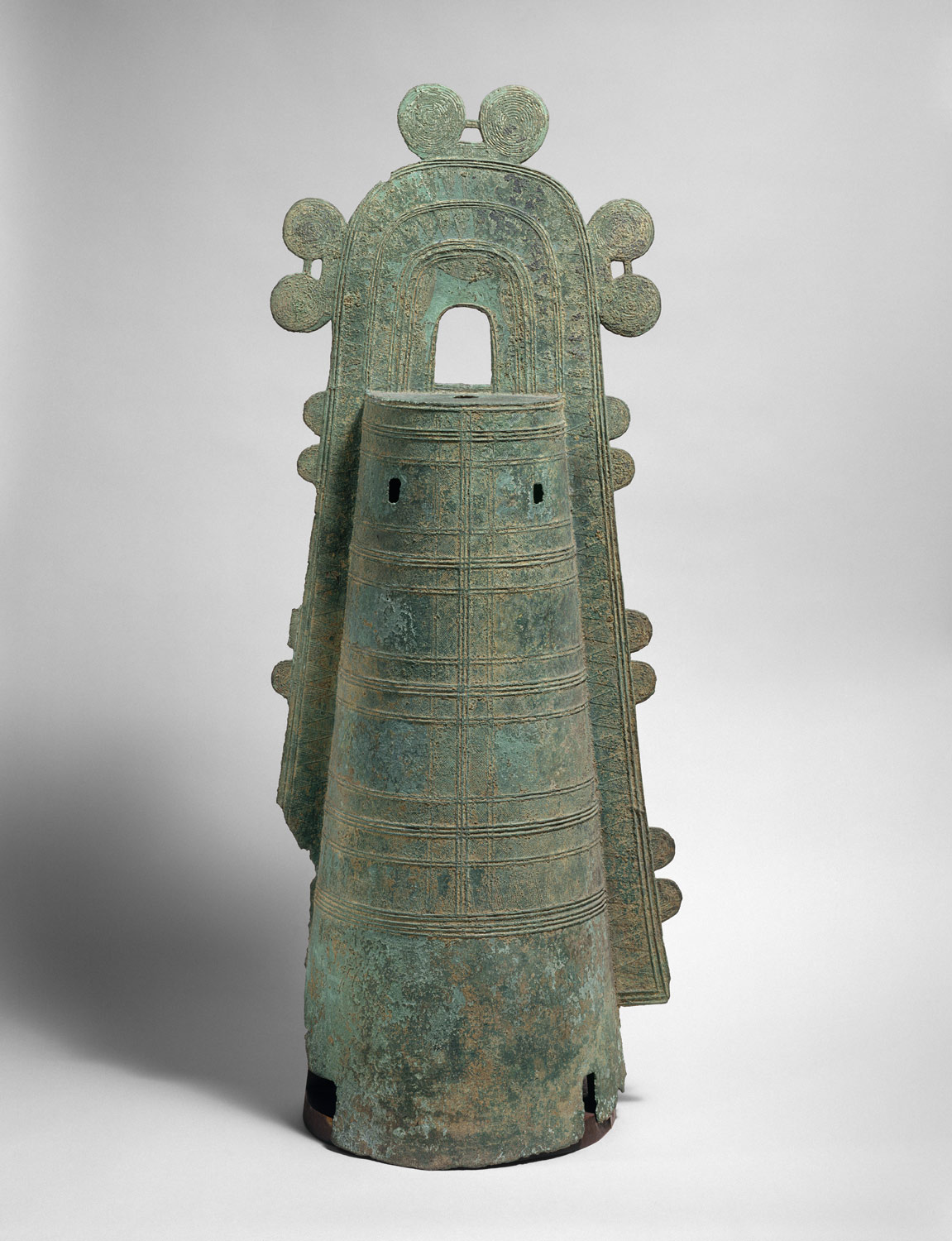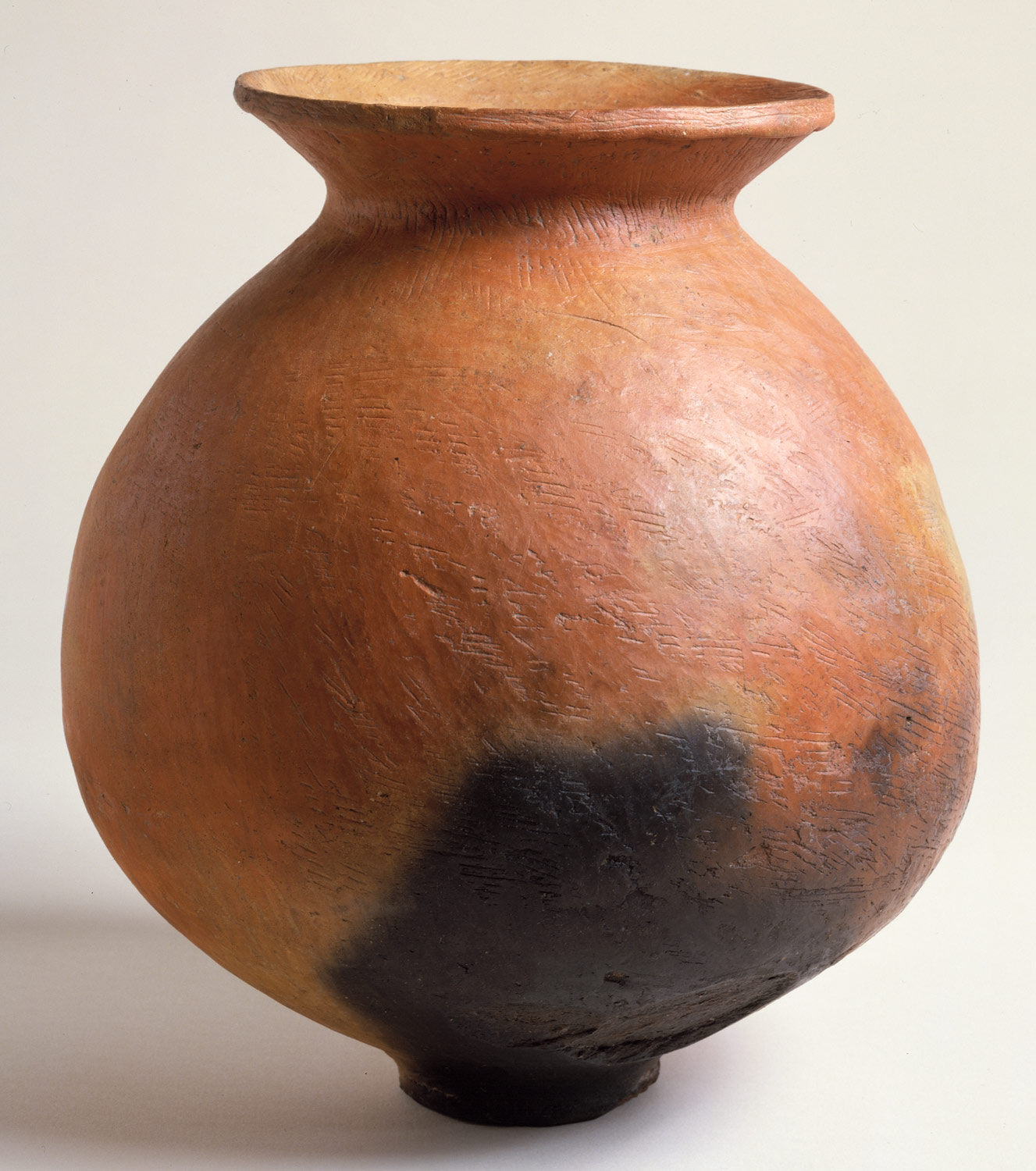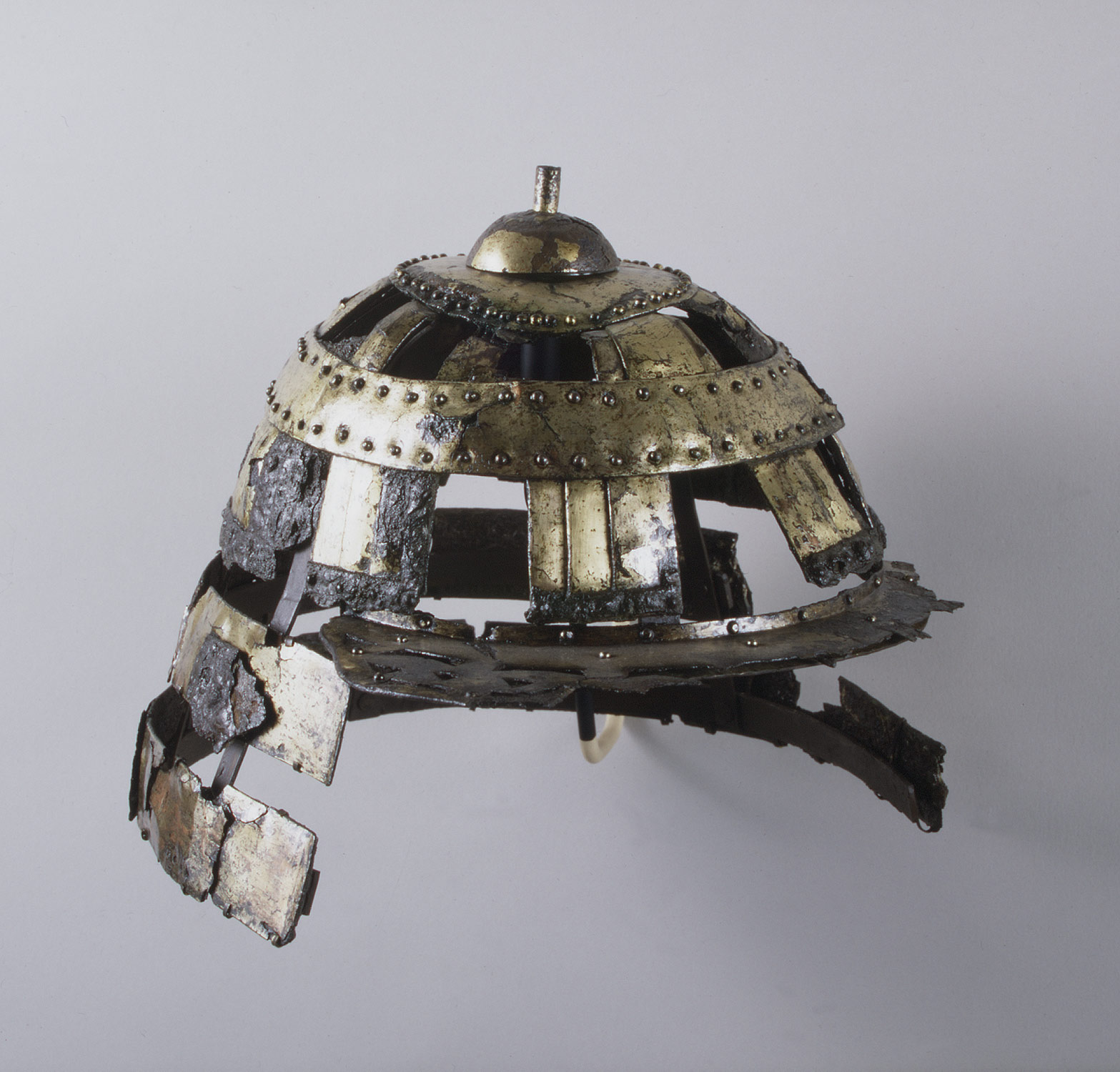
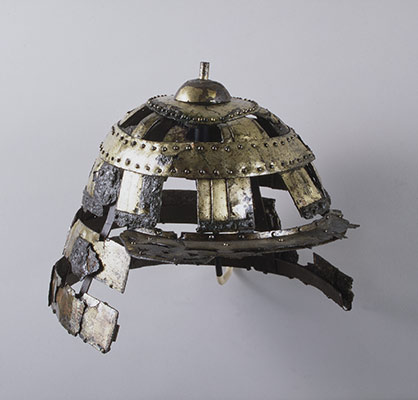
Around the third century A.D., the practice of building sepulchral mounds and burying treasures with the dead is transmitted to Japan from the continent. The next three centuries are known as the Kofun period, so-named for the many large mounded tombs (kofun) that are built during this time. These gigantic tombs, the legacy of a society moving toward unification, symbolize the power of the central governing class.

- 57 and 107 A.D. According to the Chinese official records, the Houhanshu and the Weizhi, emissaries are sent from Japanor Wa, as termed by the Chineseto the Chinese Han dynasty court. The envoys present woven cloth, jade, pearls, cinnabar, bows and arrows, and slaves, and receive brocade, silk, gold, swords, bronze mirrors, and jade and red beads in return. Historical records mention similar missions sent to Taifang in western Korea in the years 238 and 247 A.D.
- ca. 100300 A.D. Sedentary farming villages gradually increase in size and social stratification, developing into relatively complex political units, or clan-nations. According to Chinese historical records, these emerging states fight among themselves throughout this period.
- ca. 300 A.D. The practice of building monumental sepulchral mounds and burying treasuresincluding bronze mirrors, tools, weapons, personal ornaments, horse trappings, and clay vesselswith the dead is transmitted to Japan from the Asian continent. The burial mounds are encircled with stones and surrounded and covered by cylindrical pedestals made of clay (haniwa).
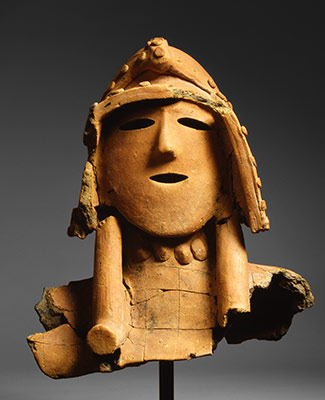
- ca. 350500 A.D. Haniwa, "clay cylinders" placed on and around the tomb mounds of the ruling elite, begin to evolve from their initial appearance as offering stands into modeled objects such as shields, boats, and houses. In the fifth century A.D., these objects are replaced by representations of humans and later of animals.
- ca. late 300searly 400s A.D. High-fired gray pottery is introduced from Kaya Federation in Korea to Japan, where it is initially produced by or with the help of immigrant potters for the ruling elite. This ware, known in Japan as Sueki, is made using the potter's wheel and fired in a single tunnel-like chamber kiln (anagama) built along a hill slope and able to reach 11001200ºC, temperatures high enough for stoneware and porcelain.
After an extended period of interregional competition and warfare, the Yamato clan emerges as the dominant political force, winning control over much of Honshu island and the northern half of Kyushu. The construction of many tomb mounds (kofun) of monumental proportions during this period symbolizes the increasingly unified power of the governing class.
 |
|
|
|
 |
|
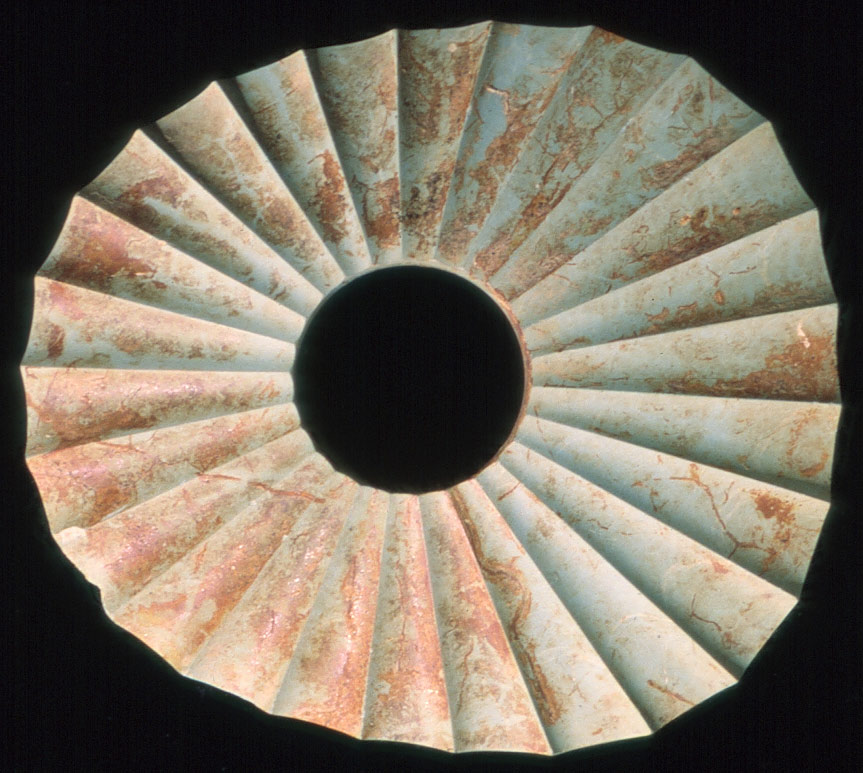
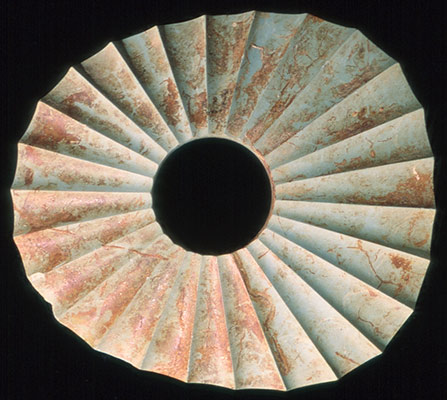
Bracelet, Kofun period (ca. 3rd century538), 4th century
Japan
Steatite; H. 8 1/2 in. (21.6 cm)
The Harry G. C. Packard Collection of Asian Art, Gift of Harry G. C. Packard, and Purchase, Fletcher, Rogers, Harris Brisbane Dick and Louis V. Bell Funds, Joseph Pulitzer Bequest, and The Annenberg Fund Inc. Gift, 1975 (1975.268.388)
|
|
 |
|
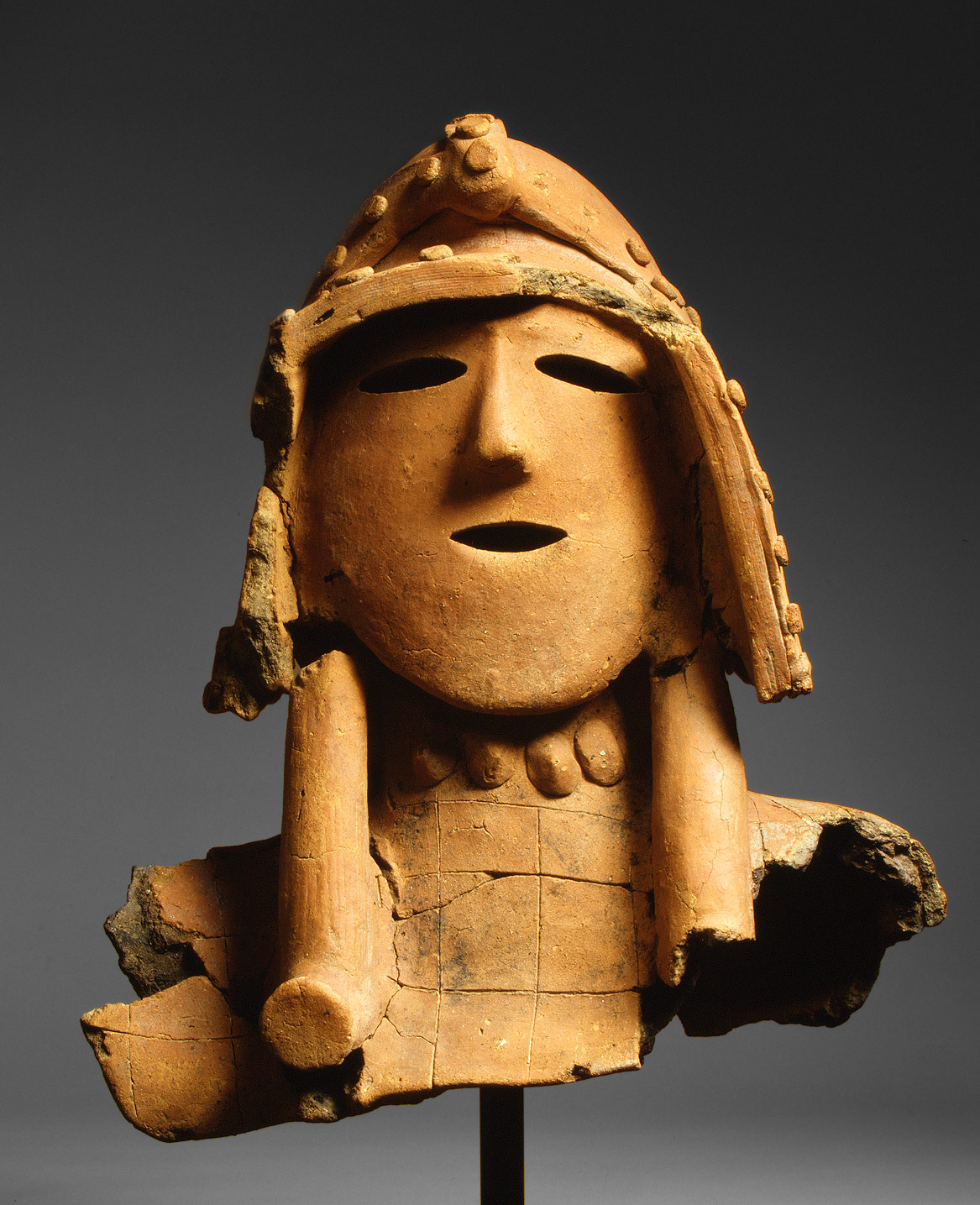
Bust of a warrior, Kofun period (ca. 3rd century538), 5th6th century
Kanto region, Japan
Earthenware with painted, incised, and applied decoration; H. 13 1/8 in. (33.3 cm), W. 10 7/8 in. (27.6 cm)
The Harry G. C. Packard Collection of Asian Art, Gift of Harry G. C. Packard, and Purchase, Fletcher, Rogers, Harris Brisbane Dick, and Louis V. Bell Funds, Joseph Pulitzer Bequest, and The Annenberg Fund Inc. Gift, 1975 (1975.268.414)
|
|
 |
|
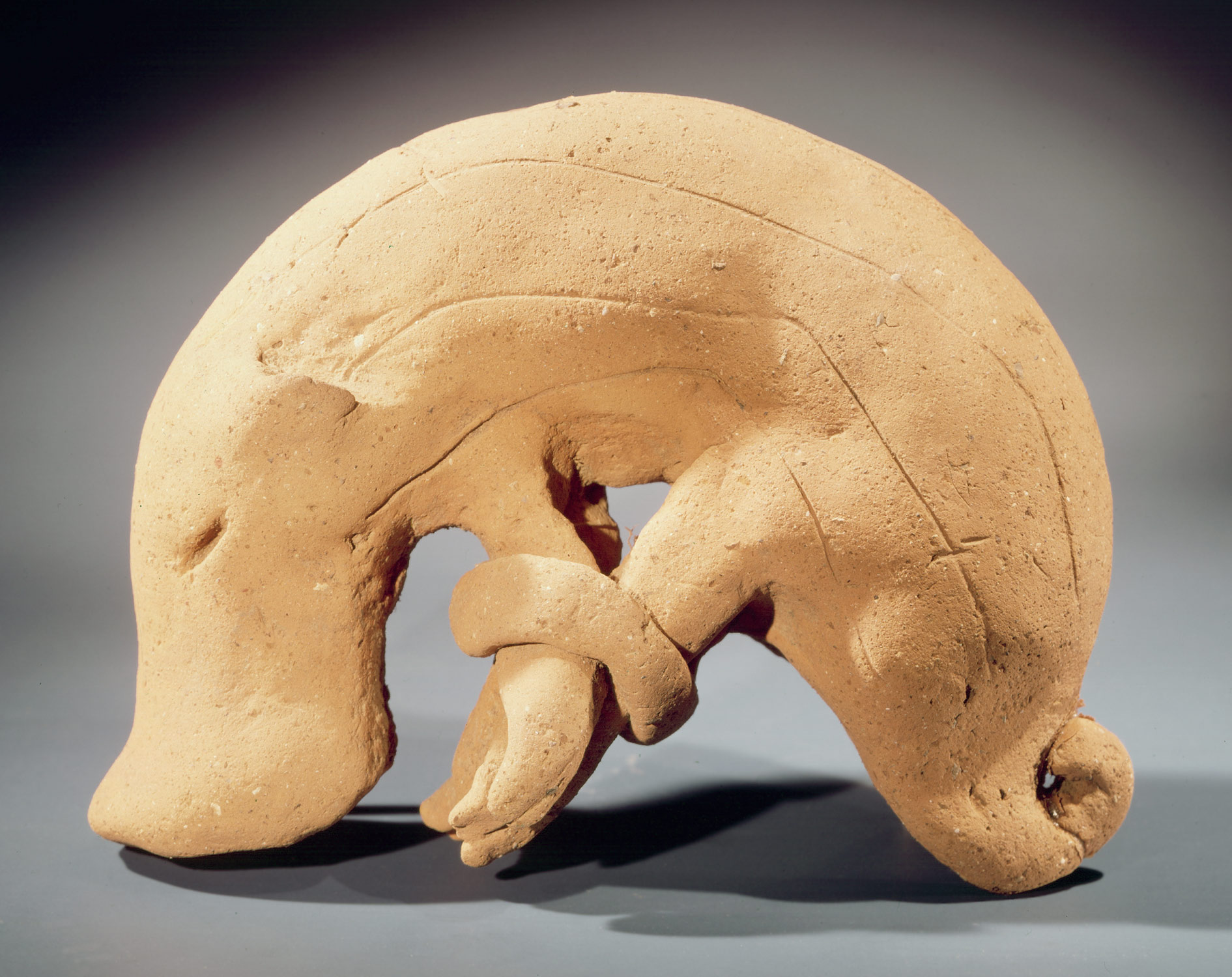
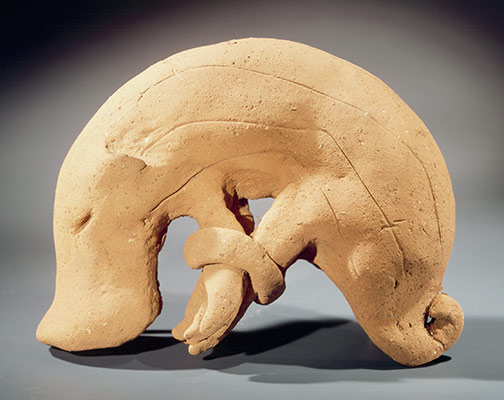
Haniwa boar, Kofun period (ca. 3rd century538), 5th century
Japan
Earthenware; L. 4 7/8 in. (12.4 cm)
The Harry G. C. Packard Collection of Asian Art, Gift of Harry G. C. Packard, and Purchase, Fletcher, Rogers, Harris Brisbane Dick and Louis V. Bell Funds, Joseph Pulitzer Bequest, and The Annenberg Fund Inc. Gift, 1975 (1975.268.418)
|
|
 |
|
|
|
 |
|
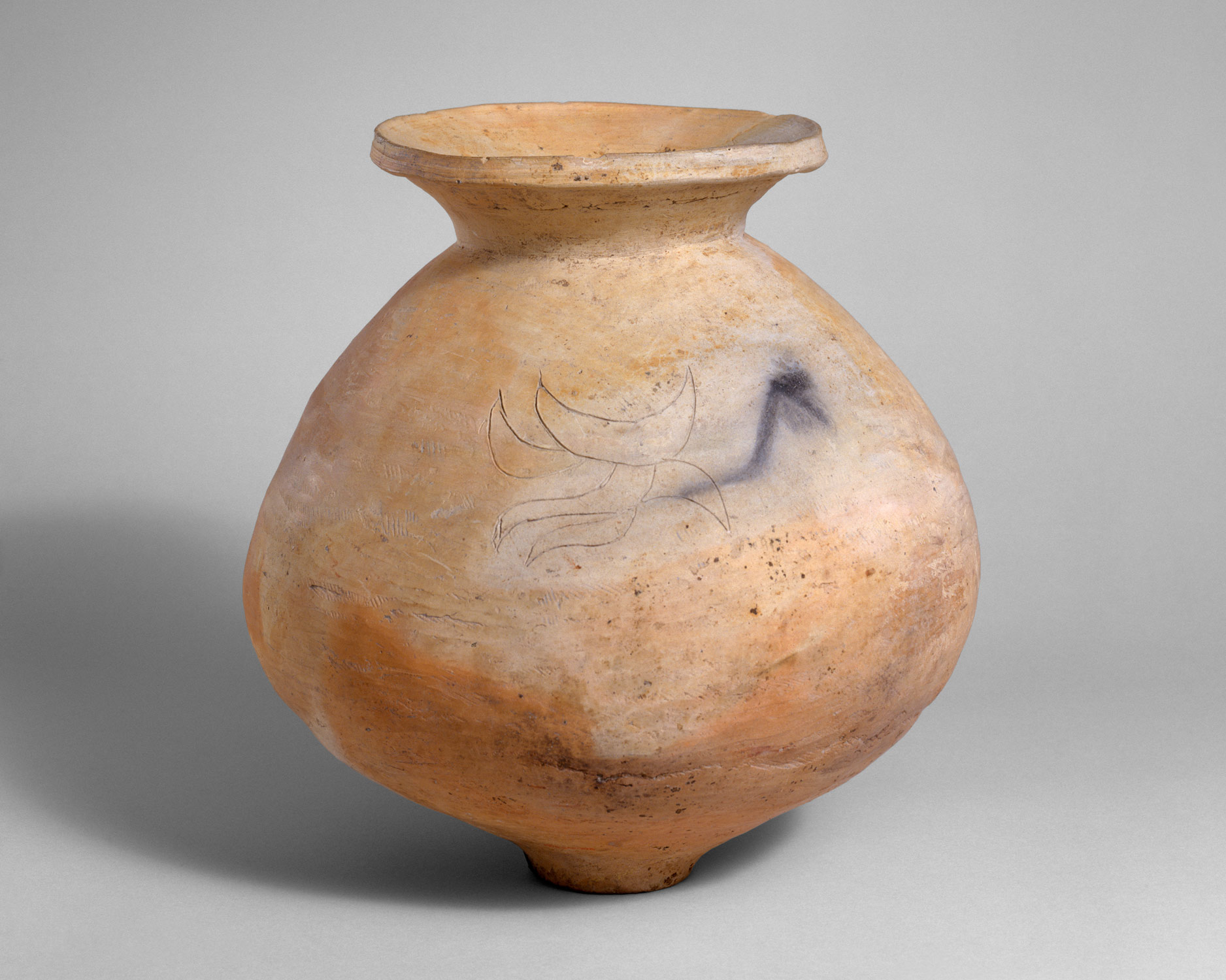
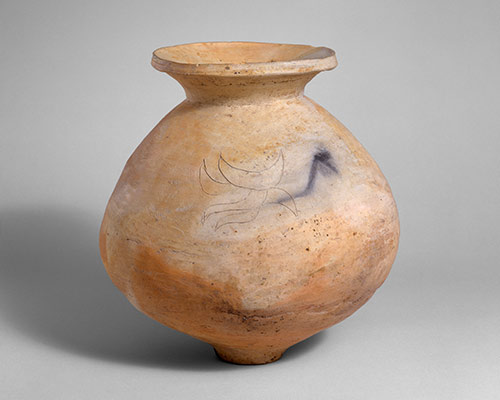
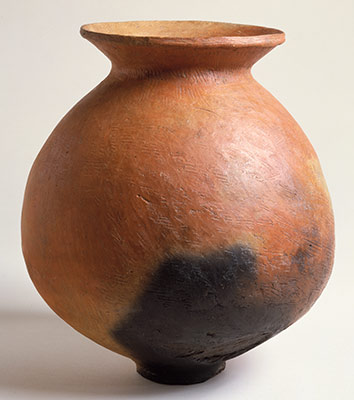
Storage jar, late Yayoi period (ca. 4th century B.C.3rd century A.D.), ca. 100200
Japan
Earthenware with incised decoration; H. 10 3/4 in. (27.3 cm)
The Harry G. C. Packard Collection of Asian Art, Gift of Harry G. C. Packard, and Purchase, Fletcher, Rogers, Harris Brisbane Dick and Louis V. Bell Funds, Joseph Pulitzer Bequest, and The Annenberg Fund Inc. Gift, 1975 (1975.268.375)
|
|
 |
|
|
|
Citation
"Japan, 1500 A.D.". In Heilbrunn Timeline of Art History. New York: The Metropolitan Museum of Art, 2000–. http://www.metmuseum.org/toah/ht/?period=05®ion=eaj (October 2000)