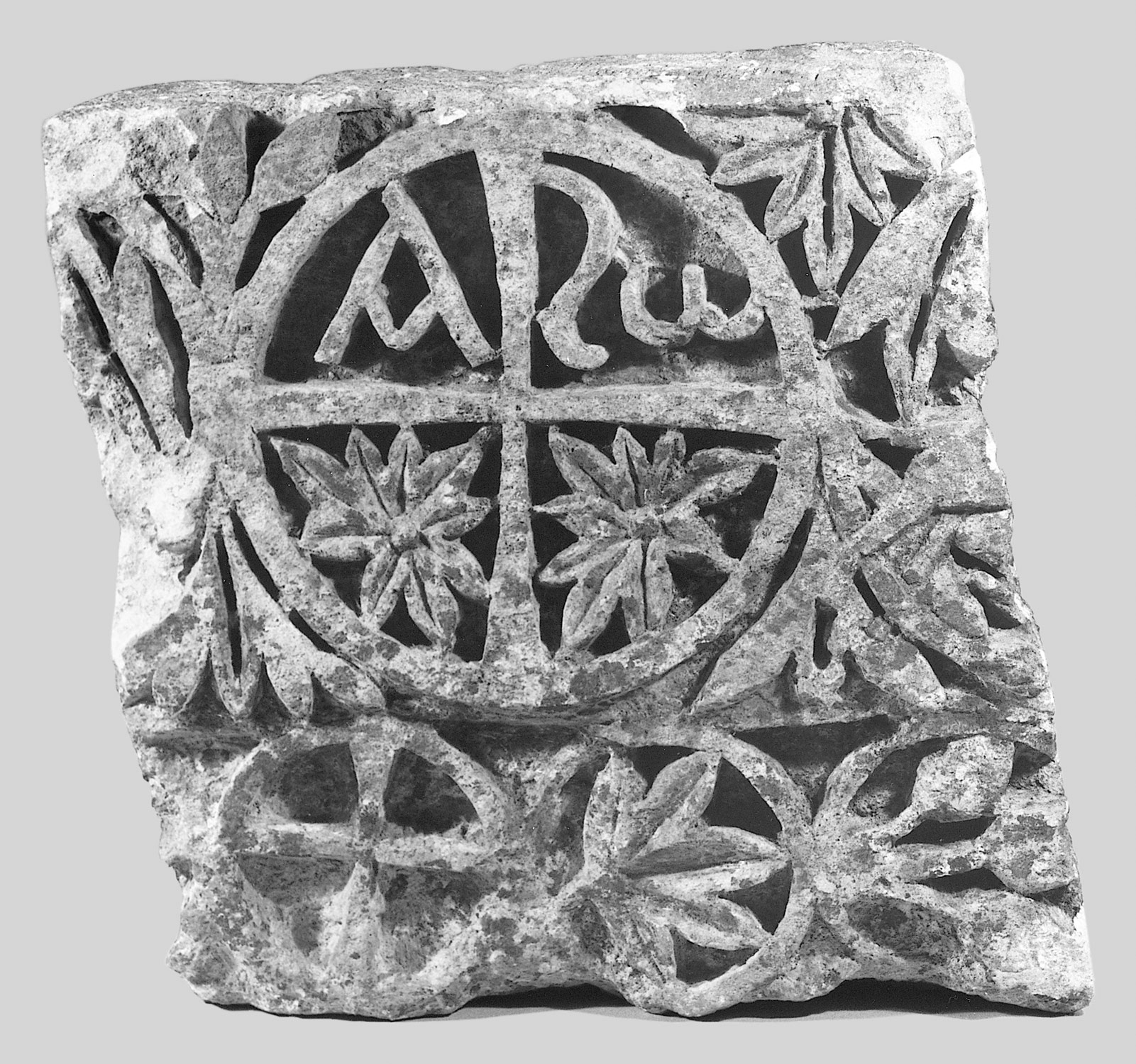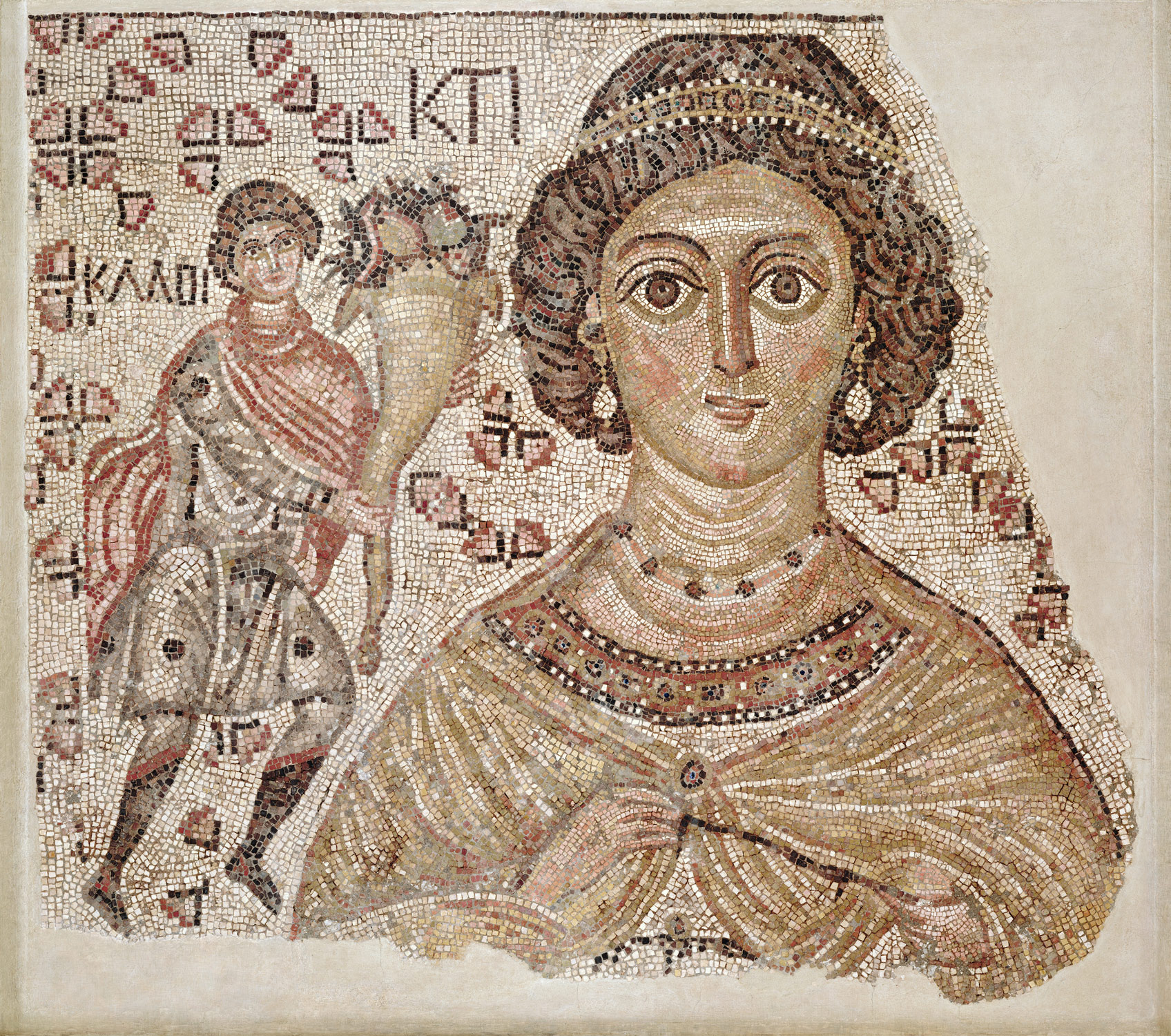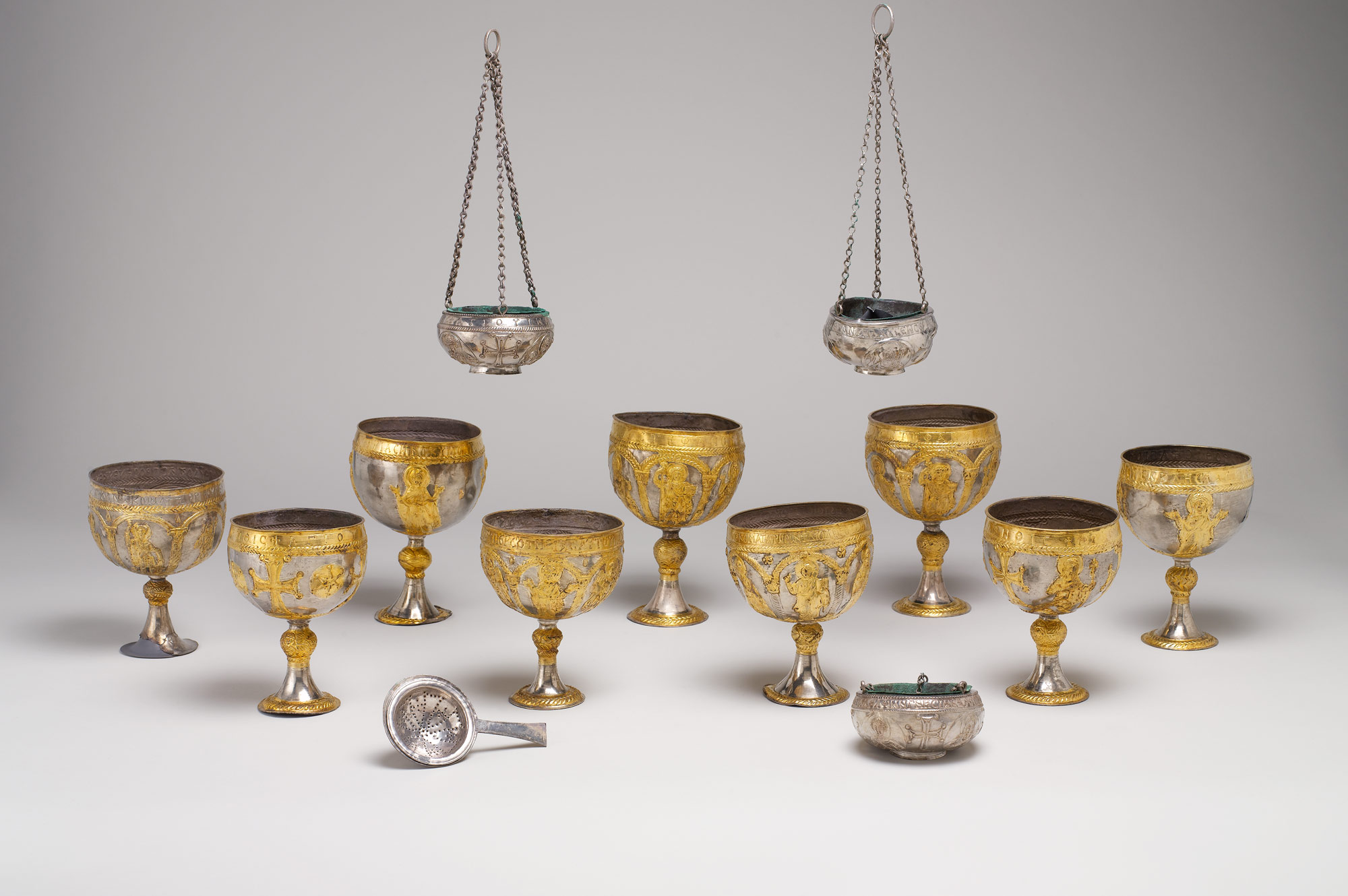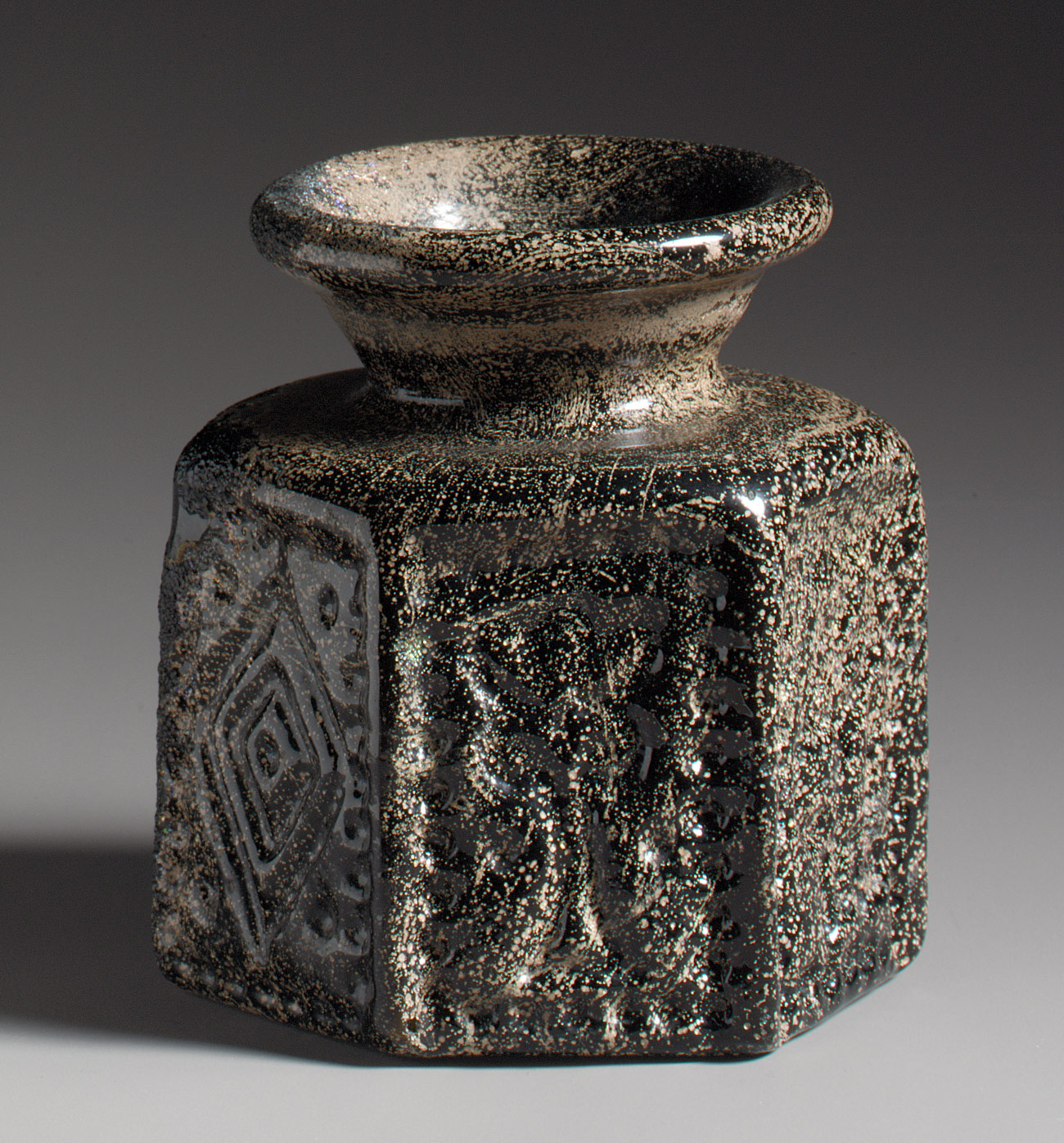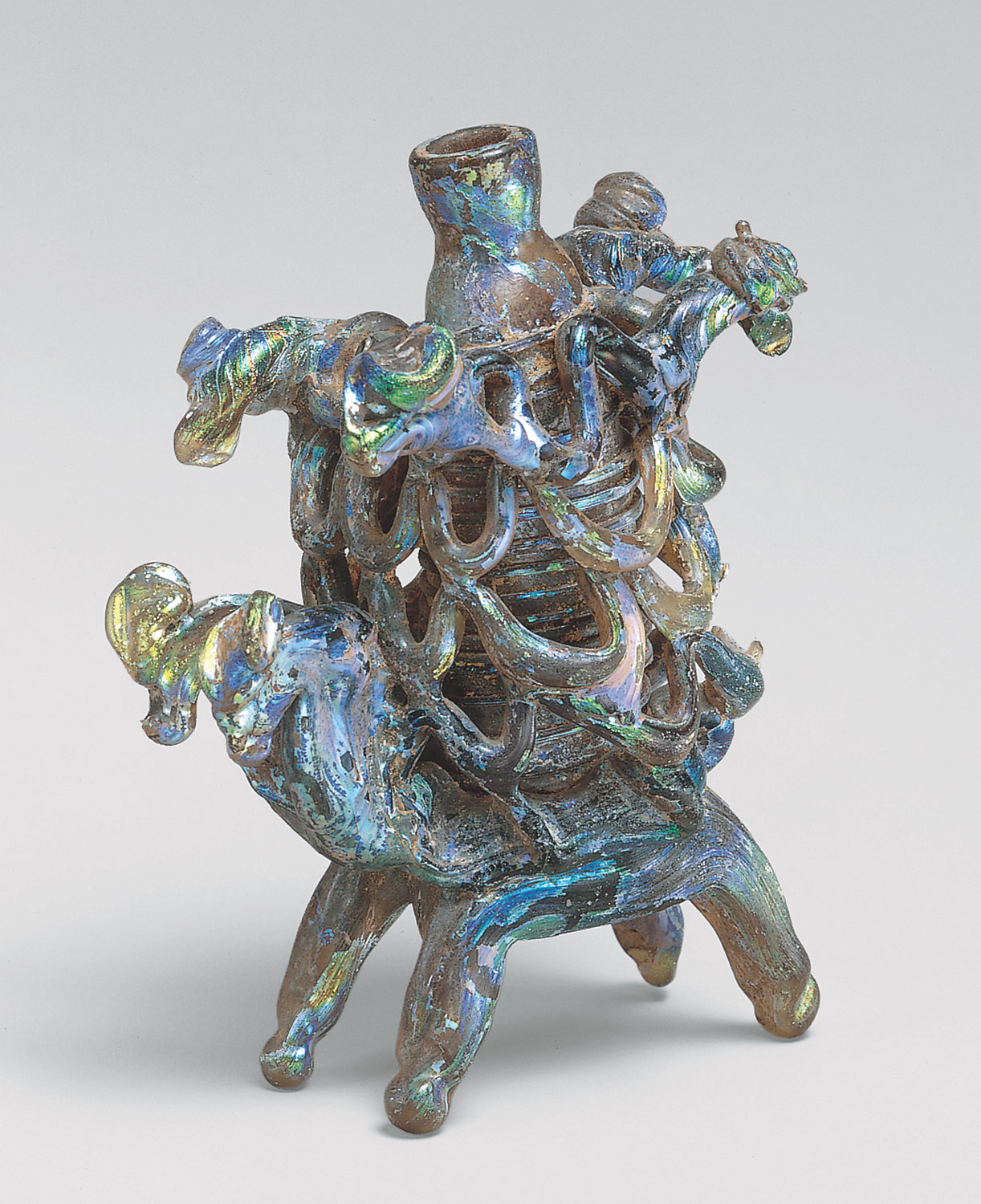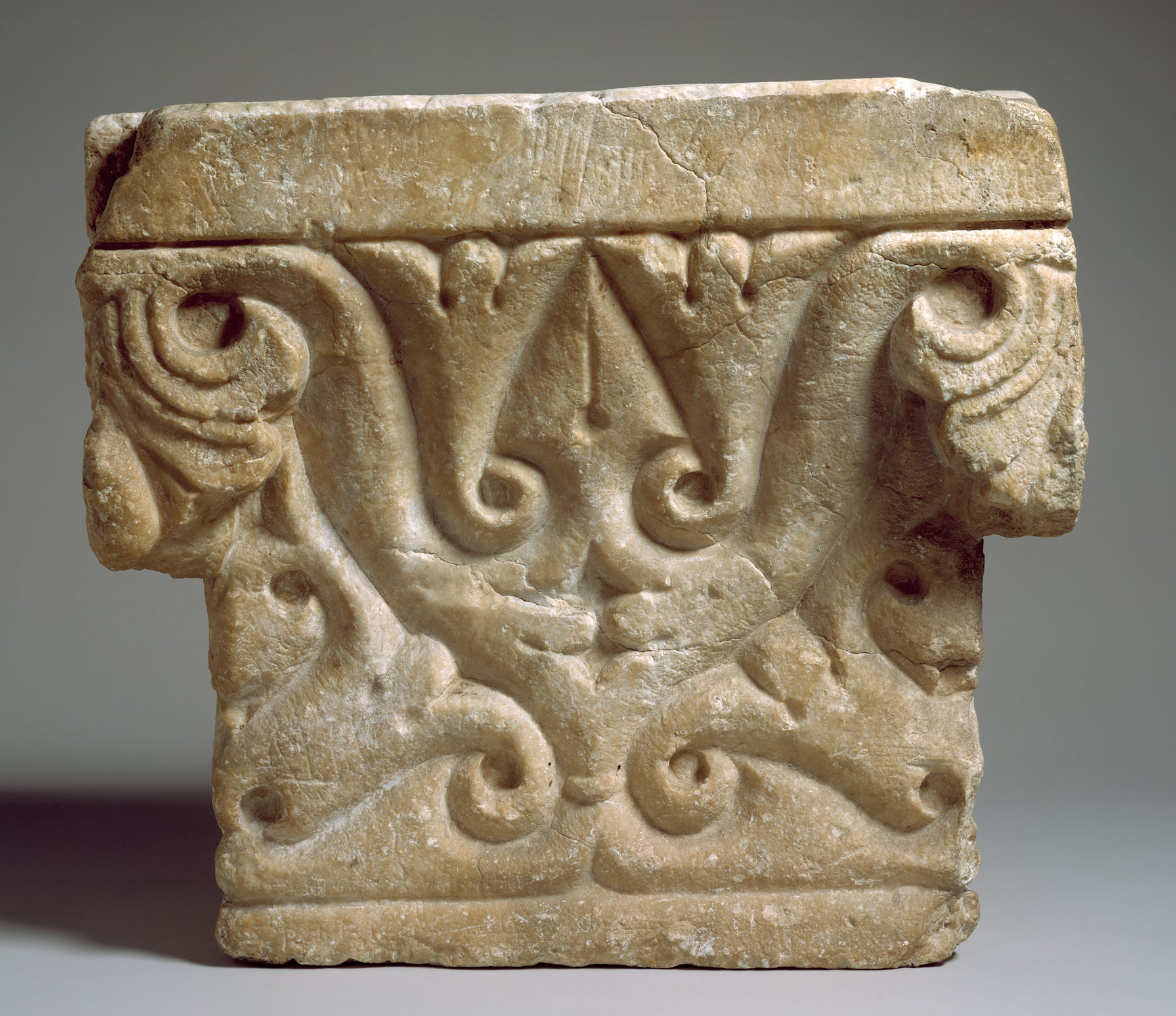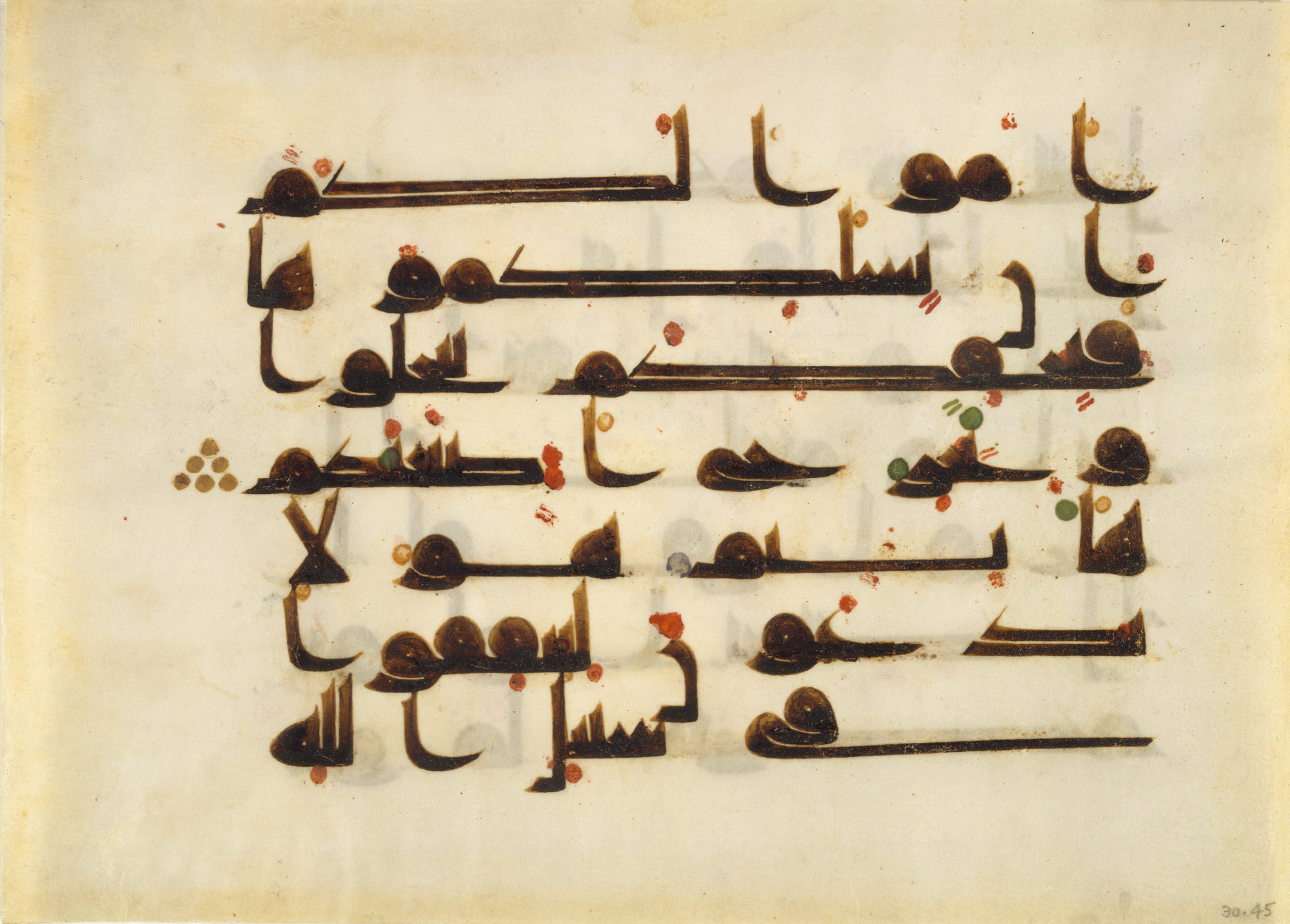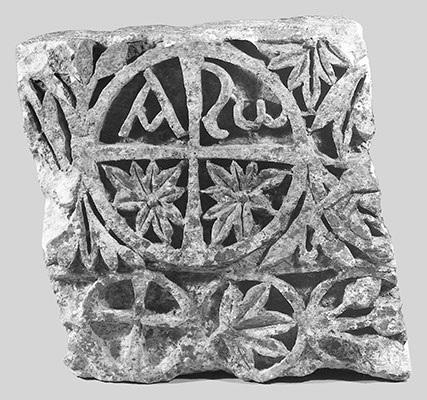
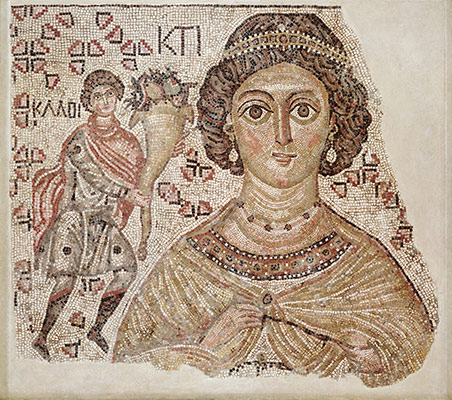
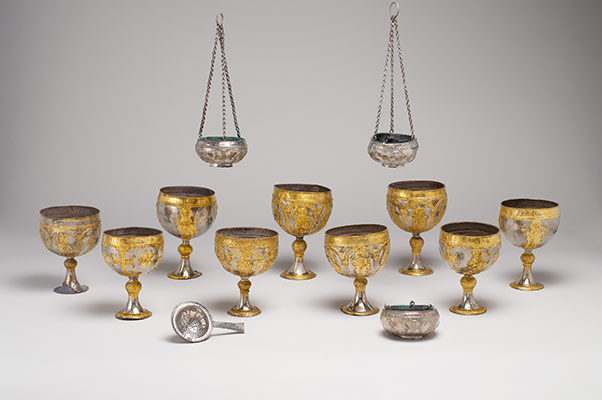
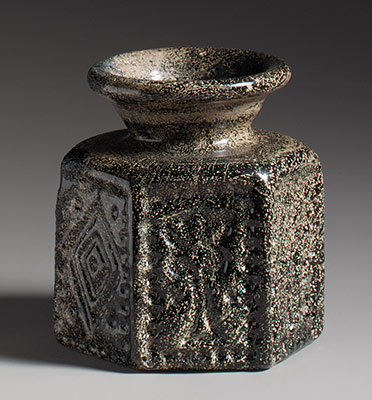
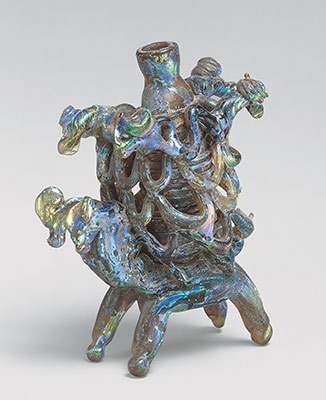
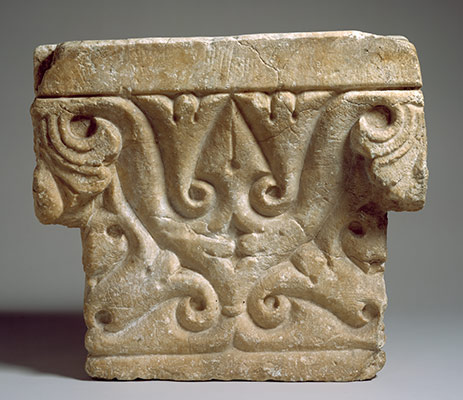
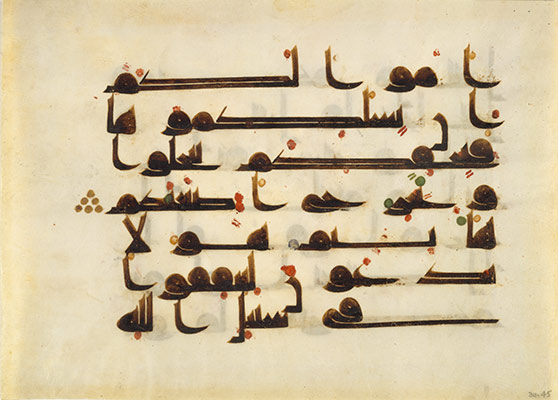
In the sixth century, the eastern Mediterranean, with its important commercial and religious centers, continues to be an integral part of the Byzantine realm. The following century, however, bears witness to a brief Sasanian interlude and Arab conquests in the name of Islam. Under Umayyad rule, Damascus becomes the center of an empire that eventually extends from the Iberian Peninsula to Central Asia. Late Roman as well as Byzantine and Sasanian models continue to be used alongside an emerging artistic expression that is distinctly Islamic.
The Eastern Mediterranean, 500–1000 A.D.
-
 69.15
69.15 -
 1998.69,1999.99
 -
 1986.3.1-15
 -
 1972.118.180
 -
 69.153
 -
 36.68.1
 -
 30.45
30.45
Timeline
500 A.D.
625 A.D.
Byzantine rule, ca. 330–640
Sasanian rule, 620–634
625 A.D.
750 A.D.
Sasanian rule, 620–634
Rule of the Rightly Guided Caliphs, 634–661
750 A.D.
875 A.D.
875 A.D.
1000 A.D.
Overview
Key Events
-
ca. 631
The Byzantine emperor Heraclius (r. 610–41) restores to Jerusalem relics of the True Cross captured during the Sasanian Persian conquest of the city in 614. Due to approaching Arab armies, the True Cross relics are conveyed to Constantinople for safekeeping in 635.
-
634–644
During the reign of the Rightly Guided Caliph ‘Umar ibn al-Khattab, Arab armies conquer extensive territories of the eastern Byzantine state, including its Syrian provinces. Important commercial and religious centers come under Arab rule, including Antioch, Damascus, and Jerusalem.
-
ca. 647
The island of Cyprus, an important way station for Mediterranean trade, is occupied by Arab forces during the mid-seventh century.
-
661
Mu‘awiya, governor of Syria under the rule of the Rightly Guided Caliphs, seizes power following the assassination of ‘Ali ibn Abi Talib (r. 656–61)—Muhammad’s cousin, son-in-law, and fourth caliph—and establishes the Umayyad caliphate, the first Islamic dynasty. During Mu‘awiya’s reign (661–80), the seat of power is transferred from the Arabian Peninsula to Syria, and Damascus becomes the capital of an empire that eventually extends from the Atlantic Ocean to the Indus River under Mu‘awiya’s successors.
-
661–750
Under Umayyad rule, Arabic becomes the official language and Islam the principal religion of the diverse lands unified under the empire. Artists continue to work in their established manner, influenced by the late antique classical tradition, prevalent in the eastern Mediterranean, as well as the more formal modes developed by the Byzantines and Sasanians. Gradually, a process of adoption, adaptation, and original creation generates new forms of artistic expression distinctly Islamic in character.
-
688
The Byzantine emperor Justinian II (r. 685–95, 705–11) reestablishes Byzantine settlement on Cyprus, signing a treaty with Umayyad caliph ‘Abd al-Malik (r. 685–705) for joint occupation of the island.
-
691
The construction of the Dome of the Rock in Jerusalem, the first major Umayyad architectural undertaking, is completed under the patronage of the caliph ‘Abd al-Malik. Built on a prominent and historically important site formerly occupied by Solomon’s Temple and later associated with Muhammad’s ascent to heaven, the building has an elaborate and sophisticated program of decoration. Byzantine and Sasanian motifs in the architecture and mosaics are especially noteworthy.
-
ca. 700–750
Umayyad desert palaces such as Mshatta (in present-day Jordan), Qasr ‘Amra (Jordan), ‘Anjar (Lebanon), Khirbat al-Mafjar (Palestine), and Qasr al-Hayr East and West (Syria) testify to the wealth of their patrons as well as to the creativity of Umayyad secular architects.
-
705–715
The mosques of Damascus (706) and Jerusalem (709–15) are commissioned during the reign of Umayyad caliph al-Walid (r. 705–15). In Damascus, the fourth-century Byzantine church of Saint John the Baptist on the site of a former Roman temple is transformed into the congregational mosque of the Umayyad capital. The marble panels and extensive mosaic programs are comparable to those of the Dome of the Rock in Jerusalem.
-
750
With the establishment of the Abbasid caliphate, the seat of power shifts to Iraq. Syria and the eastern Mediterranean region still play an important but no longer pivotal role in the Islamic world as they had during the Umayyad period.
-
868
Following the establishment of Tulunid independence in Egypt, the eastern Mediterranean region comes increasingly under the control of Egyptian dynasties: the Tulunids, Ikhshidids, and Fatimids.
-
ca. 965–969
Under the emperor Nikephoros II Phokas (r. 963–69), Byzantine armies temporarily recover territories in Syria. At the same time, Cyprus is firmly reincorporated into the Byzantine empire. From the tenth to twelfth centuries, architecture and the arts flourish on the island under Byzantine patrons.
Citation
“The Eastern Mediterranean, 500–1000 A.D.” In Heilbrunn Timeline of Art History. New York: The Metropolitan Museum of Art, 2000–. http://www.metmuseum.org/toah/ht/?period=06®ion=wae (October 2001)
Related
Map

Encompasses present-day Cyprus, Israel, Jordan, Lebanon, Syria, and southern Turkey (Hatay)
Primary Chronology
Secondary Chronology
Lists of Rulers
See also
Keywords
- Abbasid Art
- Anatolia and the Caucasus
- Ancient Near Eastern Art
- Ancient Roman Art
- Arabian Peninsula
- Asia
- Byzantium
- Cyprus
- Eastern Mediterranean
- Egypt
- Fatimid Art
- Iraq
- Islamic Art in the Medieval Period
- Israel
- Jerusalem
- Jordan
- Lebanon
- Palestine
- Rome
- Sasanian Art
- Syria
- Turkey
- Umayyad Art
- West Asia
- 6th Century A.D.
- 7th Century A.D.
- 8th Century A.D.
- 9th Century A.D.
- 10th Century A.D.