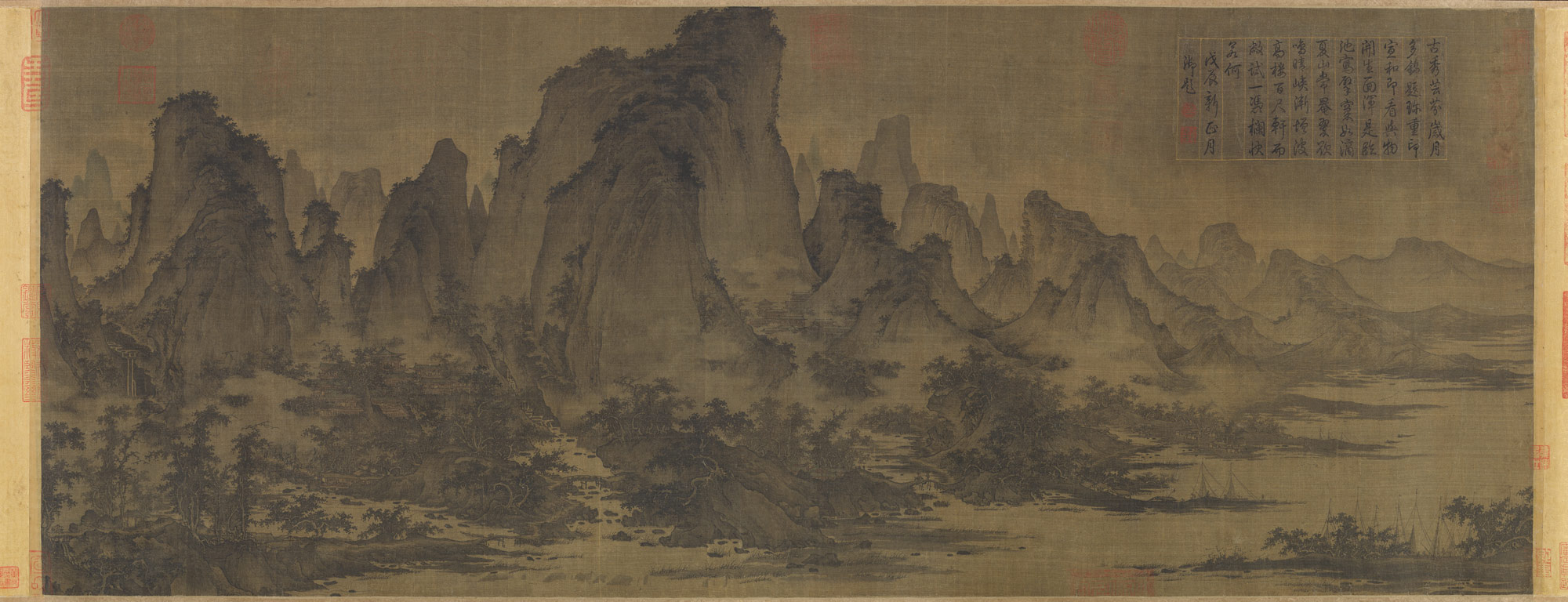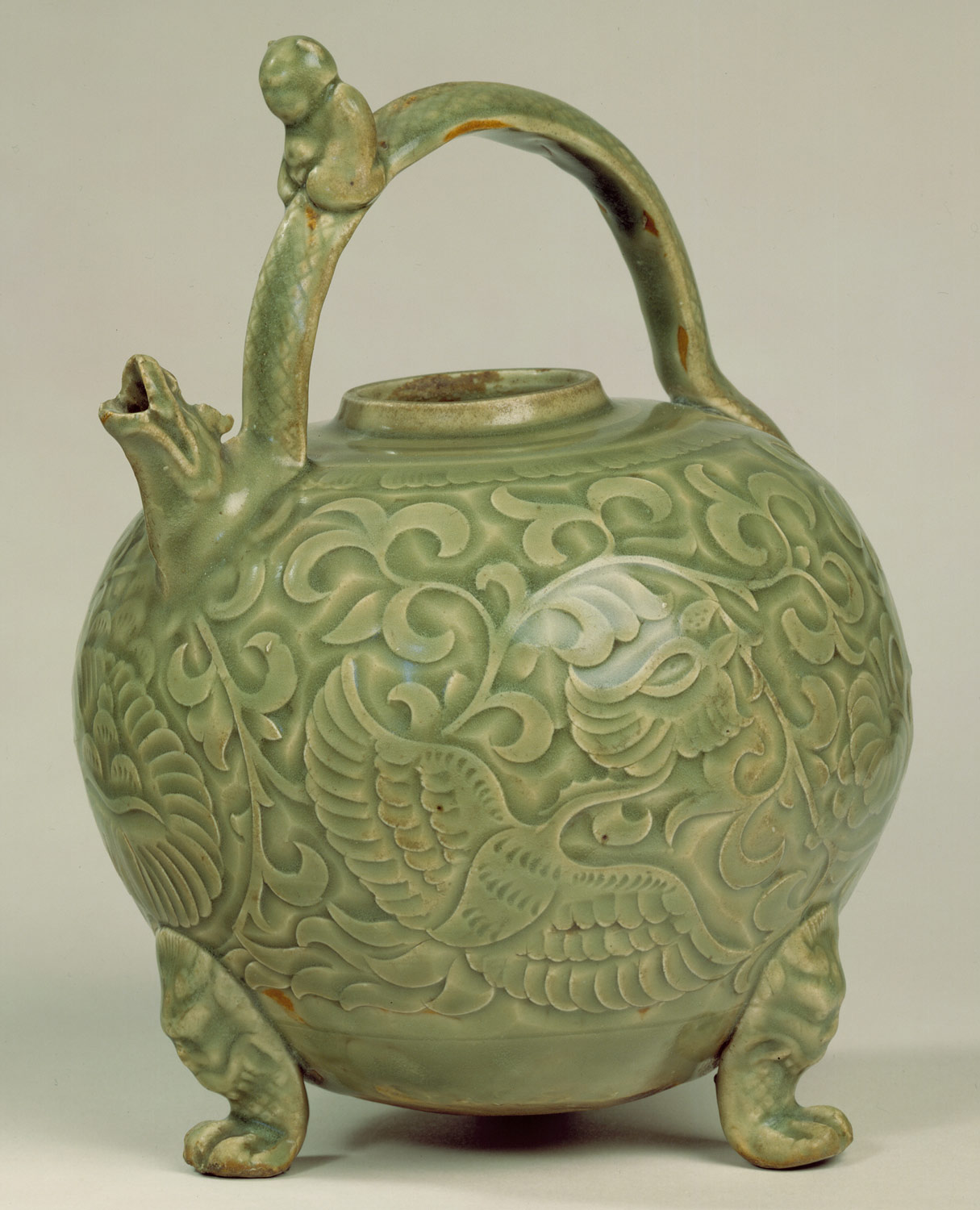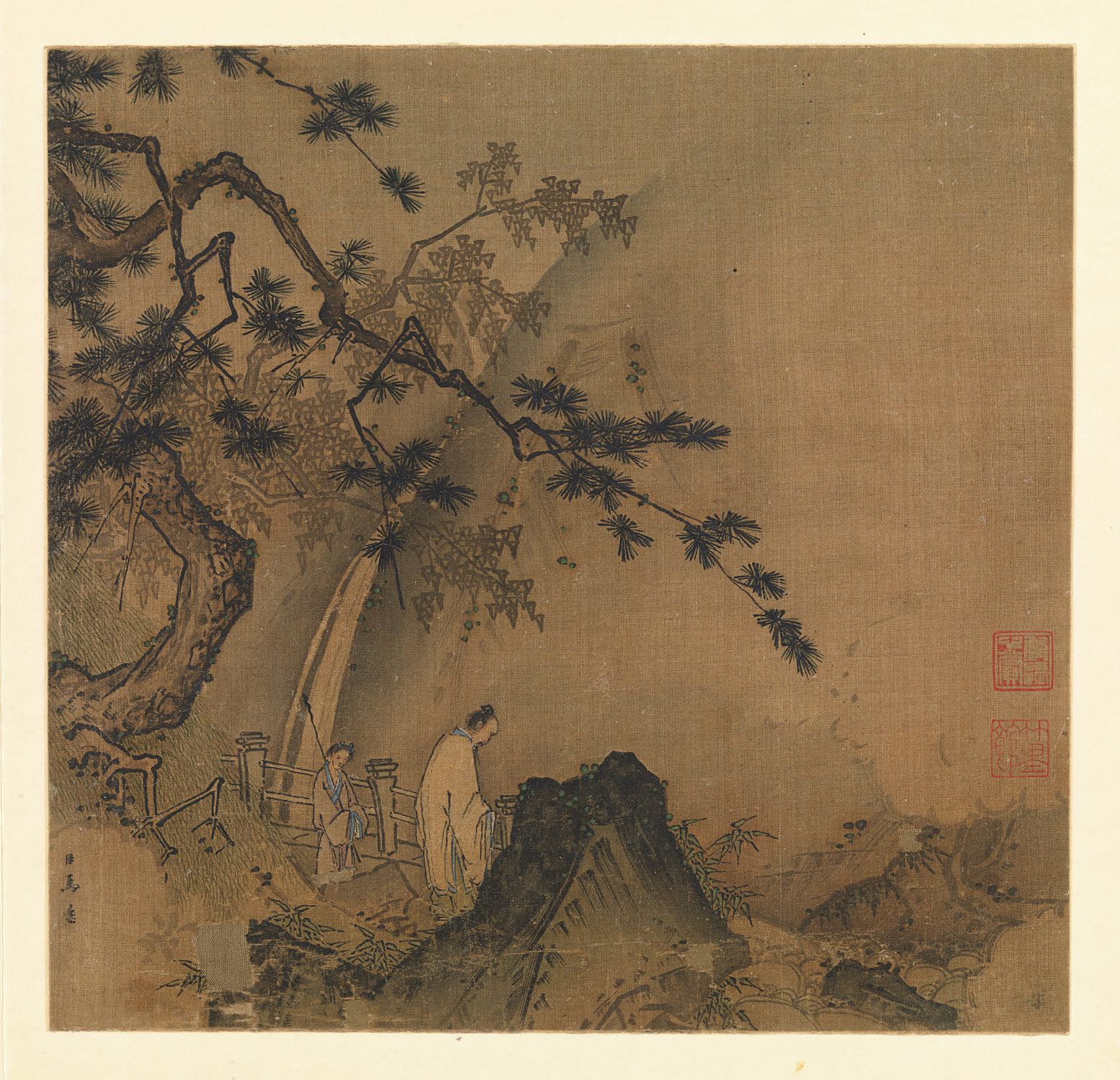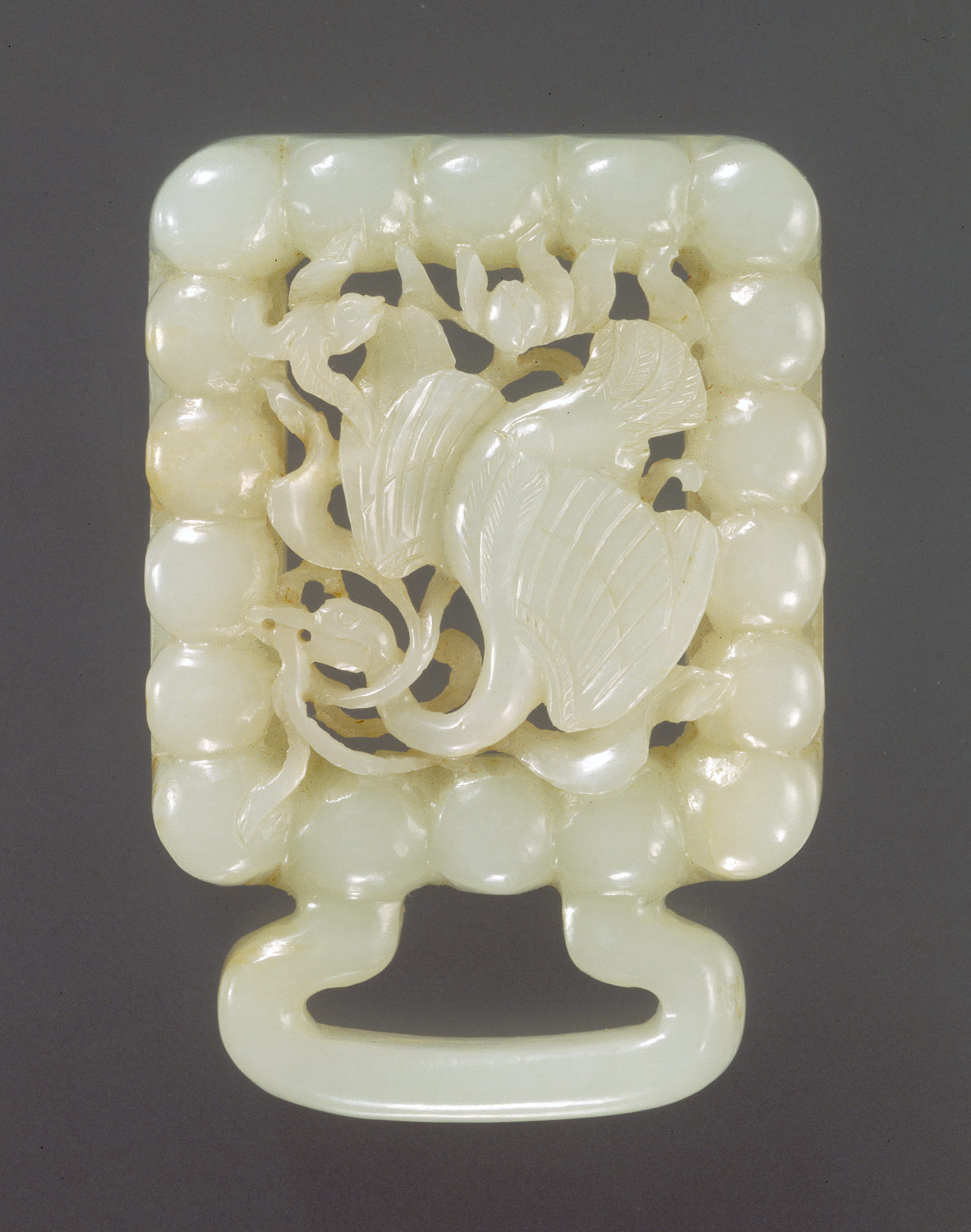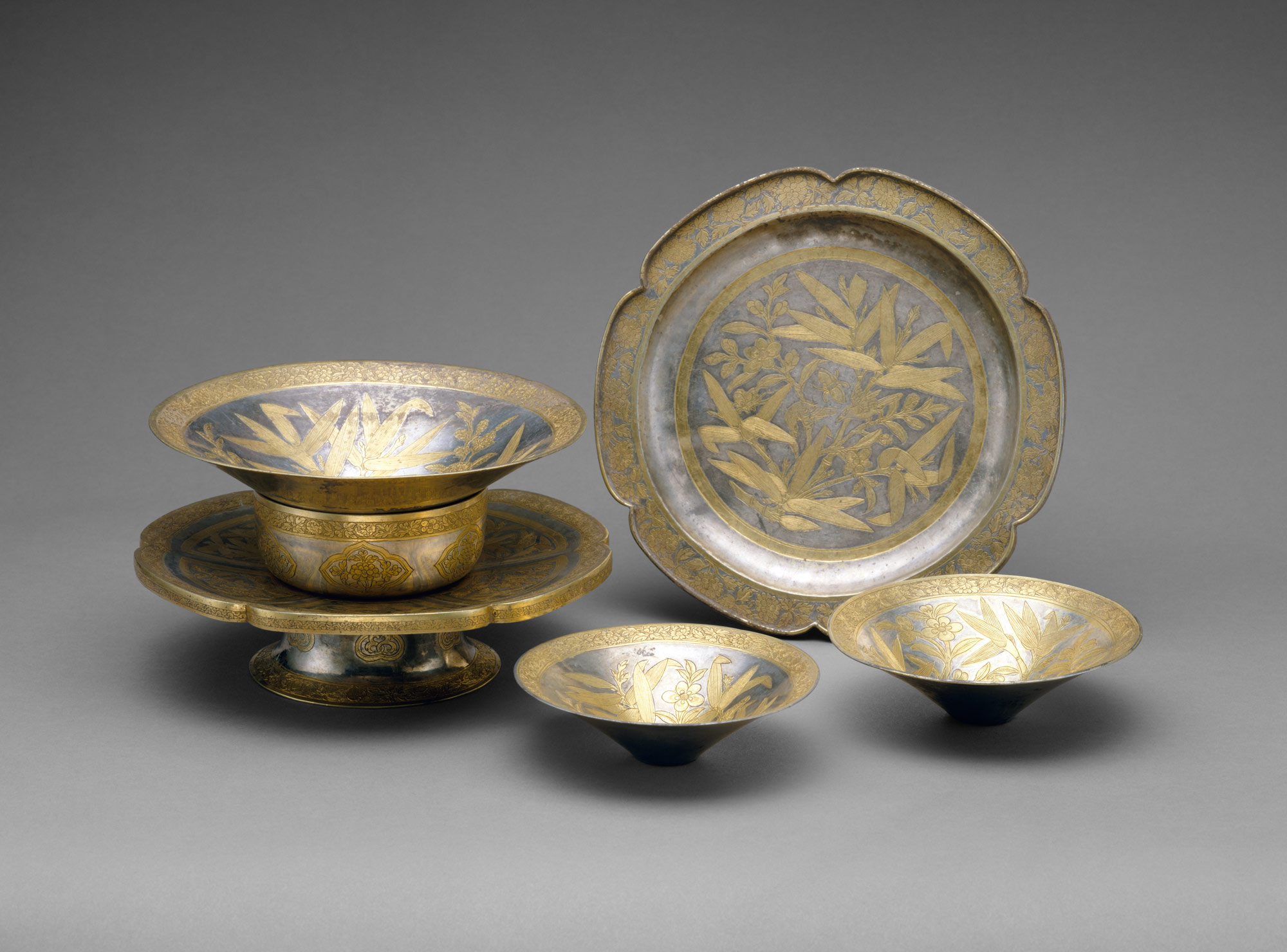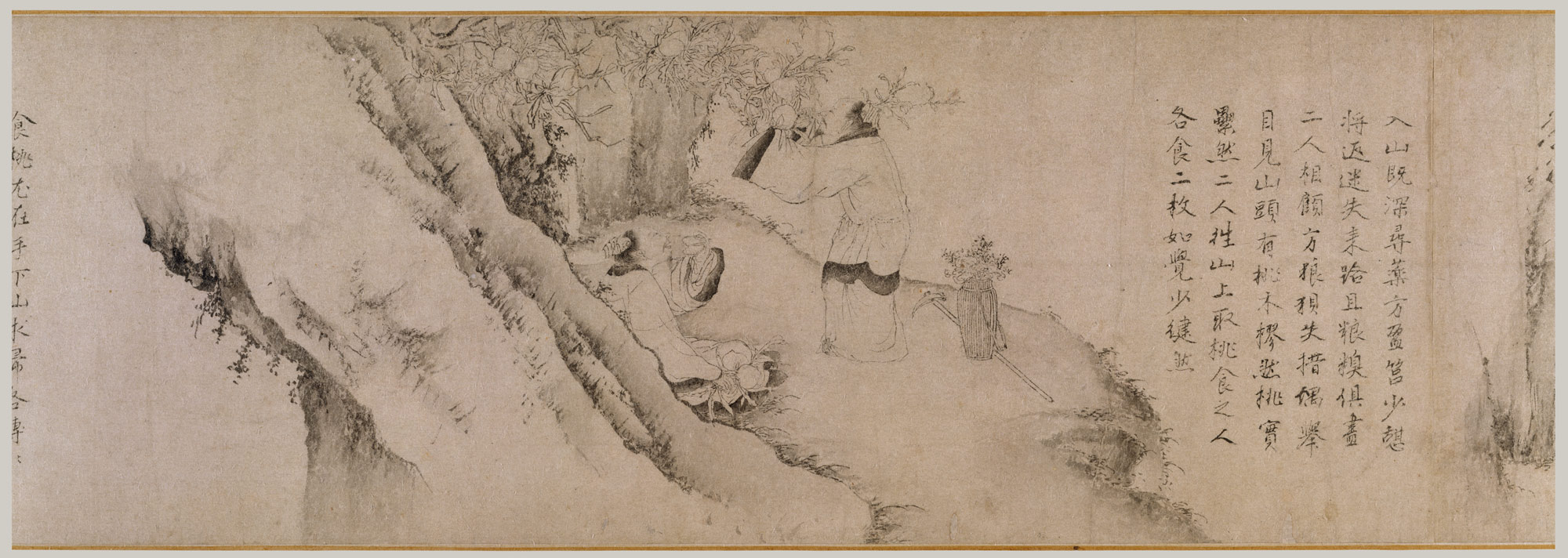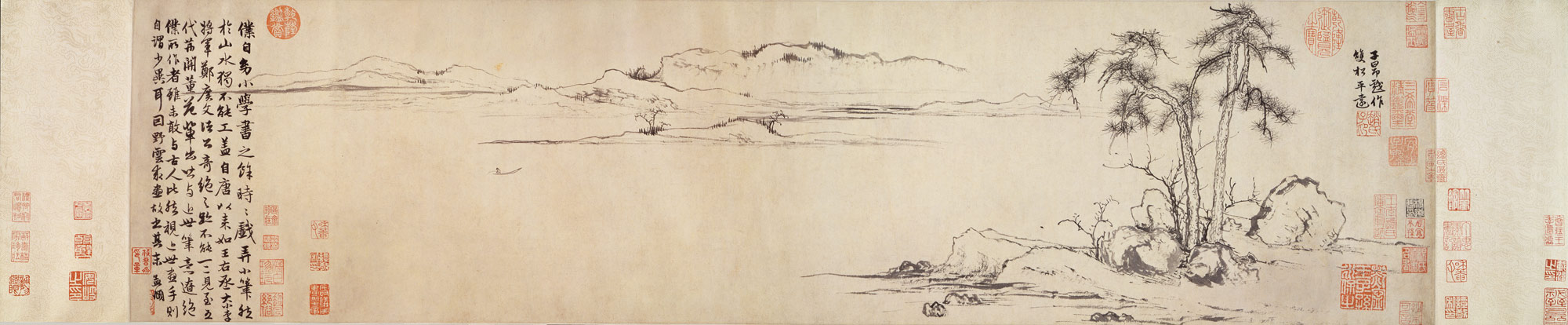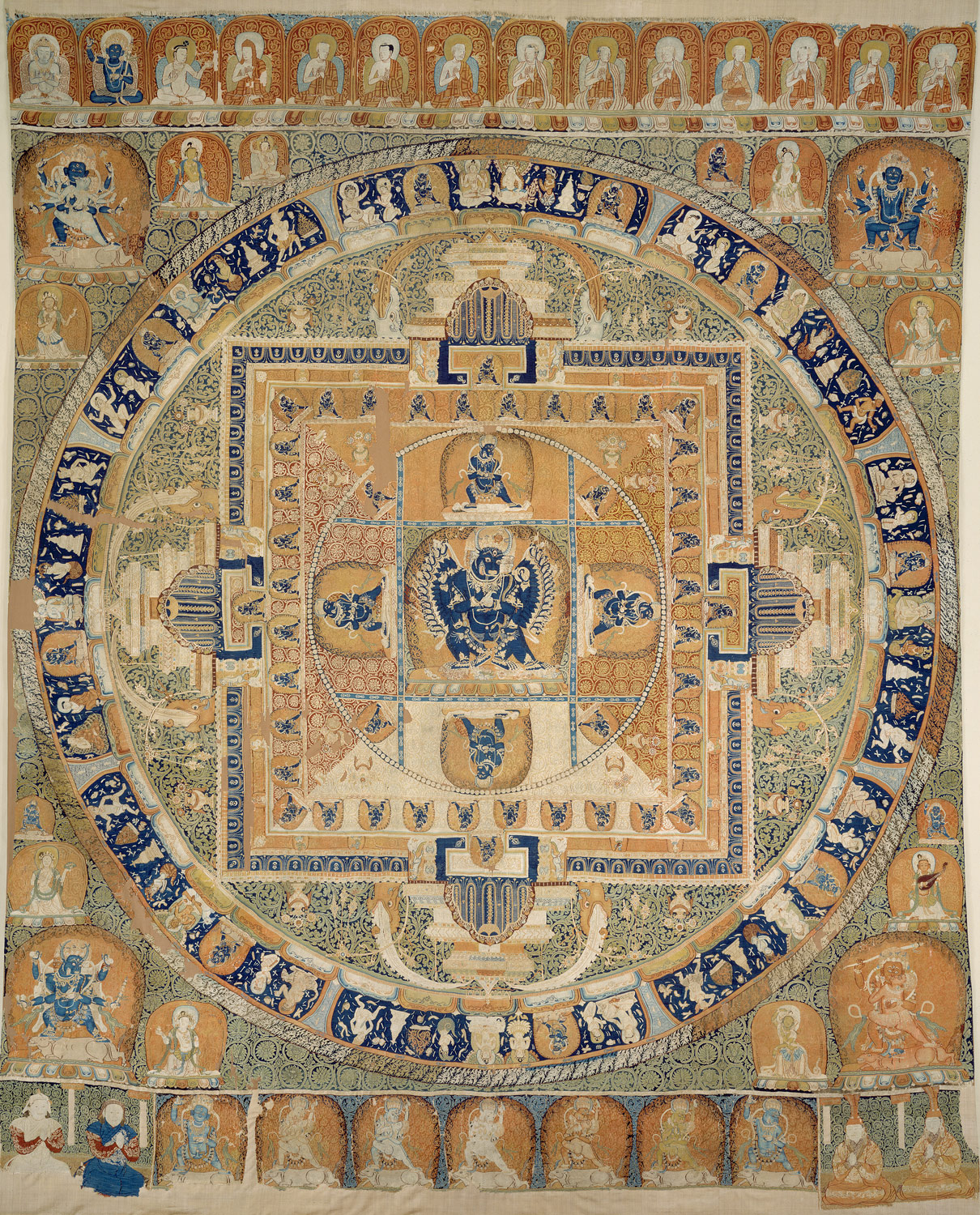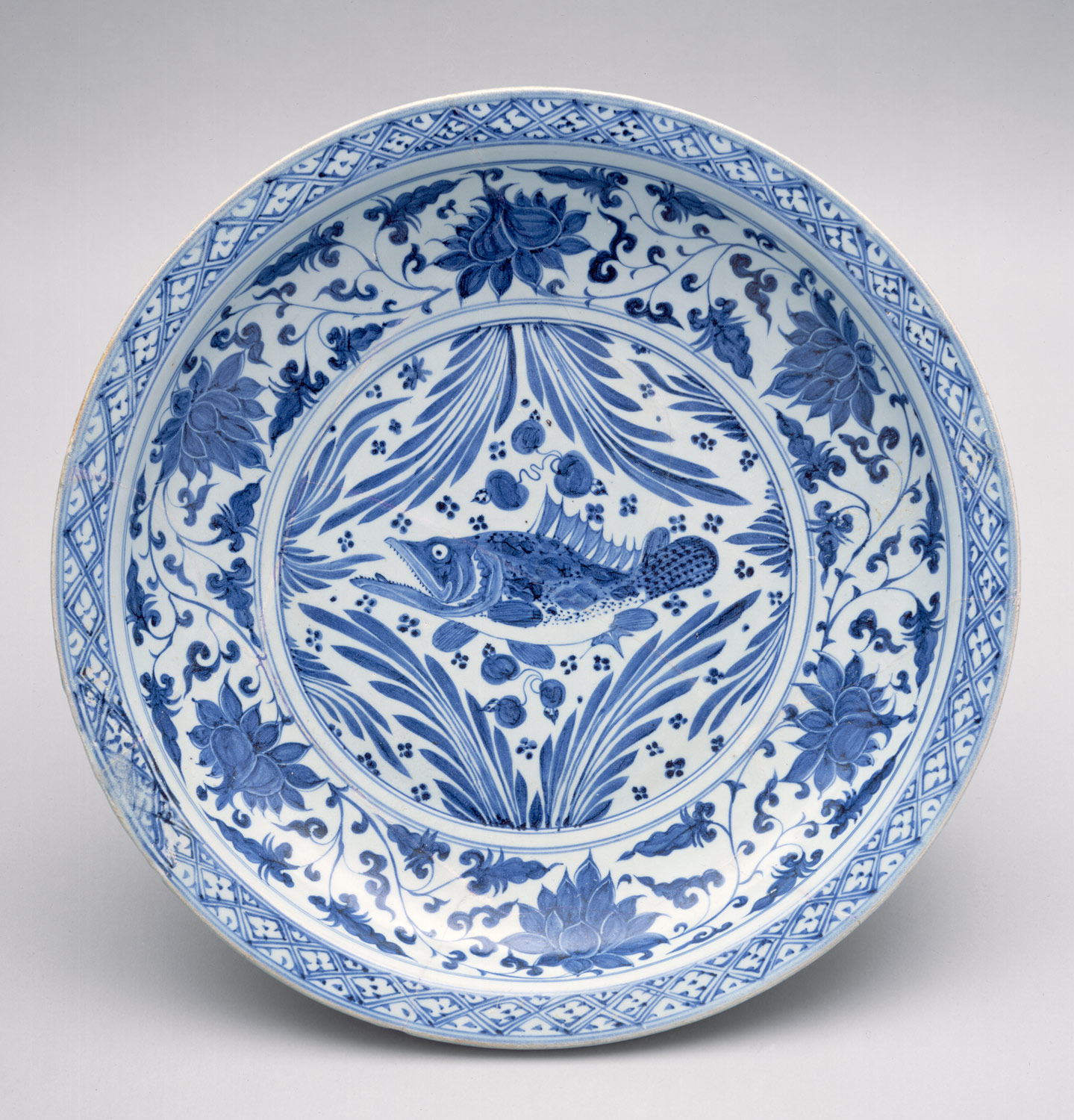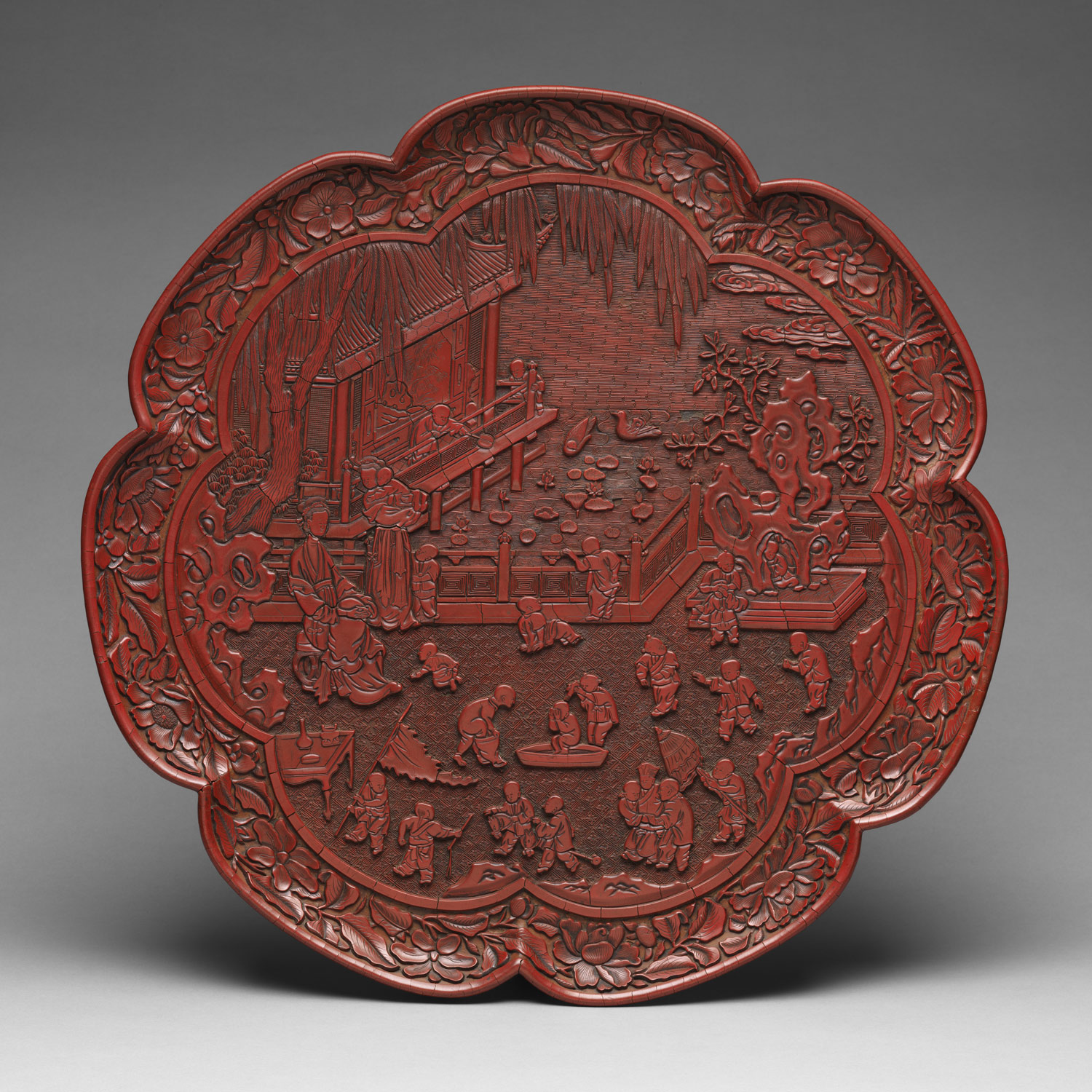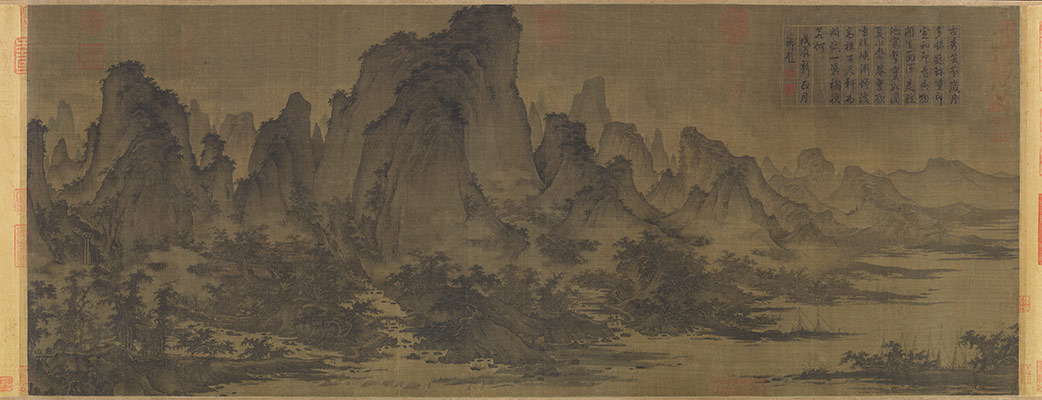

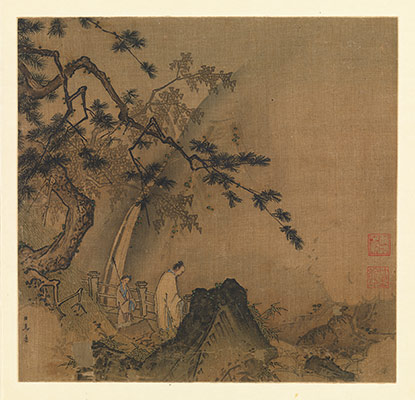
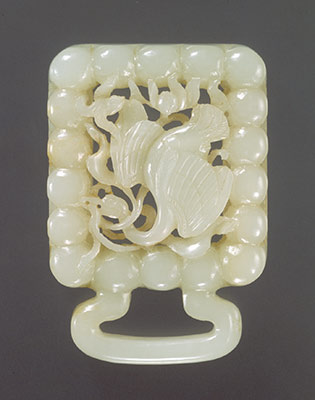
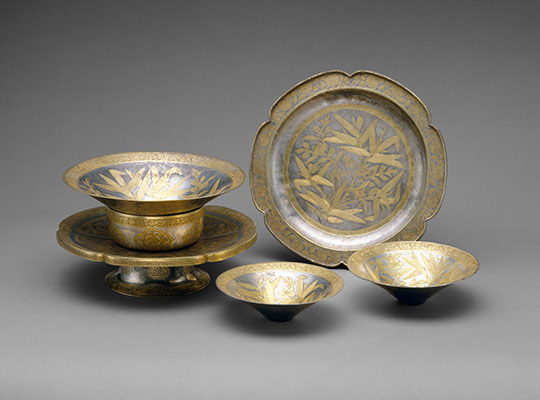
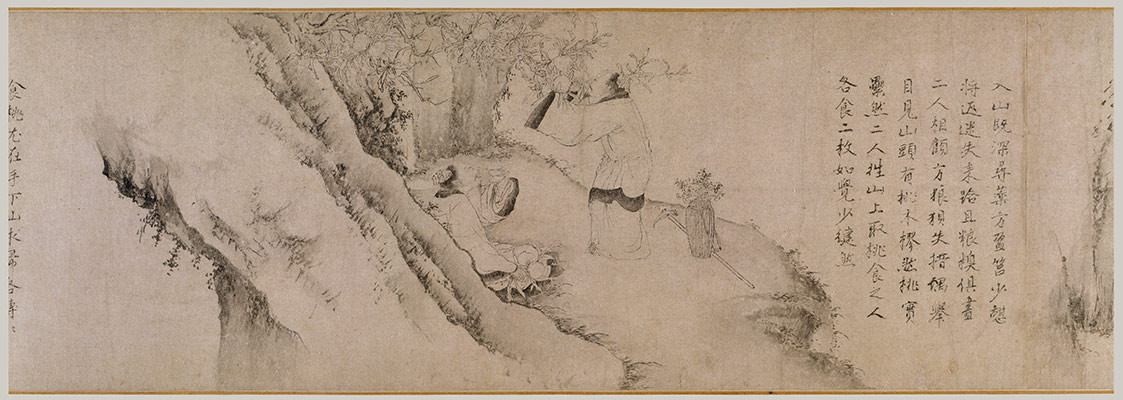
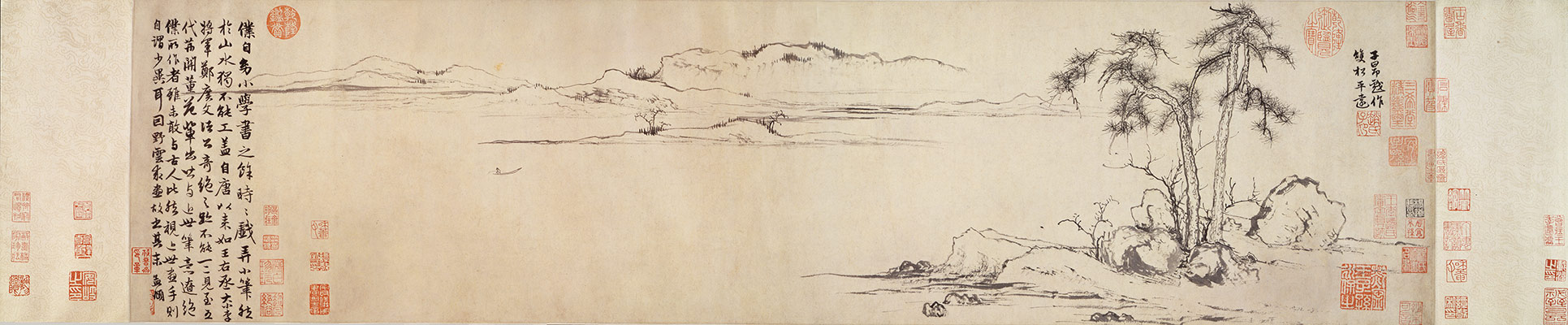
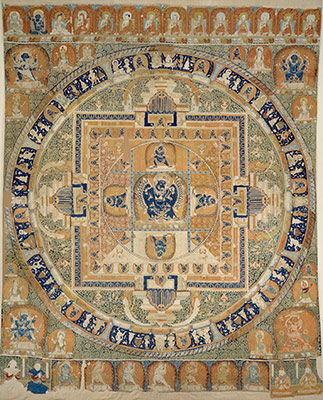
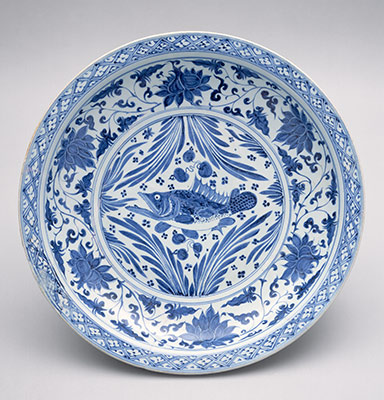
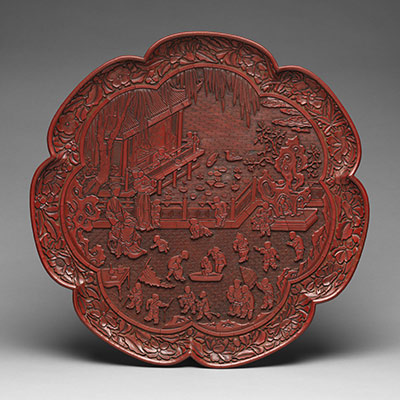
Reunited once again under the Northern Song dynasty, China maintains complicated relationships with the Liao in the northeast and the Xixia in the northwest. The former is overcome by the Jurchen, whose Jin dynasty controls North China while the Song continues to rule the south. Both succumb to the Mongols who rule China—as the Yuan dynasty—from 1271 until the establishment of the Ming in 1368. Despite harsh political realities, the Song dynasty is a brilliant era, shaping Chinese culture for centuries. The monumental landscape painting of the Northern Song and the quieter evanescent images of the Southern Song serve as models for later artists, as does the quest for self-expression that marks the Chinese literati under Mongol rule. Ceramics, both green-glazed celadon wares of the Song and the porcelains painted in underglaze blue during the Yuan, profoundly influence traditions throughout Asia. Metalwork, lacquer, textiles, and other luxuries are produced for domestic consumption and trade.
China, 1000–1400 A.D.
-
 1973.120.1
 -
 26.292.73
 -
 1973.120.9
 -
 1991.483
 -
 1997.33.1-6
 -
 2005.494.1
 -
 1973.120.5
 -
 1992.54
 -
 1987.10
 -
 2015.500.1.31
Timeline
1000 A.D.
1100 A.D.
1100 A.D.
1200 A.D.
1200 A.D.
1300 A.D.
1300 A.D.
1400 A.D.
Overview
Key Events
-
960–1127
Most of China is under the control of the Northern Song dynasty, but regions of the northeast and northwest are in the hands of foreign rulers.
-
ca. 1020
The Song government actively encourages the spread of schools, providing support through land.
-
1032–1227
The Xixia or Western Xia, a people of Tangut origin, control northwest China. Xixia paintings follow Chinese traditions, particularly in the depiction of landscape, and Tibetan Buddhist examples.
-
ca. 1044
The earliest formula for gunpowder (coal, saltpeter, and sulfur) is recorded.
-
ca. 1050
Printed books become widespread, and books and paper are exported to many lands.
-
ca. 1050–1101
Confucianism becomes a major governing ideology. The revival of this system is often associated with reformist factions; however, interest in Confucianism can also be attributed to a broader interest in reasserting native ideologies and traditions.
-
1100–1125
Huizong, the most famous emperor-aesthete in Chinese history, reigns. He is renowned as a painter and patron of the arts, but assessed as a weak ruler who loses the empire to the invading Mongols. A catalogue of his painting collection (Xuanhe huapu), published in 1123, numbers some 6,000 works. Huizong is also famous for establishing a painting academy in 1104 and for his taste in ceramics, favoring blue/green-glazed Ru wares over the white-glazed Ding. The collecting of antiquities becomes fashionable during his reign. The study of ancient ritual bronzes, jade, and epigraphy flourishes, informing scholarship up to the present day.
-
ca. 1119
The first record of a compass, although magnetic north was known and used as early as the third century A.D.
-
1125–1234
The Jurchen of eastern Manchuria conquer Liao territories and move south into northern China, capturing the capital at Bianliang (modern Kaifeng) and forcing the Song court south.
-
1127–1279
South China is ruled by members of the Song imperial family from their capital at Hangzhou while the north remains in the hands of the Jurchen Jin dynasty.
-
1130–1200
Zhu Xi, one of the most influential Confucian thinkers, synthesizes major trends, selecting the four texts that define the tradition and its scholarship until the early twentieth century.
-
ca. 1150
The Song government prospers, advancing China’s position as a major maritime power. Massive ships travel as far as the Malabar Coast of India and the Red Sea, exporting silk, porcelain, dye, and other luxuries.
-
1163
A synagogue is built in Kaifeng to serve merchants active in the caravan trade from Persia.
-
1206
Temujin is enthroned as the Genghis (“great”) Khan of the Mongols. In 1215, he captures Beijing, and in 1233, the former Northern Song capital (or the southern capital of the Jin dynasty) at Kaifeng surrenders to the Mongols.
-
1260
Khubilai Khan ascends to the Mongol throne and in 1264 moves the capital from Karakorum to Beijing. In 1271, he chooses the Chinese name Yuan (“original” or “prime”) for his dynasty, and by 1279 all of China has fallen under Mongol rule.
-
1269
The Tibetan monk ’Phagspa, a close advisor to Khubilai Khan, develops the Phagspa script for Mongolian.
-
ca. 1271
Khubilai Khan establishes an institute for Muslim astronomy, bringing Persian and Arab specialists to China.
-
ca. 1274
Using the captured Song fleet, Mongols attempt to invade Japan. The first advance is repulsed by a typhoon. A second massive invasion lands in 1281 and is defeated by another typhoon (known in Japanese as kamikaze) that strikes the island, destroying half the Mongol force of about 15,000 sailors and 900 vessels.
-
1285
An estimated 400,000 artisans are employed in government workshops and factories creating porcelains, textiles, metalwork, and other luxuries.
-
1331–1334
Possibly contracted by Mongol soldiers in Crimea, a plague epidemic devastates the population of North China. The same source may also be responsible for the European Black Death of 1348–49.
-
ca. 1350
Known as early as the eighth century, the technique of painting in underglaze cobalt blue on a porcelain body becomes popular. Items for use at the Yuan court and for trade are produced using this technique.
-
1368
The first emperor of the Ming (“brilliant”) dynasty razes the Yuan palaces at Beijing and reestablishes Chinese control over the nation. Zhu Yuanzhang (1328–1398), who reigns as Emperor Hongwu (1368–98), is also known by his temple name Taizu.
Citation
“China, 1000–1400 A.D.” In Heilbrunn Timeline of Art History. New York: The Metropolitan Museum of Art, 2000–. http://www.metmuseum.org/toah/ht/?period=07®ion=eac (October 2001)