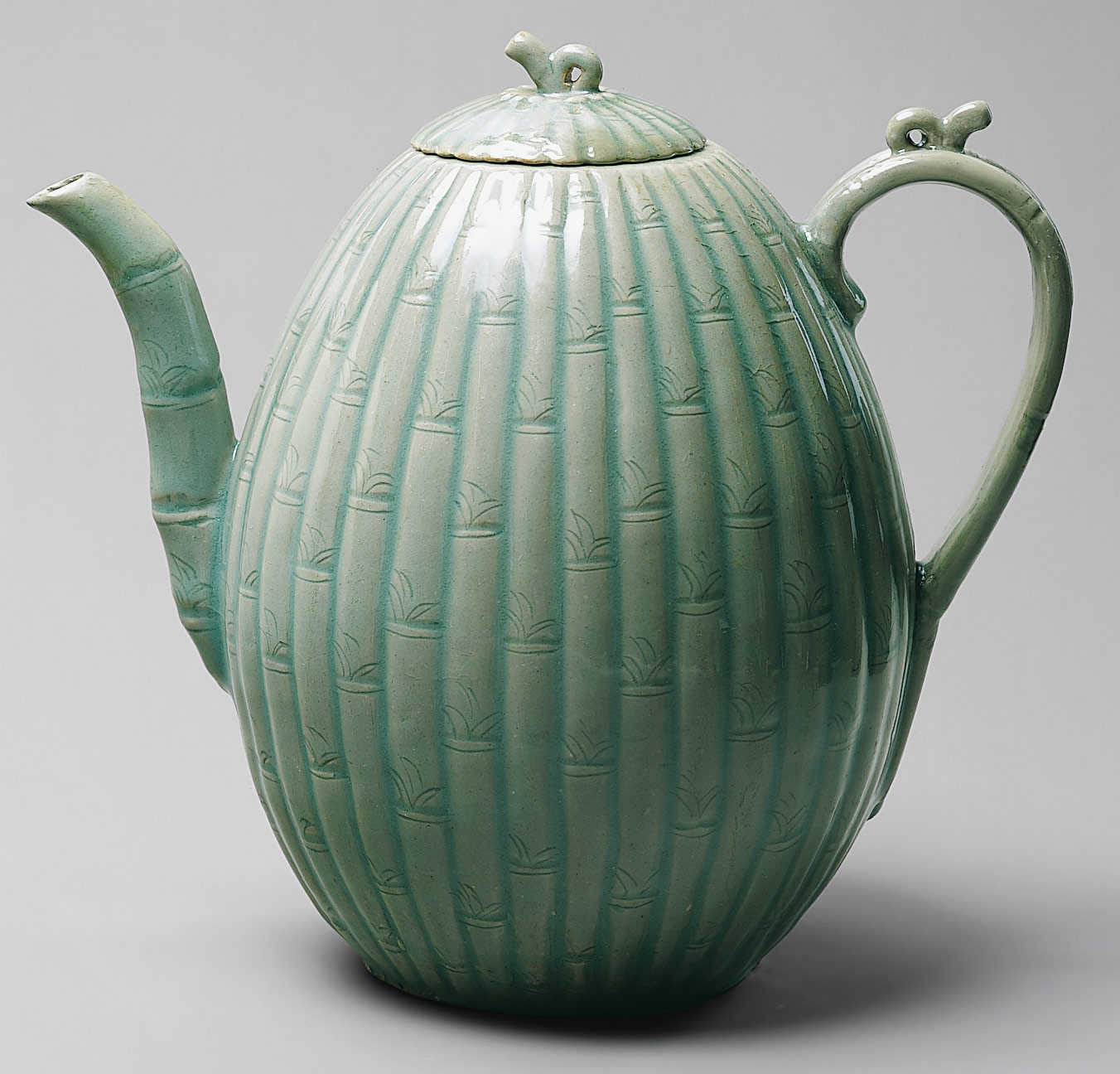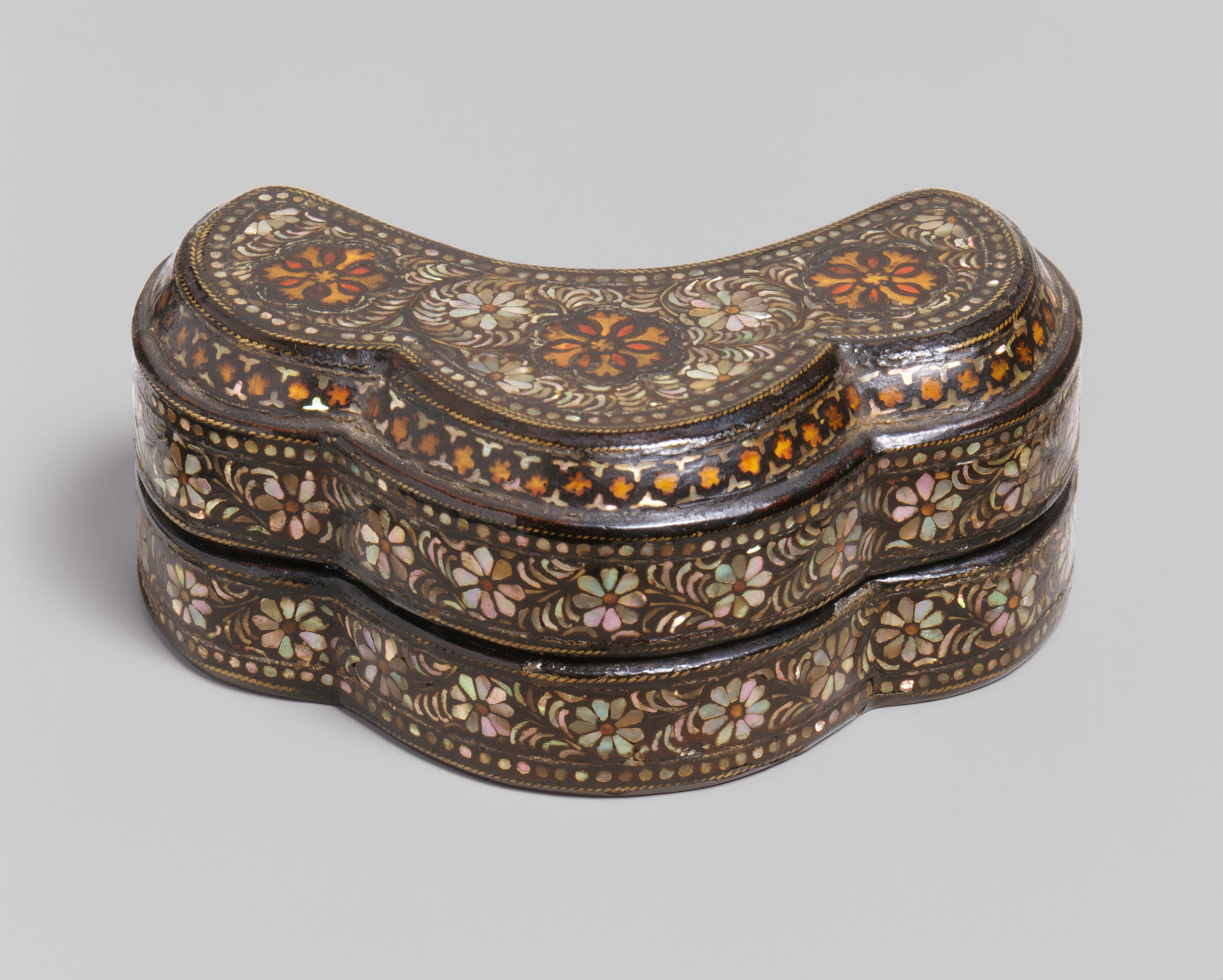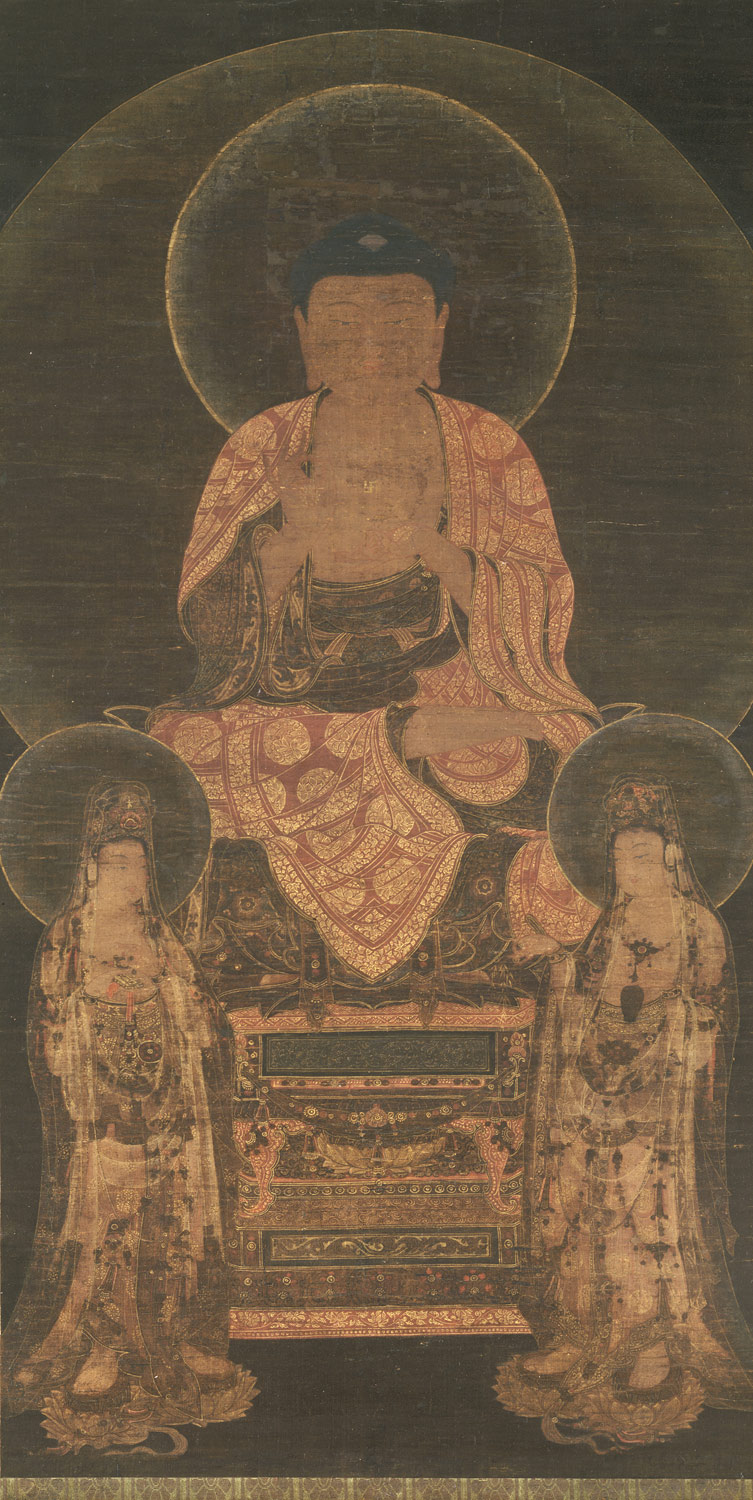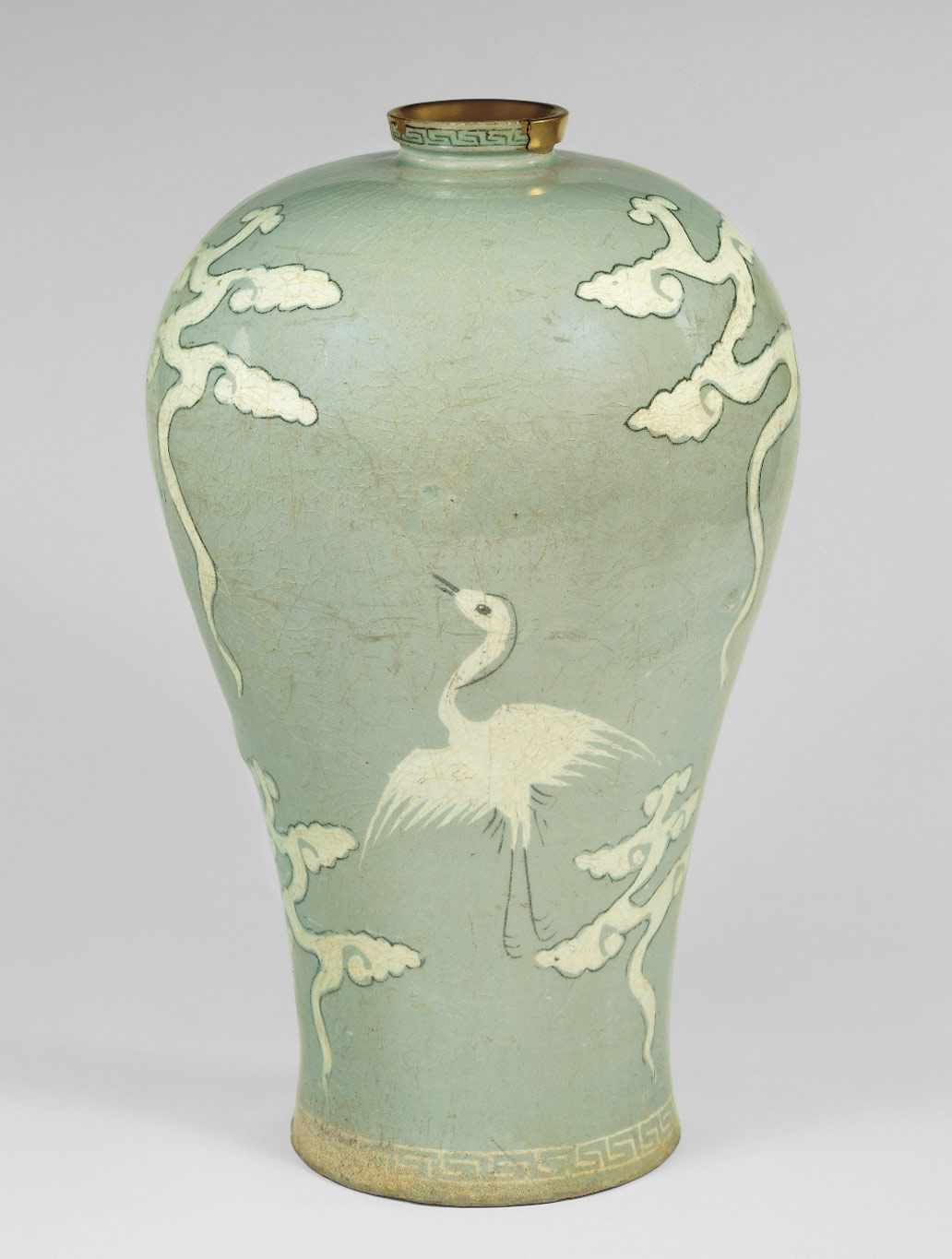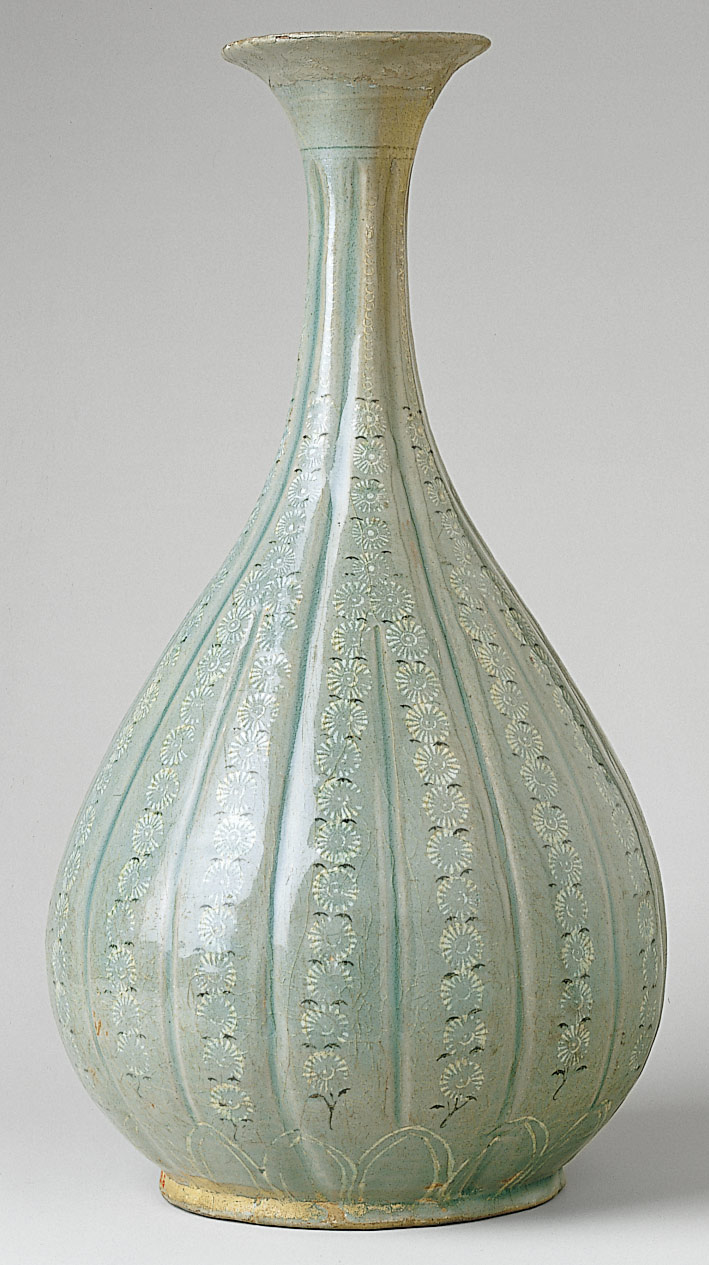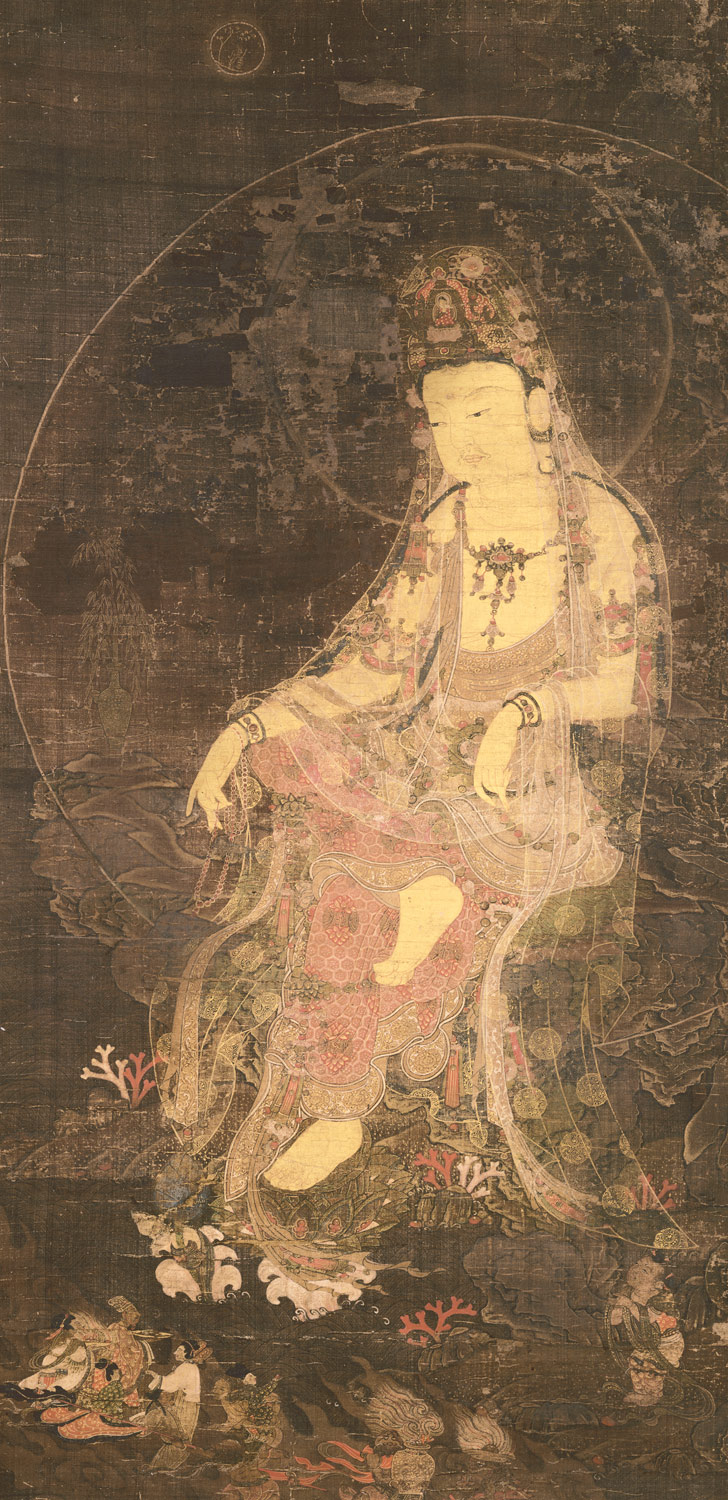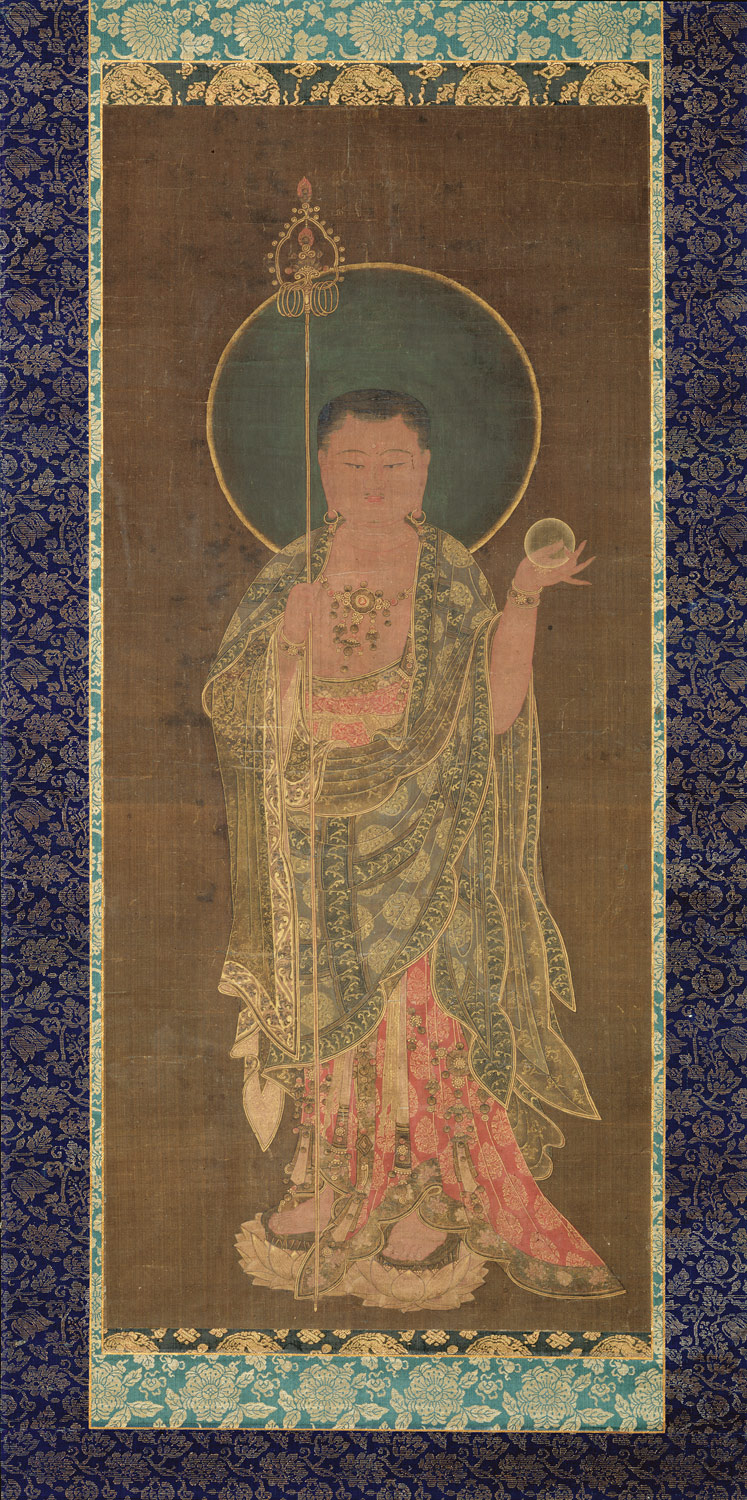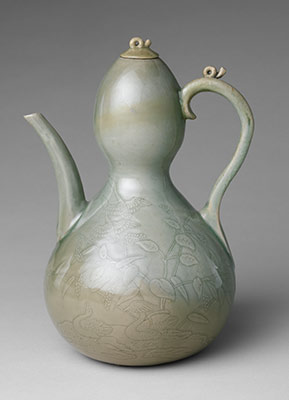
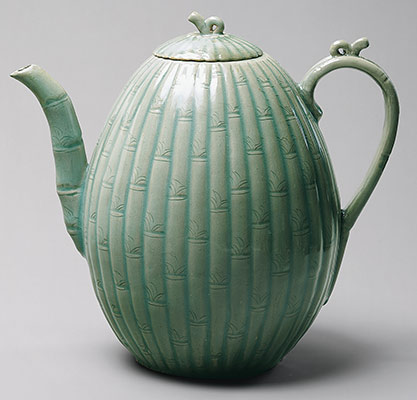
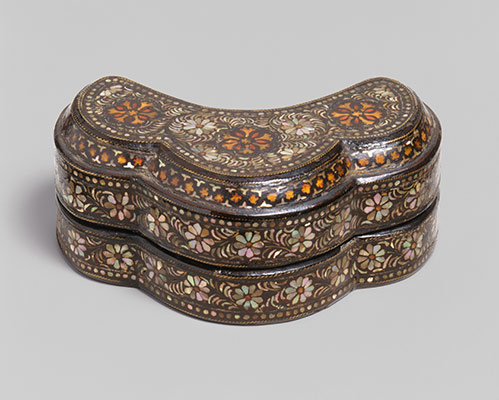
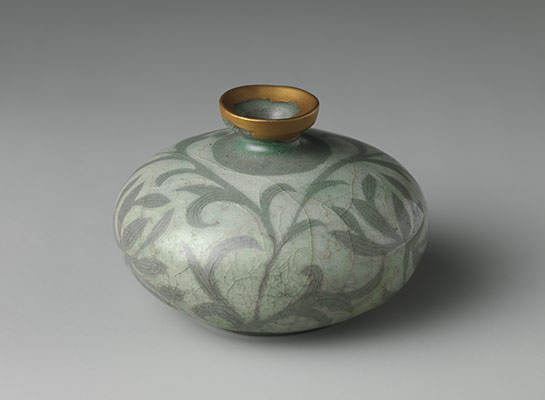
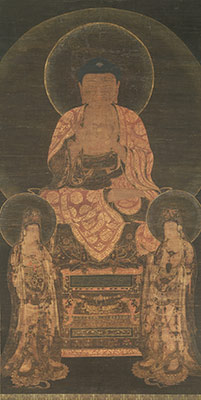
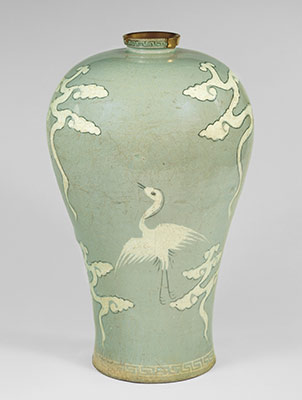

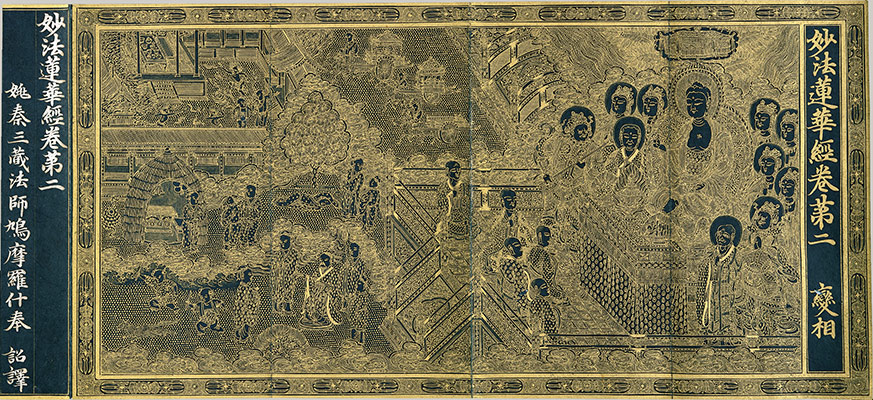
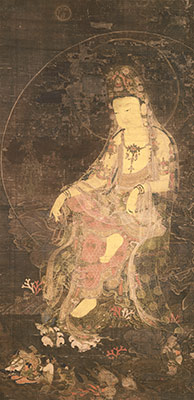
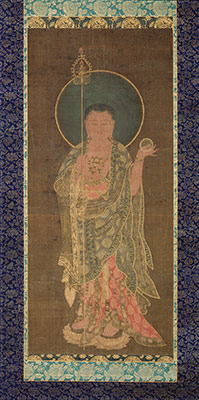
Some of the most outstanding achievements in Korean art and culture date to the Goryeo dynasty (918–1392), which rules the peninsula for nearly 500 years. Buddhism, even more lavishly patronized by the court and aristocracy during this period than in the preceding Unified Silla period (676–935), is a major creative force in the arts, exemplified in part by the proliferation of temple complexes in the new capital Songdo (modern Gaeseong) and elsewhere in the peninsula, with their elaborate stone pagodas, exquisite paintings, stone and gilt bronze sculptures, and refined ritual objects in lacquer, ceramic, and bronze. Goryeo potters produce elegant green-glazed ceramic ware, highly praised by contemporaneous Chinese and later known and appreciated in the West as celadon ware. The invention and use of cast-metal movable type in Korea in the early thirteenth century predates by two centuries Gutenberg’s invention of metal movable type in Europe.
Relations between the Goryeo court and the mainland are not always friendly. In the northern part of the peninsula, Goryeo engages in border struggles with northern China’s conquerors, the Khitan and Jurchen tribes, and suffers three invasions by the Khitan between 993 and 1018. Between 1231 and 1257, Korea is ravaged by invasions by the Mongols, who will rule China under the Yuan dynasty (1271–1368). By the mid-fourteenth century, the Mongol Yuan dynasty begins to lose control in China, and in 1368 is ousted by the Chinese rebel leader Zhu Yuanzhang, founder of the Ming dynasty (1368–1644). In 1388, a weakened and divided Goryeo court sends a military expedition to invade Manchuria, in response to a Ming government declaration that it intends to claim Goryeo’s northeastern territory. One of the expedition commanders, Yi Seonggye (1335–1408), who favors a pro-Ming policy, leads his troops back to the capital and seizes control of the government. In 1392, having consolidated his power, he founds a new dynasty, Joseon (1392–1910).