Heilbrunn Timeline of Art History


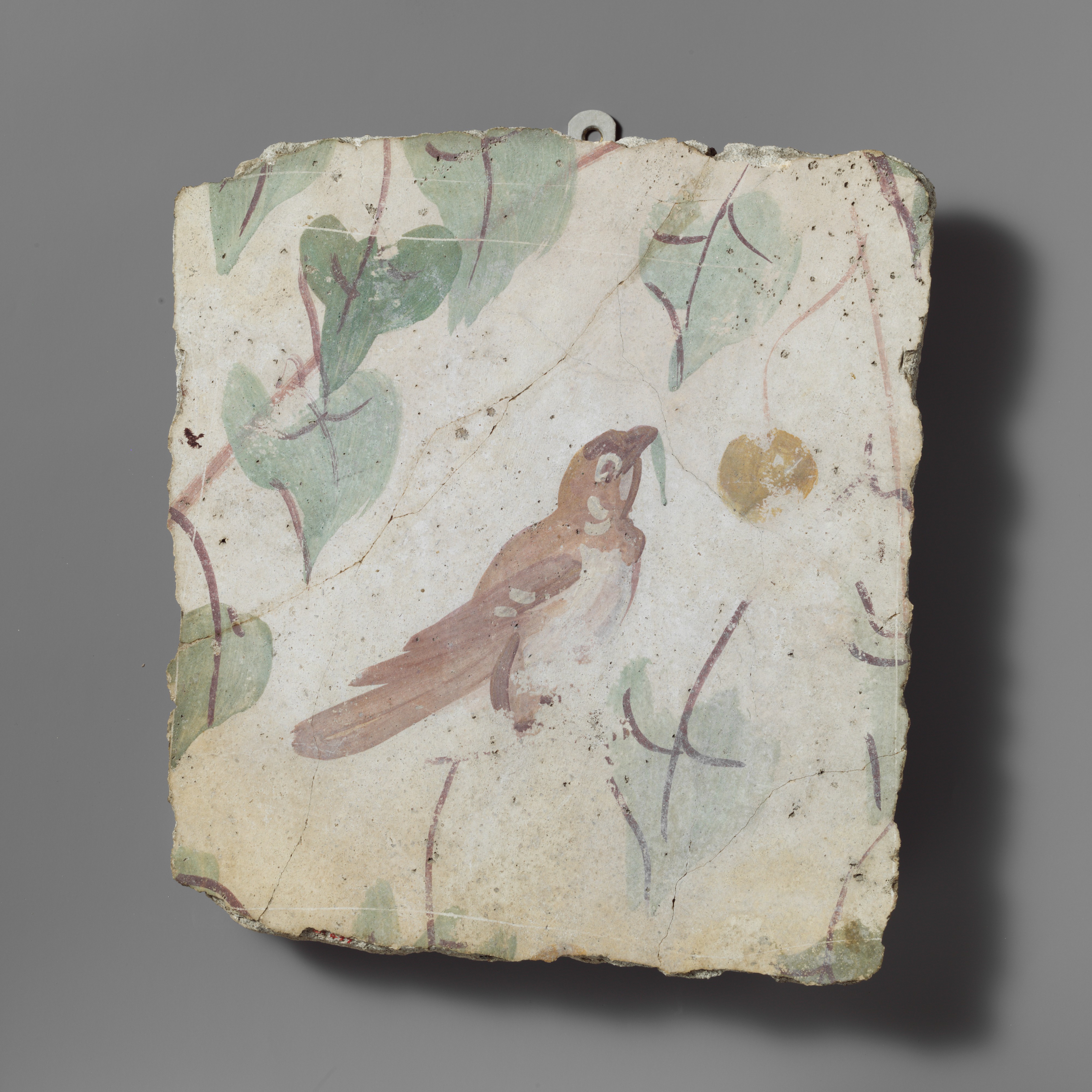
  • Wall painting fragment, 2nd–3rd century a.d.
    Roman
    Fresco

    H. 12 1/2 in. (31.8 cm)
    Gift of Henry G. Marquand, 1892 (92.11.10)

    This charming fragment, depicting a bird surrounded by ivy leaves, is painted with loose, quick brushstrokes unlike the more careful and mannered work of most Pompeian wall paintings. It may have come from a house or, more probably, a tomb, but its origin is unknown. Such types of interior decoration continued throughout the Roman period; for example, well-preserved frescoes of the mid-third century A.D. have been uncovered in houses at Ephesus in Asia Minor (Turkey).

    Related

    Index Terms

    Art Movement/Style

    Geography/Place

    Material and Technique

    Subject Matter/Theme

    Technical Glossary


    On view: Gallery 171
    MoveSeparatorPrint
    Close
    Wall painting fragment, 2nd–3rd century a.d.
    Roman
    Fresco

    H. 12 1/2 in. (31.8 cm)
    Gift of Henry G. Marquand, 1892 (92.11.10)


    Move
    Close
    fullMultimediaText