Parrying Shield
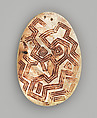
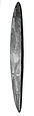
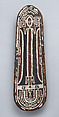
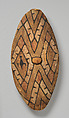
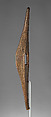
The engraved designs that cover the surface of the shields were carved while the wood was still young and fresh. Makers used specialized tools fashioned from the teeth of marsupials, or sharpened mussel shells to carve and incise designs that include crosshatching, dynamic diamond and chevron patterns, and serial undulating lines. These designs identify the regional and clan affiliation of their bearer, representing deep histories of ancestry and law. In larger gatherings, they can communicate critical information across language groups and tribal nations. As such, each shield is deeply personal, a symbol of status and identity. Shields used for customary use in performance were often painted with natural ocher pigments and clay, traces of which remain on many examples.
Artwork Details
- Title: Parrying Shield
- Artist: Aboriginal artist
- Date: 19th century
- Geography: Australia, New South Wales, Lower Murray River region
- Culture: Lower Murray River region
- Medium: Wood
- Dimensions: H. 26 1/8 in. × W. 3 1/2 in. × D. 3 in. (66.4 × 8.9 × 7.6 cm)
- Classification: Wood-Implements
- Credit Line: The Michael C. Rockefeller Memorial Collection, Gift of Mr. and Mrs. John J. Klejman, 1965
- Object Number: 1978.412.868
- Curatorial Department: The Michael C. Rockefeller Wing
Audio
1781. Parrying Shields
More Artwork
Research Resources
The Met provides unparalleled resources for research and welcomes an international community of students and scholars. The Met's Open Access API is where creators and researchers can connect to the The Met collection. Open Access data and public domain images are available for unrestricted commercial and noncommercial use without permission or fee.
To request images under copyright and other restrictions, please use this Image Request form.
Feedback
We continue to research and examine historical and cultural context for objects in The Met collection. If you have comments or questions about this object record, please contact us using the form below. The Museum looks forward to receiving your comments.
Content Notice
The Metropolitan Museum of Art presents over 5,000 years of art from around the world, and our online collection reflects ongoing work conducted over the course of our more than 150-year history. You may encounter objects or images that may be inappropriate for some viewers or information that may be outdated.