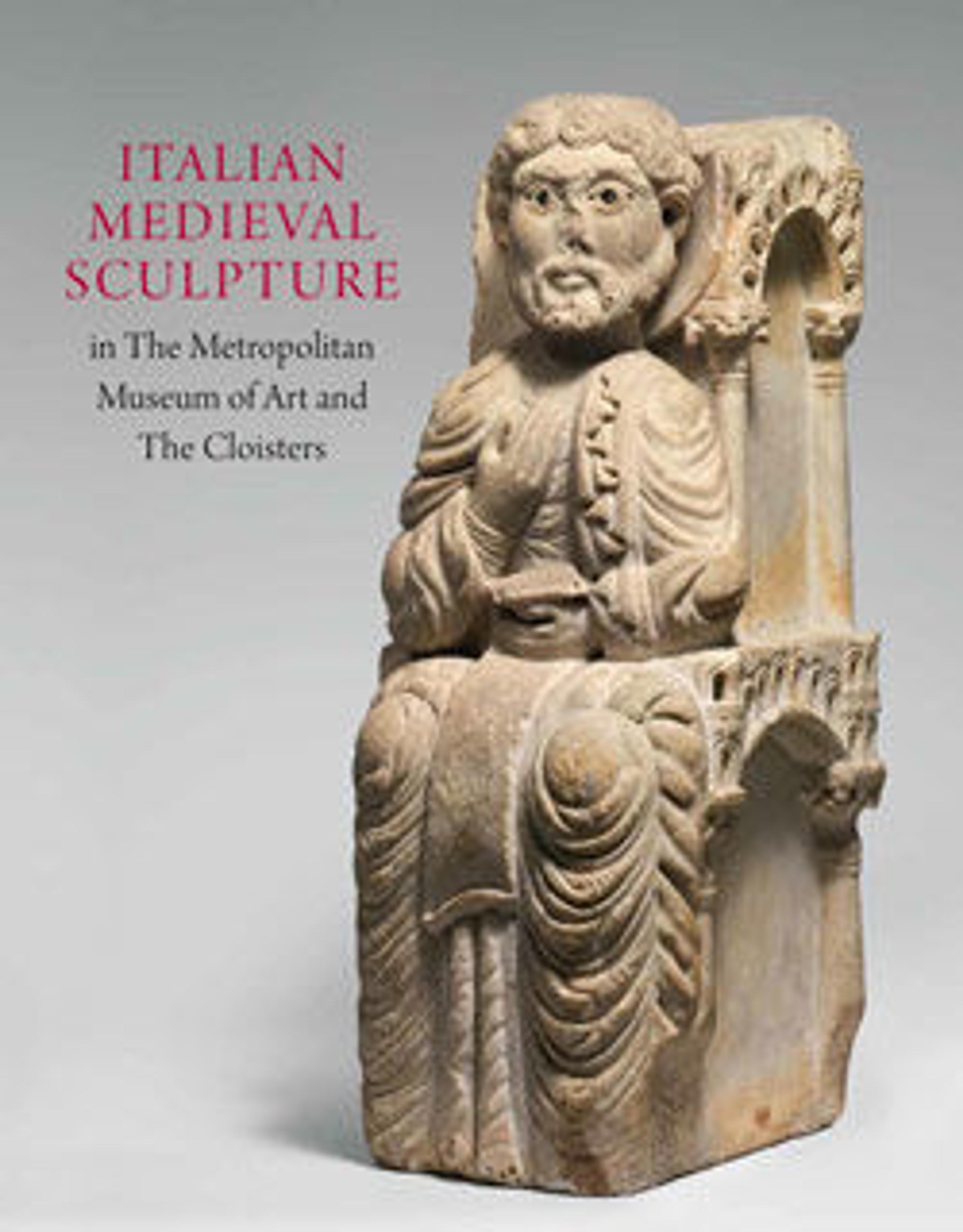
Adoring Angel
Artwork Details
- Title: Adoring Angel
- Artist: Piero di Giovanni Tedesco (Italian, died ca. 1402)
- Date: ca. 1395–96
- Geography: Made in Florence, Tuscany, Italy
- Culture: Central Italian
- Medium: Marble (Carrara marble)
- Dimensions: Overall: 46 3/4 x 11 1/4 x 12 3/4 in. (118.7 x 28.6 x 32.4 cm)
- Classification: Sculpture-Stone
- Credit Line: Gift of J. Pierpont Morgan, 1917
- Object Number: 17.190.752
- Curatorial Department: Medieval Art and The Cloisters
Audio
3100. Adoring Angel
NARRATOR: Look at the left side of this marble angel. It’s rough and unfinished surface suggests that it was once attached to a wall so that only the right side was visible. The generalized features and overall lack of great detail suggest that it was placed well above eye level where such details would be nearly impossible to discern. And indeed, this angel once adorned the façade of the Cathedral of Florence, or the Duomo as it is best known today.
The Cathedral was begun by Arnolfo di Cambio and ultimately completed by Filippo Brunelleschi. It is one of the original eight angels that stood in adoration on the second tier of the building, just above the portal, or entrance. The angels were designed in pairs; each pair flanked a larger statue of a martyr saint. The artist Piero di Giovanni Tedesco created this ensemble. Tedesco is the Italian word for German and refers to the sculptor’s German origins. Lisbeth Castelnuovo-Tedesco is a senior research consultant for the Museum:
LISBETH CASTELNUOVO-TEDESCO: Of the sculptors who were working on this last campaign for the Florence Cathedral façade at the end of the fourteenth century, Piero was the only person brought in from outside the community. He must have had a wonderful reputation as a sculptor in the Milan Cathedral workshops, where he came from Germany, as did many other people to work in Milan; but very few came from outside to work in Florence.
More Artwork

Related Content
 Free to download
Research Resources
The Met provides unparalleled resources for research and welcomes an international community of students and scholars. The Met's Open Access API is where creators and researchers can connect to the The Met collection. Open Access data and public domain images are available for unrestricted commercial and noncommercial use without permission or fee.
To request images under copyright and other restrictions, please use this Image Request form.
Feedback
We continue to research and examine historical and cultural context for objects in The Met collection. If you have comments or questions about this object record, please contact us using the form below. The Museum looks forward to receiving your comments.
Content Notice
The Metropolitan Museum of Art presents over 5,000 years of art from around the world, and our online collection reflects ongoing work conducted over the course of our more than 150-year history. You may encounter objects or images that may be inappropriate for some viewers or information that may be outdated.