Sculpture of an Enthroned King
Artwork Details
- Title: Sculpture of an Enthroned King
- Date: ca. 1230–35
- Geography: Made in Lombardy or Veneto, Italy
- Culture: North Italian
- Medium: Limestone
- Dimensions: Overall: 39 1/2 x 23 1/4 x 26 in. (100.3 x 59.1 x 66 cm)
weight: 626lb. (284kg) - Classification: Sculpture-Stone
- Credit Line: Mrs. Stephen V. Harkness Fund, 1922
- Object Number: 22.31.2
- Curatorial Department: Medieval Art and The Cloisters
Audio
3005. Enthroned King
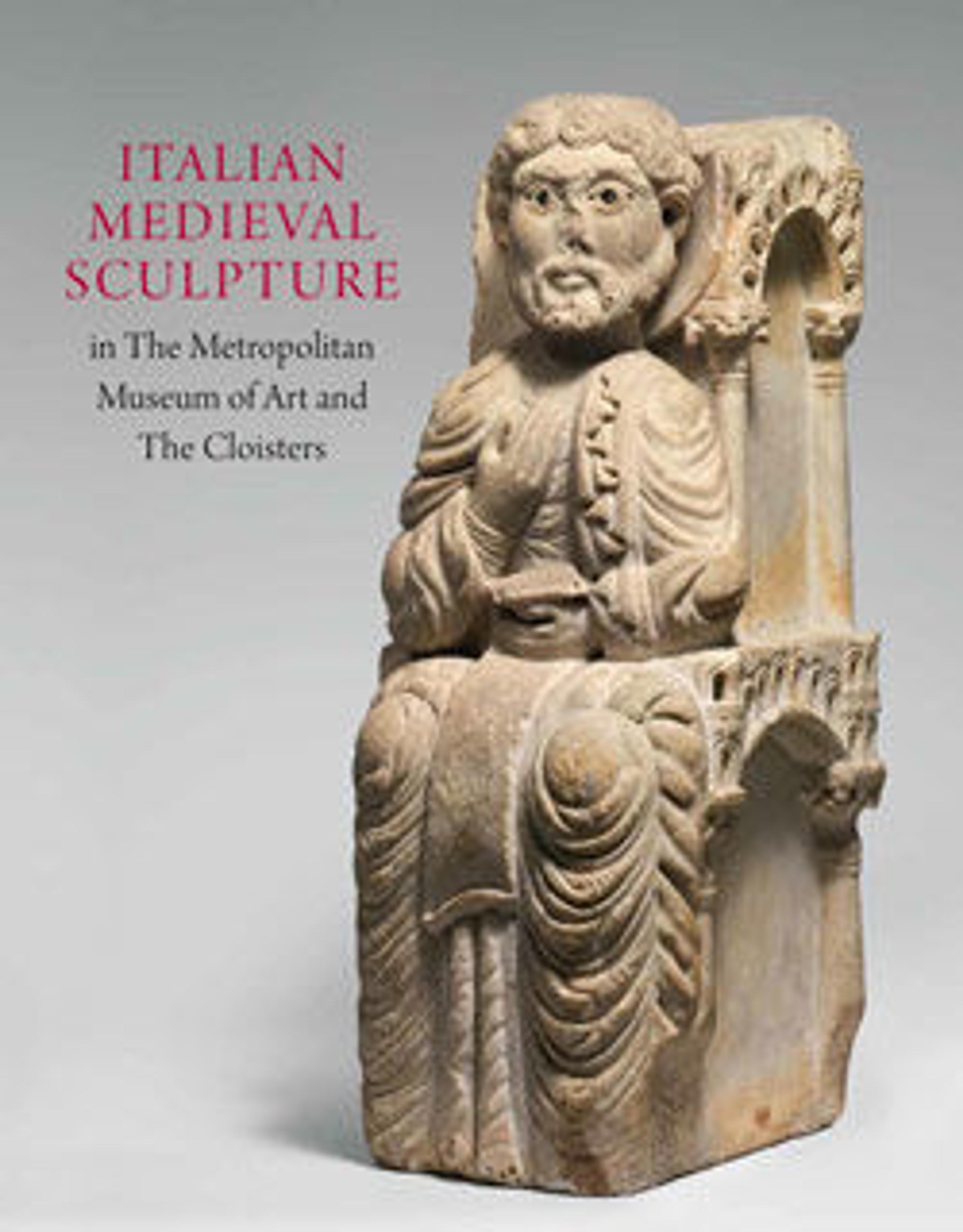
NARRATOR: At first glance, this authoritative looking figure seated in a massive throne may appear to be a King. In fact, this is probably an allegorical depiction of justice, personified here as King Solomon. Originally, his left hand held a scepter and his right gestured in judgment. Charles Little is a curator at the Museum.
CHARLES LITTLE: He has a type of a crown, which is not truly a crown, but a cap. And it’s a specific kind of a cap that can be associated with the judiciary, suggesting that this is an emblematic figure of a ruler functioning as a judge for a law court or a city gate or some kind of a secular setting.
NARRATOR: This figure would have served as a surrogate image of authority in a council chamber, law court, or city gate, where justice was often dispensed. Such a figure symbolically promotes justice—the highest political virtue according to Dante.
Conservator Jack Soultanian describes an interesting visual detail.
JACK SOULTANIAN: If we look at the sides of the throne on which the king sits, either side is fine, and we look at the arch. Just above the arch, just touching the corners of the windows we see an inscribed line. This inscribed line was made with a compass.
More Artwork
Related Content

 Free to download
Research Resources
The Met provides unparalleled resources for research and welcomes an international community of students and scholars. The Met's Open Access API is where creators and researchers can connect to the The Met collection. Open Access data and public domain images are available for unrestricted commercial and noncommercial use without permission or fee.
To request images under copyright and other restrictions, please use this Image Request form.
Feedback
We continue to research and examine historical and cultural context for objects in The Met collection. If you have comments or questions about this object record, please contact us using the form below. The Museum looks forward to receiving your comments.
Content Notice
The Metropolitan Museum of Art presents over 5,000 years of art from around the world, and our online collection reflects ongoing work conducted over the course of our more than 150-year history. You may encounter objects or images that may be inappropriate for some viewers or information that may be outdated.