Coverlet, woven double cloth
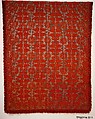
While the Craigs wove many different patterns over the years, this piece is an example of one of their most attractive and interesting patterns. The ground pattern of peacocks feeding their young is particularly lush and masterful. The side borders depicting alternating churches, mosques, and cabins, is known as the "Christians and Heathens" pattern. This pattern is very unusual in showing domed mosques among the decorative buildings, and it is interesting to speculate as to the resonance it might have had to people in rural Indiana in 1844.
Artwork Details
- Title: Coverlet, woven double cloth
- Date: 1844
- Culture: American
- Medium: Cotton and wool
- Dimensions: 84 × 74 1/2 in. (213.4 × 189.2 cm)
- Credit Line: Gift of Karen B. Cohen, in honor of Rochelle C. Rosenberg, 2022
- Object Number: 2022.146.3
- Curatorial Department: The American Wing
More Artwork
Research Resources
The Met provides unparalleled resources for research and welcomes an international community of students and scholars. The Met's Open Access API is where creators and researchers can connect to the The Met collection. Open Access data and public domain images are available for unrestricted commercial and noncommercial use without permission or fee.
To request images under copyright and other restrictions, please use this Image Request form.
Feedback
We continue to research and examine historical and cultural context for objects in The Met collection. If you have comments or questions about this object record, please contact us using the form below. The Museum looks forward to receiving your comments.
Content Notice
The Metropolitan Museum of Art presents over 5,000 years of art from around the world, and our online collection reflects ongoing work conducted over the course of our more than 150-year history. You may encounter objects or images that may be inappropriate for some viewers or information that may be outdated.