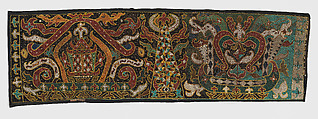
Tapis Tukusan Ratu (woman's ceremonial skirt)
Tapis are among the most prestigious textiles from Lampung and were worn by the highest-ranking women during rites of passage such as female initiations and weddings. When worn for ceremony, the tapis was accompanied by a headdress and other forms of adornment that expressed the wealth and nobility of the woman’s family.
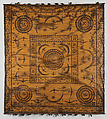
Tapis tusukan tatu, which translates as royal stitch tapis, are the rarest variety of the cloths, with few surviving examples in museums and private collections. They are distinguished by the weavers’ use of a supplementary weft technique to float designs over the warp threads across narrow bands of the skirt. This piece is woven in alternating bands of ochre silk and dark blue cotton. It also includes panels of applique mica, a silicate mineral, that has been hand cut into small pieces that are individually stitched onto the skirt using silk thread. The quantity of the imported silk required to make the cloths, and the many hours of labor involved in their manufacture added to their prestige and value. As tapis are passed down from one generation to the next, they become revered heirlooms known as pusaka.
Artwork Details
- Title: Tapis Tukusan Ratu (woman's ceremonial skirt)
- Artist: Lampung artist
- Date: 19th century
- Geography: Indonesia, Lampung
- Medium: Cotton, silk, inlaid supplementary weft
- Dimensions: H. 55 x W. 25 in. (139.7 x 63.5 cm.)
- Classification: Textiles-Woven
- Credit Line: Gift of Thomas Murray and Kristal Hale, in honor of Christine Giuntini, 2025
- Object Number: 2025.808.2
- Curatorial Department: The Michael C. Rockefeller Wing
More Artwork
Research Resources
The Met provides unparalleled resources for research and welcomes an international community of students and scholars. The Met's Open Access API is where creators and researchers can connect to the The Met collection. Open Access data and public domain images are available for unrestricted commercial and noncommercial use without permission or fee.
To request images under copyright and other restrictions, please use this Image Request form.
Feedback
We continue to research and examine historical and cultural context for objects in The Met collection. If you have comments or questions about this object record, please contact us using the form below. The Museum looks forward to receiving your comments.
Content Notice
The Metropolitan Museum of Art presents over 5,000 years of art from around the world, and our online collection reflects ongoing work conducted over the course of our more than 150-year history. You may encounter objects or images that may be inappropriate for some viewers or information that may be outdated.