The Temple of Dendur will be closed on Tuesday, June 9 and Thursday, June 11.

Plan your visit

Search for Art

30 results
Sort by:
Show only
Images
Date
For BCE dates, enter a negative number. E.g. For 2000 BCE, enter -2000.
Artist / culture
Object type / material
1
Match
 
Show results matching
selected filters.
Geographic location
Match
 
Show results matching
selected filters.
Department
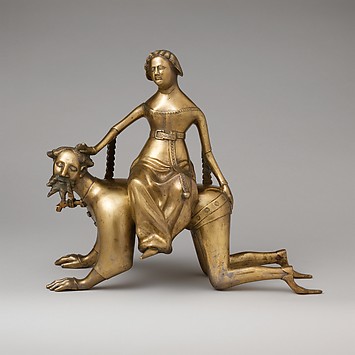
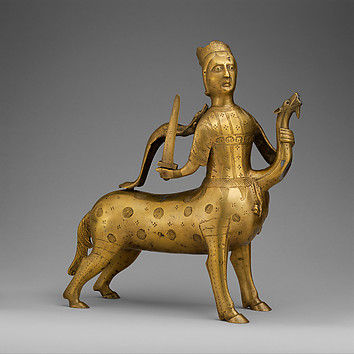
Aquamanile in the Form of Aristotle and Phyllis, Bronze; Quaternary copper alloy (approx. 72% copper, approx. 17% zinc,<br/>approx. 6% lead, approx. 3% tin)., South Netherlandish
South Netherlandish
late 14th or early 15th century
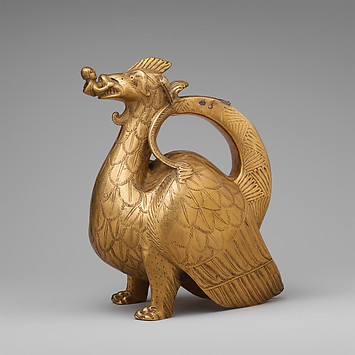
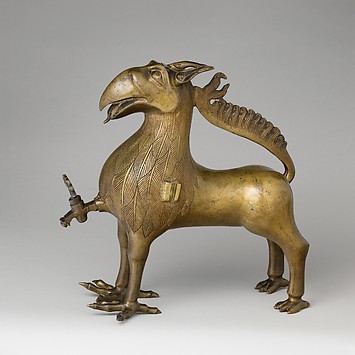
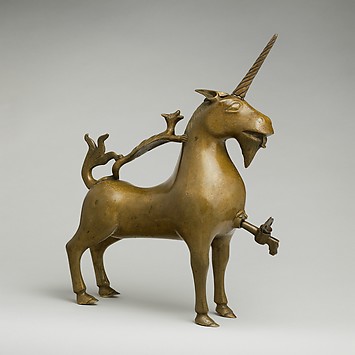
Aquamanile in the Form of a Griffin, Bronze; Ternary copper alloy with a very high content of zinc (approx. 74%<br/>copper, approx. 22% zinc, approx. 2% lead) with natural patina, hollow cast., German, Nuremberg
German, Nuremberg
ca. 1425–50
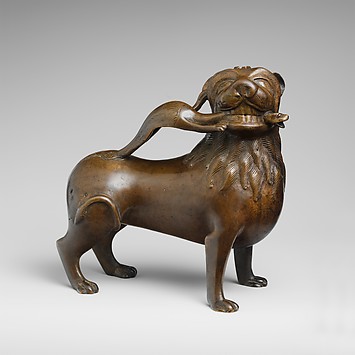
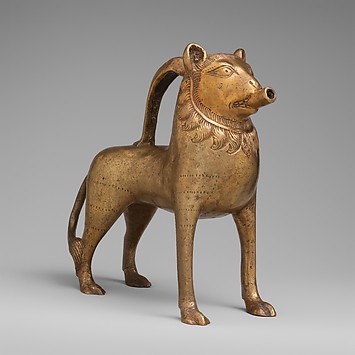
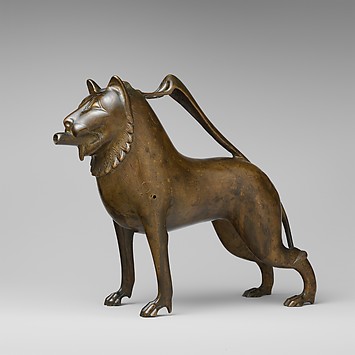
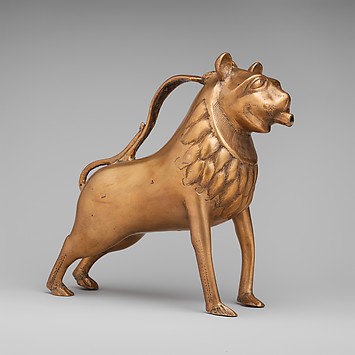
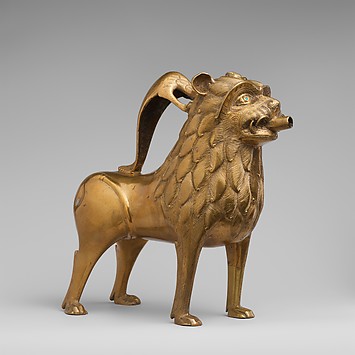
Aquamanile in the Form of a Lion, Bronze; binary copper alloy (approx. 88% copper, approx. 8% tin) hollow cast,<br/>chased, engraved, and gilded., North German, Lubeck (?)
North German, Lubeck (?)
ca. 1230 or early nineteenth century
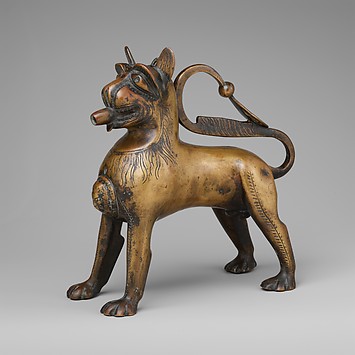
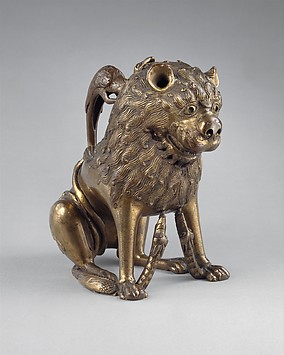
Aquamanile in the Form of a Lion, Copper alloy, glass inlays, North German
North German
12th century
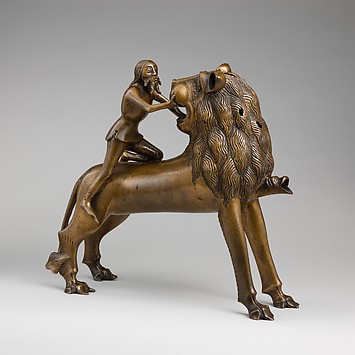
Aquamanile in the Form of Samson and
the Lion, Bronze; quaternary copper alloy (approx. 78% copper, approx. 10% zinc, approx. 6% tin, approx. 5% lead) with natural patina. Remnants of the iron armature are in the lion’s legs and the figure of Samson., Northern European (?), possibly German
Northern European (?), possibly German
ca. 1380–1400
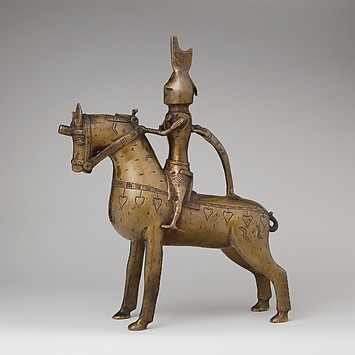
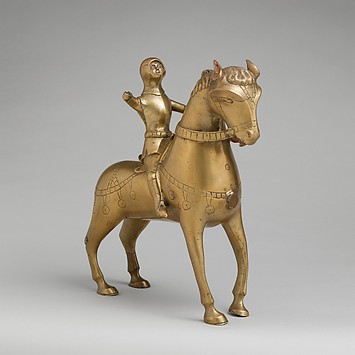
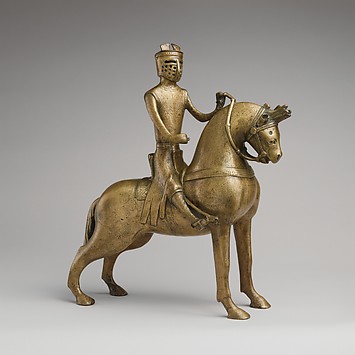
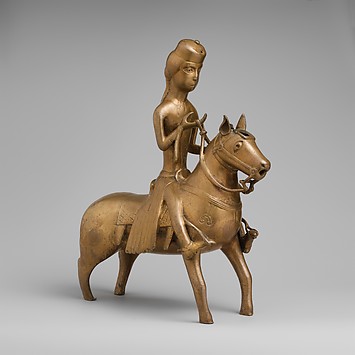
Aquamanile in the Form of a Knight on
Horseback, Bronze; Quaternary copper alloy with a high content of zinc (approx. 73% copper, approx. 15% zinc, approx. 7% lead, approx. 3% tin) with natural patina, hollow cast; remnants of the clay core<br/>and iron armature in the legs, German, Lower Saxony (?)
German, Lower Saxony (?)
ca. 1350
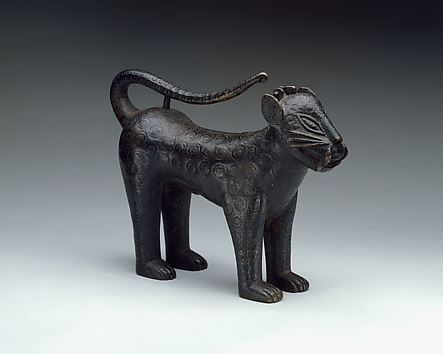
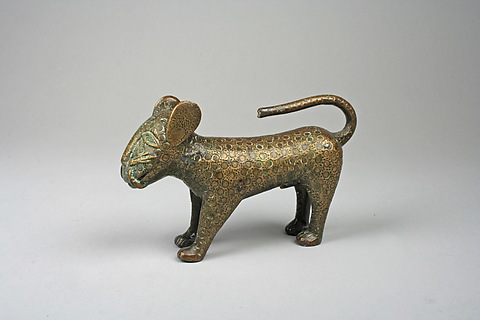
Leopard Aquamanile, Ìgùn Ẹ́rọ̀nwwọ̀n (brass-casting guild) artists, Brass, Edo peoples
Ìgùn Ẹ́rọ̀nwwọ̀n (brass-casting guild) artists
16th–19th century
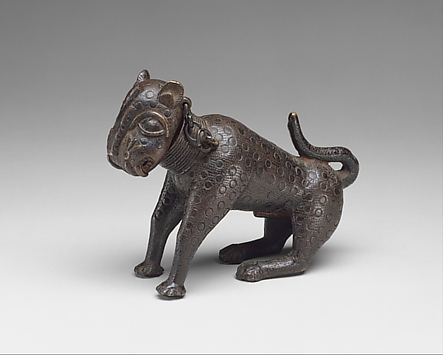
Leopard Aquamanile, Ìgùn Ẹ́rọ̀nwwọ̀n (brass-casting guild) artists, Brass, Edo peoples
Ìgùn Ẹ́rọ̀nwwọ̀n (brass-casting guild) artists
16th–19th century
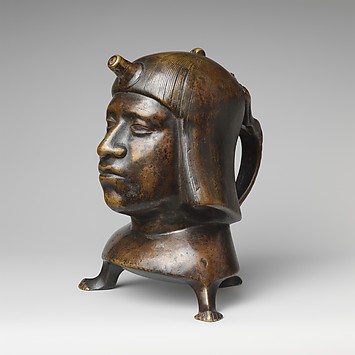
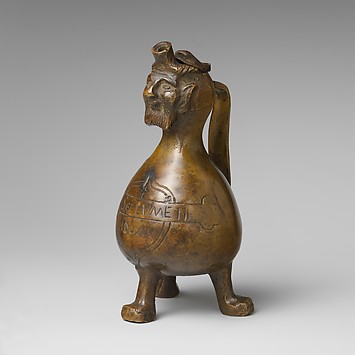
Aquamanile in the Form of a Human Head, Bronze; Ternary copper alloy with a very high percentage of zinc (approx. 68% copper,<br/>approx. 26% zinc, approx. 4% tin), covered with a thin black lacquer patina; traces of cinnabar have been detected on the interior and exterior of the vessel., German or French, Paris (in fourteenth-century Hildesheim style)
German or French, Paris (in fourteenth-century Hildesheim style)
last quarter 19th century
Aquamanile in the Form of a Lion, Copper alloy, German
German
late 19th century–early 20th century (15th century style)
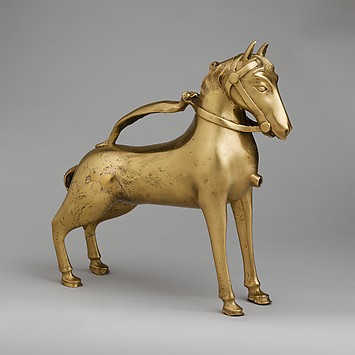
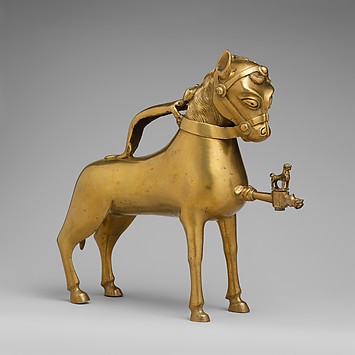
Aquamanile in the Form of a Horse, Copper alloy, German
German
first half 15th century
Aquamanile in the Form of a Horse, Copper alloy, German
German
first half 15th century
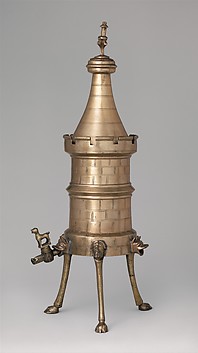
Turret Laver, Bronze, German
German
15th century
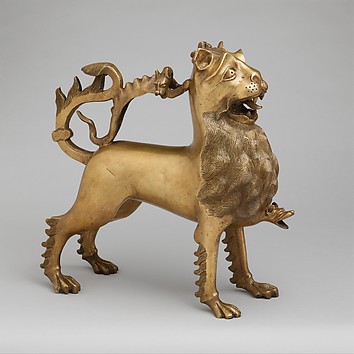
Aquamanile in the Form of a Lion, Copper alloy, German
German
late 13th century–early 14th century
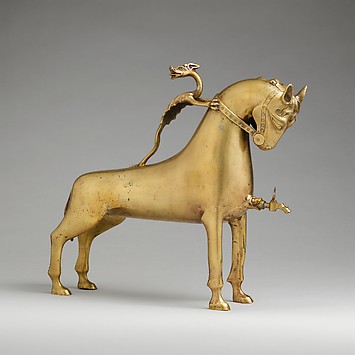
Aquamanile in the Form of a Lion, Copper alloy, German
German
late 13th century–early 14th century
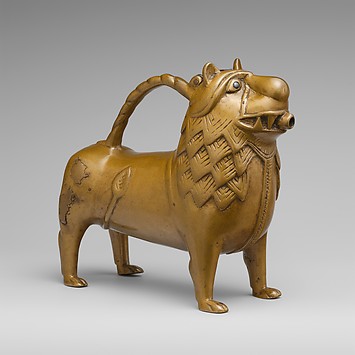
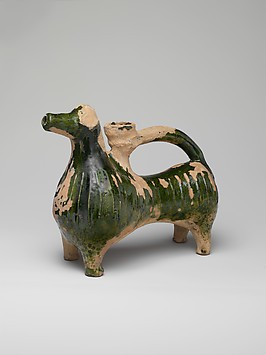
Aquamanile in the Form of a Ram, Earthenware, green glaze, British
British
ca. 1250–1350
Leopard Aquamanile, Ìgùn Ẹ́rọ̀nwwọ̀n (brass-casting guild) artists, Brass, Edo peoples
Ìgùn Ẹ́rọ̀nwwọ̀n (brass-casting guild) artists
16th–19th century