Search for Art

Search Tips
1-42 of 415 results
Sort by:
Show only
Images
Date
For BCE dates, enter a negative number. E.g. For 2000 BCE, enter -2000.
Artist / culture
Object type / material
1
Match
 
Show results matching
selected filters.
Geographic location
Match
 
Show results matching
selected filters.
Department
Crossbow of Count Ulrich V of Württemberg (1413–1480), Heinrich Heid von Winterthur  probably Swiss, Wood (European hornbeam), horn, animal sinew, staghorn, birch bark, iron alloy, copper alloy, pigment, German, probably Stuttgart
Attributed to Heinrich Heid von Winterthur
dated 1460
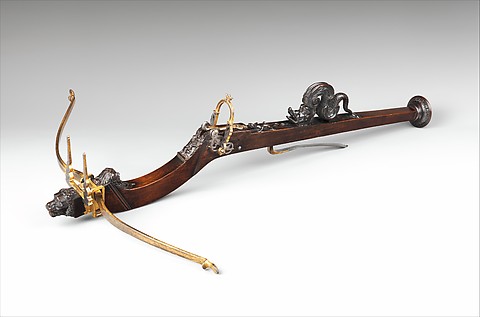
Pellet and Bolt Crossbow Combined with a Wheel-Lock Gun, Jacob Floris , published in Antwerp in 1564. Central European, Steel, wood (cherry), staghorn, hemp, felt, Central European; possibly Southern German or Austrian
Designer Decoration based on designs by Jacob Floris
ca. 1570–1600
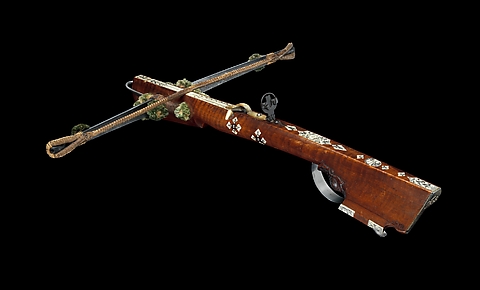
Crossbow, Wood (European hornbeam), horn, animal sinew, animal glue, birch bark, staghorn, iron alloy, hemp, leather, Central European, possibly Austria
Central European, possibly Austria
ca. 1425–75
Crossbow (Halbe Rüstung) with Winder (Cranequin), Johann Gottfried Hänisch the Elder  German, Steel, wood (walnut), staghorn, copper alloy, hemp, leather, silk, gold, iron alloy, wool, crossbow, German, probably Dresden; winder, possibly German
Crossbow attributed to Johann Gottfried Hänisch the Elder
crossbow, ca. 1720–30; winder, ca. 1575–1600
Amber from bow of a bronze fibula (safety pin), Amber, Probably Etruscan
Probably Etruscan
7th–6th century BCE
Crossbow (Halbe Rüstung) with Winder (Cranequin), Johann Gottfried Hänisch the Elder  German, Steel, wood, staghorn, copper alloy, hemp, wool, gold, iron alloy, German, Dresden
Crossbow by Johann Gottfried Hänisch the Elder
dated 1742
Cranequin (Crossbow Winder), Steel, horn (bovine), copper alloy, gold, hemp, leather, German, probably Nuremberg
German, probably Nuremberg
dated 1727
Amber from bow of a bronze fibula (safety pin), Amber, Probably Etruscan
Probably Etruscan
7th–6th century BCE
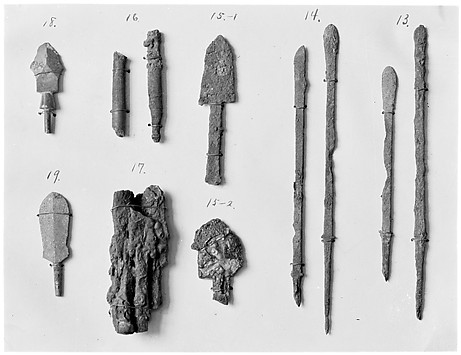
Six Crossbow Bolts, Steel, wood (oak), staghorn, pigment, Central European, possibly German
Central European, possibly German
early 16th century; 14.25.1576g, probably 17th or 18th century
Quiver with Eleven Crossbow Bolts, Wood (oak, probably birch), tanned hide (possibly badger), paper, leather, steel, iron alloy, Western or Central European; quiver, possibly German
Western or Central European; quiver, possibly German
quiver, probably early 16th century; bolts, 14th–16th century
Ubo akwara (pluriarc), Wood, fiber, Igbo (Nigeria)
Igbo (Nigeria)
late 19th century
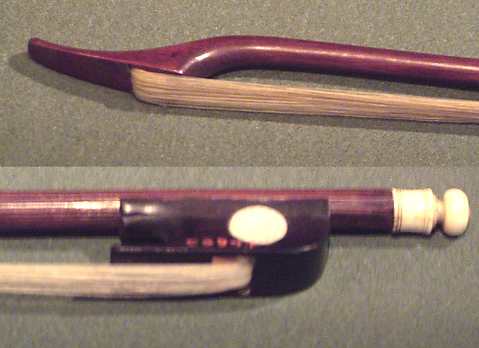
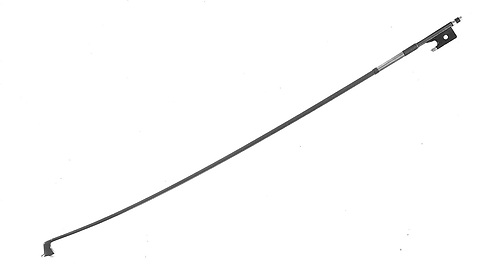
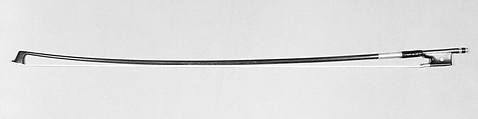
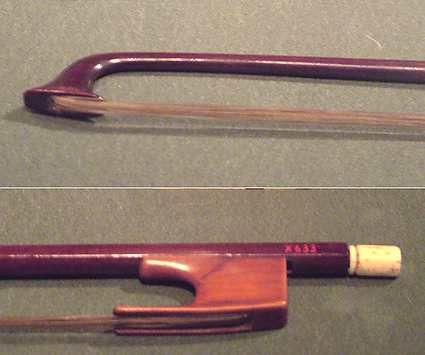
Violin or Viola Bow, Brazilwood, other materials, French
French
late 19th or early 20th century
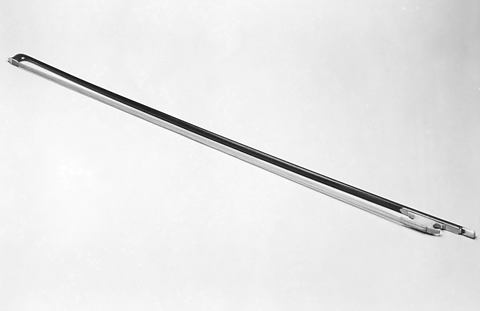
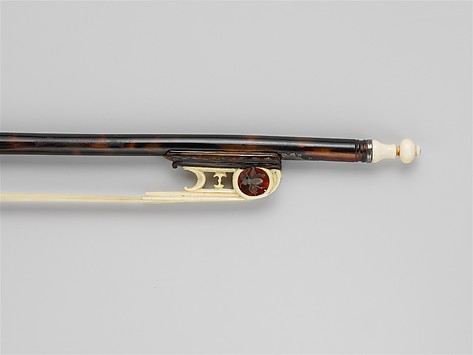
Gamba Bow, Wood, British
British
first half 18th century
Bow, Wood, hair, Norwegian
Norwegian
19th century
Akam (Pluriarc), Wood, hide, fiber, Fang
Fang
late 19th–early 20th century
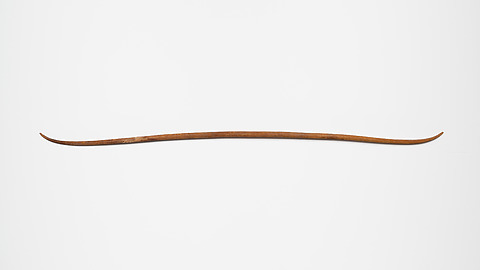
Bow, Wood
ca. 1550–1300 BCE
Bow, Wood
ca. 2030–1650 B.C.
Bow, Wood
ca. 1981–1802 B.C.
Bow, Wood
ca. 2030–1650 B.C.
Bow, Wood
ca. 2030–1650 B.C.
Bow, Wood
ca. 2030–1650 B.C.
Sistrum, Bronze or copper alloy
1st–2nd century CE
Bow, wood
ca. 1491–1473 BCE
Recurve Selfbow, wood
ca. 1491–1473 BCE
Bow, Wood
ca. 2120–1981 B.C.
End of bow, Wood, cord
ca. 2120–1981 B.C.
Bow, Wood
ca. 2120–1981 B.C.
Bow, Wood
ca. 2120–1981 B.C.
Bow tip, Wood
ca. 2120–1981 B.C.
đàn K'ni, Quốc Hùng Nguyễn  Vietnamese, Bamboo for the body; Rosewood for the tuning peg & the base; Metal string for the string; Bamboo for the bows, Vietnamese
Quốc Hùng Nguyễn
2025
Tibetan or Chinese
19th century
Chinese
19th century
European, possibly German
probably 16th century
European, possibly German
probably 16th or 17th century
European, possibly German
probably 16th century
Central European, possibly Germany
probably 17th or 18th century
probably French
second half 17th century

Content Notice

The Metropolitan Museum of Art presents over 5,000 years of art from around the world, and our online collection reflects ongoing work conducted over the course of our more than 150-year history. You may encounter objects or images that may be inappropriate for some viewers or information that may be outdated.