Search the collection

Filter By

Buttons
Geographic Location
Department
Date
Show Only:
  • As part of the Met's Open Access policy, you can freely copy, modify and distribute this image, even for commercial purposes.
    APIPublic domain data for this object can also be accessed using the Met's Open Access API
  • Objects with changed or unknown ownership in continental Europe between 1933-1945. Learn more
Showing 718 results
Sort by:
The Village Where I Came From, Pacita Abad  Filipino American, Acrylic, oil, buttons, beads, and painted cloth on stitched and padded canvas
Pacita Abad
1991
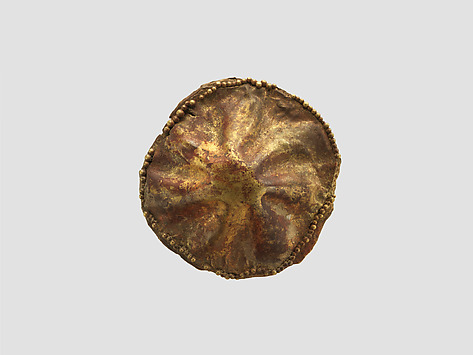
Gold disks with floral motifs and lions' heads, Gold, Etruscan
Etruscan
late 6th century BCE
Campaign Button, Union Porcelain Works  American, Porcelain, American
Union Porcelain Works
ca. 1876
Sleeve Button, Union Porcelain Works  American, Porcelain, American
Union Porcelain Works
ca. 1876
Sleeve Button, Union Porcelain Works  American, Porcelain, American
Union Porcelain Works
ca. 1876
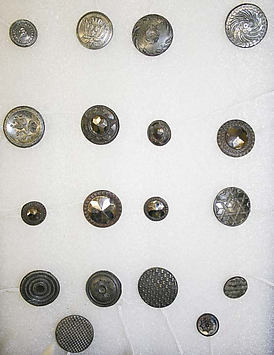
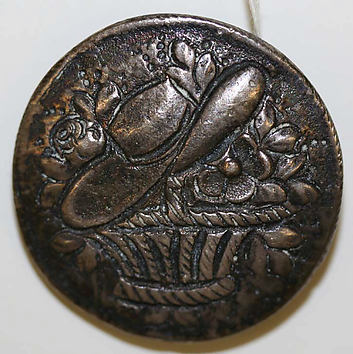
Button from a Uniform, Pewter
1770–1800
Button Mold, Brass, wood, ivory
1800–1825
Button Mold, Brass, wood
1700–1900
Sleeve Button, Union Porcelain Works  American, Porcelain, American
Union Porcelain Works
ca. 1876
Sleeve Button, Union Porcelain Works  American, Porcelain, American
Union Porcelain Works
ca. 1876
Sleeve Button, Union Porcelain Works  American, Porcelain, American
Union Porcelain Works
ca. 1876
Sleeve Button, Union Porcelain Works  American, Porcelain, American
Union Porcelain Works
ca. 1876
Sleeve Button, Union Porcelain Works  American, Porcelain, American
Union Porcelain Works
ca. 1876
Sleeve Button, Union Porcelain Works  American, Porcelain, American
Union Porcelain Works
ca. 1876
Sleeve Button, Union Porcelain Works  American, Porcelain, American
Union Porcelain Works
ca. 1876
Woman's Skirt and Blouse, cotton velvet, wool and cotton trade cloth, glass beads, paillettes, buttons, silk ribbon, Ho-Chunk
Ho-Chunk
1914–18
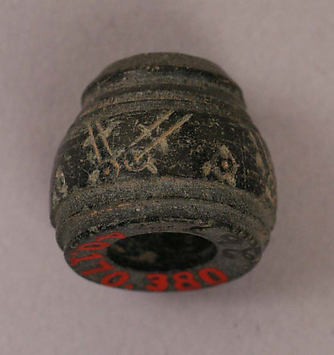
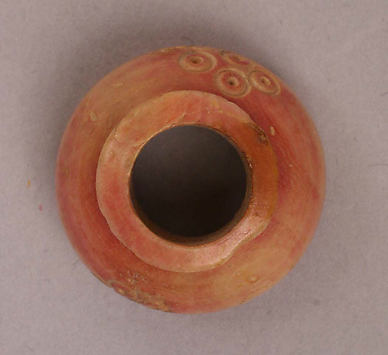
Buttons, Enstatite, Iran
Iran
ca. 9th century BCE
Faience stamp seal amulet, Faience, Egyptian
Egyptian
664–30 BCE
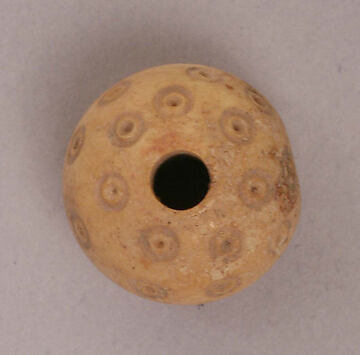
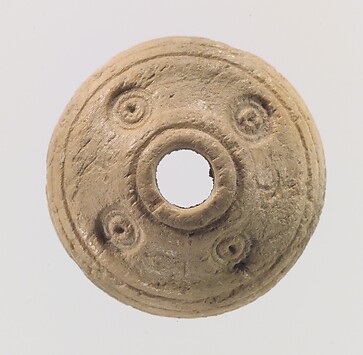
Bone counter or gaming piece, Ivory or bone, Roman or later
Roman or later
ca. 4th century CE
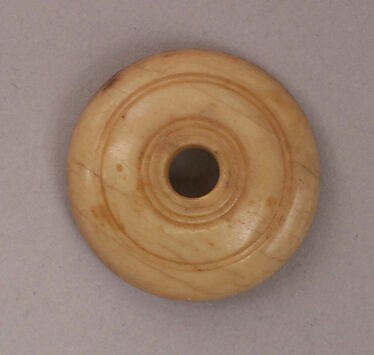
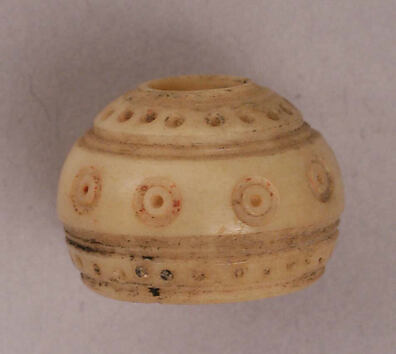
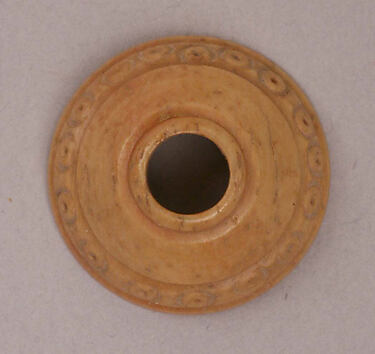
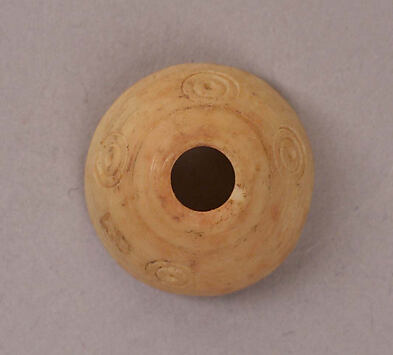
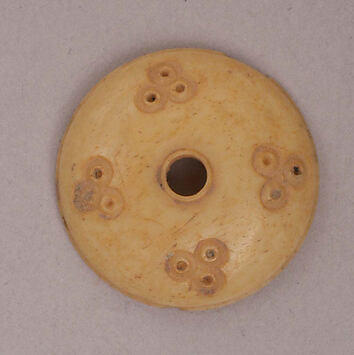
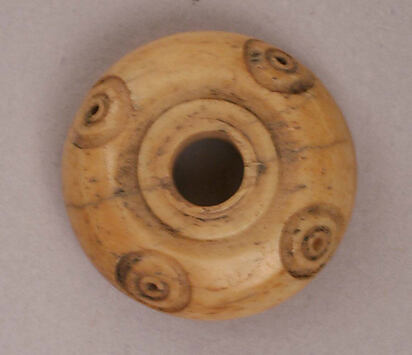
Bone disk or button, Ivory or bone, Roman
Roman
ca. 1st century CE
Button Hook, Louis C. Tiffany  American, Bronze, glass, American
Louis C. Tiffany
Tiffany Studios
ca. 1905–20
Button seal, Faience
ca. 1295–1070 B.C.
Button-shaped seal, White glazed steatite
ca. 1640–1550 B.C.
Button Seal, Glazed steatite
ca. 2030–1850 B.C.
Button seal with the cartouches of Senwosret III, Green glazed steatite, metal pin in boring
ca. 1878–1650 B.C.
Cover for eye or belly button, Gold sheet
664–380 B.C.
Round bead, Onyx
ca. 1981–1640 B.C.
Drinking Cup, Glassy faience, gold
ca. 1479–1425 B.C.
Toggle, Gold, glass inlay
ca. 1648–1540 B.C.
Beaded Bag, Tanned leather, cordage, glass beads, brass beads, and commercial brass buttons, Wasco, Native American
Wasco, Native American
ca. 1860
Toggle, Walrus ivory, Okvik, Native American
Okvik, Native American
100 BCE–200 CE
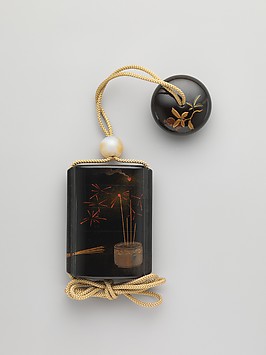
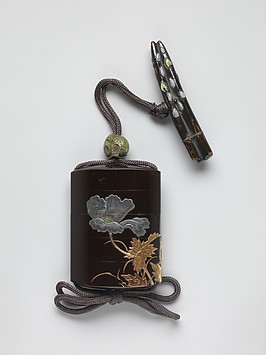
Inrō with floating fans, Lacquered wood with gold and silver togidashimaki-e and hiramaki-e <br/> Ojime: lacquer bead with maki-e decoration <br/> Netsuke: ivory toggle of Shōki, the Demon Queller, Japan
Japan
first half 19th century
ca. 1295–1070 B.C.
ca. 1640–1550 B.C.
Button, maybe for a Horse Tack, Copper alloy, possibly Roman
possibly Roman
probably 1st-4th century
Button, maybe for a Horse Tack, Copper alloy, possibly Roman
possibly Roman
probably 1st-4th century
Button, Brass
ca. 1789
Button, Waterbury Button Company  American, Silver plate, American
Waterbury Button Company
1830–70
Sword and Sheath, Mande numu (blacksmith), Iron, leather, copper alloy, cloth, dye, beads, buttons, pigment, Mande peoples
Mande numu (blacksmith)
20th century
Button, Gold, Sasanian
Sasanian
ca. 3rd–7th century CE