Search the collection

Filter By

Twill
Geographic Location
Department
Date
Show Only:
  • As part of the Met's Open Access policy, you can freely copy, modify and distribute this image, even for commercial purposes.
    APIPublic domain data for this object can also be accessed using the Met's Open Access API
Showing 173 results
Sort by:
Street Story Quilt, Faith Ringgold  American, Cotton canvas, acrylic paint, ink marker, dyed and printed cotton, and sequins, sewn to a cotton flannel backing
Faith Ringgold
1985
Daybed (Lit de repos or sultane) (part of a set), Jean-Baptiste-Claude Sené, Carved, painted and gilded walnut; modern cotton twill embroidered in silk, French, Paris
Jean-Baptiste-Claude Sené
Louis-François Chatard
1788
Armchair (bergère) (part of a set), Jean-Baptiste-Claude Sené, Carved, painted and gilded walnut; modern cotton twill embroidered in silk, French, Paris
Jean-Baptiste-Claude Sené
Louis-François Chatard
ca. 1788
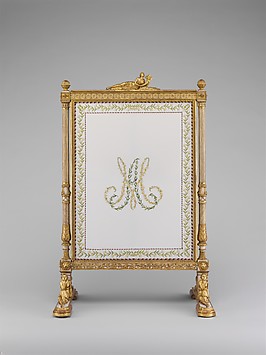
Fire screen (Écran) (part of a set), Jean-Baptiste-Claude Sené, Carved, painted and gilded walnut; modern cotton twill with silk embroidery, French, Paris
Jean-Baptiste-Claude Sené
Louis-François Chatard
1788
Noh Robe (Karaori) with Pattern of Bamboo and Young Pines on Bands of Red and White, Twill-weave silk with resist-dyed warps, supplementary weft patterning in silk, and gold-leaf paper strips (karaori), Japan
Japan
first half 19th century
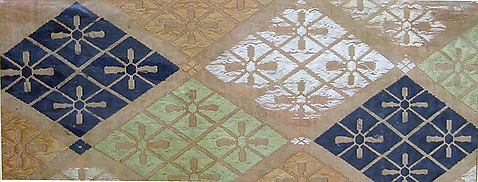
Seven-Panel Buddhist Monk’s Vestment (Shichijō kesa) with Floral-Lozenge Pattern, Twill-weave silk with supplementary weft patterning, Japan
Japan
17th century
Length of Fabric for Clothing, Metal wrapped thread, silk; twill weave, brocaded
18th century
Mitre case with the arms of Cardinal Scipio Gonzaga, Leather, wood, flannel, and cord, Italian
Italian
1587–93
Armchair, Joseph-Pierre- François Jeanselme, Carved rosewood, leather, silk, serge, French, Paris
Joseph-Pierre- François Jeanselme
Jacques-Michel Dulud
ca. 1850
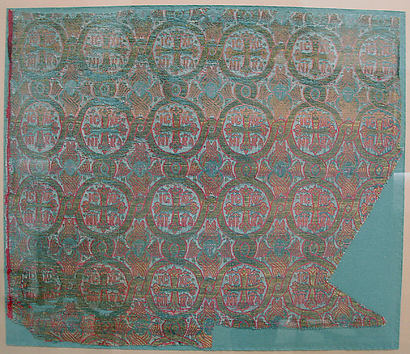
Silk textile with Seraphim and Crosses, Silk, lampas weave (ground in satin, pattern in twill), Ottoman
Ottoman
17th century
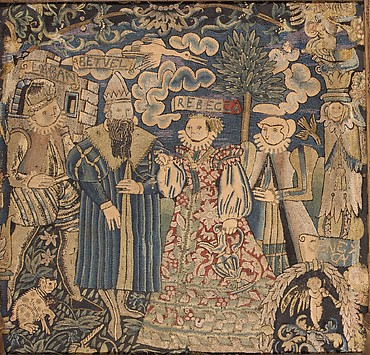
Bed hanging, Wool on cotton and linen twill, British
British
late 17th century
Noh Robe (Karaori) with Tortoise Shell Pattern and Crane Lozenges, Twill-weave silk brocade with supplementary weft patterning, Japan
Japan
first half of the 19th century
Obi with “Whose Sleeves?” (Tagasode) Pattern

, Twill-weave silk with supplementary weft patterning and metallic thread, Japan
Japan
first half of 19th century
Noh Costume (Karaori) with Cherry Blossoms and Fretwork, Silk, brocaded twill, Japan
Japan
first half of the 18th century
Noh Costume (Karaori) with Court Carriages, Cherry Blossoms, and Dandelions, Twill-weave silk brocade with supplementary-weft patterning in metallic thread, Japan
Japan
late 18th–first half of the19th century
Noh Costume (Kariginu), Twill-weave silk with supplementary weft patterning, Japan
Japan
first half 19th century
Avalokiteshvara as Shadakshari Lokeshvara, Silk twill damask, China
China
early 15th century
Noh Robe (Karaori) with Chrysanthemums and Waves, Twill-weave silk brocaded with silk and metallic thread, Japan
Japan
first half of the 19th century
Noh Robe (Karaori) with Autumn Grasses and Butterflies, Twill-weave silk with brocading in silk and supplementary weft patterning in silk and metallic thread, Japan
Japan
early 19th century
Noh Costume (Karaori) with Cypress Fans and Moonflower (Yūgao) Blossoms, Twill-weave silk with brocading in silk and supplementary-weft patterning in silk and metallic thread, Japan
Japan
18th–early 19th century
Noh Robe (Atsuita) with Cloud-Shaped Gongs and “Chinese Flowers”

, Twill weave silk brocade, Japan
Japan
first half of the 19th century
Noh Costume (Karaori) with Pattern of Fans Floating on Water, Twill-weave silk brocaded with silk and metallic thread, Japan
Japan
18th century
Noh Robe (Karaori)
, Twill-weave silk with supplementary weft patterning in silk and gold-leaf paper strips (karaori), Japan
Japan
first half 19th century
Noh Headdress with Auspicious Motifs, Twill-weave silk with supplementary gold-thread weft patterning, Japan
Japan
early 19th century
Buddhist Altar Cloth (Uchishiki), Twill-weave silk with supplementary weft patterning, Japan
Japan
first half 19th century
Noh Robe (Karaori), Twill-weave silk with brocading in silk and supplementary weft patterning in silk (karaori), Japan
Japan
second half 18th century
Noh Robe (Karaori), Twill-weave silk with supplementary weft patterning in silk and gold-leaf paper strips (karaori), Japan
Japan
late 18th–early 19th century
Fragment, Twill-weave silk with brocading in silk and supplementary weft patterning in silk (karaori), Japan
Japan
18th century
Seven-Panel Buddhist Monk’s Vestment (Shichijō kesa) with Double-Vined Peony Arabesque, Twill-weave gold lampas silk (kinran), Japan
Japan
17th century
Seven-Panel Buddhist Monk’s Vestment (Shichijō kesa) with Lotus Arabesque, Twill-weave silk with gold supplementary weft patterning (kinran), Japan
Japan
early 17th century
Seven-Panel Buddhist Monk’s Vestment (Shichijō kesa) with Lotus Arabesque, Twill-weave silk with gold supplementary weft patterning (kinran), Japan
Japan
dated 1796
Seven-Panel Buddhist Monk’s Vestment (Shichijō kesa) with Peony Arabesque, Twill-weave silk with gold supplementary weft patterning (kinran), Japan
Japan
18th century
Eleven-headed bodhisattva Guanyin, Silk and metal thread embroidery on silk twill, China
China
1778
Purse with boys playing, Weft-faced compound silk twill, China
China
10th–11th century
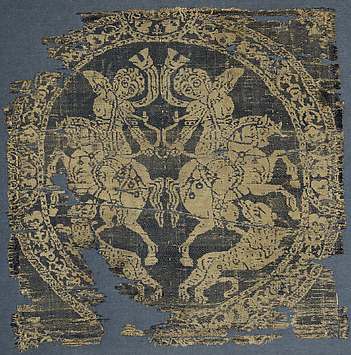
Textile with Horned Animals in a Pearl Roundel

, Weft-faced compound silk twill, China (Xinjiang Autonomous Region, Central Asia)
China (Xinjiang Autonomous Region, Central Asia)
7th–9th century
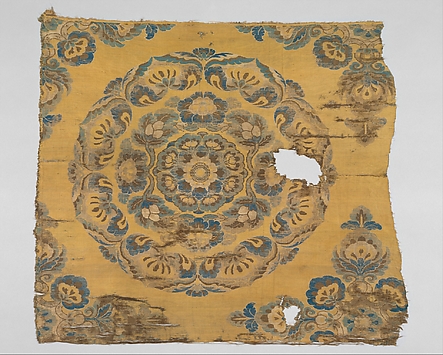
Textile with floral medallion, Weft-faced compound silk twill, China
China
late 8th–early 9th century
Textile fragment with boys in floral scrolls, Silk twill damask (ling), China
China
11th–12th century
Obi with Pattern of Checks and Floral Roundels, Silk, metallic thread; twill with supplementary weft patterning and brocading, Japan
Japan
19th century
Obi with Large Floral Roundels and Stream, Twill-weave silk with supplementary weft patterning and brocading, Japan
Japan
late 19th–early 20th century
Sutra Cover with Decorated Lattice, Silk twill with supplementary weft patterning in silk and metallic thread, China
China
15th–16th century