The Temple of Dendur will be closed on Tuesday, June 9 and Thursday, June 11.

Plan your visit

Search for Art

1-42 of 124 results for Jusepe de Ribera
Sort by:
Show only
Images
Date
For BCE dates, enter a negative number. E.g. For 2000 BCE, enter -2000.
Artist / culture
Object type / material
Match
 
Show results matching
selected filters.
Geographic location
Match
 
Show results matching
selected filters.
Department
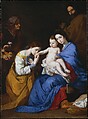
The Holy Family with Saints Anne and Catherine of Alexandria, Jusepe de Ribera (called Lo Spagnoletto)  Spanish, Oil on canvas
Jusepe de Ribera (called Lo Spagnoletto)
1648
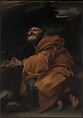
The Tears of Saint Peter, Jusepe de Ribera (called Lo Spagnoletto)  Spanish, Oil on canvas
Jusepe de Ribera (called Lo Spagnoletto)
ca. 1612–13
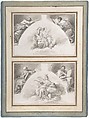
Copies after Jusepe de Ribera, Nicolas Bernard Lépicié  French, Pen and black ink, brush and gray wash, over graphite; framing lines in pen and brown ink
Nicolas Bernard Lépicié
After Jusepe de Ribera (called Lo Spagnoletto)
18th century
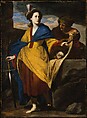
Judith with the Head of Holofernes, Massimo Stanzione  Italian, Oil on canvas
Massimo Stanzione
ca. 1640
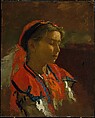
Carmelita Requena, Thomas Eakins  American, Oil on canvas, American
Thomas Eakins
1869
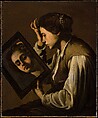
The Sense of Sight, Master of the Annunciation to the Shepherds  Italian, Oil on canvas
Master of the Annunciation to the Shepherds
Breton Fishermen and Their Families, Théodule-Augustin Ribot  French, Oil on canvas
Théodule-Augustin Ribot
possibly ca. 1880–85
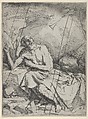
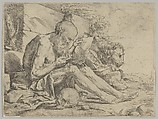
Saint Jerome Hearing the Trumpet of the Last Judgment, Jusepe de Ribera (called Lo Spagnoletto)  Spanish, Etching, engraving, and drypoint; first state of two (Brown)
Jusepe de Ribera (called Lo Spagnoletto)
1621
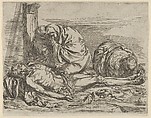
The Virgin, Saint John the Baptist, and Mary Magdalene weeping over Christ's dead body
, Jusepe de Ribera (called Lo Spagnoletto)  Spanish, Etching and drypoint; second state of two (Brown)
Formerly attributed to Jusepe de Ribera (called Lo Spagnoletto)
1624
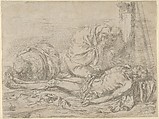
The Virgin, Saint John the Baptist, and Mary Magdalen weeping over Christ's dead body
, Jusepe de Ribera (called Lo Spagnoletto)  Spanish, Etching and drypoint (counterproof)
Formerly attributed to Jusepe de Ribera (called Lo Spagnoletto)
1624
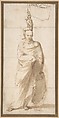
Man Wearing a Large Cloak and a Small Naked Man on His Head, Jusepe de Ribera (called Lo Spagnoletto)  Spanish, Pen and brown ink with brush and brown wash (recto). Lined with a very thin sheet of paper (verso)
Jusepe de Ribera (called Lo Spagnoletto)
ca. 1637–40
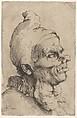
Large Grotesque Head, Jusepe de Ribera (called Lo Spagnoletto)  Spanish, Etching and engraving
Jusepe de Ribera (called Lo Spagnoletto)
ca. 1622
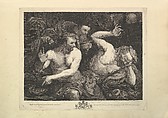
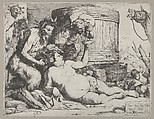
Drunken Silenus holding a cup aloft into which a Satyr pours wine, Jusepe de Ribera (called Lo Spagnoletto)  Spanish, Etching with drypoint, engraving, and burnishing
Jusepe de Ribera (called Lo Spagnoletto)
1628
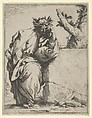
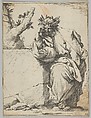
The poet, standing crowned with laurel, leaning on a stone, Jusepe de Ribera (called Lo Spagnoletto)  Spanish, Etching
Jusepe de Ribera (called Lo Spagnoletto)
1620–21
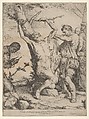
The Martyrdom of Saint Bartholomew, Jusepe de Ribera (called Lo Spagnoletto)  Spanish, Etching and engraving
Jusepe de Ribera (called Lo Spagnoletto)
1624
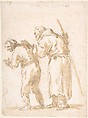
A Man Leading a Blind Friar (recto); Incidental Sketches (not by the artist; verso), Jusepe de Ribera (called Lo Spagnoletto)  Spanish, Pen and brown ink, brush and brown wash, over black chalk (recto); black chalk, graphite, or leadpoint (verso)
Attributed to Jusepe de Ribera (called Lo Spagnoletto)
17th century
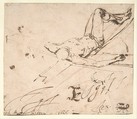
Study for a Crucifixion of St. Peter, Jusepe de Ribera (called Lo Spagnoletto)  Spanish, Pen and brown ink on off-white paper
Jusepe de Ribera (called Lo Spagnoletto)
1628–30
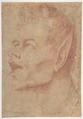
Head of a Satyr Facing Left, Jusepe de Ribera (called Lo Spagnoletto)  Spanish, Red chalk on brownish paper
Jusepe de Ribera (called Lo Spagnoletto)
ca. 1625–30
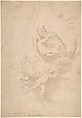
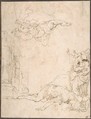
Virgin and Child on Crescent Moon with Putti, Jusepe de Ribera (called Lo Spagnoletto)  Spanish, Pen and brown ink with brush and brown wash over traces of black chalk underdrawing on beige paper
Jusepe de Ribera (called Lo Spagnoletto)
1591–1652
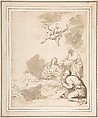
Adoration of the Shepherds, Jusepe de Ribera (called Lo Spagnoletto)  Spanish, Pen and brown ink, brush and brown wash
Jusepe de Ribera (called Lo Spagnoletto)
1645–50
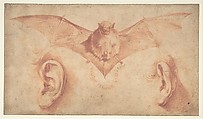
Studies of Two Ears and of a Bat. Below, the motto: FULGET SEMPER VIRTUS, Jusepe de Ribera (called Lo Spagnoletto)  Spanish, Red chalk and brush and red wash on beige paper.  Composition outlined on all borders with ruled lines in black chalk
Jusepe de Ribera (called Lo Spagnoletto)
1591–1652
A winged putto flogging a satyr tied to a tree, Jusepe de Ribera (called Lo Spagnoletto)  Spanish, Etching
Jusepe de Ribera (called Lo Spagnoletto)
ca. 1625–50
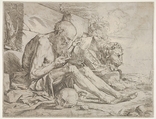
Saint Jerome Hearing the Trumpet of the Last Judgment, Jusepe de Ribera (called Lo Spagnoletto)  Spanish, Etching and engraving
Jusepe de Ribera (called Lo Spagnoletto)
ca. 1621
Battle Between a Centaur and a Triton with a Triton, Jusepe de Ribera (called Lo Spagnoletto)  Spanish, Etching
Formerly attributed to Jusepe de Ribera (called Lo Spagnoletto)
ca. 1620–1640
The Martyrdom of Saint Bartholomew, Jusepe de Ribera (called Lo Spagnoletto)  Spanish, Etching (reverse copy)
After Jusepe de Ribera (called Lo Spagnoletto)
ca. 1625–1640
Diogenes, bust-length, and turned to the right, holding a lantern, Jusepe de Ribera (called Lo Spagnoletto)  Spanish, Engraving
After Jusepe de Ribera (called Lo Spagnoletto)
Publisher François Basan
1750–69
Saint Jerome Reading, Jusepe de Ribera (called Lo Spagnoletto)  Spanish, Etching, engraving, and drypoint
Jusepe de Ribera (called Lo Spagnoletto)
ca. 1624
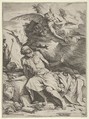
The Poet (copy in reverse), Jusepe de Ribera (called Lo Spagnoletto)  Spanish, Etching
After Jusepe de Ribera (called Lo Spagnoletto)
ca. 1625–80
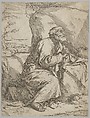
The Penitence of Saint Peter, Jusepe de Ribera (called Lo Spagnoletto)  Spanish, Etching and engraving
Jusepe de Ribera (called Lo Spagnoletto)
1621
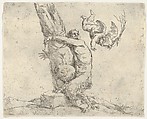
A winged putto flogging a satyr tied to a tree, Jusepe de Ribera (called Lo Spagnoletto)  Spanish, Etching
Attributed to Jusepe de Ribera (called Lo Spagnoletto)
ca. 1625–50
Jusepe de Ribera (called Lo Spagnoletto)
1624
Jusepe de Ribera (called Lo Spagnoletto)
1624