Search the collection

Filter By

Object Type / Material
Geographic Location
Department
Date
Show Only:
  • As part of the Met's Open Access policy, you can freely copy, modify and distribute this image, even for commercial purposes.
    APIPublic domain data for this object can also be accessed using the Met's Open Access API
  • Objects with changed or unknown ownership in continental Europe between 1933-1945. Learn more
Showing 794 results for cybele
Sort by:
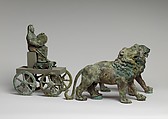
Bronze statuette of Cybele on a cart drawn by lions, Bronze, Roman
Roman
2nd half of 2nd century CE
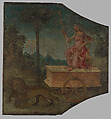
Triumph of Cybele, Pinturicchio  Italian, Fresco, transferred to canvas and attached to wood panels, Italian, Umbria
Pinturicchio
ca. 1509
Terracotta guttus (flask with handle and vertical spout), Terracotta, Greek, South Italian, Campanian
Greek, South Italian, Campanian
4th–3rd century BCE
Red jasper ring stone, Jasper, red, Roman
Roman
ca. 1st century BCE–3rd century CE
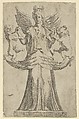
Cybele, Antonio Fantuzzi  Italian, Etching
Antonio Fantuzzi
Francesco Primaticcio
1543
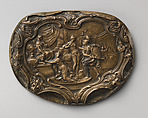
Maiden seeking refuge at a shrine of Cybele, Bronze, British
British
mid-18th century
Terracotta statuette of a dancing youth, Terracotta, Cypriot
Cypriot
3rd century BCE
Neptune and Cybele, Pieter de Jode II  Flemish, Engraving; second state of two (Hollstein)
Multiple artists/makers
1640–74
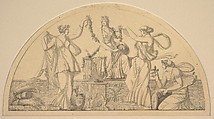
Cybele and Three Attendants, Antoine Léonard Du Pasquier  French, Pen and black ink, brush and gray wash
Antoine Léonard Du Pasquier
1801 or 1802
Pair of bronze cymbals, Bronze, Greek, Peloponnesian
Greek, Peloponnesian
5th–4th century BCE
Salt-cellar with Cybèle, René Boyvin  French, Engraving
René Boyvin
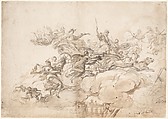
The Triumph of Cybele, Luca Giordano  Italian, Brush and brown wash over black chalk
Luca Giordano
ca. 1697
Temple of Artemis, Sardis (134. Sardes. 1843. T. de Cybèle.), Joseph-Philibert Girault de Prangey  French, Daguerreotype
Joseph-Philibert Girault de Prangey
1843
The Deliverance of Cybele, an Allegory of the Seasons, Gabriel François Doyen  French, Pen and black ink, brush and brown wash, heightened with white gouache, over black chalk
Gabriel François Doyen
n.d.
Cybele in her chariot drawn by two lions, Master of the Die  Italian, Engraving
Multiple artists/makers
1530–60
Cybele in her chariot drawn by two lions, Master of the Die  Italian, Engraving
Multiple artists/makers
1530–60
The Triumph of Cybele, after Paolo Fiammingo's "Triumph of Earth", Hans Friedrich Schorer  German, Pen and black ink, gray wash and white heightening
Hans Friedrich Schorer
Paolo Fiammingo
1634
Philips Galle
Hugo Favolius
1581
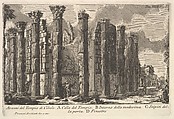
Remains of the Temple of Cybele (Avanzi del Tempio di Cibele), Giovanni Battista Piranesi  Italian, Etching
Giovanni Battista Piranesi
18th century
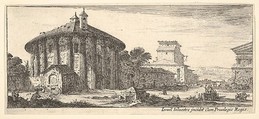
Tempio del Sole (Temple of Cybele in the Piazza della Bocca della Verità), Israel Silvestre  French, Etching
Israel Silvestre
ca. 1640–91
The Birth of Venus, with Neptune, Cybele and the Chariot of the Sun (Homage to Venus), Niccolò Berrettoni  Italian, Pen and brown ink, brush and brown wash over black chalk, highlighted with white on beige paper
Niccolò Berrettoni
ca. 1670–80
Card 26, Argynnis Cybele, from the Butterflies series (N183) issued by Wm. S. Kimball & Co., William S. Kimball & Company, Commercial color lithograph
William S. Kimball & Company
Julius Bien
1888
Multiple artists/makers
ca. 1646
Cybele Prevents Turnus from Setting Fire to the Trojan Fleet by Transforming the Ships into Sea Goddesses, Jean-Baptiste Marie Pierre  French, Pen and brown ink, brush and brown wash, over black chalk, heightened with white.
Jean-Baptiste Marie Pierre
18th century
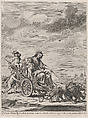
Plate 13: Cybele in her chariot, drawn by lions; from Guillielmus Becanus's 'Serenissimi Principis Ferdinandi, Hispaniarum Infantis...', Johannes Meursius  Flemish, Engraving
Johannes Meursius
1636
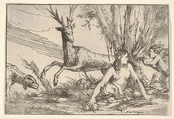
Earth, represented by Cybele seated at the base of a tree with fruits of the earth spread before her, a cupid with a torch approaches from the right, a stag and hound look toward Cybele from the left, from "The Elements", Giulio Carpioni  Italian, Etching
Giulio Carpioni
1640–60
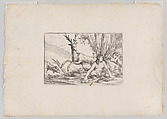
Earth, represented by Cybele seated at the base of a tree with fruits of the earth spread before her, a cupid with a torch approaches from the right, a stag and hound look toward Cybele from the left, from "The Elements", Giulio Carpioni  Italian, Etching
Giulio Carpioni
1640–60
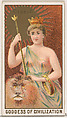
Cybele, Goddess of Civilization, from the Goddesses of the Greeks and Romans series (N188) issued by Wm. S. Kimball & Co., William S. Kimball & Company, Commercial color lithograph
William S. Kimball & Company
Ketterlinus Lithography Company
1889
Johann Friedrich Greuter
Pietro da Cortona (Pietro Berrettini)
ca. 1646
Multiple artists/makers
1806–22
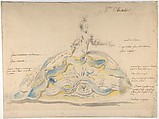
Mademoiselle Marie-Jeanne Fesch Chevallier, Louis René Boquet  French, Black chalk with watercolor, inscriptions in pen and ink
Louis René Boquet
Multiple artists/makers
ca. 1720
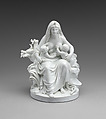
Nature (La Nature), Louis Simon Boizot  French, Biscuit (unglazed hard-paste porcelain), French, Sèvres
Louis Simon Boizot
Sèvres Manufactory
ca. 1794–95
Multiple artists/makers
1761
Giovanni Battista Piranesi
Angelo Rotili
1756–57
Jean Le Pautre
1661
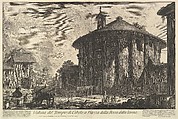
View of the Temple of Cybele in the Piazza of the Bocca della Verità (Veduta del Tempio di Cibele a Piazza della Bocca della Verità), Giovanni Battista Piranesi  Italian, etching
Giovanni Battista Piranesi
ca. 1758
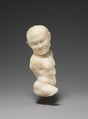
Dancing dwarf, Marble
332–150 B.C.
Multiple artists/makers
1803
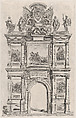
Plate 12: Triumphal arch, elevation of the back facade, surmounted with the arms of Ferdinand and decorated with five mythical or heroic scenes; from Guillielmus Becanus's 'Serenissimi Principis Ferdinandi, Hispaniarum Infantis...', Johannes Meursius  Flemish, Engraving
Johannes Meursius
1636