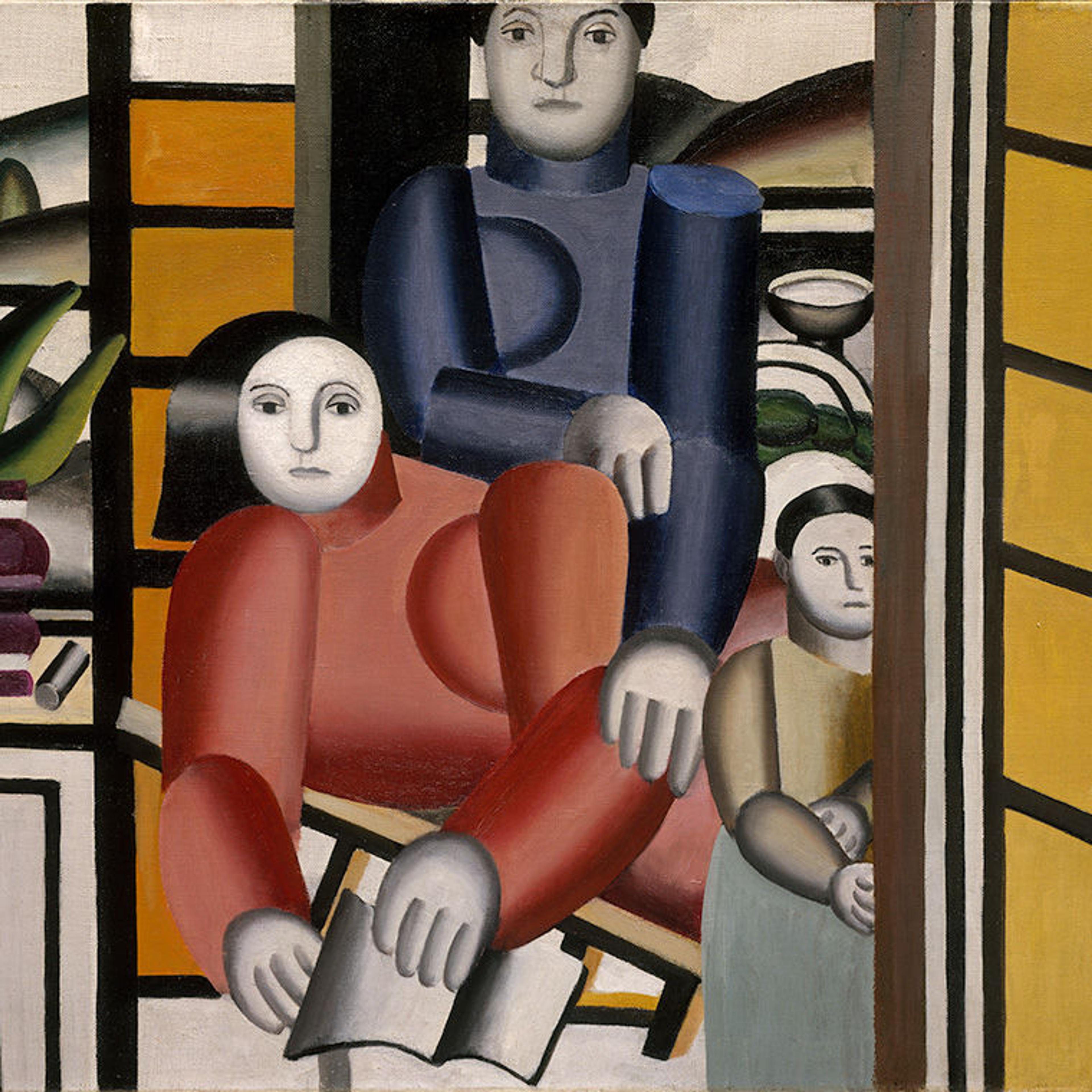
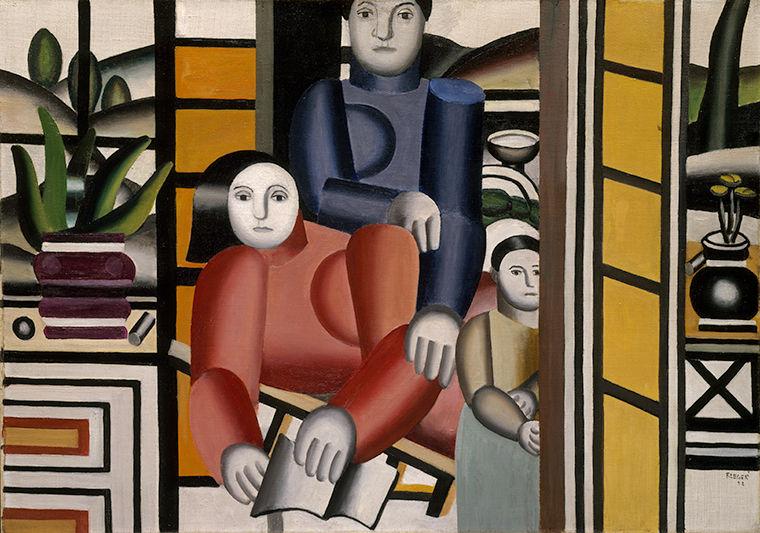
Fernand Léger (French, 1881–1955). Three Women by a Garden, 1922. Oil on canvas, 25 1/2 x 36 in. (64.8 x 91.4 cm). The Metropolitan Museum of Art, New York, Bequest of Mr. and Mrs. Allan D. Emil, in honor of William S. Lieberman, 1987 (1987.125.1). © 2018 Artists Rights Society (ARS), New York
In many ways, as the art historian Matthew Affron has noted, the work of the French Cubist painter Fernand Léger is a study in the contrast of forms.[1] From his Impressionist works of the early 1900s through the final pictures he painted in the 1950s, he demonstrated a remarkable flexibility and willingness to bend his style to suit his changing needs.
From 1912 to 1914, as Affron writes, Léger's goal was to "concentrate our attention more on the plastic and formal dimension of the image than on subject matter per se."[2] In other periods—for example, during his flirtation with social realism in the 1930s—he emphasized accessible, figurative subject matter to make his pictures appeal to the masses.
Through it all, as Rachel Boate writes in a new Timeline of Art History essay, Léger "consistently sought to capture in his art the dynamism and constantly changing conditions of modern life." This interest—in the machine age and its pictorial implications—is one of the great through-lines of his work, and it helps explain his wide influence, as Boate argues. "As an artist and art teacher, his examinations and interrogations of modernism played a significant role for future generations of twentieth-century artists."
The entirety of Boate's essay, along with more than one thousand others spanning the full range of the Museum's collection, is available on our Heilbrunn Timeline of Art History.
Notes
[1] Matthew Affron, "Line, Form, Color: Leger's Contrast of Forms," in Cubism: The Leonard A. Lauder Collection, eds. Emily Braun and Rebecca Rabinow (New York: Metropolitan Museum of Art, 2014), 88–96.
[2] Ibid., 96.


