Ceiling Painting from the Tomb Chapel of Senenmut
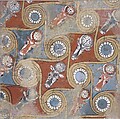
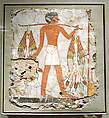
Senenmut's offering chapel consisted of two rooms forming a T. The chapel faces almost due east and the entrance leads into a broad, transverse hall extending to the right and left (north/south). The long axial hall extends straight ahead (west). The ceilings of these two rooms were painted with a variety of geometric patterns and bands of text recording offering prayers and the name and titles of Senenmut. At the end of the excavation season, the Museum was awarded several pieces of the painted ceiling plaster. This fragment came from the axial hall (the second room.
Artwork Details
- Title: Ceiling Painting from the Tomb Chapel of Senenmut
- Period: New Kingdom
- Dynasty: Dynasty 18
- Reign: Joint reign of Hatshepsut and Thutmose III
- Date: ca. 1473–1458 BCE
- Geography: From Egypt, Upper Egypt, Thebes, Sheikh Abd el-Qurna, Tomb of Senenmut (TT 71), Ceiling of passage, MMA excavations, 1923
- Medium: Mud plaster, paint
- Dimensions: H. 76 (29 15/16 in.); W. 78.5 (30 7/8 in.); Th. 6.4 cm (2 1/2 in.); Weight 41 kg (90.4 lbs.)
- Credit Line: Rogers Fund, 1923
- Object Number: 23.3.462
- Curatorial Department: Egyptian Art
More Artwork
Research Resources
The Met provides unparalleled resources for research and welcomes an international community of students and scholars. The Met's Open Access API is where creators and researchers can connect to the The Met collection. Open Access data and public domain images are available for unrestricted commercial and noncommercial use without permission or fee.
To request images under copyright and other restrictions, please use this Image Request form.
Feedback
We continue to research and examine historical and cultural context for objects in The Met collection. If you have comments or questions about this object record, please contact us using the form below. The Museum looks forward to receiving your comments.
Content Notice
The Metropolitan Museum of Art presents over 5,000 years of art from around the world, and our online collection reflects ongoing work conducted over the course of our more than 150-year history. You may encounter objects or images that may be inappropriate for some viewers or information that may be outdated.