English
DonateMembershipTickets

Noh Robe (Atsuita) with Cloud-Shaped Gongs and “Chinese Flowers”

first half of the 19th century
Not on view
The term atsuita originally referred to high-quality fabrics imported from China as bolts rolled around “thick wood boards” (atsu-ita). In the Muromachi period (1392–1573), warlords acquired these fabrics through private trade and presented them to Noh actors. The costumes made from such fabrics also came to be called atsuita. In the Edo period, these robes were made from twill-weave fabric produced in Japan and mainly worn by male leads playing warlords, gods, or demons. Costumes for violent gods and demons were decorated with powerful motifs, including dragons, clouds, zigzag patterns known as “hammer-wheels on lightning,” and cloud-shaped, flat gongs, as seen on this robe.

Artwork Details

Object Information
  • 唐花雲板模様段替厚板
  • Title: Noh Robe (Atsuita) with Cloud-Shaped Gongs and “Chinese Flowers”
  • Period: Edo period (1615–1868)
  • Date: first half of the 19th century
  • Culture: Japan
  • Medium: Twill weave silk brocade
  • Dimensions: Overall: 60 x 55 in. (152.4 x 139.7 cm)
  • Classification: Textiles-Costumes
  • Credit Line: Gift of Mrs. Harold Bache, 1962
  • Object Number: 62.158.2
  • Curatorial Department: Asian Art
More Artwork
Armor (<i>Gusoku</i>), Saotome Ietada  Japanese, Iron, lacquer, silk, gilt copper, Japanese
Armorer Helmet bowl signed Saotome Ietada
Armorer Breastplate inscribed inside, Myōchin Munesuke
16th and 18th centuries
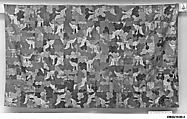
Seven-Panel Buddhist Monk’s Vestment (Shichijō kesa) with Crane Patterns on Hexagonal Diaper Pattern (Mokkō) Background, Twill-weave silk with supplementary weft patterning (karaori), Japan
Japan
early 17th century
Shō, Bamboo wood, metal, Japanese
Japanese
19th century
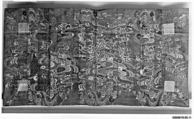
Buddhist Vestment (Kesa) with Pattern of Flowing Water, Chrysanthemums, Fishing Nets, and Waterwheels, Twill-weave silk brocaded with silk (karaori), Japan
Japan
18th century
Koto (箏), Various woods, ivory, metal, nylon, tortoiseshell, abalone, lacquerwork, Japanese
Japanese
20th century

Research Resources

The Met provides unparalleled resources for research and welcomes an international community of students and scholars. The Met's Open Access API is where creators and researchers can connect to the The Met collection. Open Access data and public domain images are available for unrestricted commercial and noncommercial use without permission or fee.

To request images under copyright and other restrictions, please use this Image Request form.

Feedback

We continue to research and examine historical and cultural context for objects in The Met collection. If you have comments or questions about this object record, please contact us using the form below. The Museum looks forward to receiving your comments.

Send feedback

Content Notice

The Metropolitan Museum of Art presents over 5,000 years of art from around the world, and our online collection reflects ongoing work conducted over the course of our more than 150-year history. You may encounter objects or images that may be inappropriate for some viewers or information that may be outdated.