English
DonateMembershipTickets

Apothecary Cabinet

Goldsmith Nicolaus I Kolb German
1617–18
On view at The Met Fifth Avenue in Gallery 520
Apothecary cabinets like this one were luxury goods made primarily for a princely clientele. The ebonized travelling case, veneered in pear wood, holds a silver medical garniture that would have contained only the most exclusive remedies, including exotic ingredients from far away countries such as pulverized ‘unicorn horn’ (narwhal horn), bezoar stones, and preparations of curative herbs, next to local favorites. The lid of the écuelle in this example, made by master Goldsmith Nicolaus I Kolb, is engraved with the armorial bearings of the Zobel von Giebelstadt family, several members of which held the powerful positions of Prince-Bishops in various German provinces and were discerning art collectors. Chests of this type served as intimate companions to their princely owners, equipped with the indispensable medicine, implements, and instructions for curing almost any of their ailments. It was common for princes to practice medicine themselves, and on a symbolic level, their personal skill in medical endeavors was equated with their ability to heal society, ensuring the wellbeing of their lands through skillful surgical interventions. Displayed in the Kunstkammer, fine surgical instruments and medicine chests could stand as an indication of the ruler’s ability to govern.

Artwork Details

Object Information
  • Title: Apothecary Cabinet
  • Goldsmith: Nicolaus I Kolb (German, master 1582–1621)
  • Date: 1617–18
  • Culture: German, Augsburg
  • Medium: Veneer: ebonized pearwood (Pyrus communis), ebony, partially gilded silver; carcass: conifer; interior: protective quilted cushion covered in red silk, drawers and chest lined with red silk velvet; gold trimming; mounts and fittings: partially gilded brass; thirty-two (32) vessels and utensils: glass, partially gilded silver, low carbon steel, leather
  • Dimensions: 11 × 11 × 9 1/16 in. (28 × 28 × 23 cm)
  • Classification: Woodwork-Furniture
  • Credit Line: Purchase, Anna-Maria and Stephen Kellen Acquisitions Fund, 2019
  • Object Number: 2019.229.1a–c–.32a, b
  • Curatorial Department: European Sculpture and Decorative Arts
More Artwork
Cantle Plate, Steel, gold, German, Augsburg or Nuremberg
German, Augsburg or Nuremberg
ca. 1565–75
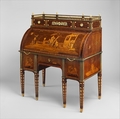
Rolltop desk, David Roentgen  German, Oak, pine, walnut, cherry, tulipwood, and mahogany (later drawers), veneered with maple hornbeam (both partially stained), tulipwood, burl wood (stained), mahogany, holly, walnut, and other woods; gilt bronze, brass, steel, and iron; marble; partially tooled and gilded leather, German, Neuwied am Rhein
David Roentgen
ca. 1780
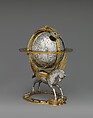
Celestial globe with clockwork, Gerhard Emmoser  German, Case: partially gilded silver, gilded brass; movement: brass, steel, Austrian, Vienna
Gerhard Emmoser
1579
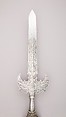
Partisan of Wolfgang Wilhelm of Bavaria, Count Palatine of the Rhine, Steel, wood, textile, German, Bavaria
German, Bavaria
dated 1615
Rolltop desk, David Roentgen  German, Oak, cherry, pine, mahogany, veneered with maple, burl woods, holly, hornbeam (all partially stained), tulipwood, mahogany, and other woods; mother-of-pearl; partially gilded and tooled leather; gilt bronze, iron, steel, brass, partially gold-lacquered brass, German, Neuwied am Rhein
David Roentgen
Designer Drawer pulls after a design by Thomas Chippendale
Designer Marquetry panel after a design by Januarius Zick
ca. 1776–79

Research Resources

The Met provides unparalleled resources for research and welcomes an international community of students and scholars. The Met's Open Access API is where creators and researchers can connect to the The Met collection. Open Access data and public domain images are available for unrestricted commercial and noncommercial use without permission or fee.

To request images under copyright and other restrictions, please use this Image Request form.

Feedback

We continue to research and examine historical and cultural context for objects in The Met collection. If you have comments or questions about this object record, please contact us using the form below. The Museum looks forward to receiving your comments.

Send feedback

Content Notice

The Metropolitan Museum of Art presents over 5,000 years of art from around the world, and our online collection reflects ongoing work conducted over the course of our more than 150-year history. You may encounter objects or images that may be inappropriate for some viewers or information that may be outdated.