Double Spout and Bridge Bottle with Snake
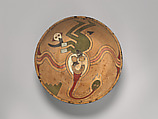
This vessel’s emphasis on a central animal figure, geometric patterns, and color palette are also noted on several other Paracas double spout and bridge examples in the Metropolitan Museum of Art’s collection such as 64.228.84 and 64.228.97. These hues were possibly indicative of a color-coded system created to represent a particular ceremony or a specific person or social ranking. Dualism was a fundamental ideology in Andean cosmology and expressed in this vessel’s form, such as: dual spouts, imagery such as the snakeheads at each end of the winding serpent body, or the geometric forms depicted in pairs on either side of the snake head. The double-headed serpent design was created through incision on the vessel prior to firing. After the ceramic was fired, lively colors were applied creating the desired effect of vibrant colors. The exact purpose of this vessel is unknown, however bottles such as this one have been found as part of a funerary offerings.
Christina De León, Ph.D. student, Bard Graduate Center, 2017
References
DeLeonardis, Lisa. “Encoded Process, Embodied Meaning in Paracas Post-fired Ceramics” in Making Value, Making Meaning: Techné in the Pre-Columbian World, edited by Cathy Lynne Costin, pp. 129-166. Washington, D.C.: Dumbarton Oaks Research Library and Collections, 2016.
Stone, Rebecca R. Art of the Andes: From Chavín to Inca, Third edition. London: Thames & Hudson, 2012.
Artwork Details
- Title: Double Spout and Bridge Bottle with Snake
- Date: 5th–3rd century BCE
- Geography: Peru, Ica Valley
- Culture: Paracas
- Medium: Ceramic, pigment
- Dimensions: H. 5 in. (12.7 cm)
- Classification: Ceramics-Containers
- Credit Line: Gift of Mr. and Mrs. Nathan Cummings, 1964
- Object Number: 64.228.89
- Curatorial Department: The Michael C. Rockefeller Wing
More Artwork
Related Content
 Free to download
Research Resources
The Met provides unparalleled resources for research and welcomes an international community of students and scholars. The Met's Open Access API is where creators and researchers can connect to the The Met collection. Open Access data and public domain images are available for unrestricted commercial and noncommercial use without permission or fee.
To request images under copyright and other restrictions, please use this Image Request form.
Feedback
We continue to research and examine historical and cultural context for objects in The Met collection. If you have comments or questions about this object record, please contact us using the form below. The Museum looks forward to receiving your comments.
Content Notice
The Metropolitan Museum of Art presents over 5,000 years of art from around the world, and our online collection reflects ongoing work conducted over the course of our more than 150-year history. You may encounter objects or images that may be inappropriate for some viewers or information that may be outdated.