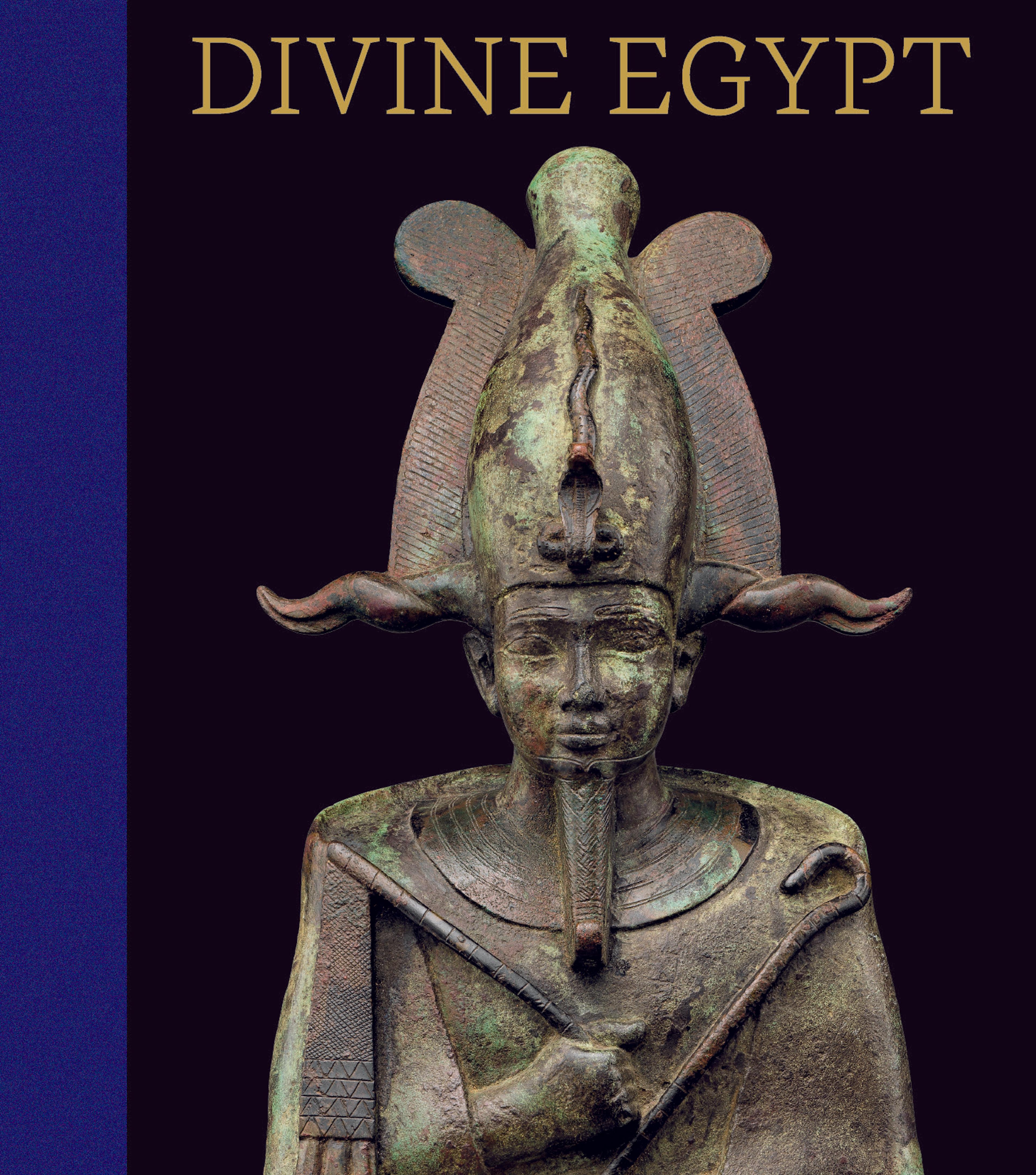
Figurine of Wepwawet
As is common in images of a standing canid, the alert and slender animal holds its head upright, with its front legs situated vertically and its hind legs and long tail slightly slanted. Both Anubis and Wepwawet could be represented in full canid form. Wepwawet is usually shown as a standing canid, and the favored position for Anubis was recumbent, but exceptions are known. In the case of this work, two cobras (today difficult to recognize as such) run along the bottom sides of this piece, flanking the canid and aiding in its identification, for these snakes—whose heads and inflated hoods were originally at the front, on each side of the small loop—are a common iconographical element for Wepwawet and thus leave no doubt that he is the god depicted here.
Individual images of Wepwawet on standards were often carried in processions, but this figure is far too small to have been used for this purpose. Its size and loop might suggest that the piece was used as an amulet, but copper alloy was not a typical material for such works; rather, it was more often a preferred medium for gifts to deities, ritual equipment, or images of deities used in temple settings. The original function of the unusual gold wire that goes through the loop and is then twisted, knotted, and wrapped several times around the canid’s neck is unknown. Did it have beneficial value, since tying and knotting were magically charged actions? Or did this wire have a more practical use, originally functioning to attach the piece to a person or an object? If the latter, then the high value of the wire’s material would accord with the piece having been used in a temple setting, where it might have been attached, for example, to a divine image or a piece of ritual equipment. It is tempting to further speculate that perhaps the loose end of the wire was looped around this small Wepwawet image once the figure was no longer being used in its original manner and was then deposited within the temple precinct.
Artwork Details
- Title: Figurine of Wepwawet
- Period: Probably Late Period
- Dynasty: Dynasty 26–30
- Date: 664–332 BCE
- Geography: From Egypt
- Medium: Cupreous metal, gold wire
- Dimensions: H. 3.7 × W. 1 × D. 4.3 cm (1 7/16 × 3/8 × 1 11/16 in.)
- Credit Line: Gift of Helen Miller Gould, 1910
- Object Number: 10.130.1324
- Curatorial Department: Egyptian Art
More Artwork
Research Resources
The Met provides unparalleled resources for research and welcomes an international community of students and scholars. The Met's Open Access API is where creators and researchers can connect to the The Met collection. Open Access data and public domain images are available for unrestricted commercial and noncommercial use without permission or fee.
To request images under copyright and other restrictions, please use this Image Request form.
Feedback
We continue to research and examine historical and cultural context for objects in The Met collection. If you have comments or questions about this object record, please contact us using the form below. The Museum looks forward to receiving your comments.