Audio Guide
603. Florence and the Influence of Leonardo
Which techniques did Raphael borrow from Leonardo?
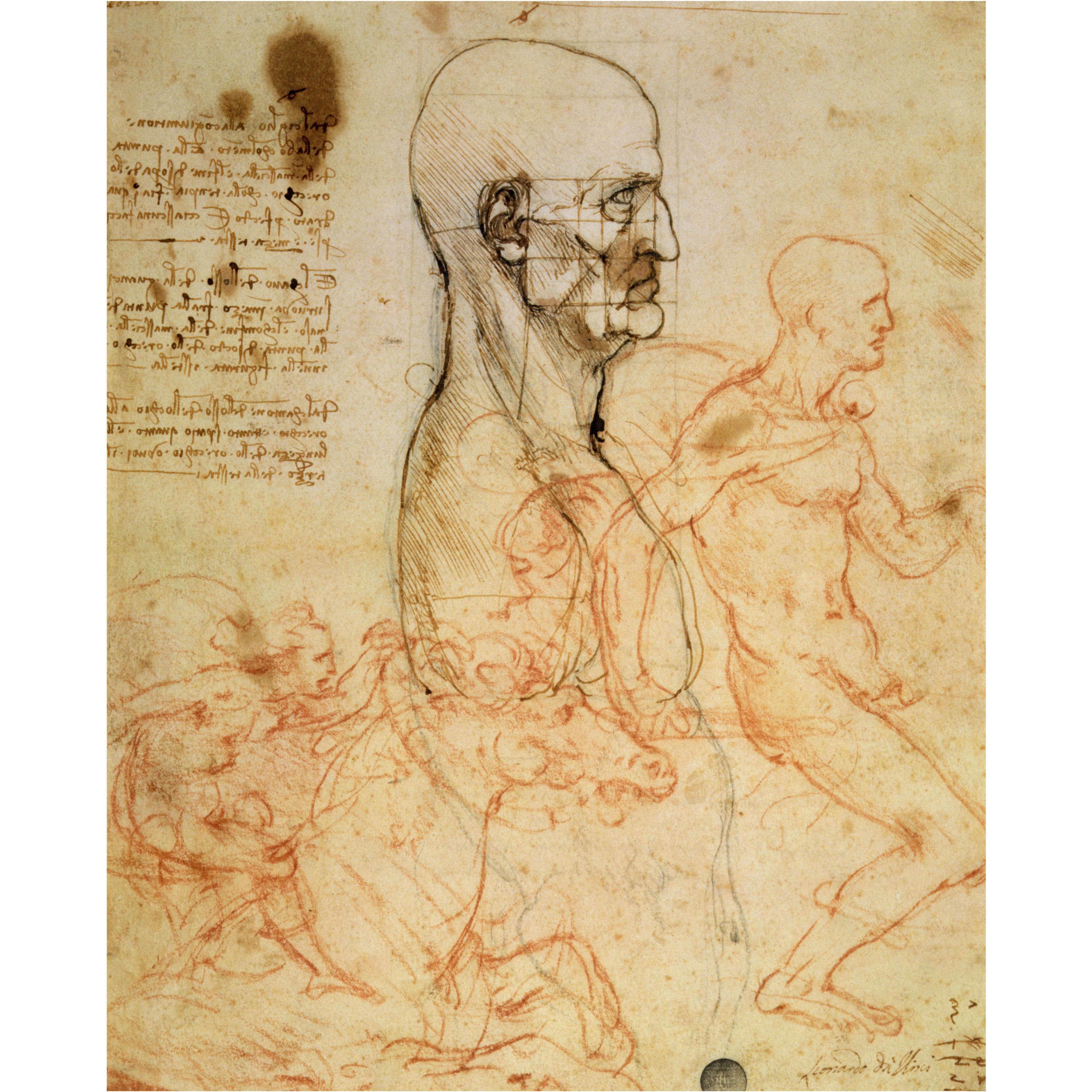
ISABELLA ROSSELLINI (NARRATOR): When Raphael was around twenty-one years old, he arrived in Florence. In this artistic capital, he was able to study major works by both Michelangelo and Leonardo first-hand. To the right of this text panel, look for a drawing by Leonardo with a study of a man’s head at center. Here’s art historian Catherine Whistler:
CATHERINE WHISTLER: It’s quite an amazing sheet. It shows us so many different sides of Leonardo as an artist and as a draftsman.
ROSSELLINI: We see a scientific study of the proportions of a man’s face in profile. But the galloping horseman in red chalk is something different.
WHISTLER: So, it’s almost as though a door has been flung open and this horseman comes racing in in a kind of fury from the left, so disrupting the calm scientific, if you like, qualities of the sheet.
We can see in Leonardo’s study of the horseman how he’s constantly changing his mind and revising as he’s working. His hand is moving very, very fast using the red chalk to bring out both the sense of motion and the sense of emotion.
ROSSELLINI: This type of rapid sketching had a huge influence on Raphael. So much so that it changed his entire approach to composition. Curator Carmen Bambach:
CARMEN BAMBACH: He learns from Leonardo what Leonardo calls bozzare pronto. Bozzare pronto means sketching quickly. So, don’t bother to finish fingers on a hand, just let the creative juices flow.
WHISTLER: What this kind of drawing opens up for Raphael is a new freedom. He discovers how to let himself go gesturally, letting his thoughts spring out. And drawing becomes invention made visible.
ROSSELLINI: As you explore this gallery and the next, you’ll see Raphael learning from both Leonardo and Michelangelo…
BAMBACH: … but also competing.
He learns from Leonardo and then he tries to outdo Leonardo; he learns from Michelangelo, he tries to outdo Michelangelo. And it’s a sense of what at the time is called concorrenza, competition. It’s one of these themes that are essentially career-long for Raphael.