
The word Orient is derived from the Latin Oriens, which means the direction of the rising sun—the east. Orientalism: Between Fact and Fantasy explores notions of “the East” in the 19th century, when globalism, shaped by colonialism and imperialism, fueled unprecedented encounters, connections, and exchanges in Europe and the Middle East. “Hard power” mingled with “soft power,” as accelerated travel, rapid technological change, and shifting geopolitics hastened artistic exchange between distant regions and different cultures.
Beginning with Napoleon’s conquest of Egypt in 1798 and culminating in the paintings of Ottoman renaissance man Osman Hamdi Bey, this exhibition tells the story of how Islamic works of art made their way to European dealers, collectors, international expositions, and museums, introducing a new visual language to artists, architects, and designers. Deep admiration for the sophisticated techniques and visual language of Islamic art led Owen Jones and other influential figures to transform architecture and design in Europe and America. Artists such as Jean Auguste Dominique Ingres, Eugène Delacroix, and Jean-Léon Gérôme visited lands and people across the Mediterranean or imagined them from afar. They sometimes depicted what they saw and at other times conjured distant places through memory and imagination, often using Islamic objects to stage their paintings.
Orientalism: Between Fact and Fantasy is the first exhibition at The Met to explore Orientalism as its central focus, presenting not only easel paintings but also drawings, photographs, illustrated books, architecture, arms and armor, textiles, garments, glassware, ceramics, and metalwork. Highlighting The Met collection, it features approximately 180 objects from 12 Met departments along with rarely seen loans from the U.S. and abroad. Displayed across four galleries that straddle the departments of European Paintings and Islamic Art, the presentation invites visitors to approach the exhibition from its primary entrance in Gallery 453 or explore its themes from multiple points of entry.
The exhibition is made possible by the Sherman Fairchild Foundation, Alice Cary Brown and W. L. Lyons Brown, and The Hagop Kevorkian Fund.
Additional support is provided by the Janice H. Levin Fund and an Anonymous Foundation.
The catalogue is made possible by the Janice H. Levin Fund.
Additional support is provided by the Diane W. and James E. Burke Fund and Eric Weider.
Events
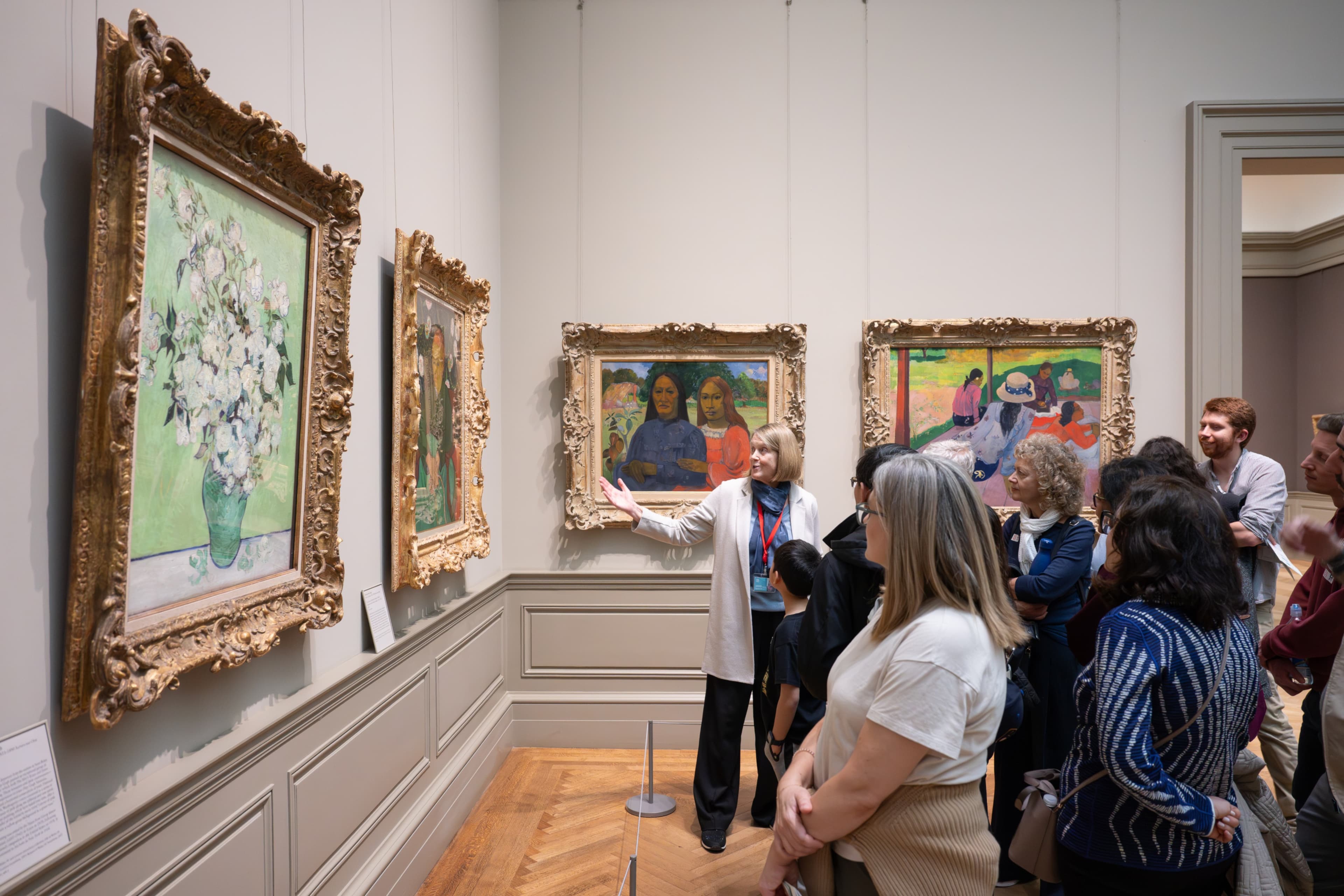
Met Expert Talks—Orientalism: Between Fact and Fantasy
Resplendent.
Magnificent.
Exhibition Catalogue
Orientalism: Between Fact and Fantasy
This title offers a fresh look at the ways nineteenth-century European and Ottoman artists portrayed and promoted the Middle East through interpretations and emulations of Islamic art and design.