Cylinder seal
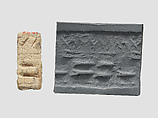
The modern impression of the seal is shown so that the entire design can be seen. This hematite cylinder seal is carved with the images of two deities, identifiable by their horned headgear. The seated deity holds a rod with an emblem or recarving at the top and wears a long dress; the standing god is dressed in a shorter tunic and rests one foot on a horned animal. Based on his attributes, the standing figure on the right may be the god Amurru.
Amurru, the eponymous god of the Amorite peoples (Akkadian amurru), began to be represented on cylinder seals in the early second millennium B.C. It is likely that the god was created by the urban elite of southern Mesopotamia as a personification of the semi-nomadic Amorite tribes whose name he shared. The symbols associated with this god – the horned animal, crooked staff, and in some cases distinctive headgear or a stylized mountain – all emphasize his foreignness. On this cylinder, Amurru is shown in an inferior position standing before an enthroned (and traditionally-garbed) deity.
Cylinder seals in the ancient Near East served as both a kind of amulet and as a mark of ownership or identification. The representation of Amurru on this cylinder may have appealed to its owner either as a Mesopotamian symbol of Amorite identity or, perhaps more likely, as a protective device, since the god came to be associated with exorcism and healing.
Artwork Details
- Title: Cylinder seal
- Period: Old Babylonian
- Date: ca. 18th–16th century BCE
- Geography: Mesopotamia
- Culture: Babylonian
- Medium: Hematite, black
- Dimensions: H. 3 cm x Diam. 1.4 cm
- Credit Line: Museum Accession
- Object Number: X.304.13
- Curatorial Department: Ancient West Asian Art
More Artwork
Research Resources
The Met provides unparalleled resources for research and welcomes an international community of students and scholars. The Met's Open Access API is where creators and researchers can connect to the The Met collection. Open Access data and public domain images are available for unrestricted commercial and noncommercial use without permission or fee.
To request images under copyright and other restrictions, please use this Image Request form.
Feedback
We continue to research and examine historical and cultural context for objects in The Met collection. If you have comments or questions about this object record, please contact us using the form below. The Museum looks forward to receiving your comments.
Content Notice
The Metropolitan Museum of Art presents over 5,000 years of art from around the world, and our online collection reflects ongoing work conducted over the course of our more than 150-year history. You may encounter objects or images that may be inappropriate for some viewers or information that may be outdated.