La Virgen y el Niño
Artwork Details
- Título: La Virgen y el Niño
- Artista: Claus de Werve, francés, activo 1396–1439
- Fecha: ca. 1415–1417
- Geografía: Francia, procedente del convento franciscano de clarisas, Poligny, Borgoña
- Material: Piedra caliza con pintura y dorado originales
- Dimensiones: 135,5 x 104,5 x 68,6 cm
- Crédito: Fondo Rogers, 1933
- Número de inventario: 33.23
- Curatorial Department: Medieval Art and The Cloisters
Audio
865. Kids: Virgin and Child
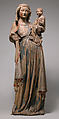
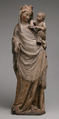
Have you every tried to hold a squirming baby? It’s hard isn’t it? Look how the Virgin Mary is clutching Baby Jesus, trying to keep him still. Her eyes look tenderly past her child, as if she’s lost in thought. Time has faded the colors painted on this statue. When it was new, around 1420, both Mary and Jesus had golden hair. Jesus’ gown was green, with a gold pattern. He looks like a realistic, chubby baby, wriggling on Mary’s lap—and trying to kick the book she’s holding. He’s also pointing to a page in the book. What words was Jesus pointing to? Unfortunately, they’re gone now. But look at the right side of the bench that Mary’s sitting on. Here you see words in Latin, painted on a scroll. These words come from a book in the Latin Bible called Ecclesiasticus or The Book of Wisdom. Christians in 1420 would have associated wisdom with the Virgin Mary. That’s why these words from the Book of Wisdom appear on her statue. In English, they say, “From the beginning, and before the world, was I created.”
More Artwork
Related Content

Research Resources
The Met provides unparalleled resources for research and welcomes an international community of students and scholars. The Met's Open Access API is where creators and researchers can connect to the The Met collection. Open Access data and public domain images are available for unrestricted commercial and noncommercial use without permission or fee.
To request images under copyright and other restrictions, please use this Image Request form.
Feedback
We continue to research and examine historical and cultural context for objects in The Met collection. If you have comments or questions about this object record, please contact us using the form below. The Museum looks forward to receiving your comments.
Content Notice
The Metropolitan Museum of Art presents over 5,000 years of art from around the world, and our online collection reflects ongoing work conducted over the course of our more than 150-year history. You may encounter objects or images that may be inappropriate for some viewers or information that may be outdated.